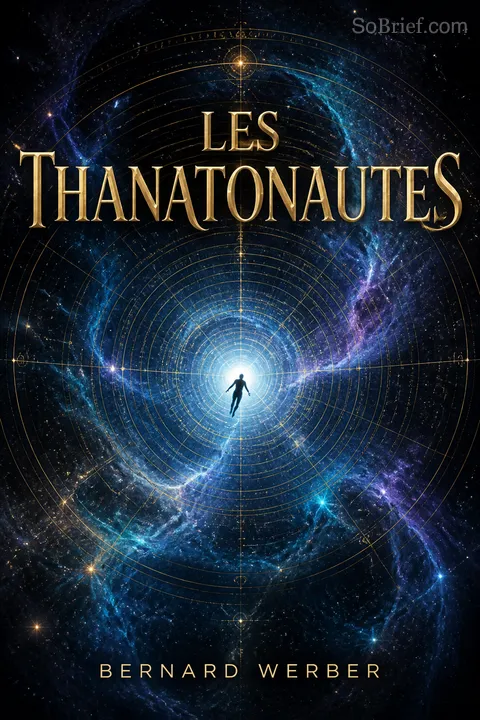
Résumé de l'intrigue
Childhood Questions, First Death
Michael Pinson's earliest memories are shaped by confusion and curiosity about death. His family's awkward attempts to explain mortality only deepen his fascination. A traumatic accident at age seven gives Michael his first brush with death, an experience that leaves him with more questions than answers. The silence and darkness of unconsciousness are not terrifying, but the reactions of adults—grief, fear, and taboo—teach him that death is something to be feared and never discussed lightly. This formative experience plants the seeds of a lifelong obsession, as Michael senses that the greatest mysteries of existence—who we are, where we come from, and where we go—are all bound up in the enigma of death.
Raoul, Cemeteries, and Curiosity
Michael's childhood is transformed by his friendship with Raoul Razorbak, a precocious, eccentric boy he meets at a funeral. Raoul's fascination with death matches Michael's, and together they explore the Père-Lachaise cemetery, discussing myths, philosophy, and the afterlife. Raoul's father's suicide and his unfinished thesis on death haunt him, fueling his determination to uncover what lies beyond. Their bond is cemented by shared curiosity and a sense of being outsiders, united against the "imbeciles" who refuse to question the world. Through Raoul, Michael learns to see death not as an end, but as a frontier waiting to be explored.
Myths, Fears, and Friendship
Raoul introduces Michael to the world's death myths—Egyptian, Mesopotamian, Hindu, and more—each offering symbolic journeys through the afterlife. These stories, full of monsters, trials, and judgments, become the boys' shared language. Raoul's fearless curiosity and Michael's skepticism balance each other, and together they challenge taboos, even confronting a satanic cult in the cemetery. The coin-flip becomes their ritual for facing fear, symbolizing the power of choice in the face of the unknown. Their friendship is a refuge from family pressures and societal norms, nurturing the seeds of future rebellion and discovery.
The Seeds of Thanatonautics
As they grow, Michael and Raoul's interests mature. Michael becomes a doctor, specializing in anesthesia and resuscitation, while Raoul pursues biology, fascinated by hibernation and near-death states. The world around them remains fearful and superstitious about death, but scientific advances—organ transplants, life extension—hint at the possibility of conquering mortality. When President Lucinder survives an assassination attempt and reports a near-death experience, the stage is set for a new era: the systematic, scientific exploration of death itself. Raoul and Michael are drawn back together, ready to turn myth into experiment.
Reunion and Scientific Ambition
Reunited as adults, Michael and Raoul find their childhood dreams within reach. Lucinder's government, eager to explore the "continent of the dead," funds a secret project: Project Paradise. Raoul, now a respected researcher, recruits Michael for his medical expertise. Together with the enigmatic nurse Amandine and a group of condemned prisoners, they begin dangerous experiments—inducing controlled clinical death and attempting to bring subjects back. The early trials are fraught with failure and guilt, but the team's resolve hardens. The quest is no longer just personal; it is a mission to map the afterlife for all humanity.
The Lucinder Incident
President Lucinder's near-fatal shooting becomes a turning point. His vivid account of leaving his body, traveling through a tunnel of light, and being called back by doctors galvanizes public and political interest. Lucinder's experience legitimizes the project and secures further funding. The government's involvement brings both resources and scrutiny, as the ethical implications of experimenting on prisoners and the boundaries between science and spirituality become national debates. The incident marks the transition from clandestine curiosity to a state-sponsored quest, with Michael and Raoul at the helm.
Project Paradise Begins
With official backing, the team refines their methods, using anesthesia and precise monitoring to guide volunteers into near-death states. The early "thanatonautes" (death-nauts) face high risks—some die, some return brain-damaged, others traumatized by visions of horror or nothingness. The breakthrough comes with Félix Kerboz, a hardened prisoner who returns from the brink with a coherent, detailed account of the afterlife: a tunnel, a light, a sense of peace, and a choice to return. For the first time, the "continent of the dead" is not just myth or hallucination, but a territory to be explored and mapped.
The First Thanatonautes
As more volunteers undertake the journey, patterns emerge. The afterlife is experienced as a series of territories, each with its own trials—fear, pleasure, memory, knowledge, beauty, and finally, judgment. The team constructs a map, marking the "walls" (Moch) that separate each zone. The process is perilous; many thanatonautes are lost, some return changed or broken. Yet the lure of discovery is irresistible. The project becomes a global phenomenon, with other nations racing to send their own explorers. The afterlife is no longer a matter of faith, but of empirical investigation.
Death's Continent Revealed
The thanatonautes' reports converge: the afterlife is a vast, spiraling tunnel, each segment colored by emotion and challenge. The blue zone is peaceful, the black zone confronts one's fears and regrets, the red zone tempts with pleasure, the orange zone tests patience, the yellow zone offers knowledge, the green zone overwhelms with beauty, and the white zone is the realm of angels and judgment. At the end lies the mountain of light, where souls are weighed and assigned their next incarnation. The afterlife is revealed as a moral landscape, shaped by one's actions and choices.
The World Reacts
The revelation of the afterlife shakes the foundations of religion, philosophy, and daily life. Traditional faiths are challenged, as the afterlife becomes a matter of science rather than belief. Laws are passed to regulate thanatonautics, and the world is swept by a wave of gentleness and moral anxiety. People become obsessed with their karmic scores, striving for good deeds to ensure a better reincarnation. Yet this new era brings unintended consequences: apathy, fatalism, and a loss of passion. The mystery that once gave life meaning is replaced by a bureaucratic morality.
The Race for the Beyond
As nations and religions vie to claim the afterlife, the race becomes fierce. Alliances and rivalries form, leading to "wars" in the afterlife between groups of thanatonautes. Techniques evolve—group journeys, cord-braiding for safety, and new technologies for tracking souls. The afterlife becomes crowded with tourists, and even advertising invades the spiritual realm. The quest for knowledge gives way to spectacle and commerce, as the original pioneers struggle to maintain the integrity of their mission amid chaos and exploitation.
The Walls of Death
Each "wall" in the afterlife represents a profound challenge: confronting one's past, resisting temptation, enduring waiting, embracing knowledge, facing beauty, and finally, submitting to judgment. The journey is both universal and deeply personal, shaped by culture, belief, and individual karma. Some explorers are broken by the experience, others find enlightenment or despair. The afterlife is not a static paradise or hell, but a dynamic process of self-discovery and transformation, echoing the myths and teachings of every culture.
The Map of the Afterlife
The team's discoveries are compiled into maps, manuals, and public lectures. The afterlife is charted in detail, with each territory described, each trial explained, and each angel catalogued. The process of death becomes a science, complete with karmic calculators and official guidelines. The world adapts, but the loss of mystery breeds new problems: ennui, mass suicide, and the rise of "evil" cults seeking to restore balance. The pioneers realize that knowledge, once shared, cannot be contained—and that the ultimate secret may be the necessity of not knowing everything.
The Price of Knowledge
As the world becomes obsessed with karma and the afterlife, society stagnates. The thrill of discovery is replaced by conformity and fear of error. Stefania, once a champion of exploration, becomes a rebel, leading a movement to restore the value of risk, passion, and even evil. The pioneers are caught between their achievement and its consequences, questioning whether they have done more harm than good. The angels themselves intervene, erasing the memory of thanatonautics from humanity and restoring the mystery that gives life its meaning.
The Age of Mass Exploration
With the barriers to the afterlife breached, thanatonautics spreads worldwide. Thanatodromes open everywhere, offering guided tours of the afterlife. The process is commodified, regulated, and eventually trivialized. The pioneers watch as their creation is diluted and corrupted, their original vision lost amid commercialism and bureaucracy. The world is transformed, but the cost is the loss of wonder, individuality, and the very drive that led to the conquest of death in the first place.
The Triumph and the Backlash
The world's obsession with karma and the afterlife leads to unintended consequences: mass suicides, apathy, and the rise of a new elite who manipulate reincarnation for personal gain. The pioneers, disillusioned, witness the unraveling of their dream. Stefania's rebellion, Lucinder's suicide, and the destruction of the thanatodrome mark the end of an era. The angels, seeing the chaos unleashed, erase the memory of thanatonautics from humanity, restoring ignorance and the possibility of genuine discovery.
The End of Mystery
The pioneers, now dead, find themselves before the mountain of light, judged by the angels for their hubris. Their achievements are erased from history, their knowledge consigned to myth and legend. The world forgets thanatonautics, and the cycle of curiosity, discovery, and forgetting begins anew. The lesson is clear: some mysteries must remain unsolved, for it is the search, not the answer, that gives life its meaning.
The Final Journey
In the afterlife, the pioneers are shown the true nature of existence: that the divine is hidden within, that the journey matters more than the destination, and that every answer leads to new questions. Their story becomes another myth, another secret waiting to be rediscovered. The cycle of life, death, and rebirth continues, driven by curiosity, love, and the eternal desire to know what lies beyond.
Analysis
Les Thanatonautes is a sweeping meditation on humanity's relationship with death, knowledge, and the unknown. By reimagining the afterlife as a continent to be explored, Bernard Werber transforms the ultimate taboo into a field of adventure, blending myth, science, and philosophy into a narrative that is both playful and profound. The novel interrogates the consequences of demystifying death: the loss of fear gives way to apathy, the pursuit of goodness becomes mechanical, and the very drive that propels progress is threatened by its own success. Through its richly drawn characters and inventive plot devices, the story explores the paradox that meaning is found not in answers, but in the search itself. The ultimate lesson is one of humility: some mysteries must remain unsolved, for it is the journey—the curiosity, the love, the struggle—that gives life its value. In the end, the divine is hidden not in distant realms, but within ourselves, waiting to be rediscovered with each new cycle of forgetting and awakening.
Résumé des avis
Les Thanatonautes receives mixed reviews averaging 4.06/5 stars. Readers praise the original premise of exploring death scientifically and the incorporation of diverse religious mythology. Many enjoyed the engaging first half and Werber's philosophical approach. However, common criticisms include flat, stereotypical characters (especially women), boring middle sections, repetitive plot points, excessive religious references, and uninspiring protagonists. Several reviewers found the writing clinical and devoid of emotion. The romantic subplots were deemed poorly executed. Despite these flaws, fans appreciated the imaginative worldbuilding and thought-provoking themes about life, death, and reincarnation.
Les lecteurs ont aussi lu
Characters
Michael Pinson
Michael is the narrator and emotional core of the story, a man whose childhood confusion about death becomes a lifelong quest for understanding. Adopted, insecure, and often passive, he is shaped by his friendship with Raoul and his exposure to myth, science, and philosophy. As a doctor, he brings medical rigor to the exploration of death, but his journey is as much psychological as scientific. Michael's arc is one of gradual awakening: from naive curiosity to the burden of knowledge, from passive observer to reluctant pioneer, and finally to a man who learns the limits of understanding and the necessity of love, forgiveness, and humility.
Raoul Razorbak
Raoul is Michael's childhood friend and intellectual catalyst, driven by the trauma of his father's suicide and a burning need to solve the mystery of death. Brilliant, eccentric, and sometimes reckless, Raoul is both leader and outcast, inspiring others while struggling with his own demons—anger, addiction, and a deep sense of abandonment. His relentless pursuit of the unknown leads to both triumph and tragedy, as he becomes a martyr to the cause he helped create. Raoul's journey is a study in the dangers of obsession and the cost of seeking truth at any price.
Amandine Ballus
Amandine is the enigmatic nurse who joins the thanatonautic project, her beauty and silence masking a deep well of emotion and determination. Haunted by her inability to save patients, she is drawn to the project as a way to conquer death and redeem herself. Amandine's relationships—with Michael, Raoul, Félix, and others—reflect her search for meaning and connection. She evolves from a passive assistant to a charismatic leader and public figure, embodying both the allure and the danger of the quest for transcendence.
Félix Kerboz
Félix is a hardened prisoner whose resilience and lack of illusions make him the ideal candidate for the first successful journey into the afterlife. His crude honesty and simple desires contrast with the lofty ambitions of the scientists, grounding the project in the realities of human motivation. Félix's experience opens the door to the systematic exploration of death, but his later struggles with fame and meaning highlight the psychological toll of confronting the unknown.
President Jean Lucinder
Lucinder is the political force behind Project Paradise, using his own near-death experience to legitimize and fund the exploration of death. His motivations are a mix of curiosity, ambition, and a desire for immortality—both personal and historical. Lucinder's journey mirrors that of the project itself: from visionary leadership to unintended consequences, disillusionment, and self-destruction. His fate underscores the dangers of hubris and the limits of human control.
Stefania Chichelli
Stefania is an Italian thanatonautess whose mastery of meditation and spiritual discipline allows her to penetrate deeper into the afterlife than most. Her journey from enthusiastic explorer to disillusioned rebel reflects the story's central tension between knowledge and mystery, order and chaos. Stefania's eventual embrace of "the Mal" (evil) is a desperate attempt to restore balance and meaning to a world rendered bland by excessive goodness and certainty.
Freddy Meyer
Freddy is a blind rabbi and master of group thanatonautic techniques, whose humor and wisdom provide stability amid chaos. His invention of cord-braiding allows deeper exploration of the afterlife, and his teachings on forgiveness, joy, and humility offer a counterpoint to the story's darker themes. Freddy's self-sacrifice and eventual reincarnation as a child symbolize the cyclical nature of life and the enduring power of compassion.
Rose Solal Pinson
Rose is Michael's wife, an astrophysicist whose scientific rigor and emotional intelligence balance the story's mystical and philosophical elements. Her insights into the physical structure of the afterlife (the "hole noir" and "fontaine blanche") bridge the gap between science and spirituality. Rose's journey is one of love, loss, and reconciliation, embodying the story's ultimate message that meaning is found not in answers, but in relationships.
Maxime Villain
Maxime is the journalist whose perfect memory and outsider status make him the ideal recorder of the thanatonautic adventure. His inability to forget, and his struggle to be heard, reflect the story's themes of memory, communication, and the burden of knowledge. Maxime's role as both witness and participant highlights the importance of storytelling in shaping collective understanding and the dangers of unchecked revelation.
Stefania's Rebels (The Mal)
The group of outcasts and rebels led by Stefania represent the story's recognition that good and evil, order and chaos, are both necessary for balance and growth. Their actions, though disruptive, serve as a corrective to the stagnation and apathy that follow the loss of mystery. They embody the paradox that sometimes, to preserve meaning, it is necessary to resist the very progress one has helped create.
Plot Devices
Framing the Afterlife as a Continent
The central device of the novel is the metaphor of the afterlife as a literal continent, complete with borders, territories, and obstacles. This framing allows the story to blend myth, science, and adventure, transforming death from an abstract fear into a concrete challenge. The mapping of the afterlife, with its colored zones and "walls," provides structure and momentum, while also serving as a commentary on humanity's drive to conquer the unknown.
Interweaving Mythology and Science
The novel draws on a vast array of myths, religious texts, and philosophical traditions, weaving them into the fabric of the scientific quest. Each territory of the afterlife echoes a different cultural vision of death, from Egyptian judgment to Buddhist reincarnation. This intertextuality enriches the narrative, grounding the speculative elements in the collective unconscious and highlighting the universality of the search for meaning.
The Coin-Flip and the Power of Choice
The recurring motif of flipping a coin to make decisions symbolizes the tension between fate and free will, knowledge and ignorance. It reflects the story's central question: how much should we seek to know, and when is it better to accept mystery? The coin becomes a talisman for courage, humility, and the acceptance of uncertainty.
The Dangers of Total Knowledge
From the beginning, the narrative warns of the risks inherent in uncovering too much. The gradual transformation of society—from fear to obsession, from apathy to rebellion—serves as a cautionary tale about the limits of human understanding and the necessity of mystery. The angels' eventual intervention, erasing the memory of thanatonautics, is both a narrative reset and a philosophical statement about the cyclical nature of discovery and forgetting.
Narrative Structure: Memoir, History, and Myth
The novel is structured as a memoir, interspersed with "historical" documents, police reports, and mythological excerpts. This collage approach blurs the boundaries between fact and fiction, personal and universal, past and future. The shifting perspectives and voices reinforce the theme that every story is part of a larger, ongoing narrative—the eternal human quest to understand life, death, and what lies beyond.
Cycle des Anges Série
Télécharger le PDF
Télécharger l'EPUB
.epub digital book format is ideal for reading ebooks on phones, tablets, and e-readers.








































