Plot Summary
Awakening in Wasteland
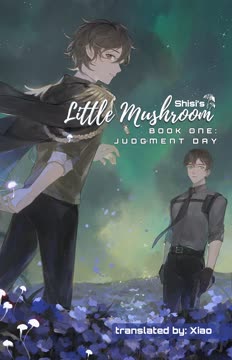
An Zhe, a sentient mushroom, awakens in a devastated wasteland where flora and fauna have mutated, making survival a constant struggle. He discovers the corpse of a young man, An Ze, whose genes he unknowingly assimilates by trying to help. An Zhe thus gains the ability to become human, inheriting fragments of language, memory, and personality. However, An Zhe is incomplete—he is missing his only spore, his irretrievable "child," and is left with a deep-seated emptiness. This loss becomes his purpose: to travel against all odds toward the Northern human base in hope of recovering what he has lost, driven both by mushroom instinct and a growing echo of human emotion.
Search for Lost Spore
Driven by the need to recover his spore, An Zhe travels through landscapes riddled with monsters and dangers that barely notice him—he is simply a harmless mushroom. As he journeys, he witnesses grotesque mutations and the pitched battle for survival between hybrid plants, animals, and monsters. The loss of his spore is a primal void, and An Zhe's journey quickly becomes not only a quest for that lost fragment but a search for connection, home, and meaning amid chaos. His innocence and strangeness sets him apart, yet it also allows him to cross borders unnoticed and to witness quietly the world's slow unraveling.
Humanity's Precarious Shelter
After being picked up by a battered team of human mercenaries, An Zhe is exposed to a different danger: human suspicion. Within their armored vehicle, he witnesses both casual cruelty and unexpected warmth, particularly from Vance, who shields him. Yet, even here, the threat of mutation is everywhere: Anthony, one of the mercenaries, is infected, transforming into a monster and killing his teammate Horsen. Despite passing genetic tests, An Zhe learns that the Northern Base's survival depends on the fear-fueled policy of preemptive, indiscriminate execution, enforced by the enigmatic and feared "Judge"—who can kill on sight, without explanation.
Encounter at the City Gates
At the threshold of sanctuary, An Zhe and Vance are subjected to the infamous trial: Vance is shot dead, his demise unquestioned by bystanders. Faced with the emotionless, icy gaze of Judge Lu Feng, An Zhe is led into the base, barely surviving through a battery of genetic and psychological tests. Though declared "human," he is constantly on the precipice of exposure and death. Inside, he glimpses the brittle, bitter peace of the base—order enforced at the cost of endless fear, suspicion, and the silent acceptance of brutality.
Trial by Judge
Inside the base, An Zhe encounters the labyrinthine power and paranoia of the Judgement System and the Trial Court. Judge Lu Feng, merciless and cold, is both enforcer and symbol of humanity's desperate measures. Retrospectively, An Zhe learns about the origins of the Trial Court—a legacy of massacres, intended to spare humanity from even greater devastation by erring on the side of killing the innocent. The rules are arbitrary and secret, sustained by fear and a "better safe than sorry" ethos. Within this system, individual lives are nothing more than tools for a shaky, collective survival.
New Life, Old Wounds
Adopting An Ze's identity, An Zhe tries to survive the routines and suspicions of base society, encountering Josie—a man with personal ties to An Ze, whose guilt and possessiveness only bring painful reminders of human frailty. With poverty threatening, An Zhe takes work in the black market, making lifelike dolls for grieving survivors yearning for lost loved ones. Through all this, his single unbroken link to his former self is the brass bullet casing, the only clue to his lost spore's fate—a silent testament to both longing and violence.
Discovering Human Cruelty
As he works and observes, An Zhe uncovers the bleak mechanics behind human routines: lives determined by arbitrary social status, rigid quotas, and social indifference. He witnesses both kindness and the lurking possibility of exploitation, even among friends. The myths and daily assurances of progress are shown to be fragile, thin masks for a pervasive, desperate fear. Beneath the surface of safety, there is constant repression, both self-inflicted and systematized.
Bonds and Betrayal
An Zhe fights to forge genuine relationships even as everyone, including himself, is forced to hide or betray their true nature. He enlists in a found family of black market outcasts, led by the ambiguous but ultimately pragmatic Boss Shaw, who gives An Zhe his first taste of both acceptance and transactional affection. Even small acts of help or kindness are overshadowed by the ever-present threat of exposure and grief. As An Zhe edges closer to understanding what it means to care for others—and to be cared for—he realizes that trust and betrayal are often indistinguishable in a world built on denial and sacrifice.
Labyrinth of Survival
An Zhe becomes adept, not only at hiding what he is, but at mimicking what others need—he learns human skills, passes for human, and manages to secure the basic means of survival. Yet, his continued innocence is frequently in tension with the casual violence and sexuality around him. Each time he barely escapes disaster, he is more aware of how monstrous the world is, not just because of mutation, but because of what people do to each other in order to feel safe, needed, or simply alive. The base's own moral core is eroding from within.
Becoming Human, Becoming Other
An Zhe's investigation for his spore leads him to the heart of the base's research. He learns that his spore is considered a scientific marvel, inert to infection or mutation, and is kept under study. The closer he gets to recovering it, the more obvious it becomes that he himself is a unique anomaly—neither human nor monster, existing in the liminal space between. As the world's disasters escalate—strange mutant tides, disappearance of the global magnetic field—An Zhe's journey becomes a parable of becoming: a creature becoming human, a human becoming monster, everyone touched by and touching others irreversibly.
Poison and Innocence
Poison—both literal and metaphorical—flows through the base: the threat from mutants, poisonous spores, and also poisonous love, guilt, and hope. An Zhe's own innocence is repeatedly tested as he encounters the fragile children of Eden, the embittered women locked into endless reproduction, and the system-built enmity between those who judge and those who are judged. The illusion of innocence dies as An Zhe witnesses how civilization demands collective participation in suffering and collective denial—a system of judgment no less toxic and unstable than the wild outside.
The System of Judgment
As An Zhe and the reader learn, the Trial Court was a desperate creation designed to save humanity by sacrificing its soul. Absolutist, unaccountable, and omnipresent, it is governed by arbitrary "trial rules" no one is allowed to know or challenge. The ultimate power rests in the hands of a few—chiefly Judge Lu Feng—who bear the unbearable psychological weight of being both executioner and scapegoat. The truth is that the system's cruelty was created by the same scientists who once sought peaceful fusion. Its necessity is what makes it monstrous and inescapable.
A World Without Answers
Catastrophe arrives as environmental and genetic collapse outpace humanity's ability to understand or contain it. Human scientific mastery erodes as even the most advanced technology becomes useless: monsters infect without contact, matter itself fuses and distorts, and the magnetic field—earth's last defense—teeters on failure. Faith, whether in God, in science, or in justice, is shown to be a coping strategy as much as a guide. Humanity's only defense is the will to keep going, to "not go gentle into that good night," as the base's orphans and rebels echo the poems that once defined human hope.
Monsters Within and Without
The world outside devolves into a war of all against all, with monsters reaching new, coordinated intelligence while humanity fractures. The prospect of survival is revealed as an endless, self-devouring struggle. Within the Highland Research Institute, "fused" and partial humans—monsters who retained a sliver of consciousness—continue to seek hope, home, or atonement. The only possibility left is to discover a "stable frequency" in matter itself, a metaphor for spiritual or existential harmony that could halt further collapse.
Eden and Rebellion
The rebellion in Eden—the last stronghold of human fertility—turns from hope to disaster as the matriarch leads her daughters in an attempted escape from compulsory reproduction, only to unleash a plague of self-awareness and contactless infection. The consequences cause devastation on a civilizational scale. The sadness and rage at this pointless, self-consuming destruction fuel both rebellion and resignation. Yet in its final moments, Eden also offers something moving: a vision of impossible solidarity, of unrequited love that is nonetheless foundational.
Love Amid Collapse
Through his painful journey, An Zhe discovers love, not as romantic salvation but as a fraught, ephemeral thing experienced in glimpses: in the caring of Polly Joan, the impossible affection of Judge Lu Feng, and the tears of fellow survivors. For Lu Feng, An Zhe is the only one who can judge him, forgive him, and make him truly human. For An Zhe, love is inseparable from pain and longing, an impossible bridge between species, roles, worlds. Their reunion is as much an afterlife as a happy ending—a brief moment of peace and mutual forgiveness at the edge of extinction.
Apocalypse and Sacrifice
In the climax, the world's stability is lost. The only possible salvation is the "bell," a stable frequency derived from An Zhe's self-sacrifice in the Simpson Cage. This act finally halts the distortion and enables a fragile, new integration between human and monster. Yet the price is the dissolution of all previous identities and stories, a literal and figurative death and rebirth. Suffering and endurance are given meaning only by the willingness to act for others in the face of annihilation. In the aftermath, survivors keep going—finding new ways of living and caring, honoring the dead, and teaching the next generation to find hope amid uncertainty.
Epilogue: Songs for Tomorrow
Years after, the survivors, both human and changed, live quietly and humbly. Through diary entries and everyday acts, the legacy of the past—the violence, the love, the faith, the trials—is transformed into memory, myth, and an unassuming kindness. The story ends not with answers, but with the affirmation that to strive, to care, and to forgive—even in the midst of death—is its own unglamorous heroism. Lives persist like mushrooms under rain: brief, ordinary, yet, in the end, luminous and enough.
Analysis
In Little Mushroom: Judgment Day, Yi Shi Si Zhou crafts an apocalypse not of sudden ruin but of slow, grinding loss—of trust, clarity, and continuity. The novel is both a searing allegory of "otherness" and a meditation on the costs of survival. Its core question—what does it mean to be human, and is it worth the price?—plays out in the interplay between personal affection and collective necessity, between monstrousness and kindness. Through An Zhe's transformation, the story strips back identity to its barest essence: the longing to connect, to forgive, to belong, and to be seen. The novel rejects both heroic grandeur and nihilistic despair, affirming instead a quieter heroism: endurance, empathy, the courage to "not go gentle into that good night." In a world where even matter and meaning are collapsing, what ultimately survives is not science, power, or purity, but the capacity to bear and be borne by others, to remember and be remembered—fragile, ordinary, and, finally, enough.
Review Summary
People Also Read


Characters
An Zhe
An Zhe is both the protagonist and the emotional core of the story: a mutant mushroom who accidentally becomes human by assimilating An Ze's genes. He is gentle, innocent, and stubbornly clings to a childlike moral clarity, even as he learns fear, loss, and desire from humans. His journey is a quest for belonging—for his lost spore, for connection, for a place to call home. Psychologically, An Zhe embodies the outsider's perspective: naïve yet sensitive to the suffering and contradictions of humans. His inability to hate, constant curiosity, and tendency to trust set him apart, and yet he is deeply lonely. Through suffering, guilt, and brief moments of love, he is ultimately the one who—for a moment—holds together all the broken pieces, sacrificing himself to give the world a "stable frequency," a metaphorical hope.
Lu Feng
Lu Feng, the feared "Judge" of the base, is the human face of justice turned monstrous by necessity. Cold, controlled, and unflinching in his duty, he is both executioner and the most despised scapegoat—bearing the burden of sacrificing the few for the sake of broken humanity. Despite his emotional reserve, he is tormented by what it costs him to remain "sane" in this role. His underlying kindness is visible only in rare, wordless actions—saving An Zhe, letting him go, or seeking him out beyond the dictates of logic. At heart, Lu Feng is a paradox: his faith in collective good is what isolates him most cruelly. His arc is one of gradual self-recognition—finding redemption only in his love for the utterly alien An Zhe, who alone judges and accepts him.
Polly Joan
Polly Joan is the leader of the Highland Research Institute, once the founder of the Trial Court and the last "fusionist" scientist. His life is shaped by a relentless search for "rules" to spare lives, only to realize the impossibility of certainty and the inescapability of guilt. Haunted by empathy, he becomes an avuncular figure—offering unconditional acceptance to An Zhe and the other "fused" beings. His perspective is one of wisdom, pain, and mourning. He is the voice of memory and measured hope, seeing the world as both crushing in its indifference and shaped by transient, salvaging acts of kindness.
Dr. Ji (Ji Balan)
Dr. Ji, once Lu Feng's childhood friend, stands for the promise and failure of human science. Rational, sarcastic, and unsentimental, he is nonetheless deeply affected by love—whether for Polly, for his charges, or for the suffering of his people. His inability to "solve" the world's chaos mirrors both the base's hubris and its humility. In the apocalypse he is both a source of comfort and a living testament to the failure of knowledge without compassion.
An Ze
An Ze is both a literal and symbolic origin: the dying young man whose genes make An Zhe human. Gentle, melancholic, and self-effacing, his memories and language give An Zhe a foothold in the world. An Ze's death—and the subsequent betrayal by Josie and others—sets the tone for everything that follows: survival is suffused with regret and loss, connection always bound up with separation.
Boss Shaw (Scott Shaw)
Shaw, the black market craftsman and entertainer, gives An Zhe both shelter and a lesson in the transactional, bittersweet bonds of human society. Sardonic, resourceful, and not without genuine warmth, Shaw is a reminder that even amid violence, small acts of generosity can sustain hope. He stands for the "found family" possible—if fleeting—on the margins of a collapsing society.
Lily
Lily, a girl raised in the Garden of Eden, symbolizes the forced reproductive future of women in the base. Her eventual transformation and destruction reveal both the cruelty of social engineering and the tragic cost of agency denied. Her friendship with Sinan highlights the moments of kindness possible even for those deemed monstrous.
Sinan
Sinan—a gifted, emotionally distant child from Eden—becomes the first contactless infection and a harbinger of mutation's next phase. His story illustrates the tragic dimension of innocence lost not through evil but through circumstance; his ultimately communicative bond with Lily is a brief, shining point of resistance.
Hubbard & Tang Lan
Hubbard, a legendary mercenary, and Tang Lan, his once-lost vice-captain, represent the best of human resilience and loyalty outside the boundaries of law. Their relationship, marked by sacrifice and tenderness, is a poignant counterpoint to Lu Feng and An Zhe—showing that love and courage outlast even the systems that seek to destroy them.
Josie
Josie, An Ze's childhood friend, is a potent reminder of the ambiguities of human relationships: love, abandonment, guilt, and the fear that risks self-destruction. His wish to possess and rescue An Ze/An Zhe is both a lifeline and a chain—the personal echo of the base's collective failings.
Plot Devices
Dual Narrative Perspective and Role Reversal
The novel's structure consistently contrasts An Zhe's naïve viewpoint as a mushroom with revelations from human narrative—dialogues, trial records, and diary entries. This device highlights the arbitrary boundaries and fluidity of identity, creating empathy and critical distance for the reader.
The "Trial" as Social Mirror
The core device is the judicial system that protects by killing, and the psychological cost of such a bargain. The trial is both literal (Lu Feng's judgments) and metaphorical: every act is a "trial" of one's own nature, loyalty, and capacity for compassion in a world that punishes both weakness and kindness.
Foreshadowing through Mutation and Distortion
Regular occurrences of mutation—initially biological, ultimately physical and metaphysical—foreshadow not just environmental collapse but spiritual and moral dissolution. These mutations illustrate the instability of all boundaries and the potential, and cost, of transcending them.
The Spore and the Bell—Literal and Metaphorical Seeds
The spore is at once An Zhe's lost child, his purpose, and the lynchpin for the world's survival. Its "inert frequency" becomes the Bell that halts distortion, yet the true "salvation" is in An Zhe's willingness to sacrifice his own selfhood to save others. The Bell is both signal and metaphor, a "song" of endurance.
Nonlinear Revelation and Recursion of Motifs
Events, characters, and dialogues repeatedly reference earlier moments, poems, and promises—heightening the sense of fated tragedy and heroism. The recurrence of poetry ("Do not go gentle into that good night"), diaries, and recurring reunions/repartings blurs the boundaries between memory and destiny, past and present.
Hybrid Identity and Empathic Contagion
By constantly shifting the lines between human and nonhuman, judge and judged, friend and betrayer, the narrative explores the terror and possibility at the heart of all connection. Empathy, like infection, is shown to be as dangerous as it is necessary.








































