
Plot Summary
Wayside's Unraveling Magic
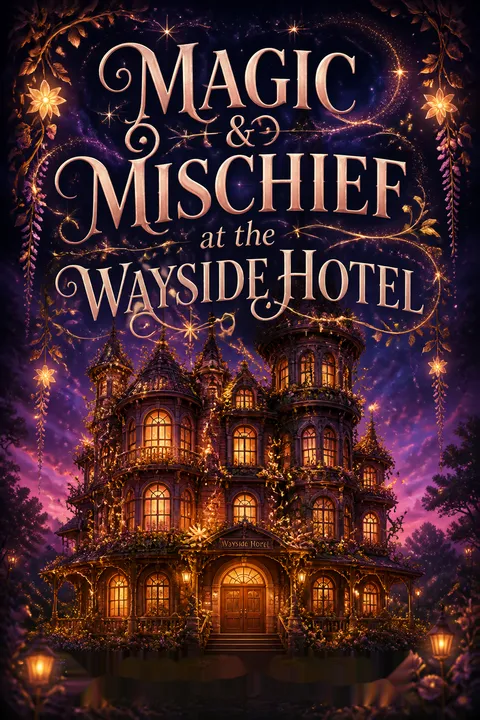
The Number Five Wayside Hotel, once a vibrant magical hub, is now plagued by failing magic and mounting tension among its supernatural guests. Pax, a former paladin turned reluctant hotel manager, struggles to maintain order as the Wayside's fuel—its very lifeblood—runs dangerously low. The guests, ranging from faeries to vampires to gnomes, bicker over rules and the impending doom that threatens not just their sanctuary but the entire universe's magical flow. The Wayside's living heart is failing, and with other Waysides vanishing, the stakes are nothing less than the survival of magic itself. Amidst this, the hotel's only hope may lie in a mysterious "reboot"—a fresh start that no one fully understands, but which will soon draw an unsuspecting human into their world.
Josie's Wishful Arrival
Josephine "Josie" LaChiusa, a widowed single mother, is drowning in financial and emotional stress. Her son Amos's health is fragile, her job is thankless, and her landlord has raised the rent beyond her means. On a whim and a wish, Josie stumbles upon an apartment listing for the Wayside Hotel. The building feels oddly right, and she's greeted by Pax, the enigmatic superintendent. The apartment is perfect—almost magically so, with a child's room tailored to Amos's needs. Despite her doubts and fears, Josie is drawn in by the sense of safety and possibility, unaware that her arrival is the first step in the Wayside's last, desperate gamble to save itself.
Tenants and Tensions
The Wayside's residents—disguised as ordinary tenants—prepare for Josie and Amos's arrival, debating whether humans can be the cure or a threat. Factions form: some, like the vampire prince Raphe, argue for blood sacrifice; others, led by Pax and Maddy the medusa, insist on nonviolence and secrecy. The building's magic is unstable, and the guests' patience is fraying. Josie and Amos's presence is both a risk and a hope, and the supernatural community must hide their true natures while watching for signs that the newcomers can heal the Wayside. The fragile peace is threatened by suspicion, old grudges, and the ever-present possibility of disaster.
The Child's Room Transforms
As Josie moves in, she's startled to find Amos's room transformed overnight into a perfect sanctuary, complete with his favorite superhero décor. The building seems to anticipate their needs, but the magic is unpredictable and unsettling. Pax, torn between duty and growing affection, tries to reassure Josie while hiding the truth about the Wayside's sentience. Josie's longing for stability and safety for her son resonates with the building, sparking small but significant magical changes. The transformation of the apartment is both a comfort and a warning: the Wayside is alive, and it is watching them closely.
Rules, Meetings, and Cake
Josie is swept into the chaos of tenants' meetings, where rules are debated with supernatural fervor and alliances shift with every argument. The cheerleaders (faery princesses), gnomes, and other residents bicker over laundry etiquette and magical mishaps. Amos's innocence and humor begin to thaw the building's gloom, and Pax's awkward attempts at connection—like researching Spider-Man to bond with Amos—hint at his deepening attachment. Josie's struggles as a single mother are laid bare, and the community's dysfunction mirrors her own fears of inadequacy. Yet, amidst the chaos, small acts of kindness and shared cake begin to knit the group together.
Secrets Behind the Walls
As Josie and Pax grow closer, the building's magic becomes more responsive, but also more erratic. Josie's anxieties manifest in strange ways—walls change color, flowers appear and vanish, and the apartment seems to pulse with her emotions. Pax confides his own burdens: a lifetime of war, guilt, and loneliness. Their mutual vulnerability draws them together, but the secrets of the Wayside—and the true cost of its survival—loom over every interaction. The line between safety and danger blurs, and Josie must decide whether to trust Pax, the building, and herself.
The Garden Committee Forms
The tenants, led by Maddy's iron will, form a garden committee to transform the bleak courtyard. Josie's longing for earth and growth inspires the project, and the act of planting becomes a metaphor for healing and belonging. Magical and mundane residents alike contribute their hopes to the soil, and the garden begins to flourish in impossible ways. The act of creation brings the community together, but also exposes old wounds and new dangers. The garden is both a promise and a test: can this found family nurture something lasting, or will their differences tear them apart?
Magic, Lies, and Laughter
As the garden grows, so do the relationships among the tenants. Josie's honesty and resilience earn her respect, even from skeptics like Denis the gnome. Pax's awkward humor and steadfastness win over Amos and Josie, while Maddy's stern exterior cracks to reveal a fierce protectiveness. The building's allergy to lies—manifested as the scent of cinnamon—forces everyone to confront uncomfortable truths. Laughter, play, and shared vulnerability become the true magic that begins to heal the Wayside, but the threat of exposure and betrayal still hangs over them all.
Gloria's Shadow
Josie's mother-in-law, Gloria, intensifies her campaign to take Amos, using every perceived flaw in Josie's parenting as ammunition. The pressure threatens Josie's fragile sense of belonging and security. Encounters with Denis and other tenants test her patience and boundaries, but also reveal her growing strength. The building's magic responds to her turmoil, sometimes helpfully, sometimes not. Josie's struggle to protect Amos and herself from both supernatural and mundane threats becomes the crucible in which her courage and self-worth are forged.
The Building's True Nature
The truth about the Wayside is finally revealed: it is a sentient, interdimensional hub, and its survival depends on the presence of love, hope, and community. Josie learns of the guests' true natures and the stakes of their predicament. The possibility of blood sacrifice is raised and rejected, and the community must decide whether to trust in a new way of healing. Josie's role as the potential savior—and the risks to her and Amos—become clear. The building's fate, and that of all its residents, hangs on her willingness to stay and believe.
Snow Day Revelations
A snowstorm brings the tenants together in unexpected ways. Play and laughter—especially Amos's—spark a surge of magic that begins to restore the Wayside. The community's shared joy becomes the antidote to despair, and even the most jaded residents are drawn into the celebration. Josie and Pax's relationship deepens, and the building's transformation accelerates. The snow day becomes a turning point, proving that healing is possible when people risk connection and embrace their imperfections.
Play, Parenting, and Protection
Josie's challenges as a single mother are mirrored by the building's need for nurturing and care. The tenants rally around her, offering support and protection in their own eccentric ways. Pax's promise to keep Amos safe is tested by both internal and external threats. The boundaries between parent and child, protector and protected, blur as everyone learns to rely on each other. The building's magic becomes more stable, but the threat of loss and separation remains ever-present.
The Truth About Number Five
Josie is forced to confront the full reality of the Wayside's magic, its history, and the dangers it faces. The serpent's warning—delivered in a dream—underscores the urgency of finding a cure. Pax confesses the risks and the possibility of sacrifice, and Josie must decide whether to stay or flee. The community's fate depends on her choice, and the building itself pleads for her help. Acceptance of the truth, and of her own power, becomes the key to survival.
The Serpent's Warning
Josie's encounter with the serpent goddess on the sixth floor is both a warning and a call to action. She is told that the cure for the Wayside is the cure for everything: love, hope, and connection. The dream forces Josie to confront her deepest fears and her responsibility—not just to Amos, but to the entire community. The serpent's message is clear: the universe is out of balance, and only by embracing her role can Josie restore harmony.
Amos Disappears
In a moment of magical chaos, Amos vanishes from the apartment. Panic and rage consume Josie and Pax as they search for him, fearing the worst. The possibility that some tenants might have acted on their darker impulses—sacrificing Amos to save themselves—shatters the fragile trust within the community. Josie's faith in Pax and the Wayside is tested to the breaking point, and the true cost of love and belonging is laid bare.
Rage, Forgiveness, and Rescue
Pax's rage threatens to destroy everything, but Josie's forgiveness and resilience bring him back from the brink. Together, they confront the building and its residents, demanding Amos's return. The community rallies, and through a combination of magic, love, and sheer determination, Amos is found safe. The ordeal cements the bonds among the tenants and proves that forgiveness and compassion are stronger than fear and violence.
Love as the Cure
The Wayside's magic is restored—not by sacrifice or violence, but by the love and connection forged among its residents. Josie and Pax's relationship becomes the heart of the building, and their willingness to stay and nurture the community fills the Wayside's tank at last. The garden flourishes, the tenants find peace, and the building itself is reborn as a sanctuary for all who need it. Love, in all its messy, imperfect forms, is revealed as the true magic that saves them all.
A New Beginning
With the Wayside healed and the community united, Josie, Amos, and Pax look to the future with hope. The building remains a place of magic and possibility, open to new adventures and new residents. The lessons of love, forgiveness, and courage endure, and the promise of happiness—hard-won and deeply cherished—shines brighter than ever. The story ends not with an ending, but with the beginning of a new chapter for everyone at the Wayside Hotel.
Analysis
Magic and Mischief at the Wayside Hotel is a luminous, genre-blending tale that uses the trappings of fantasy to explore the deepest questions of home, belonging, and the transformative power of love. At its heart, the novel is a meditation on the ways trauma, loss, and isolation can be healed not by grand gestures or heroic violence, but by the slow, often messy work of building community and trusting others. The Wayside itself is a brilliant metaphor for the wounded self: its magic flickers and fails when hope is lost, but is restored through vulnerability, play, and connection. The story's refusal to offer easy answers—insisting instead on the necessity of forgiveness, the courage to risk happiness, and the acceptance of imperfection—makes it both emotionally resonant and profoundly modern. In a world where the forces of darkness often seem overwhelming, Everett's novel insists that the true magic lies in ordinary acts of kindness, the willingness to be seen, and the stubborn belief that even the most broken places can become home. The lesson is clear: love is not just the cure for the Wayside, but for all of us.
Review Summary
Magic and Mischief at the Wayside Hotel receives generally positive reviews, averaging 3.68/5. Readers frequently praise its cozy atmosphere, whimsical characters, and heartwarming romance between Pax and Josie. The sentient hotel concept and found-family elements are highlighted as standouts. Common criticisms include thin world-building, an underdeveloped plot, rushed ending, and too many competing storylines. Many compare it favorably to Ilona Andrews' Innkeeper series. Most agree it succeeds as a lighthearted, feel-good cozy fantasy, even if it doesn't fully deliver on its promising premise.
Characters
Josie LaChiusa
Josie is a widowed single mother whose life is defined by struggle, sacrifice, and a fierce love for her son, Amos. Haunted by loss and self-doubt, she is pragmatic, anxious, and deeply empathetic. Her journey is one of gradual empowerment: from a woman barely surviving to a leader who brings hope and healing to a magical community. Josie's psychological arc is about learning to trust herself, accept love, and believe she deserves happiness. Her relationship with Pax is transformative, teaching her that vulnerability is strength and that true magic lies in connection. Josie's presence catalyzes the Wayside's recovery, and her choices shape the fate of everyone around her.
Pax Nomen
Pax is a former paladin, scarred by centuries of battle and burdened by guilt and loneliness. As the reluctant manager of the Wayside, he is both a leader and an outsider, struggling to balance duty with desire. Pax's stoicism masks a deep longing for belonging and love, which he finds unexpectedly in Josie and Amos. His development is marked by the shedding of old armor—literal and emotional—and the embrace of vulnerability. Pax's protective instincts are both his strength and his weakness, and his journey is about learning that true heroism lies in nurturing, not just fighting. His love for Josie and Amos becomes the key to the Wayside's salvation.
Amos LaChiusa
Amos is Josie's young son, whose health challenges and boundless curiosity make him both vulnerable and resilient. His laughter and joy are the spark that reignites the Wayside's magic, and his presence draws out the best in everyone around him. Amos represents the possibility of healing, the power of play, and the importance of community. His relationship with Pax is especially poignant, offering both men a chance to redefine family and fatherhood. Amos's innocence is never naïve; it is a force that transforms fear into hope.
Maddy (Medusa)
Maddy is the president of the tenants' association and a medusa whose stone-cold exterior hides a deep well of care for her community. She is the keeper of order, the enforcer of rules, and the protector of secrets. Maddy's psychological complexity lies in her struggle to balance control with compassion, and her journey is about learning to trust others and let go of perfection. Her relationship with Josie evolves from suspicion to respect, and her loyalty to the Wayside is unwavering. Maddy embodies the tension between tradition and change, and her leadership is crucial to the community's survival.
Raphe (Vampire Prince)
Raphe is the heir to a vampire throne, stranded at the Wayside while his world teeters on the brink of chaos. He is proud, cunning, and often abrasive, but his bravado masks deep insecurity and longing for home. Raphe's skepticism about the "reboot" and his advocacy for blood sacrifice put him at odds with Pax and Josie, but over time he becomes a grudging supporter of their approach. His psychological arc is about learning humility, empathy, and the value of community over power. Raphe's complexity adds tension and dark humor to the story.
Denis (Gnome)
Denis is a gnome with a chip on his shoulder and a talent for stirring up trouble. He is skeptical of humans, obsessed with rules, and quick to advocate for drastic solutions. Denis's antagonism forces the community to confront uncomfortable truths, but his vulnerability and need for belonging are always just beneath the surface. His development is subtle, moving from obstructionist to reluctant participant in the healing of the Wayside. Denis represents the voice of fear and resistance to change, but also the possibility of redemption.
Princess Naliti (Faery)
Naliti is the eldest of the faery princesses, balancing youthful exuberance with wisdom beyond her years. She is fascinated by human culture and becomes a key ally to Josie and Amos. Naliti's openness and adaptability make her a bridge between the magical and mundane residents, and her leadership is instrumental in the community's transformation. Her psychological arc is about embracing responsibility and the complexities of identity in a changing world.
Bert and Ernie (Gargoyles)
Bert and Ernie are the building's gargoyles, serving as both protectors and observers. Their presence is a reminder of the Wayside's ancient magic and the importance of tradition. They offer wisdom, humor, and occasional intervention at critical moments. Their relationship with Josie and Amos is gentle and supportive, and they symbolize the enduring power of home and sanctuary.
The Serpent (Sixth Floor)
The serpent is a mysterious, godlike being residing on the sixth floor, appearing to Josie in a dream as both threat and guide. The serpent's warning forces Josie to confront her fears and accept her role in the Wayside's fate. Psychologically, the serpent represents the unknown, the necessity of facing darkness to find light, and the cyclical nature of healing and destruction.
Number Five (The Building)
The Wayside Hotel itself is a character: sentient, responsive, and desperately in need of healing. Its magic is tied to the emotions and connections of its residents, and its survival depends on the presence of hope, love, and community. Number Five's psychological journey mirrors that of Josie and Pax: from isolation and fear to trust and renewal. The building's interactions with its tenants are both nurturing and challenging, pushing everyone to grow and change.
Plot Devices
Living Building as Magical Organism
The hotel is not just a setting but a living, feeling entity whose health and magic are directly tied to the emotional state of its residents. This device allows for a dynamic interplay between character growth and environmental change: as Josie, Pax, and the community heal, so does the building. The Wayside's responses—changing décor, manifesting objects, altering reality—serve as both plot catalysts and metaphors for psychological transformation. The building's "allergy to lies" (manifested as the scent of cinnamon) enforces honesty and vulnerability, pushing characters toward growth.
Found Family and Community Healing
The narrative structure centers on the gradual formation of a found family among the tenants, each bringing their own wounds and strengths. The garden committee, tenants' meetings, and shared crises serve as crucibles for forging trust and interdependence. The healing of the Wayside is inseparable from the healing of its residents, making community both the means and the end of the story.
Magical Realism and Emotional Resonance
The story blends fantasy with the mundane, using magical events (transforming rooms, talking gargoyles, supernatural tenants) as externalizations of internal struggles. The building's magic responds to hope, love, and play, making emotional honesty and vulnerability the true sources of power. Dreams, visions, and magical interventions serve as both plot twists and opportunities for character revelation.
Narrative Structure: Dual Worlds and Hidden Truths
The story unfolds through alternating perspectives—primarily Josie and Pax—allowing readers to experience both the mundane and magical realities. The gradual unveiling of the Wayside's true nature mirrors the characters' journeys toward self-acceptance and trust. Foreshadowing is used through magical mishaps, prophetic dreams, and the building's reactions, building suspense and deepening the emotional stakes.
The Threat of Sacrifice and the Power of Choice
The possibility of blood sacrifice as a solution to the Wayside's crisis forces characters to confront their values and fears. The ultimate rejection of violence in favor of love and community is both a plot resolution and a thematic statement. The story's climax hinges on Josie's and Pax's willingness to choose hope over despair, and to risk everything for the possibility of belonging.
Download PDF
Download EPUB
.epub digital book format is ideal for reading ebooks on phones, tablets, and e-readers.








































