
Key Takeaways
1. A Privileged Upbringing Forged a Sense of Duty
“Great wealth imposed obligations, she preached; the opportunities bestowed by private fortunes must be put to ‘some good purpose.’”
Family foundations. Theodore Roosevelt, Jr., known as Teedie, grew up in a prominent, wealthy New York family, the Roosevelts, who instilled in him a profound sense of civic duty and moral rectitude. His father, Theodore Roosevelt, Sr., was a respected importer and philanthropist, a man of immense integrity and compassion, who believed strongly in using his fortune for the good of mankind. This ethos permeated the household at 28 East 20th Street, where Teedie, his sisters Bamie and Corinne, and brother Elliott were raised.
Parental influences. Teedie's mother, Martha Bulloch Roosevelt, or Mittie, a charming Southern belle, brought a romantic, adventurous spirit and a rich storytelling tradition to the family. His father, affectionately called "Greatheart," was a towering figure of authority and affection, teaching his children values like unselfishness, courage, and the importance of action. He actively involved them in his philanthropic endeavors, such as the Newsboys' Lodging House, demonstrating that wealth came with responsibilities.
Contrasting figures. The family circle also included colorful characters like Uncle Robert Barnwell Roosevelt, a lawyer, conservationist, and politician, who, despite his unconventional "Bohemian" lifestyle and secret second family, was a gifted raconteur and sportsman. This contrast between his upright father and his flamboyant uncle, along with the family's deep roots in New York society and their strong moral code, provided a complex backdrop for young Teedie's formative years.
2. Childhood Asthma: A Battle That Shaped His Will
“Theodore, you have the mind, but you have not the body, and without the help of the body the mind cannot go as far as it should.”
A constant struggle. From the age of three, Teedie suffered from severe bronchial asthma, a "disease of the direst suffering" that profoundly impacted his childhood and the entire family. His attacks, often occurring at night, were terrifying, leaving him gasping for air and his parents desperate for relief. The family's wealth allowed for extensive, though often harsh, treatments:
- Strong black coffee
- Emetics like ipecac
- Smoking cigars to induce nausea
- Emergency carriage rides in the cold night air for a "change of air"
Psychological toll. The psychological impact of asthma was immense. Teedie felt like an "oddity," a "defective," yet also learned that his condition granted him absolute attention. The disease fostered a deep-seated fear of vulnerability and a fierce determination to fight back against any weakness. His father's challenge to "make your body" became a lifelong creed, transforming his perception of life as a constant battle.
Unseen patterns. While the family sought environmental triggers, the attacks often followed a distinct pattern, frequently striking on weekends or Sundays. This suggested a psychosomatic component, where emotional stress or the rigid formality of the Sabbath might trigger his symptoms. The constant worry and the special treatment he received, though born of love, inadvertently reinforced his central role in the family's anxieties.
3. The Grand Tour: A World of Discovery and Enduring Illness
“Strange child! his mother mused. She must wake him up to the world, ‘and make him observe.’”
A journey for health and culture. In 1869, the Roosevelt family embarked on their first Grand Tour of Europe, a year-long expedition intended for cultural enrichment and, crucially, for Teedie's health. Despite the hope that new environments would alleviate his asthma, the disease persisted, making the year abroad "his worst yet." The family's itinerary was ambitious, covering eight countries by various modes of transport, staying in 66 different hotels.
Teedie's meticulous diary. Throughout the journey, ten-year-old Teedie kept a detailed diary, revealing his insatiable curiosity and keen observational skills. He meticulously documented:
- Castles, armor, and Roman artifacts
- Birds and animals, especially bears
- His "fine fun" and "great play"
- Moments of homesickness and discomfort
Heroic encounters. A highlight was meeting his mother's brothers, Captain James Dunwody Bulloch and Irvine Bulloch, Confederate heroes living in exile in Liverpool. These "mythical" figures from Mittie's stories, particularly James, who built the famous Confederate raider Alabama, deeply impressed Teedie, fueling his admiration for fearless men of action and shaping his future interest in naval history.
4. Physical Metamorphosis: Forging the Body to Match the Mind
“I had no idea how beautiful the world was . . . I could not see, and yet was wholly ignorant that I was not seeing.”
The father's challenge. Upon returning from the first Grand Tour, Teedie's asthma worsened, prompting his father's pivotal challenge: "You have the mind, but you have not the body... You must make your body." This spurred Teedie into a rigorous regimen of physical training at Wood's Gymnasium, followed by a home gym on their piazza, where he tirelessly worked on horizontal bars and weights. This "drudgery" was a direct response to his father's call for strength.
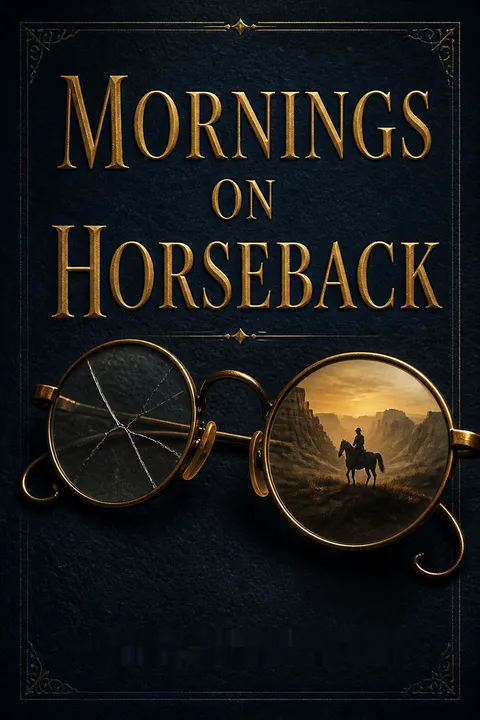
A new world revealed. A crucial turning point came in 1872 with the discovery of his severe myopia and the acquisition of spectacles. This literally "opened an entirely new world" to him, allowing him to see the natural world in vivid detail for the first time. This newfound clarity intensified his passion for natural history and hunting, which had been a solace during his illness.
The Nile expedition. The second family trip abroad, a winter on the Nile (1872-1873), became a period of intense physical activity and scientific collecting. Armed with his new gun and spectacles, Teedie relentlessly hunted birds, amassing a collection of hundreds of specimens. This "vigorous open-air existence" proved to be a powerful antidote to his asthma, which largely disappeared during this period, marking a significant step in his lifelong battle for health.
5. Harvard: A Crucible for Identity and Ambition
“I have had just as much money as I could spend; belonged to the Porcellian Club; have had some capital hunting trips; my life has been varied; I have kept a good horse and cart; I have had a dozen good and true friends in college, and several very pleasant families outside; a lovely home; I have had but little work, only enough to give me an occupation, and to crown all infinitely above everything else put together, I have won the sweetest of girls for my wife. No man ever had so pleasant a college course.”
A new chapter. Theodore's arrival at Harvard in 1876 marked his first true independence from family, a period where his health miraculously improved, and his asthma largely vanished. He embraced college life with characteristic intensity, balancing rigorous studies with a vibrant social calendar. He joined prestigious clubs like the Porcellian, cultivated friendships, and indulged in sports like boxing and rowing, despite his initial physical awkwardness.
Academic pursuits. While he later claimed Harvard stifled his scientific ambitions, his grades in natural sciences were excellent, and he continued his taxidermy and field studies, even publishing his first work, "The Summer Birds of the Adirondacks." He also developed a keen interest in political economy, foreshadowing his future career.
Love and loss. His junior year brought a "burst of popularity" and the all-consuming romance with Alice Hathaway Lee, whom he pursued with relentless passion and eventually married on his 22nd birthday in 1880. However, his freshman year was also marked by the profound grief of his father's sudden death in 1878. This loss, coupled with a sense of inferiority to his idealized father, fueled a desperate ambition to "do something" with his life and uphold the family name.
6. The Call to Politics: Fighting Corruption with Unyielding Zeal
“I honestly mean to act up here [in the Assembly] on all questions as nearly as possible as I think Father would have done, if he had lived.”
A new path. After graduating from Harvard and marrying Alice, Theodore enrolled in Columbia Law School, but his true calling soon emerged in politics. Inspired by his father's civic engagement and a desire to combat the corruption rampant in New York, he ran for the State Assembly in 1881, defying the prevailing sentiment among his social class that politics was "dirty."
Albany's "Cyclone Assemblyman." As the youngest member of the Assembly, Theodore quickly gained notoriety for his fearless attacks on corruption and his "ruthless righteousness." He immersed himself in the legislative process, studying issues with intense focus and making powerful speeches. His early legislative efforts included:
- The Cigar Bill, aimed at improving conditions in tenement sweatshops, which exposed him to the harsh realities of urban poverty.
- The Westbrook Scandal, where he boldly challenged a State Supreme Court judge implicated with railroad magnate Jay Gould, earning him both enemies and widespread admiration.
A unique political style. Theodore's distinctive mannerisms—his high-pitched voice, thick spectacles, and "dude" attire—initially made him a target of ridicule from the press and political opponents. However, his tireless work ethic, evident sincerity, and combative spirit quickly earned him respect. He forged alliances across party lines, demonstrating a pragmatic approach to reform, and proved he was no "mornin' glory" but a formidable force in New York politics.
7. Personal Tragedy: The Light Goes Out, Forcing a Retreat
“And when my heart’s dearest died, the light went out from my life for ever.”
A winter of joy and sorrow. The winter of 1884 began with Theodore and Alice enjoying their new life together in New York, Alice pregnant with their first child. Theodore was deeply engaged in his political work in Albany, feeling "at ease in my mind" and "holding the reins in my hand." He cherished his time with Alice, finding immense happiness in their shared home and anticipating their future.
Double tragedy. On February 12, 1884, Alice gave birth to a daughter, also named Alice. Just two days later, on February 14, a devastating double tragedy struck: Theodore's mother, Mittie, died of typhoid fever, and Alice, his beloved wife, died of Bright's disease (kidney failure) just hours later. Theodore was left shattered, his world plunged into "hideous dream."
Profound grief and retreat. The loss of both his mother and wife on the same day was an unbearable blow. Theodore's grief was absolute, leading him to write in his diary, "The light has gone out of my life." Unable to cope with the overwhelming sorrow, he made the difficult decision to leave his infant daughter, Alice, in the care of his sister Bamie and retreat to his ranch in the Dakota Bad Lands, seeking solace in solitude and the "vigorous open-air existence" of the West.
8. The Bad Lands: A Frontier of Solitude and Self-Discovery
“Nowhere, not even at sea, does a man feel more lonely than when riding over the far-reaching, seemingly never-ending plains; and after a man has lived a little while on or near them, their very vastness and loneliness and their melancholy monotony have a strong fascination for him.”
Escape and renewal. Theodore's retreat to the Dakota Bad Lands in 1884 was a desperate attempt to escape his profound grief and the political defeat of the Blaine nomination. He embraced the life of a ranchman, investing heavily in cattle and establishing the Elkhorn Ranch, a remote haven where he could write, hunt, and immerse himself in the elemental rhythms of the frontier. This period was crucial for his physical and spiritual restoration.
A new identity. In the Bad Lands, Theodore shed his "dude" image, earning the respect of cowboys and frontiersmen through sheer grit and hard work. He participated in grueling cattle roundups, enduring physical hardships and demonstrating a tenacity that belied his privileged upbringing. This experience forged a new, rugged identity, transforming him into the "husky" and "bronzed" figure he would become.
Confrontation and resilience. His time in the West was not without conflict, including a tense standoff with the flamboyant Marquis de Mores, a French aristocrat with grand, often reckless, business ambitions. Theodore's calm handling of a perceived challenge to a duel, and his unwavering commitment to justice (as seen in his pursuit of boat thieves), further solidified his reputation for courage and principle. The Bad Lands, with their "curious, fantastic beauty," became a place of profound self-discovery, where he found a new voice as a writer and a renewed sense of purpose.
9. The Political Arena: From "Dude" to "Cyclone Assemblyman"
“I am a Republican, pure and simple, neither a ‘Half-Breed’ nor a ‘Stalwart’; and certainly no man, nor yet any ring or clique, can do my thinking for me.”
A rising star. Theodore's political career in the New York State Assembly quickly gained momentum, transforming him from a ridiculed "dude" into a formidable "Cyclone Assemblyman." His unwavering commitment to reform and his willingness to challenge powerful figures like Jay Gould earned him national attention and the admiration of leading reformers like George William Curtis and Carl Schurz.
Legislative battles. Theodore's legislative efforts were marked by a fierce independence and a moralistic fervor. He championed bills to:
- Improve working conditions (the Cigar Bill)
- Reform city government by strengthening the mayor's office (the Reform Charter Bill)
- Combat corruption in the judiciary and public works departments
Confronting the machine. Despite his initial political naiveté, Theodore quickly learned the intricacies of machine politics. He engaged directly with "pols" like Jake Hess and Joe Murray, understanding their motivations while never compromising his principles. His dramatic speeches, though sometimes criticized for their "cocksuredness," resonated with a public weary of corruption, establishing him as a powerful voice for good government.
10. Return to Life: Embracing Destiny After Profound Loss
“I am, myself, at heart as much a Westerner as an Easterner; I am proud, indeed, to be considered one of yourselves, and I address you in this rather solemn strain today, only because of my pride in you, and because your welfare, moral as well as material, is so near my heart.”
A new beginning. After the devastating losses of 1884 and his retreat to the Bad Lands, Theodore gradually found his way back to public life. His time in the West had hardened his body and spirit, giving him a new perspective and a powerful, authentic voice. He returned to New York, ready to re-engage with politics, accepting the Republican nomination for mayor in 1886, despite knowing it was a long shot.
Reconciliation and remarriage. In a testament to his resilience, Theodore secretly became engaged to Edith Carow, a childhood friend, in 1885, marrying her in London in December 1886. This second marriage brought "wonderful balance" to his life and a new family, though he continued to grapple with the memory of Alice Lee and the profound grief of his past. His daughter, Alice, was entrusted to his sister Bamie, who became a central figure in the lives of both his and Elliott's children.
A future forged. Theodore's Fourth of July speech in Dickinson, Dakota Territory, in 1886, articulated his vision for America, blending Western self-reliance with Eastern civic duty. He spoke of the unique responsibilities of pioneers and the importance of virtue in a great nation, foreshadowing his future role as a national leader. Though he lost the mayoral race, his political standing was stronger than ever, and he was poised for a career that would ultimately lead him to the presidency, fulfilling his ambition to "do something" and honor his father's legacy.
Review Summary
Mornings on Horseback receives generally high praise from readers, earning a 4.1 average rating. Most reviewers celebrate McCullough's vivid storytelling and deep research into Roosevelt's formative years, highlighting the fascinating family dynamics, TR's battle with asthma, and the tragic losses that shaped him. Many appreciate the book's focus on Roosevelt's early life rather than his presidency. Some critics note the narrative occasionally feels disconnected, ends abruptly, or lacks deeper psychological interpretation, but the majority find it an engaging, illuminating portrait of both Roosevelt and Gilded Age America.
People Also Read



About the Author
Other books by David McCullough







Download PDF
Download EPUB
.epub digital book format is ideal for reading ebooks on phones, tablets, and e-readers.








































