
Key Takeaways
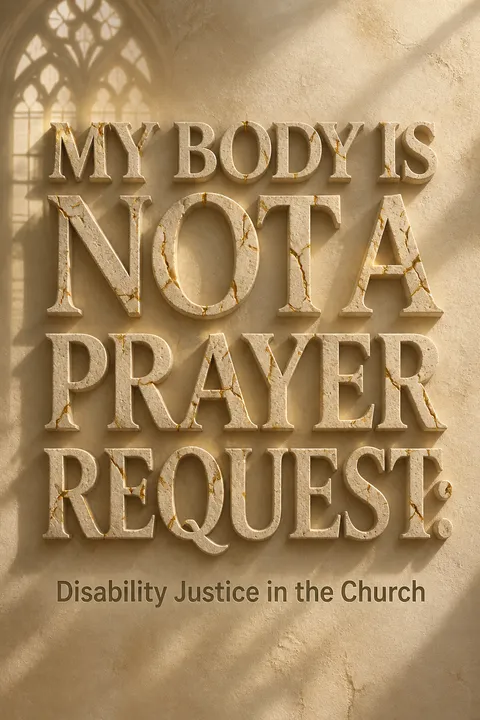
1. Ableism is a systemic ideology that devalues disabled bodies under the guise of piety
Ableism is "a system that places value on people’s bodies and minds based on societally constructed ideas of normalcy, intelligence, excellence, and productivity."
Systemic devaluation. Ableism is not merely a personal prejudice or a bad attitude; it is an all-encompassing system that ranks human worth based on productivity and physical conformity. In both secular society and religious spaces, bodies that do not fit a narrow definition of "normalcy" are treated as defective, tragic, or subhuman. This ideology traces back to Western philosophical roots, such as Aristotle's assertion that disabled people lacked reason, which continues to influence modern hierarchies of humanity.
Religious complicity. Within the church, ableism often masquerades as spiritual concern or theological truth. Well-meaning congregants frequently treat disabled people as spiritual projects or "before" pictures in a miraculous makeover narrative. This religious ableism manifests in several damaging ways:
- Equating physical disability with a lack of faith or unconfessed sin.
- Using euphemisms like "special needs" or "handi-capable" to avoid the reality of disability.
- Reducing disabled individuals to passive objects of charity rather than active image-bearers.
Dismantling the idol. To counter this systemic harm, the church must repent of its obsession with physical perfection and self-sufficiency. True Christian theology asserts that every person is an image-bearer of God, regardless of their physical or cognitive abilities. Dismantling ableism requires a conscious choice to reject the cultural script of productivity and instead celebrate the beautiful, diverse ways that God's image is reflected in all bodies.
2. True healing is a holistic, communal process distinct from a physical cure
Curing is a physical process; it’s individual, usually (fairly) rapid, and concentrates on eliminating disease. Healing is a sociocultural process.
Curing versus healing. Modern Western society conflates curing with healing, viewing any bodily difference as a medical problem to be solved immediately. Curing focuses strictly on the biological elimination of symptoms or impairments, treating the individual body as a broken machine. In contrast, biblical healing—often translated from the Greek word sozo—is about making whole, saving, and restoring right relationships between the individual, God, and the community.
The social dimension. Healing is a lengthy, non-linear, and deeply communal process that addresses the social isolation and spiritual exclusion experienced by disabled people. When Jesus interacted with marginalized individuals, his actions went far beyond physical modification; he restored their social standing and integrated them back into community life. Consider the following distinctions:
- Curing is individualistic and rapid; healing is relational and ongoing.
- Curing seeks to erase the experience of trauma; healing seeks to process and integrate it.
- Curing is often commodified as a quick fix; healing requires entering into one another's pain.
A call to the church. The church is called to the slow, difficult work of healing rather than chasing the illusion of instant cures. When Christian communities prioritize physical cures over social inclusion, they reduce the gospel to a transactional magic trick. By focusing on holistic healing, the church can dismantle the social barriers that isolate disabled people, fostering a culture of genuine belonging and mutual flourishing.
3. Society and the church disable people more than their physical impairments do
In the disability community, disability is often described as a social construct. This means people are not disabled because of bodily differences but because of systemic barriers in a society built around nondisabled people.
The social model. The social model of disability distinguishes between a physical impairment (a biological condition) and disability (the social exclusion that results from an inaccessible environment). A person who uses a wheelchair is not inherently disabled by their inability to walk, but rather by a society that builds stairs instead of ramps. This perspective shifts the burden of "fixing" from the individual's body to the structures and attitudes of the surrounding culture.
Inaccessible sacred spaces. Unfortunately, church architecture and liturgies frequently disable people by ignoring their physical and sensory needs. When a church places its pulpit up a steep flight of stairs or fails to provide accessible restrooms, it sends a clear message about who is expected to lead and belong. Systemic barriers in religious environments include:
- Heavy doors, narrow hallways, and gravel pathways that block mobility devices.
- Liturgies that demand standing, kneeling, or reading without visual or auditory aids.
- Segregated "special needs" ministries that isolate disabled people from the main congregation.
Reimagining the environment. If Christian communities restructured their spaces with disabled people in mind from the outset, the experience of disability would be radically transformed. Designing accessible environments is not a matter of optional charity, but a fundamental requirement of justice and hospitality. By removing physical and social barriers, the church can create a space where all bodies can move, worship, and lead together without shame.
4. Unsolicited prayers for healing often act as "benevolent eugenics"
"I don’t need prayer for healing. My body has already been sanctified and redeemed."
Prayerful perpetrators. Disabled people are routinely accosted by strangers—both inside and outside the church—who offer unsolicited prayers to "fix" their bodies. These "prayerful perpetrators" operate with a paternalistic confidence, assuming that every disabled person despises their body and desperately wants to be cured. This behavior reduces the disabled person to a public spectacle and a theological problem, violating their bodily autonomy under the guise of Christian love.
Benevolent eugenics. At its core, the desperate desire to pray away disability is a form of benevolent eugenics, which seeks to eradicate bodily difference rather than accept it. It reveals a deep-seated fear of vulnerability and a lack of control over our own fragile human conditions. These encounters cause significant spiritual and emotional harm by:
- Imposing the assumption that a disabled body is inherently cursed or demonic.
- Blaming the disabled person's lack of faith or unconfessed sin when a cure does not occur.
- Treating the disabled body as public property that exists for the nondisabled person's spiritual ego.
Honoring bodily autonomy. The church must learn to respect the dignity and autonomy of disabled individuals, recognizing that their bodies are already temples of the Holy Spirit. Prayer should never be weaponized to enforce assimilation or erase difference. Instead of trying to pray away the cane or the wheelchair, nondisabled Christians should pray for the eradication of ableism and work to dismantle the barriers that exclude their disabled neighbors.
5. The church has a painful historical legacy of resisting disability civil rights
When the Americans with Disabilities Act (ADA) was signed into law in 1990, it excluded religious communities after some Christian leaders lobbied for restrictions.
A painful history. Many Christians are shocked to learn that religious institutions actively fought against the landmark civil rights legislation for disabled people. During the drafting of the Americans with Disabilities Act (ADA) in 1990, prominent Christian organizations lobbied to exempt churches and religious schools from compliance. They argued that installing ramps, accessible bathrooms, and elevators would impose "burdensome costs" and infringe upon their religious liberty.
The cost of exclusion. This lobbying effort was highly successful, and to this day, churches and religious schools are legally exempt from the ADA. Consequently, any accessibility feature in a church—whether a ramp, an elevator, or a designated parking space—is provided out of benevolence rather than legal obligation. This exemption has had devastating consequences:
- It legally permits churches to remain physically inaccessible to disabled image-bearers.
- It reinforces the message that disabled people are too expensive and inconvenient to include.
- It prioritizes financial preservation and architectural aesthetics over human dignity and civil rights.
A call to repentance. The church's historical resistance to the ADA is a grievous sin that requires public confession, repentance, and active reparation. Christian communities must move beyond legal exemptions and voluntarily hold themselves to standards that exceed the ADA. True repentance means budgeting the necessary time, money, and resources to ensure that every part of the church is fully accessible and welcoming to all.
6. Disability is a prophetic witness and a mark of divine blessing, not a curse
The sun was rising as Jacob left Peniel, and he was limping because of the injury to his hip.
The blessing of the limp. Throughout Scripture, disability is frequently presented not as a curse or a punishment, but as a mark of divine blessing and covenant relationship. In Genesis 32, Jacob wrestles with an angel of God all night and emerges with a new name (Israel) and a permanent limp. This physical impairment is a badge of his struggle, perseverance, and transformation, serving as a constant reminder of his dependence on God.
Prophetic vulnerability. Disabled bodies offer a powerful prophetic witness to a world obsessed with self-sufficiency, independence, and youth. They puncture the illusion of control and remind us of the fragile, interdependent nature of all human life. Scripture consistently highlights disabled leaders at the forefront of God's redemptive work:
- Moses, who had a speech disorder, was chosen to speak to Pharaoh.
- Leah, described as having "weak eyes," became a matriarch of Israel.
- Paul, who lived with a "thorn in the flesh," boasted of his weakness to display God's power.
Embracing interdependence. Rather than viewing disability as a tragic consequence of the fall, the church must learn to celebrate it as a teacher of holy living. Disabled people understand that human flourishing is inherently collaborative and relational, not individualistic. By embracing the prophetic witness of disability, the church can dismantle the idols of productivity and learn to walk with the holy limp of interdependence.
7. "Spoon Theory" and "Crip Time" challenge capitalistic demands of productivity
Crip time "bends the clock to fit the demands of the disabled body and mind."
Spoon Theory explained. "Spoon Theory," coined by Christine Miserandino, is a metaphor used by the disability and chronic illness communities to describe the finite amount of energy they have each day. Each daily task—showering, making breakfast, driving to work—costs a certain number of "spoons." Unlike nondisabled people who have an seemingly unlimited supply, spoonies must carefully calculate and ration their energy, knowing that once their spoons are gone, they face physical collapse.
The fluidity of Crip Time. "Crip Time" is a concept that recognizes how disability disrupts the linear, rigid schedules of modern clocks and calendars. It acknowledges that bodies do not always function in a predictable, consistent manner, requiring flexibility, rest, and patience. Crip time challenges the capitalistic expectation of constant productivity and immediate gratification by:
- Bending schedules to accommodate the fluctuating needs of the body-mind.
- Valuing presence and being over constant doing and achieving.
- Embracing the non-linear rhythms of healing, resting, and waiting.
Sabbatical rhythms. The practice of living by spoons and crip time is deeply aligned with the biblical concept of the Sabbath. God's command to rest is a radical rejection of the workaholic hustle that defines human worth by output. By learning from the wisdom of crip time, the church can cultivate healthier, more sustainable rhythms of rest and grace, recognizing that we are worthy simply because we are made in the image of God.
8. Assistive technology is a creative force that ultimately benefits all of humanity
Living with a disability encourages innovation, because our body-minds do not belong in the current world.
The curb-cut effect. Assistive technology—devices designed to help disabled people navigate an inaccessible world—frequently ends up benefiting the entire population. This phenomenon, known as the "curb-cut effect," is named after the concrete ramps cut into sidewalks for wheelchair users, which are now used daily by parents with strollers, travelers with luggage, and delivery workers. Disability is not a deficit, but a powerful catalyst for creative problem-solving and universal design.
Ubiquitous innovations. Many of the everyday technologies that modern society takes for granted were originally invented by or for disabled individuals. These innovations were only integrated into the mainstream once the broader public realized their convenience and utility. Examples of assistive technology turned mainstream include:
- The typewriter, invented so a blind countess could write letters without a scribe.
- Text messaging, originally designed as a communication tool for d/Deaf people.
- Touch-screen interfaces, developed to assist users with motor control difficulties.
Designing for the margins. When we design our environments, technologies, and communities with the most vulnerable in mind, everyone thrives. The history of assistive technology proves that the flourishing of the nondisabled majority is deeply tied to the inclusion of the disabled minority. The church must adopt this mindset, recognizing that making spaces accessible is not a niche accommodation, but an investment in the collective flourishing of the entire body of Christ.
9. We worship a Disabled God whose wounds are the ultimate marks of redemption
The disabled Christ is the definitive revelation of God to humanity.
The scarred savior. The central mystery of the Christian faith is the incarnation of a God who took on human flesh, suffered, and died on a cross. Crucially, when Jesus rose from the dead, his resurrected, glorified body still retained the physical scars of his crucifixion. By presenting his wounded hands and side to Thomas, the resurrected Christ demonstrates that his disabling injuries were not erased, but were transformed into the ultimate marks of redemption and divine identity.
The wheeled throne. This imagery of a disabled God is woven throughout the prophetic books of the Old Testament. In Ezekiel and Daniel, God's throne is described not as a static, golden chair, but as a fiery, wheeled mobility device that moves dynamically in all directions. This wheeled throne challenges our cultural assumptions about power, majesty, and physical perfection, suggesting that:
- God's presence is mobile, accessible, and unconfined by traditional structures.
- Disability is not a defect to be cured, but a reflection of the divine nature.
- The heavenly realm is built around the experiences and movements of the disabled.
Cruciform power. To worship a disabled God is to reject any theology that equates physical impairment with spiritual deficiency. God's power is not displayed through the worldly standards of muscular strength and self-sufficiency, but through the vulnerability of the cross. By embracing the disabled Christ, the church can expand its imagination and learn to recognize the sacred, radiant image of God in every disabled body.
10. The true church must "crip" its spaces to build an accessible kingdom banquet
To crip something is to invite the way disability disrupts our ideas of what is normal and allow disability to lead how we gather and participate in a communal space without hierarchy.
Crip the church. To "crip" the church is to move beyond superficial inclusion and actively restructure our communities around the needs, leadership, and wisdom of disabled people. It means refusing to treat accessibility as an afterthought or a checklist, and instead baking it into the very foundation of our communal life. Cripping church spaces requires a radical shift in power, allowing disabled individuals to lead, teach, and shape the liturgy.
The accessible banquet. This vision of a cripped church is beautifully illustrated in Jesus's parable of the Great Banquet in Luke 14. When the wealthy and elite refuse the host's invitation, the servant is commanded to go out quickly and bring in "the poor, the crippled, the blind, and the lame." This kingdom feast is not a segregated space of pity, but an accessible, abundant banquet where:
- Disabled people are the guest list of honor, not an afterthought.
- Accommodations are made proactively and joyfully, without complaint.
- There is always enough room and resources for everyone to flourish together.
A foretaste of the kingdom. The church is called to be an earthly appetizer for this heavenly banquet, offering a tangible foretaste of the kingdom of God. When we crip our churches, we create spaces of mutual interdependence where no one is left behind and everyone's gifts are celebrated. By tearing down the physical and social roofs of our sanctuaries, we can build a truly accessible church that reflects the beautiful, diverse, and loving heart of our disabled God.








































