
Plot Summary
Shadows of the Past
Twenty years before the present, young Jyrine Tessella is led by her father into a strange coastal town, where gold is worthless and the people are stranger still. In a golden temple, she witnesses a ritual that opens her mind to visions of Elders—ancient, incomprehensible beings. She is marked by a mysterious emerald, binding her fate to the future of the Empire. The experience is both terrifying and awe-inspiring, planting seeds of curiosity and ambition. Her father assures her she will be important, but the true cost of that importance is yet unknown. The past's shadows linger, shaping the destinies of those who dare to look forward.
Chains and Choices
Calder Marten, a young Soulbound Navigator, finds himself at the mercy of Meia, a Consultant assassin, aboard his ship, The Testament. Their tense negotiation is interrupted by the arrival of Bliss, Head of the Blackwatch, and a sudden, catastrophic attack on a nearby ship. Calder's choices—whether to trust, to fight, or to submit—are shaped by the chains binding both his ship and the Elder beneath it. The struggle for control is not just physical but existential, as every character is forced to confront the limits of their power and the consequences of their bargains with forces beyond comprehension.
The Emperor's Will
The Emperor's throne, the Optasia, is revealed as a device amplifying a Reader's Intent across the world, but at a terrible cost: the risk of insanity. Calder learns that the Guilds need a figurehead—an Emperor strong enough to use the Optasia, but disposable if things go wrong. The Guild Heads debate, plot, and maneuver, each seeking to control the future of the Empire. Calder is caught between ambition and fear, realizing that the very tools of power may destroy him. The Emperor's will lingers, shaping the world even after his death, and those who seek to inherit it must pay a steep price.
Shipwreck and Survival
A mysterious force tears apart The Eternal, Cheska Bennett's ship, leaving survivors clinging to life. Calder, using his bond with the Lyathatan, orchestrates a daring rescue, but the cost is high. The survivors are haunted by loss, trauma, and the knowledge that the world is changing in ways they cannot control. The aftermath forges new alliances and deepens old wounds, as the crew must decide who to trust and how to move forward in a world where even the sea itself is an enemy.
The Price of Power
Jyrine, now a young woman, negotiates with the Sleepless cabal, seeking to use Calder as a pawn in their schemes. The Elders' influence is pervasive, offering knowledge and power at the cost of sanity and freedom. Calder's own bargains—with Kelarac, with his crew, with his own ambitions—threaten to consume him. The price of power is never paid in gold, but in blood, loyalty, and the slow erosion of self. Every choice draws the characters deeper into the web of Elder machinations.
Webs of Deceit
The Imperial Palace becomes a battleground of secrets as the Guilds maneuver for control. The palace is besieged by a living wall of Elder flesh, and the Guild Heads must work together—uneasily—to break through. Jyrine, trapped inside, is both prisoner and key, her actions shaped by the whispers of Kelarac. The lines between friend and foe blur, as every alliance is shadowed by suspicion and every victory tainted by betrayal. The web tightens, and escape seems impossible.
The Gathering Storm
The assassination of a Regent throws the Empire into chaos, forcing the Guilds to act. Calder is named Imperial Steward, a puppet Emperor for a fractured world. The Guilds prepare for war, each seeking to provoke the others into open conflict. The storm gathers, both literal and metaphorical, as ancient powers stir and the cracks in the Empire widen. The future is uncertain, and every decision carries the weight of history.
The Throne's Shadow
Calder is thrust into the role of Emperor, but the throne is a poisoned chalice. The Optasia's power is seductive but deadly, and the Guilds' support is conditional at best. Jyrine, now Jerri Marten, is both ally and adversary, her loyalty torn between Calder and the Elders. The palace is haunted by ghosts—of the past, of ambition, of betrayal. Calder must decide what kind of ruler he will be, even as the shadow of the Emperor looms over every choice.
The Library of Eyes
The crew is drawn into Ach'magut's library, a vast, impossible space filled with books and Inquisitors. Each is confronted by the Elder's gaze, forced to confront their deepest fears and desires. Ach'magut reveals that Calder's rise is the result of a cosmic deviation, a ripple in the Elder's plans. The crew is changed by the encounter, each marked by prophecy and warning. The library is both a prison and a revelation, and escape comes at a cost.
The Crack in the Sky
The use of the Optasia unleashes a crack in the sky, a rift to the void where Elders dwell. The world trembles as the boundaries between reality and nightmare blur. The Guilds scramble to respond, but the true threat is beyond their comprehension. Calder and Jerri are forced to confront the consequences of their actions, as the future of the Empire hangs by a thread. The sky itself becomes a symbol of the world's fragility, and the cost of power is revealed in full.
Allies and Betrayals
Old friends become enemies, and enemies become allies, as the battle for the Empire intensifies. Meia's shifting loyalties, Jerri's desperate choices, and Calder's struggle to hold his crew together all come to a head. The Consultants, the Champions, and the Navigators each pursue their own agendas, and no one is safe from betrayal. The bonds of loyalty are tested to the breaking point, and the true nature of friendship is revealed in the crucible of conflict.
The Emperor's End
The Emperor dies, and the world is thrown into mourning and chaos. Calder's claim to the throne is both a triumph and a curse, as the Guilds vie for control and the Elders watch with hungry eyes. The void's promise is both hope and threat, as the future of humanity is decided by those willing to pay the ultimate price. The end of an era is also the beginning of something new—and far more dangerous.
The Battle for the Future
The Imperialist Guilds launch an assault on the Consultants, but victory is elusive. The battle is fought not just with swords and cannons, but with secrets, betrayals, and the ever-present threat of Elder intervention. Calder must lead, even as his authority is questioned and his allies fall. The cost of unity is high, and the future is won only through sacrifice and the willingness to defy fate itself.
The Dance of Elders
Kelarac and Ach'magut reveal the depth of their schemes, manipulating events from the shadows. Calder is offered bargains and threats, each more tempting and dangerous than the last. The illusion of choice is shattered, as the characters realize how deeply they are enmeshed in the Elders' dance. Defiance becomes both a victory and a tragedy, as the price of freedom is revealed.
The Cost of Defiance
Calder rejects Kelarac's bargains, choosing to fight for his own destiny even as the odds grow longer. The cost is high: friends lost, alliances shattered, and the future uncertain. The battle with Jorin, the Regent, is both physical and existential, as Calder must prove himself worthy of the throne. The cost of defiance is measured in blood and hope, and the future is won only by those willing to pay it.
The Emperor's Heir
With the Emperor dead and the Guilds in turmoil, Calder stands as the new Emperor—haunted by prophecy, burdened by loss, and determined to forge a new path. The world is changed, the cracks in the sky a constant reminder of the dangers that lurk beyond. The crew is scattered, but their bonds endure. The future is uncertain, but Calder is resolved to lead, whatever the cost. The dawn is both an ending and a beginning, and the true test of leadership is only just beginning.
Analysis
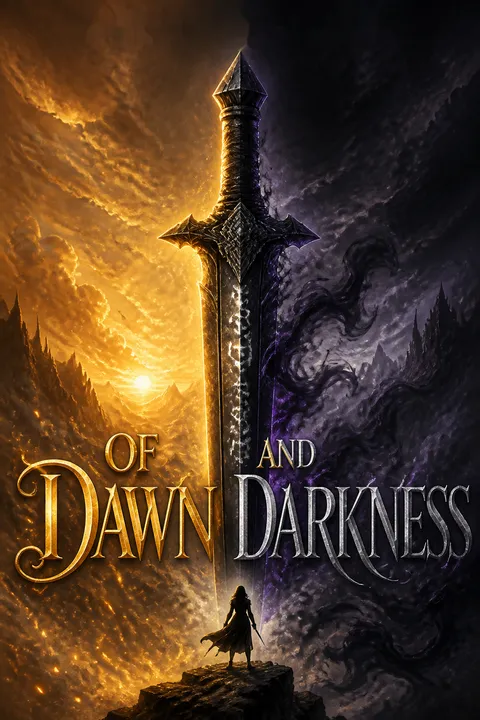
Of Dawn and Darkness is a sweeping epic that interrogates the nature of power, agency, and the cost of ambition in a world shaped by both human frailty and cosmic indifference. Through its intricate web of characters, timelines, and political intrigue, the novel explores how the past shapes the present, and how every choice—no matter how small—ripples outward to shape the fate of nations. The magic system of Intent serves as both a literal and metaphorical exploration of agency: power is always double-edged, and every bargain exacts a price. The Elders, as embodiments of cosmic horror, force the characters—and the reader—to confront the limits of human understanding and the dangers of seeking knowledge or power at any cost. Ultimately, the novel is a meditation on leadership, sacrifice, and the struggle to forge meaning in a world where destiny and free will are in constant tension. The lesson is clear: true leadership is not about seizing power, but about bearing its burdens, making hard choices, and refusing to surrender to despair—even when the sky itself is cracking open.
Characters
Calder Marten
Calder is a Soulbound Navigator, marked by ambition, guilt, and a deep sense of responsibility. His journey from rebellious youth to Imperial Steward is shaped by loss—his father's execution, his own exile, and the betrayals of those he loves. Calder's relationships are complex: he is both husband and adversary to Jerri, friend and rival to Meia, and a pawn in the games of the Elders. Psychologically, Calder is driven by a need to prove himself, to protect those he cares about, and to resist the manipulations of powers greater than himself. His development is a struggle between ambition and humility, trust and suspicion, hope and despair. Calder's arc is defined by his refusal to surrender to fate, even as he is forced to confront the limits of his own agency.
Jyrine "Jerri" Tessella Marten
Jerri is Calder's wife and a Soulbound in her own right, marked from childhood by the Elders' touch. Her relationship with Calder is fraught with love, resentment, and the weight of shared secrets. Jerri's loyalty is divided between the Sleepless cabal, her own ambitions, and her desire to shape the future of the Empire. Psychologically, she is driven by curiosity, a hunger for knowledge, and a need to prove her worth. Her development is a tragic arc of hope, betrayal, and sacrifice, as she is forced to choose between love and duty, self and destiny. Jerri's actions are both heroic and destructive, and her legacy is one of both creation and ruin.
Meia
Meia is a Consultant assassin with a complex past, marked by loyalty to her Guild and a growing sense of independence. Her relationship with Calder is adversarial but respectful, shaped by mutual recognition of skill and necessity. Meia's psychological landscape is defined by discipline, trauma, and a longing for meaning beyond her assignments. She is both weapon and person, struggling to reconcile her humanity with the demands of her role. Meia's development is a journey from tool to agent, as she learns to choose her own path—even when it leads her into danger.
Bliss
Bliss is the Head of the Blackwatch, a Soulbound with the power of Tharlos. She is both childlike and ancient, her demeanor masking a mind shaped by centuries of experience and the influence of Elders. Bliss's relationship to the other characters is one of guidance and manipulation; she is both ally and observer, never fully trusted but always necessary. Psychologically, Bliss is detached, analytical, and unpredictable, her actions shaped by a logic that is both human and inhuman. Her development is subtle, as she navigates the line between protector and puppet-master.
Andel Petronus
Andel is Calder's quartermaster and a former Luminian Pilgrim, serving as both supervisor and confidant. His relationship with Calder is one of cautious respect, shaped by duty and a shared sense of responsibility. Andel's psychological core is defined by faith, skepticism, and a commitment to doing what is right—even when it means breaking the rules. He is a stabilizing force, offering wisdom and perspective in a world gone mad. Andel's development is a quiet arc of acceptance and resolve, as he chooses to stand by Calder even when the future is uncertain.
Dalton Foster
Foster is the ship's gunner, a Soulbound gunsmith with a past shrouded in loss and regret. His relationship with Calder is gruff but loyal, shaped by shared danger and mutual respect. Foster's psychological landscape is marked by stubbornness, pragmatism, and a refusal to be cowed by fate. He is haunted by the loss of his family, but finds purpose in the crew and the fight against the Elders. Foster's development is a journey from isolation to belonging, as he learns to trust again.
Petal
Petal is a brilliant but traumatized alchemist, rejected by her Guild and forced to survive on the margins. Her relationship with the crew is tentative, shaped by gratitude and fear of abandonment. Psychologically, Petal is fragile but resilient, her genius tempered by anxiety and a desperate need for acceptance. Her development is a quiet triumph, as she finds a place among the crew and learns to believe in her own worth.
Urzaia Woodsman
Urzaia is a former Champion, condemned to die in the arena but kept alive by his own indomitable will. His relationship with Calder is one of mutual respect and shared defiance. Psychologically, Urzaia is defined by joy in battle, loyalty to friends, and a refusal to surrender to despair. He is both comic relief and moral center, his laughter masking a deep understanding of suffering. Urzaia's development is a testament to the power of hope and the refusal to be broken.
Jarelys Teach
Teach is the Head of the Imperial Guard, wielding the deadly Tyrfang and commanding both fear and respect. Her relationship with Calder is adversarial but evolving, shaped by shared goals and mutual recognition of strength. Psychologically, Teach is disciplined, ruthless, and haunted by the burdens of leadership. She is both protector and judge, her actions shaped by a fierce commitment to order. Teach's development is a struggle between duty and compassion, as she learns to trust those she once saw as threats.
Kelarac
Kelarac is an ancient being whose motives are inscrutable, his influence pervasive. His relationship to the human characters is one of puppet-master and tempter, offering power at a price. Psychologically, Kelarac is alien, his actions shaped by a logic beyond human comprehension. He is both ally and adversary, his bargains always double-edged. Kelarac's development is a study in the dangers of power without empathy, and the consequences of treating humanity as pieces on a board.
Plot Devices
Dual Timelines and Interwoven Perspectives
The novel employs a dual timeline structure, weaving together past and present to reveal how childhood traumas, ancient bargains, and formative choices shape the current crisis. Flashbacks to Calder and Jerri's youth, the rise of the Guilds, and the origins of the Elder cults provide context and emotional resonance, allowing readers to see the echoes of history in every decision. The interwoven perspectives—shifting between Calder, Jerri, Meia, and others—create a tapestry of motives and secrets, heightening suspense and deepening character development. This structure also allows for dramatic irony, as the reader often knows more than the characters, amplifying tension and emotional impact.
The Power and Cost of Intent
The system of Intent—where focused will invests objects with power—serves as both a literal magic system and a metaphor for the costs of ambition, leadership, and desire. The Optasia, Soulbound Vessels, and Awakened weapons all embody the double-edged nature of power: every use brings both strength and risk, every bargain with Elders or Guilds exacts a price. The narrative uses this device to explore themes of agency, responsibility, and the limits of human control. The cost of power is a recurring motif, with characters forced to confront the consequences of their choices—both for themselves and for the world.
Foreshadowing and Prophecy
The story is rich with foreshadowing, from Jyrine's childhood visions to Ach'magut's prophecies and Kelarac's bargains. These glimpses of possible futures create a sense of inevitability and dread, as characters struggle to defy or fulfill the destinies laid out for them. The use of prophecy is both a narrative engine and a thematic exploration of free will versus determinism. The tension between fate and choice is embodied in Calder's journey, as he fights to carve his own path even as the Elders manipulate events from the shadows.
The Web of Guilds and Political Intrigue
The ten Imperial Guilds, each with their own agendas, rivalries, and secrets, provide a rich backdrop for political maneuvering and betrayal. The shifting alliances, secret bargains, and open conflicts between Navigators, Consultants, Blackwatch, and others create a dynamic, unpredictable world. The Guilds are both sources of strength and obstacles to unity, reflecting the broader theme of the difficulty—and necessity—of cooperation in the face of existential threat.
The Elders as Cosmic Horror
The Elders—especially Kelarac and Ach'magut—are not just monsters, but embodiments of cosmic horror: ancient, unknowable, and indifferent to human suffering. Their influence is pervasive, their motives inscrutable, and their bargains always dangerous. The narrative uses the Elders to explore themes of insignificance, manipulation, and the limits of human understanding. Encounters with Elders are moments of existential crisis, forcing characters to confront their own powerlessness and the fragility of their world.
The Elder Empire: Sea Series

Download PDF
Download EPUB
.epub digital book format is ideal for reading ebooks on phones, tablets, and e-readers.








































