
Plot Summary
Clay, Madness, and Immortality
In the aftermath of the Titanomachy, Zeus, restless and burdened by a prophecy of his own madness, sculpts Pandora from clay by the cursed river. He breathes life into her, binding her existence to his own through a potion and a cruel ritual. Pandora becomes the vessel for Zeus's darkness—his rage, bloodlust, and envy—forced into her soul. Her immortality is a curse: she must carry his madness, mutilated and marked by thorns and black roses where her eyes once were. Zeus's act is both desperate and calculated, ensuring his own survival at the cost of Pandora's eternal suffering. This origin sets the stage for a world where gods' traumas are inflicted on mortals, and the seeds of chaos are sown in the most innocent.
The Asylum's Broken Clock
Brooks, a man with no memory of his past, wakes in a grim psychiatric hospital. His only possession is a broken wristwatch, hidden in his mattress—a symbol of lost time and identity. The asylum is a place of routine and despair, where patients are stripped of agency and subjected to harsh treatments. Brooks is haunted by voices—one gentle, one dark—and plagued by nightmares of violence and shadow. He clings to small rituals, like touching the watch, hoping for meaning. The world is colorless, the food tasteless, and the days blur together. Yet, beneath the monotony, Brooks senses something is wrong: the boundaries between reality and delusion are thin, and the shadows seem to watch him.
Voices in the Shadows
Brooks's mind is a battleground. He converses with a female voice—his "Siren"—who offers comfort and banter, and a darker, more predatory presence that threatens to consume him. The asylum's therapies—electroshock, insulin comas—only deepen his dissociation. Brooks questions whether his nightmares are mere symptoms or glimpses of a deeper truth. He fears the monster within, unsure if it is a product of his illness or something ancient and real. The voices are both torment and solace, reflecting his longing for connection and his terror of losing control. The line between hallucination and supernatural intrusion grows ever more blurred, as Brooks's sense of self fractures.
The Girl with Scars
Into Brooks's stagnant world comes Lytta, a girl marked by scars and trauma. Her arrival is a catalyst: she is fierce, broken, and enigmatic, carrying her own nightmares and secrets. Brooks is drawn to her, not with obsession but with a need to understand the pain behind her eyes. Their encounters are charged with vulnerability and recognition—like calls to like. Lytta's presence brings color and life back to Brooks's perception, and her scars mirror the wounds he feels inside. Yet, she is also hunted by her past, and her connection to Brooks is deeper than either realizes. Together, they begin to unravel the mysteries of their existence.
Nightmares for Nightmares
On the asylum's rooftop, Brooks and Lytta play a dangerous game: "Nightmare for a Nightmare." They exchange confessions—her abuse and self-harm, his fear of his own mind. The act of sharing is both cathartic and perilous, forging a fragile bond. Lytta hints at a reality beyond the asylum, urging Brooks to listen to the darkness between the stars. Their stories are not just trauma dumps but keys to understanding their roles in a cosmic struggle. The rooftop becomes a liminal space, where the boundaries of the asylum and the universe blur, and hope flickers amid despair.
The Siren's Song
Far from the asylum, Xia, a Siren cursed to a glass prison beneath the sea, endures endless torment at the hands of the Lord of Nightmares. Her song brings death to men and fish alike, and her only solace is tending to the innocent creatures she cannot save. Xia's existence is defined by guilt, shame, and a desperate wish for escape. Her only comfort is the mysterious connection she shares with Brooks—a voice in the darkness that offers fleeting hope. Their bond is forged in mutual suffering, and Xia clings to the fantasy of rescue, even as she doubts her own worth.
Rooftop Confessions
Brooks and Lytta's relationship deepens as they share more of their histories and fears. Lytta reveals her true name and hints at a destiny that transcends the asylum. She urges Brooks to look beyond the stars, to the darkness that holds them. Their connection is threatened by Rue, a stalker-like patient who spies for the asylum's sinister authorities. The rooftop becomes a battleground for trust and betrayal, as Brooks is forced to confront the possibility that his reality is a carefully constructed illusion. The seeds of rebellion are sown, and the cost of awakening becomes clear.
Therapy and Betrayal
Brooks and Lytta endure increasingly brutal treatments—hydrotherapy, electroshock, and the ever-present threat of lobotomy. Dr. Kore, the head psychiatrist, is revealed as a sadistic manipulator, more interested in control than healing. Rue's betrayal is exposed: she is an agent of the asylum, reporting on Brooks's every move. The institution is not just a place of healing but a prison designed to suppress and exploit those with power. Brooks's sense of self is further eroded, and the line between patient and prisoner vanishes. Yet, amid the cruelty, Brooks and Lytta's bond becomes a lifeline.
The Devil's Playground
Drugged and dissociated, Brooks finds himself in a surreal nightclub—Club Hel—where Xia dances for him. Their dream encounter is charged with longing, desire, and the ache of separation. Xia reveals her true name and her lineage as the daughter of Selene, the moon goddess. Their connection transcends the boundaries of dream and reality, and Brooks begins to accept that his hallucinations may be messages from another world. The dream is both a refuge and a warning: Xia is in danger, and only Brooks can save her. Their fates are entwined, and the stakes are nothing less than the survival of hope itself.
Madness Unleashed
The truth of Lytta's identity is revealed: she is Pandora, the original vessel of Zeus's madness, reborn as the goddess of rage and fury. Her life has been an endless cycle of torment, self-destruction, and resurrection. In a climactic act, Lytta sacrifices herself to awaken Brooks's true power, carving the word "Chaos" into his flesh. The asylum's horrors are exposed as manifestations of a cosmic struggle, and Brooks's passenger is revealed as the Deathless God of Chaos, trapped in human form. Lytta's sacrifice is both an act of love and a desperate bid for redemption.
Pandora's Sacrifice
In a vision, Brooks relives Pandora's final confrontation with Zeus. On a sacred dais, she exposes his theft of Chaos's power and the binding of their souls. Refusing to be a pawn any longer, Pandora sacrifices herself at the well, offering her blood to the Deathless God. Her act shatters the illusion of the asylum and breaks the cycle of suffering. The world is plunged into chaos—famine, war, pestilence, and death—but hope is reborn in the possibility of change. Pandora's story is one of endurance, rebellion, and the ultimate price of freedom.
Embrace Your Chaos
Guided by the Fates—Atropos and Lachesis—Brooks confronts the reality of his existence. He is not merely a patient or a victim but the Deathless God of Chaos, the creator and destroyer, the void between the stars. By embracing his darkness and accepting the sacrifices made for him, Brooks reclaims his power. The boundaries between self and other, madness and divinity, dissolve. He honors Pandora's sacrifice, granting her peace and a place among the stars. The journey from ignorance to acceptance is complete, and Brooks stands ready to face the world as its true ruler.
The Fates' Garden
In the garden of the Fates, Brooks witnesses the weaving of life and death. Atropos, Lachesis, and Clotho tend the blooms of existence, measuring and cutting the threads of destiny. Brooks's memories are restored, and he sees the interconnectedness of all things—the suffering of mortals, the machinations of gods, and the cycles of creation and destruction. The Fates reveal that hope is not found in the stars but in the darkness that holds them. Brooks's role is to restore balance, to embrace both light and shadow, and to guide the world through its nightmares.
The Truth of Brooks
Brooks awakens to his true nature, no longer fractured but whole. He is Chaos, the Deathless God, and his journey has been one of forgetting and remembering, of suffering and awakening. He seeks out Xia, drawn by her cries and her enduring hope. Their reunion is both a fulfillment of longing and a promise of redemption. Together, they face the aftermath of the gods' crimes and the possibility of healing. The world is still broken, but in their union, there is a chance for renewal.
The End of Ignorance
The asylum, the nightmares, and the cycles of suffering are revealed as illusions—constructs designed to keep Chaos asleep and hope suppressed. With Pandora's sacrifice and Brooks's awakening, the old order collapses. The world is plunged into chaos, but the possibility of change is born. Brooks and Xia, united by love and pain, stand as beacons of hope in the darkness. The lesson is clear: to heal, one must embrace both the light and the shadow, to accept the chaos within and without.
The Deathless God Awakens
Brooks, now fully awakened as Chaos, unleashes his power to restore balance. He honors the sacrifices of those who suffered—Pandora, Lytta, Xia—and vows to never again let hope be extinguished. The gods who abused their power are held to account, and the world is remade in the image of both suffering and compassion. Chaos is not merely destruction but the fertile ground from which new life can grow. The journey from madness to divinity is complete, and the cycle of nightmares gives way to the dawn of possibility.
Reunion in the Void
In the aftermath, Brooks and Xia are reunited in the void between the stars. Their love is both a balm and a challenge, forged in the crucible of suffering and sacrifice. Together, they face the uncertainties of a world remade, carrying the lessons of their journey. The void is no longer a place of fear but of potential, where hope and chaos coexist. Their union is a testament to the power of connection, even in the darkest of times.
Hope Among the Stars
The story ends with a vision of hope: the stars shining in the void, held by the darkness that gives them meaning. Brooks, Chaos reborn, and Xia, the Siren, stand together as guardians of a new order. The world is still haunted by nightmares, but the possibility of healing and transformation endures. The lesson is not to banish the darkness but to embrace it, to find hope in the spaces between the stars. The journey is ongoing, and the future is unwritten, but for the first time, there is light in the darkness.
Analysis
Modern myth, trauma, and the power of hopeOne Little Nightmare is a dark, mythic exploration of trauma, identity, and the cyclical nature of suffering. By reimagining ancient gods as patients in a psychiatric asylum, the novel interrogates the ways in which power, madness, and abuse are perpetuated across generations. The story's central lesson is that healing requires the embrace of both light and shadow—the acceptance of chaos as an integral part of existence. Through the journeys of Brooks, Lytta, and Xia, the novel argues that hope is not found in denial or escape but in the willingness to confront pain, share vulnerability, and forge connections amid despair. The narrative's use of unreliable narration, mythological symbolism, and nonlinear structure invites readers to question their own perceptions of reality and to find meaning in the spaces between suffering and redemption. Ultimately, the book is a testament to the resilience of the human (and divine) spirit, the necessity of sacrifice, and the enduring possibility of hope—even in the darkest of nightmares.
Characters
Brooks / Chaos
Brooks is introduced as a patient in a psychiatric asylum, plagued by amnesia, hallucinations, and a sense of profound loss. His journey is one of self-discovery, as he moves from believing himself mad to realizing he is the Deathless God of Chaos, the primordial force behind creation and destruction. Brooks's psyche is split: one part gentle and yearning for connection, the other dark, predatory, and powerful. His relationships—with Lytta/Pandora, Xia, and his own inner voices—mirror his struggle to reconcile light and shadow. Brooks's arc is about embracing his chaos, accepting the pain and power within, and using it to restore balance. His love for Xia and friendship with Lytta ground him, offering hope amid cosmic despair.
Lytta / Pandora
Lytta is both a new patient in the asylum and the reincarnation of Pandora, the original vessel for Zeus's madness. Scarred, fierce, and haunted, she carries the trauma of centuries—abuse, self-destruction, and resurrection. Her relationship with Brooks is complex: she is both guide and victim, friend and catalyst. Lytta's ultimate act is one of sacrifice—she gives herself to awaken Brooks's true power, breaking the cycle of suffering. Her psychological depth lies in her struggle for agency, her longing for peace, and her willingness to endure pain for the sake of hope. Lytta embodies the cost of bearing others' darkness and the possibility of redemption through self-acceptance.
Xia / The Siren
Xia is a Siren imprisoned beneath the sea, forced to use her deadly song for the Lord of Nightmares. Her existence is defined by guilt, longing, and a desperate wish for freedom. Xia's connection to Brooks is both supernatural and deeply emotional—they are drawn together by shared suffering and the hope of rescue. Her arc is one of endurance and transformation: from victim to partner, from despair to hope. Xia's psychological complexity lies in her struggle with shame, her yearning for love, and her ability to find beauty amid horror. She is both a mirror and a balm for Brooks, and their union is the story's emotional core.
Zeus
Zeus is portrayed as a ruthless, self-serving deity who creates Pandora to rid himself of madness. His actions are driven by fear, pride, and a need for control. Zeus's relationship with Pandora is one of abuser and victim, and his legacy is the cycle of trauma that haunts the world. Psychologically, Zeus represents the dangers of unchecked power and the projection of one's flaws onto others. His inability to accept his own darkness leads to the suffering of countless innocents. Zeus is both a symbol of patriarchal cruelty and a cautionary figure, whose downfall is inevitable.
Dr. Mel Kore / Melinoe
Dr. Kore is the head psychiatrist at St. Dymphna's, orchestrating the asylum's cruelty and exploiting the patients' powers. She is later revealed as Melinoe, a goddess of nightmares and death, using the institution to suppress and siphon chaos. Kore's relationship with Brooks is adversarial—she seeks to keep him powerless and ignorant. Her psychological profile is one of sadism, control, and a twisted sense of purpose. Kore embodies the institutionalization of trauma and the dangers of authority unchecked by compassion. Her downfall is tied to the awakening of Chaos and the collapse of her illusions.
Rue
Rue is a patient who fixates on Brooks, acting as both stalker and informant for Dr. Kore. Her cheerful facade masks a deep instability, and her loyalty to Kore is rooted in a shared past and a longing for approval. Rue's role is that of betrayer, but she is also a victim of the asylum's manipulations. Psychologically, Rue represents the internalization of abuse and the ways in which victims can become complicit in their own oppression. Her arc is one of tragedy, as she is ultimately used and discarded by those in power.
The Lord of Nightmares / Phobetor
The Lord of Nightmares is the daemon who imprisons and torments Xia, feeding on her fear and pain. He is a shapeshifter, sadist, and manipulator, embodying the darkest aspects of the subconscious. His relationship with Xia is one of captor and victim, but also of twisted intimacy—he knows her deepest fears and uses them against her. Psychologically, Phobetor represents the inescapability of trauma and the power of nightmares to shape reality. He is both a literal and symbolic antagonist, standing in opposition to hope and healing.
Atropos
Atropos is one of the three Fates, responsible for cutting the threads of life. She appears in Brooks's dreams, guiding him toward self-acceptance and the embrace of chaos. Atropos is both compassionate and implacable, embodying the inevitability of destiny. Her relationship with Brooks is that of mentor and challenger, pushing him to confront his fears and claim his power. Psychologically, Atropos represents the acceptance of mortality and the necessity of endings for new beginnings.
Lachesis
Lachesis, another of the Fates, measures the threads of life and offers Brooks visions of possible futures. She is softer than Atropos, providing comfort and clarity amid confusion. Lachesis's role is to help Brooks see the interconnectedness of all things and to understand the consequences of his choices. Psychologically, she represents the importance of perspective, memory, and the acceptance of one's path.
Clotho
Clotho, the third Fate, is depicted as eternally suspended, weaving the threads of existence with her own body. She is a symbol of creation, endurance, and the cost of sustaining life. Though largely passive, her presence is a reminder of the sacrifices required to maintain order and the interconnectedness of all beings. Clotho's suffering is both literal and metaphorical, embodying the pain that underlies all creation.
Plot Devices
Dual Realities and Unreliable Narration
The novel's central device is the blurring of reality and hallucination. The asylum is both a literal institution and a metaphorical prison for gods and mortals alike. Brooks's unreliable narration keeps readers questioning what is real, mirroring his own confusion. Dreams, visions, and supernatural intrusions are woven seamlessly into the narrative, creating a sense of disorientation and suspense. This device allows for gradual revelation, as the true nature of the characters and their world is uncovered piece by piece.
Mythological Reinterpretation
The story draws heavily on Greek mythology, reinterpreting figures like Pandora, Zeus, and the Fates as victims and perpetrators of cosmic trauma. The myths are not just background but active forces shaping the characters' lives. The use of myth allows for exploration of themes like power, sacrifice, and the cyclical nature of suffering. The narrative structure mirrors the myths' patterns of creation, destruction, and rebirth.
Symbolism of Objects and Rituals
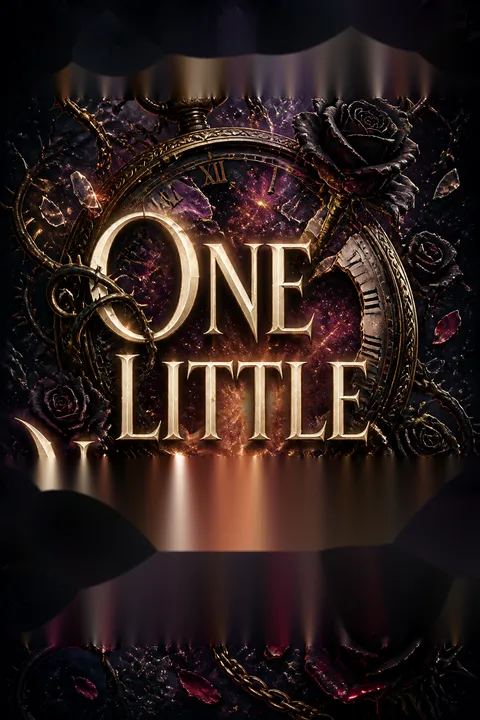
Objects like Brooks's broken watch, Lytta's scars, and the black roses serve as symbols of lost time, trauma, and transformation. Rituals—such as the exchange of nightmares, the rooftop confessions, and the sacrificial acts—are plot devices that drive character development and thematic resonance. These symbols and rituals ground the supernatural elements in tangible, emotional reality.
Foreshadowing and Nonlinear Revelation
The narrative is rich with foreshadowing—visions of the Fates, recurring nightmares, and cryptic warnings. The story unfolds in a nonlinear fashion, with memories and truths revealed through dreams, therapy sessions, and supernatural encounters. This structure keeps readers engaged, gradually building toward the climactic revelation of Brooks's true identity and the collapse of the asylum's illusion.
Sacrifice and Transformation
The plot is driven by acts of sacrifice—Pandora's original suffering, Lytta's self-destruction, Xia's endurance, and Brooks's acceptance of his darkness. Transformation is both literal and metaphorical: characters are remade through pain, love, and the embrace of chaos. The narrative structure mirrors this process, moving from ignorance to knowledge, from fragmentation to wholeness.
Download PDF
Download EPUB
.epub digital book format is ideal for reading ebooks on phones, tablets, and e-readers.








































