
Plot Summary
The Last Appointment
On an ordinary morning in London, Hercule Poirot faces his consistent fear: the dentist's chair. His dentist, Mr. Henry Morley, seems irritable but otherwise normal, reassuring his sister and lamenting his secretary's inconvenient absence. In the waiting room, Poirot observes city life in miniature—patrons ranging from the sullen to the eccentric. Morley's appointments are busy, his attention to detail unwavering. Poirot leaves only slightly discomforted, while a minor incident—a woman's broken shoe buckle—catches his eye on the street, subtly unsettling the narrative's order. Poirot, momentarily free of his dread, cannot foresee that this routine morning will soon unravel into a mystery laced with politics, betrayal, and murder.
A Sudden Suicide
The tranquility breaks that afternoon: Chief Inspector Japp calls Poirot with chilling news—Morley has shot himself. Poirot, shaken, rushes back to 58 Queen Charlotte Street. Police swarm Morley's office, weighing suicide against possibilities of murder. There's no clear motive: Morley enjoyed good health and stable finances. Yet doubts persist—why end his life in the midst of busy appointments? Japp and Poirot consult Morley's colleagues and sister, piecing together the morning's schedule. The regularity of Morley's routines is at violent odds with the desperate act. Was it suicide, a tragic professional error, or has a killer disguised murder as self-inflicted shame?
Mismatched Memories
The first interviews reveal inconsistencies. Morley's secretary, Miss Nevill, returns from a senseless trip—summoned by a false telegram regarding her aunt. The page boy Alfred's recollection of patients, along with Morley's partner Reilly's jokes, fail to clarify events. Among patients: Alistair Blunt—the powerful banker, Mr. Amberiotis—a Greek of slippery reputation, the odd Miss Sainsbury Seale, and the restless young man Raikes. Each seems harmless, but alibis are shaky. Blunt's importance draws police scrutiny, as any attempt on his life would have national consequences. The confusion over movements, motives, and even names lays a foundation of uncertainty beneath polite exteriors.
The Deadly Greek
Twenty-four hours after Morley's death, Amberiotis, the mysterious Greek, is found dead—apparently from a fatal overdose of anesthetic administered in the dentist's chair. The easy explanation is toxic error, yet Poirot feels a deeper scheme. Was Morley guilt-ridden, leading to suicide? Or did someone intend Amberiotis's death—making the dentist either a killer or a potentially expendable witness? The timing is too precise, the deaths too sequential. Poirot's unease grows; he senses that, not chance but a deliberate hand, orchestrates this macabre dance. Meanwhile, gossip and politics swirl, casting suspicion on every shadow.
The Vanished Spinster
Amid investigation, Miss Sainsbury Seale—the quintessential faded English spinster—vanishes without a trace. Her disappearance, seemingly at random, complicates the narrative. Poirot discovers she left her hotel, luggage untouched, dinner plans made. Her past appears harmless: retired elocution teacher, missionary zeal, but whispers of connection to Blunt's wife and Amberiotis suggest hidden depths. Scotland Yard scours the city; tips mislead and baffle. Poirot, always attentive to detail, notices peculiar holes—her shoe buckle, ill-fitting shoes, and an odd kindness from Amberiotis. The empty absence of Miss Sainsbury Seale weighs more heavily than her presence ever did.
Faces and Falsehoods
Poirot probes deeper, dissecting the web of relationships: Blunt's public integrity contrasts with his personal reticence. Jane Olivera, his American-born niece, shows both fear and insight, hinting at unspoken secrets. Howard Raikes, an idealist critical of Blunt's conservatism, surfaces as Jane's lover, his presence unsettling both family and case. An overheard fragment—"But that's absurd!"—betrays knowledge no outsider should have. Poirot finds that every outwardly respectable figure harbors secrets, and every narrative another, more cunning narrative within. Respectability, patriotism, and political idealism mingle with personal motives, blurring the line between justice and expediency.
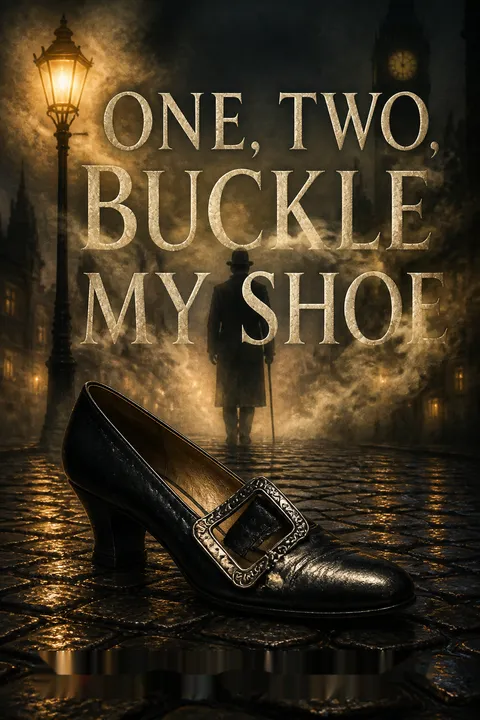
The Buckled Shoe
A seemingly minor observation haunts Poirot: the shoe buckle he picked up for the now-missing Miss Sainsbury Seale no longer matches the shoes later associated with her. Tracking shoes and sizes, Poirot detects a physical impossibility—how did shoes worn in the morning become shabby by evening? This thread—a literal and metaphorical mismatch—suggests an exchange of identities. The body discovered in a fur chest, claimed to be Miss Sainsbury Seale, cannot be identified by face, which has been savagely destroyed. Only the shoes and habits offer hints. Poirot realizes, beneath layers, a performance is unfolding; someone is living another's life.
Shadows in the Waiting Room
The focus shifts to the waiting room's ghosts: each appointment and comings-and-goings. Carter, the surly fiancé of Morley's secretary, emerges as a suspect, his movements unclear at the crucial hour. The American Raikes disappears, then reemerges at pivotal moments. Reilly, the Irish partner, hints at monetary desperation. Alibis begin to crumble; recalled sights and sounds fall apart under scrutiny. Poirot reconstructs the period surrounding Morley's death, uncovering that neither the Greek's departure nor the next patient's arrival was witnessed. Meanwhile, the theory of murder staged as suicide resurfaces, now with more credence and urgency.
The Traps of Power
Poirot realizes that suspicion surrounding Blunt is not paranoia: his death—or survival—carries weight far beyond the household. Political radicals, government agents, and foreign interests all watch, motivated to remove or protect a bulwark of British finance. Yet, as Poirot learns from the quietly perceptive Mr. Barnes, the real danger may not be from abroad or among the "obvious" threats, but from someone closer, hidden in plain sight, and skilled at manipulating both public and private faces. The murder, meant to look accidental or personal, may actually serve an agenda with national consequences.
The Staged Attack
While Blunt invites Poirot for a supposedly peaceful weekend, calamity strikes: a gunshot echoes in the garden. Frank Carter, now a gardener under suspiciously arranged employment, is caught supposedly red-handed by Howard Raikes. The episode seems straightforward—a failed assassination by a disgruntled young man—but Poirot, sensing contrivance, suspects it is a trap. The similarity between the gun used in this staged attack and the one that killed Morley cannot be dismissed. The cycle of scapegoating and alibi engineering points not to clarity, but to calculated misdirection and another forced "card" in a magician's hand.
Truth in the Garden
Poirot, relentless in his quiet pursuit, induces a crucial confession from Frank Carter. Under pressure, Carter admits being present at Morley's office just after the murder—but not as the killer. Instead, he encountered Morley already dead. His inability to provide an alibi, along with the evidence arrayed against him, nearly sends him to the gallows. Yet, Poirot recognizes that Carter's guilt is too neatly arranged; he has been positioned as a convenient fall guy. The truth lies deeper, among those whose motives blend personal desperation and the ability to manufacture respectability.
Two Women, One Name
Patient investigation reveals the masterstroke of the plot: the body in the fur chest, presumed to be Miss Sainsbury Seale, is in fact Mrs. Albert Chapman—the supposed tenant of the flat, known by few and connected only by the thinnest social thread. The real Miss Sainsbury Seale had been killed days earlier; her identity appropriated by another who impersonated her to perfection. Minor clues—shoe sizes, habits, and mannerisms—are backed by dental charts, deviously switched. This fraud, performed beneath the eyes of friends and police, is the work of someone with patience, means, and acting talent.
A Life of Lies
Poirot's net, now cast wide and fine, collapses with precision on Alistair Blunt. Blunt admits that years before, he married a woman named Gerda Grant before his wealthy second marriage to Rebecca Arnholt. Gerda, becoming Helen Montressor and Mrs. Chapman by turns, has quietly supported and enjoyed Blunt's position and secrecy for decades, slipping between personas as needed. When old acquaintances—Sainsbury Seale and blackmailer Amberiotis—threatened exposure, the elaborate series of murders began. The need to maintain not just a reputation but the foundation of British financial power set the fatal chain in motion.
Delving Beneath Respectability
Poirot's analysis cuts through the sediment of English respectability. Beneath the veneer of tradition, sanity, and power, he finds capacity for deceit, ruthlessness, and cold calculation. Gerda, Blunt's true wife and accomplished actress, executed impersonations and murder with clinical efficiency. Their defense rests on national need—the idea that Blunt's fortune and "sanity" are essential for the country's future. But Poirot, with his unyielding grip on individual human value, refuses to accept the doctrine of sacrificial necessity. His vision asserts that not even the greatest claims of nationhood can excuse murder.
The Net Draws Tight
The accumulating clues—buckled shoe, altered dental charts, confessions, and witness revelations—leave no escape. Blunt and Gerda, cornered and exposed, no longer deny their actions. The police swiftly arrest Gerda in her latest disguise; Blunt faces Poirot's private judgment and, soon thereafter, public justice. The power couple's motives—at once selfish and grandiose—appear both contemptibly petty and chillingly vast. Their meticulous planning, acting skills, and political justifications have failed to shield them from Poirot's truth. The "game" is over; the cost, in lives and lost souls, is counted.
Justice and Justification
In a final confrontation, Blunt pleads his case directly to Poirot: his crimes, he insists, are justified by the greatness of his work, by the peace and security he claims to safeguard for Britain. He is sane, stable, honest, indispensable. Poirot, weary but steadfast, rejects this ethical arithmetic. Greatness does not confer immunity from judgment or allow the "necessary" destruction of the inconvenient. Poirot recognizes Blunt's virtues but does not excuse his vices. Personal responsibility, not patriotic necessity, binds all who wield power. Poirot's lonely decision falls on the side of justice, not expedience.
Poirot's Final Judgment
Poirot, after exposing the full story, is left with the existential burden of judgment. He walks away from the case aware that he has unseated a "savior" of the nation to restore dignity to its humblest citizens and victims. Respect for private individuals is his guiding star, trumping the temptations of statecraft and the seductions of collective gain. The world around him will go on, as will power games, but Poirot remains loyal to the sanctity of every single life—"not one small person must be sacrificed for the good of the many."
The Price of Greatness
As the final pieces fall, Poirot contemplates the ironies: the price of stability, the self-delusions of the powerful, the dangers beneath respectability's polished mask. In the quiet of London, the story has burned through politicians, patriots, radicals, and the forgotten. The murderer's vision of his own importance collapses in the face of Poirot's moral clarity. The great man's plate is now empty: the rhyme concludes, but the cost of power and the cost of justice linger. Poirot, solitary as always, keeps faith with the lost, resisting the temptations of necessary evil, and preserves the flawed but vital promise of justice in an uncertain world.
Analysis
One, Two, Buckle My Shoe is as much a psychological chess game as a detective mystery, a warning about the seductive lure of power, and a meditation on the perils of respectability. Christie crafts a world in which the forces that claim to protect stability—money, tradition, and order—are shown to harbor, and even require, deception and violence at their core. Poirot's journey moves from the clinical, external logic of evidence to the ambiguous inner logic of human motives, ultimately refusing to allow the "great" to trample the "small" for public good. In staging the plot as a children's rhyme, Christie delivers her bleakest message through the language of innocence: that even the most stable society is vulnerable to those who wield narrative as both shield and weapon. The lesson is timeless—justice, real justice, lies in refusing to be blinded by expedient explanations, and in recognizing that each human life, even the most ordinary or apparently disposable, must be valued above the abstractions of power and the rationalizations of the powerful. The real "plate," in the end, is left "empty"—not because justice is perfect, but because the cost of greatness is the willingness to betray one's own humanity.
Review Summary
One, Two, Buckle My Shoe receives mixed reviews, averaging 3.78/5. Many readers appreciate Christie's clever plotting, unexpected twists, and the relatable portrayal of Poirot's fear of dentists, which adds a humanizing dimension to his character. Fans enjoy the nursery rhyme structure and espionage elements woven throughout. However, some critics find the large cast of characters difficult to track, the political themes excessive, and the ending overly complicated or contrived. Most agree it is a solid, entertaining Poirot mystery, though not among Christie's finest works.
People Also Read




Characters
Hercule Poirot
Poirot is the relentless Belgian detective, famed for his logical "little grey cells" and methodical approach, but haunted by the knowledge that perfect logic does not ease human pain. Morally unwavering, he abhors not only murder but all rationalizations that make evil seem necessary. The events challenge even his self-assurance; his intuition battles the convolutions of political intrigue and personal deception. As the story evolves, Poirot's psychological insight exposes not only the physical murderer but also the psychological mechanisms by which the most respectable commit the worst crimes. His relationship with Japp is both affectionate and gently antagonistic, but at his core, Poirot's loneliest struggle is not to solve puzzles, but to judge without cruelty, and to believe in humility over grandeur.
Alistair Blunt
Blunt is the epitome of British discretion and power: a banker who manages not only finances but the emotional climate of the country. He is modest in manner and quietly proud, but beneath the surface lies a hunger for control and a willingness to override moral boundaries for a "greater good." His crimes emerge not from malice but from a chilling logic—he believes his survival is essential for national order. His personal life is a carefully buried secret: a bigamous marriage, a hidden wife, and a readiness to silence any threat. Blunt's psychological depth manifests in a dichotomy between national savior and selfish criminal, making him one of Christie's most complex antagonists.
Gerda Grant / Helen Montressor / Mrs. Chapman
Gerda, Blunt's first and only legal wife, is as accomplished an actress as she is a co-conspirator. Alternately "Helen Montressor" and "Mrs. Chapman," she occupies multiple stations—country gentlewoman, city widow, and impersonator. Behind her mildness lies steely resolve; behind respectability, a deadly adaptability. Her motives are a mix of love, self-preservation, and the romantic thrill of deception. Gerda orchestrates impersonations, murder, and evidence tampering with simplicity, showing no remorse for the "necessary" elimination of Sainsbury Seale or for her role in larger crimes. Her psychological insecurity about her position fuels her willingness to shed any identity—or person—that threatens her protected world.
Mabelle Sainsbury Seale
Sainsbury Seale is an aging, kindly woman, remembered more for her nervous prattle than her criminal capacity. In truth, she is both a pawn and a catalyst; her unguarded recollections set the entire tragedy in motion. Her kindness toward Amberiotis enables blackmail; her old acquaintance with Blunt exposes his secret. Ironically, her gullibility and naivety make her perfect prey. She is murdered not because of malice, but because her memory—her innocent recognition—renders her too dangerous in a world of lies. She embodies the theme that respectability and harmlessness are not shields against the predations of the powerful.
Henry Morley
Morley, the dentist whose murder starts the chain, is diligent but ordinary. His ordinary habits, kindness to his staff, and professional pride mask fatal vulnerabilities: his honest lifestyle makes him remarkably ill-suited to defend himself when drawn into someone else's deception. He is a victim of both circumstance and the cold calculus of others; his efficient yet undramatic life is exploited and then disregarded by those who see him as expendable. Morley, more than any other, symbolizes the cost to ordinary people in the machinations of the great.
Jane Olivera
Jane is Alistair Blunt's American-born niece, caught between her affection for her uncle and her passion for Howard Raikes. Outspoken, skeptical of tradition, she harbors a modern idealism and a deep emotional restlessness. Her relationship with Poirot is marked by sharp questioning and subtle trust. Jane's observations and doubts provide the detective with crucial insights, but her quick wit masks insecurities about her own place in a family, and in a world, defined by secrets and deception.
Howard Raikes
Raikes is a young American radical, Jane's lover, and briefly a suspect in the unfolding drama. His disdain for Blunt's politics and tradition is transparent, but beneath the fiery rhetoric lies genuine emotion. Raikes is both too earnest and too naïve to be the sophisticated criminal some suspect. Nonetheless, his presence highlights the generational and philosophical divides at the heart of the social order. In his confrontations with Poirot and Blunt, Raikes unwittingly propels the narrative toward its exposure of deeper hypocrisies.
Frank Carter
Carter, Morley's secretary's fiancé, is impulsive, jobless, and embittered by perceived slights. Initially an obvious suspect, his inability to provide a coherent alibi and his hot-headed nature seem to incriminate him. Yet, it is his bluster and eventual confession to Poirot that clarify essential facts; his proximity to the truth, brought by accident, nearly costs him his life. Carter's journey dramatizes the dangers of easy scapegoating and the vulnerability of those on the social margins.
Gladys Nevill
Morley's secretary, Gladys, is efficient and caring, struggling with personal anxieties about her relationship with Carter and her own role in the chaos. She is drawn into the core of the investigation; her sense of loyalty, and an unintended act—leaving the office when needed most—create a domino effect that intensifies the case. Gladys, through her devotion and fear, embodies the impact of violence on the ordinary, the loyal, and the quietly competent.
Chief Inspector Japp
Japp, Poirot's old ally at Scotland Yard, provides the voice of procedure and skepticism. His method is practical and robust, yet he relies on Poirot's intuition to find what routine investigation cannot. Their interplay—jokes, frustrations, grudging respect—adds warmth and realism to the darkest moments. Japp represents the limits of official justice, often content with clear answers, while Poirot pushes toward uncomfortable truths.
Plot Devices
Nursery Rhyme Structure
The story's architecture draws from the nursery rhyme "One, Two, Buckle My Shoe," with chapter titles, key clues, and the order of deaths and discoveries mirroring the rhyme's progression. This device injects an eerie undertone of predestination and childish innocence manipulated for adult darkness, while signaling to the reader that surface simplicity can mask complex patterns below. The rhyme also frames Poirot's psychological breakthroughs, guiding and misdirecting perception as much as the villain's ruses.
Identity Exchange and Impersonation
The killer's greatest weapon is not brute force but the mastery of impersonation. Through skillful acting (Gerda's transformations into Helen Montressor, Mrs. Chapman, and Sainsbury Seale) and intentional evidence tampering (the switching of dental records, shoe sizes, signatures), the plot continuously undercuts certainty. This shifting of identity laces the theme of respectability with danger, and is the only way the murderer, hiding in plain sight, evades detection for so long.
Forced Narratives and Red Herrings
The plot is saturated with manufactured alibis, misleading evidence (suicide staged as accidental death, staged assassination attempts, timely letters and telegrams), and signatures intended to "force a card." Both characters and readers are pushed toward convenient conclusions—patriotic sacrifices, villainous foreigners, radicals—only to have the rug pulled beneath their feet by Poirot at the climax.
Socio-Political Context
The murderer's defense is explicitly political: killing to preserve the nation's "sanity and solvency" is deemed an act of public good. This theme reframes every suspect and every victim, forcing readers to reckon with the costs of civilization and the dangers of power unobstructed by moral limits. The story thus both uses and subverts spy thriller conventions—setting the stage for the more intimate, human revelations at the story's heart.
Psychological Revelation
Poirot relies as much on psychoanalysis—understanding insecurities, traumas, and motivations—as on physical evidence. The book is littered with interior drama: remorse, fear, pride, and rationalization. The ultimate unraveling depends not on fingerprints but on understanding the human need for security, love, and justification—and how these can fuel the worst acts.
Hercule Poirot Series






















About the Author
Other books by Agatha Christie


Download PDF
Download EPUB
.epub digital book format is ideal for reading ebooks on phones, tablets, and e-readers.








































