Key Takeaways
1. 1 Corinthians is a meticulously structured masterpiece of Hebrew prophetic rhetoric.
This study will argue that the outline of 1 Corinthians is as precise as any of Paul’s letters and that it falls into five carefully constructed essays, which themselves showcase a discernible theological method, both internally as individual essays and together as a collection.
Rhetorical structure unveiled. Rather than being a disjointed, haphazard letter written in a rush, 1 Corinthians is a carefully crafted theological masterpiece. Paul, drawing deeply from his rabbinic training, utilizes ancient Hebrew poetic structures to organize his arguments. These structures include:
- Ring composition (chiasm), which places the climax in the center.
- Step parallelism, where ideas are repeated in a matching sequence.
- The "high jump" format, featuring an introduction, an ascending argument, a central climax, and a descending resolution.
Semitic literary patterns. By recognizing these Semitic literary patterns, modern readers can move past the arbitrary chapter and verse divisions that often obscure Paul's flow of thought. The letter is organized into five distinct, beautifully balanced essays that address the core issues of the early church. This structural precision demonstrates that Paul was not merely reacting to crises but was intentionally writing a circular letter meant for the entire global church.
A unified theological method. Each of the five essays follows a consistent, five-step pedagogical methodology. Paul begins by invoking the received tradition, presents a glaring ethical or practical problem, establishes a profound theological foundation, re-evaluates the problem in light of that theology, and concludes with a deeply personal appeal. This method ensures that ethics are never divorced from theology, providing a timeless model for Christian discernment.
2. The cross of Christ subverts worldly wisdom and heals community divisions.
At the cross the world discovered that you cannot beat brokenness!
Subverting cultural pride. In the opening essay, Paul confronts the factionalism dividing the Corinthian church, where believers aligned themselves with different leaders based on ethnic and intellectual pride. To heal these rifts, Paul points directly to the cross, which stands as the ultimate subversion of both Jewish demands for miraculous signs and Greek desires for philosophical eloquence. The cross reveals a divine wisdom that makes the highly polished rhetoric of the worldly academy look foolish.
A counter-cultural message. Paul's "word of the cross" is not a set of clever ideas but a historical event that redefines power. While the Roman Empire boasted of military dominance and the Greeks of intellectual superiority, the cross introduced a power made perfect in weakness. This message was designed to:
- Expose the limitations of human wisdom and political power.
- Eliminate all grounds for human boasting in the presence of God.
- Unite diverse ethnic groups under a single, crucified Savior.
Healing through humility. By centering the community on the cross, Paul shifts the focus from the credentials of human leaders to the sacrificial love of Christ. True Christian unity is not achieved through organizational compromise or intellectual uniformity, but through a shared participation in the self-emptying humility of the crucified Lord. This theological foundation dismantles the party spirit and calls the church to a life of mutual service.
3. The human body is a sacred temple destined for resurrection, defining sexual ethics.
The Apostle denies that coitus is, as the Corinthians would have it, merely a detached and (as it were) peripheral function . . . of the genital organs.
The body's eternal destiny. Paul rejects the Gnostic and dualistic views of his day, which treated the physical body as a temporary, disposable vessel of no spiritual consequence. He argues that the body is not meant for self-indulgence or sexual immorality, but is created for the Lord and destined for resurrection. Because our physical bodies will be raised and transformed, our physical actions in the present have eternal significance.
A temple of the Spirit. To ground his sexual ethics, Paul utilizes a powerful Trinitarian framework that redefines the believer's physical existence. The human body is not an individual's private property to be used at will, but is:
- A member of the very body of Christ, bought with a costly price.
- A sacred sanctuary indwelt by the Holy Spirit of God.
- An instrument intended to bring glory to God in the physical realm.
The depth of intimacy. Sexual union is never merely a physical appetite to be satisfied like hunger, but an act that engages and unites the entire personality. To join oneself to a prostitute is to violently tear a member of Christ away from His body and forge an illegitimate union. Paul's theology of the body elevates human sexuality to a sacred covenant, calling for absolute fidelity and holiness.
4. Christian freedom must always be limited and guided by love for the other.
Knowledge operating alone makes it an engine of destruction.
The limits of liberty. In discussing food offered to idols, Paul addresses the tension between intellectual knowledge and pastoral love. The "strong" in Corinth correctly understood that idols have no real existence and that all food belongs to the Lord. However, Paul warns that exercising this freedom without regard for the "weak" can cause spiritual ruin to fellow believers.
Love over knowledge. While knowledge puffs up and creates a sense of superiority, love builds up the community. Paul establishes a vital ethical principle for the exercise of Christian freedom:
- Freedom must never be used as a stumbling block for those with sensitive consciences.
- The spiritual well-being of a brother or sister takes precedence over personal rights.
- True maturity is demonstrated by a willingness to limit one's freedom for the sake of others.
A Christ-like model. Paul offers his own life as a model of this self-limiting freedom, pointing out that he chose to waive his right to financial support to avoid placing any obstacle in the way of the gospel. By prioritizing the spiritual progress of the community over his personal rights, Paul demonstrates that Christian liberty is ultimately the freedom to serve.
5. Cultural identification has boundaries: we must flee communion with darkness.
The only way to build love between two people or two groups of people is to be so related to each other as to stand in need of each other.
Three patterns of engagement. Paul outlines a sophisticated, three-part approach to how Christians should engage with the non-Christian culture around them. He does not advocate for a total withdrawal from society, nor does he endorse an uncritical assimilation. Instead, he presents three distinct models of cultural interaction:
- Full identification: Becoming "all things to all people" in neutral cultural matters to win others to Christ.
- Partial identification: Participating in the shared heritage of the past while remaining vigilant against its moral failures.
- No identification: Refusing any compromise or participation in practices that involve spiritual darkness or idolatry.
The danger of compromise. While eating meat purchased in the public market is entirely acceptable, participating in cultic feasts within pagan temples is strictly forbidden. Paul argues that such feasts are not harmless social gatherings but constitute a real communion with demonic forces. A believer cannot drink the cup of the Lord and the cup of demons without provoking the Lord to jealousy.
Preserving spiritual identity. True missional engagement requires a clear sense of spiritual boundaries. Christians must be willing to enter deeply into the lives of others in weakness and humility, yet they must never compromise the exclusive loyalty they owe to Christ. This balance ensures that the church remains a distinct, life-giving presence in a broken world.
6. Worship leadership requires mutual respect and gender interdependence.
In the Lord you are equal and mutually interdependent.
Affirming women's leadership. Paul explicitly affirms that both men and women are called to lead the congregation in public worship through prayer and prophecy. He does not silence women prophets but instead addresses the practical and cultural challenges of their public ministry. In the ancient Mediterranean world, how a leader dressed signaled their respect for the community and the sacredness of the occasion.
Order and propriety. To prevent public worship from descending into chaos or cultural scandal, Paul provides specific guidelines for how male and female prophets should present themselves:
- Men are to lead in worship with their heads uncovered, reflecting their direct relationship with Christ.
- Women are to cover their heads while prophesying, preserving their honor and preventing distraction.
- Both genders must respect the cultural sensitivities of the diverse congregation to keep the focus on the message.
A theology of mutuality. Paul grounds these guidelines in a profound theology of mutual interdependence, correcting any patriarchal assumptions of male superiority. While the woman was originally created from the man, every man since then has been born through a woman, and all things ultimately come from God. This mutual dependence in the Lord ensures that both genders are honored and valued as equal partners in the ministry of the church.
7. The Eucharist is a sacrament of unity that must never humiliate the poor.
The unity of the church is something more than physical juxtaposition in a determined space.
Correcting sacramental abuse. Paul addresses a severe crisis in the Corinthian celebration of the Lord's Supper, where social and economic divisions were being replicated at the sacred table. The wealthy members of the congregation were arriving early, consuming their own lavish food and getting drunk, while the poor and enslaved members arrived late to find nothing left. This behavior turned the sacrament of unity into a display of selfish indulgence.
Despising the church. By humiliating the "have-nots," the wealthy were holding the entire community of faith in contempt. Paul warns that such gatherings are not the Lord's Supper at all, but are:
- A profanation of the body and blood of the Lord.
- A denial of the reconciling power of the cross.
- A source of spiritual and physical sickness within the community.
Discerning the body. To celebrate the Eucharist worthily, believers must "discern the body," which means recognizing their profound connection to every other member of the community. The rich must wait for the poor, and those who are hungry should eat at home to ensure that the communal gathering remains a sacred space of mutual care. The sacrament must always reflect the self-giving love of Christ, who broke His body for all.
8. Spiritual gifts are diverse manifestations of the Spirit meant for the common good.
The spiritual gifts therefore are the concrete deeds of helpfulness, the actual giving of guidance on different occasions.
Unity in diversity. Paul uses the famous metaphor of the human body to explain the nature and purpose of spiritual gifts within the church. Just as a physical body is composed of many different organs, each with a unique and indispensable function, the church is a single body made up of diverse members. No member can claim self-sufficiency, and no member can be dismissed as worthless.
The source of gifts. The Holy Spirit is the sole source of these diverse gifts, distributing them to individuals as He chooses for the upbuilding of the entire community. Paul lists several manifestations of the Spirit, emphasizing that:
- Gifts are given for the common good, not for personal prestige or self-exaltation.
- The lowly and seemingly "weaker" parts of the body are indispensable and deserve greater honor.
- Every gift is necessary to ensure the health, growth, and reproduction of the body of Christ.
A call to mutual care. Because all believers are baptized into one body and given to drink of one Spirit, they must live in deep solidarity with one another. When one member suffers, the entire body must suffer with them; when one member is honored, all must rejoice together. This mutual care eliminates discord and ensures that the spiritual gifts serve their true purpose of building up the church.
9. Love is the supreme, permanent reality that outlasts all temporary spiritual gifts.
Love alone can bear the burden of the living for it bears all things.
The high road of love. Placed at the very center of his essay on worship, Paul's famous hymn to love provides the ultimate solution to the Corinthian worship wars. He compares the way of love to a challenging journey over a high mountain pass, requiring immense discipline and commitment. Without love, even the most dramatic spiritual gifts—such as speaking in tongues, prophecy, and faith that moves mountains—are rendered completely worthless.
Love defined in action. Paul personifies love, describing its character through a series of positive and negative attributes that directly challenge the behavior of the Corinthians. Love is:
- Patient and kind, absorbing hostility without retaliation.
- Free from jealousy, boasting, arrogance, and rudeness.
- Unselfish, slow to anger, and quick to forgive, keeping no record of wrongs.
An abiding reality. While temporary spiritual gifts like prophecy, tongues, and knowledge are imperfect and will eventually be discarded when the perfect comes, love is permanent. Along with faith and hope, love abides forever, standing as the supreme manifestation of the divine nature. Paul concludes by urging his readers to "run after love," making it the primary pursuit of their lives.
10. The physical resurrection of Christ guarantees our future transformation and victory.
Without the resurrection, there is no reason to suppose that Jesus’ crucifixion dealt with sins, or with sin.
The foundation of hope. In the final essay, Paul defends the historical reality and theological necessity of the physical resurrection of Christ. He recites an early Christian creed, pointing to a cloud of witnesses who saw the risen Lord, including Peter, the Twelve, and Paul himself. If Christ is not raised, Christian preaching is empty, faith is futile, and believers remain trapped in their sins.
The transformed body. Paul addresses the nature of the resurrection body, using agricultural and celestial analogies to explain the mystery of our future transformation. The resurrection body is:
- A physical, material body, not a disembodied spirit or a ghost.
- Raised in incorruption, glory, and power, free from decay and weakness.
- Constituted and directed by the Holy Spirit, fashioned after the image of the heavenly Christ.
Victory over death. The resurrection of Christ, as the "first fruits," guarantees the ultimate destruction of death, the final enemy of humankind. This victory subverts the power of sin and the law, filling the present life of the believer with hope and purpose. Paul concludes with a triumphant call to remain steadfast and immovable, always abounding in the work of the Lord, knowing that our labor in Him is never in vain.
I confirm that I have written detailed takeaways for ALL 10 key takeaways in the format requested.
Review Summary
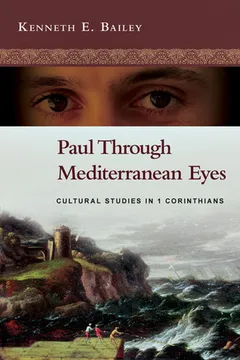
Paul Through Mediterranean Eyes receives generally positive reviews, averaging 4.36/5. Readers appreciate Bailey's unique Middle Eastern cultural lens and analysis of Paul's Hebraic rhetorical structures, particularly "ring composition." Many find his structural insights into 1 Corinthians refreshing and illuminating, though some critics note the chiastic analysis occasionally feels forced. The book is frequently compared favorably—though deemed slightly inferior—to Bailey's Jesus Through Middle Eastern Eyes. Reviewers recommend it primarily as a valuable supplemental commentary, most useful for pastors, students, and serious Bible scholars.








































