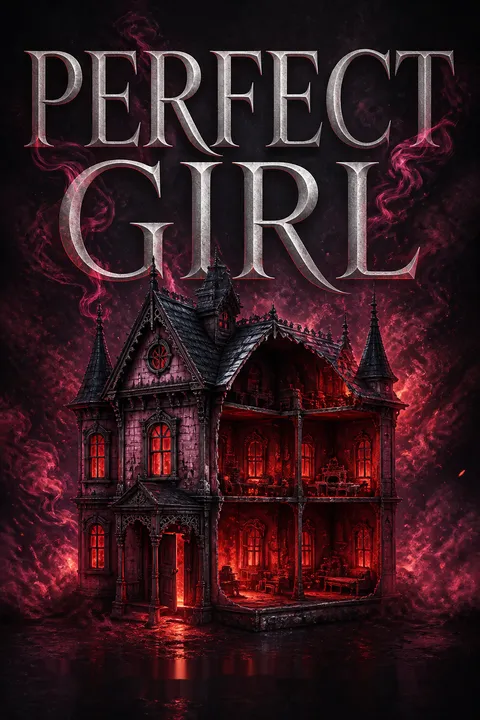

Plot Summary
Rules, Secrets, Sleepover Plans
Jessa prides herself on being responsible: rule-follower, academic superstar, and family peacekeeper. Living in an isolated rural home, she copes with being the "perfect girl" while wrestling with secret doubts about her future. Her brother, Josh, is her chaotic opposite. As a series of girls vanish in the nearby city of York, Jessa's parents reluctantly allow her to host friends for a sleepover. Jessa invites her tight-knit but fracturing group: Kellan the influencer's daughter, Alexis the quietly intense athlete hiding a big secret, and Tiny, Jessa's lifelong best friend who has grown distant, reckless, and moody. The group dynamic shudders under the surface, tinged with secrets and longing for simpler, safer times.
Haunted Houses, Hidden Terrors
As storm clouds gather, Jessa's friends arrive and tension pulses beneath giggles and snack runs. The old house moans and creaks; the friends joke about Betty, the girl ghost said to haunt the property. But the real hauntings are emotional—unspoken anxieties about their friendships unraveling, their futures, and the recent disappearances. Outside, the storm intensifies. The discussion of the missing girls sharpens everyone's fear. In this enclosed space, normal teenage worries are overlaid with a chilling awareness: real horror can come from people, not ghosts. When a strange neighbor, David, drops by, Jessa shrugs him off—unaware of the thread she's begun to unravel.
Friendship Tests and Friction
The girls try to recapture the joy of old times, but struggles erupt. Tiny is combative and evasive. Old wounds resurface: insecurity over boys, jealousy, secrets, and the shifting roles between childhood and adulthood. Truth or Dare, meant to lighten the mood, becomes a minefield; dares force the girls to reveal vulnerabilities and hidden pain. Underneath laughter, loneliness gnaws: both Jessa's hunger for agency and connection, and Tiny's for escape. Amidst the games, exclusion, betrayal, and the threat of the outside world echo louder with each thunderclap. A knock at the door soon shatters their fragile safety.
Boys, Dares, and Storms
The power dies—forcing Jessa and her friends into the dark, with only flashlights and the roaring storm outside. Their safe space is breached further: Josh and his friend Ryan, Jessa's secret crush, join the group out of necessity. With internet down and nerves frayed, they revert to playing group games. Amid rising wind and isolation, dares turn riskier and confessions rawer, and the friction between Tiny and the others grows. Jessa resists pressure to be messy or reckless—her central struggle. The storm escalates to a disaster, with a fallen tree trapping them at home, amplifying the night's sense of menace.
Truth or Dare Emergency
The group's Truth or Dare turns from laughter to confession, sparking self-doubt, and real threats. Jessa is pressured to "make a mess"—to act out of character and violate the rules that define her. Meanwhile, lightning literally strikes, fire threatens, and uncanny sightings around the house hint at something (or someone) prowling outside. David and other outsiders reappear, offering help that soon curdles into something else. Fears of violence, being watched, and trust fractures emerge. Dares, once innocent, become loaded—especially when a real knife and real emotional wounds are revealed, setting the stage for the night's horrors.
Unwanted Guests, Unspoken Fears
Suddenly, Tiny's secret life comes crashing in: her abusive older boyfriend, Johnny, invades the sleepover, armed and angry. The friends freeze in fear—realizing the horror they joked about is not supernatural, but a very human threat. Johnny tries to control Tiny and drive her away. The other girls are paralyzed by terror and helplessness, until they band together to force him out. This brush with violence leaves everyone shaken, guilt-ridden, and reeling. Tiny's pain surfaces, exposing fractures in the group's support system. After, Jessa and Ryan seek help, setting off into the rain, leaving the others to their own private terrors.
Tiny's Darkness Revealed
The group, traumatized, fragments further. Forced into the stormy night, Jessa and Ryan confess their feelings and secrets as they seek aid not only for themselves but for their friends. Their near-miss with romance is painfully interrupted; a "pact" keeps happiness from their grasp. Meanwhile, the backstory of the missing girls is interwoven, revealing the real perils lurking in plain sight. Tiny's isolation—and the others' failure to see her pain—haunts Jessa. Old betrayals, new guilt, and the unnamed threat pressing against their safe world converge as what was a sleepover morphs into a life-or-death struggle.
Disappearances and Desperation
Separated by circumstance, the girls are picked off by the real predator: David and his mother, Mrs. Woodlock. Under the guise of helping, they drug, abduct, and imprison Jessa, Tiny, and Alexis in a hidden, old-fashioned basement room—the "dollhouse". Here, the missing girls' fate is revealed to have been eerily similar. The confines—pretty, neat, and suffocating—echo society's rules for "good girls." As horror consumes hope, Jessa's perfectionism turns from protection to prison. Guilt, blame, and the need to please become life-threatening liabilities as the captives realize they are not the first, and may not be the last.
Into the Dollhouse
Mrs. Woodlock—chillingly proper—enforces twisted ideas of femininity and order. David, obsessed with finding a "perfect" girl to care for him, uses surveillance and manipulation, turning Jessa's own desire for approval against her. Each girl is forced to perform roles expected of women: pretty, quiet, accommodating. Attempts at rebellion are punished with gas, drugs, and isolation. Jessa realizes the rules that once kept her safe now make her vulnerable—her every strength is inverted by her captors' warped logic. In the dollhouse, survival hinges on reclaiming agency, forging solidarity, and refusing to be a doll destined for another shallow grave.
Trapped by Perfection
As the hours bleed into terror, Jessa finally understands she must abandon her desperate need to please: David only wants her as a "perfect" puppet. The room's history unfolds—previous captives, like missing girl Bella, were destroyed when they failed to conform. Jessa is drugged, groomed, and pressured to acquiesce, with her friends' safety held hostage. In a harrowing confrontation, Jessa finally fights back—not with compliance, but with rage, violence, and refusal. She frees herself—physically and emotionally—breaking out of the room and running for her life, even as guilt gnaws at her for leaving her friends behind.
Pretend-to-Play: The Captive Game
Chaos erupts—there's violence, fire, and finally, ghostly reckoning. Mrs. Woodlock's plan to cover up her crimes by burning down Jessa's house nearly succeeds. The girls' collective fight, Jessa's inner transformation, and the household's own haunted legacy combine to turn the tide. The house, once a place of comfort, becomes a battleground. Jessa fights not just for herself, but for her friends and all the girls before them, confronting both Mrs. Woodlock and David with her newfound rage and unwillingness to be controlled. Exposed, the abusers' fragile power collapses in a final, explosive confrontation.
Breaking Point, Breaking Free
With violence, ingenuity, and some luck (and maybe the house's benevolent ghost), the survivors turn the abusers' plan against them. An explosion and fire mark the end of the Woodlock family's reign of terror. Jessa is bruised but alive, her relationships with Josh, Kellan, Tiny, and Alexis forever changed. Rescue arrives thanks to teamwork and bravado, and as dawn rises, the surviving girls are found together, battered but resilient. For all, there is trauma—but also hope: love, friendship, and a new appreciation for honest messiness rather than the dangerous ideal of being "perfect."
Flames, Ghosts, and Reckonings
News filters out: the killers' pattern of abducting and burying girls is uncovered. Betty's ghost is at peace; her story—once trivialized—now mirrors the real costs of obedience and silence. Mrs. Woodlock is dead, her ideology of control destroyed. David, survived by his victims, is apprehended, and the "perfect girl" narrative is shattered. The girls—especially Jessa and Tiny—begin real recovery, learning to own their scars and identities. Family, love, and justice all get reevaluated. The trauma is not tidily resolved, but the cycle is broken. The dream of needing to be perfect is finally discarded.
Aftermath and New Beginnings
A month later, Jessa, Alexis, Tiny, and Kellan are healing. Tiny pursues justice and safety. Jessa confesses her ambivalence about "the plan." The friends are closer, having survived both real and psychological captivity. The house is rebuilt, but the ghosts are not forgotten—literal and metaphorical. Jessa dates Ryan, forges new boundaries with Josh, and finally enjoys being a little messy, a little braver, and a lot more true to herself. The specter of the Woodlocks lingers, but hope, friendship, and imperfect honesty anchor the future as the girls—once mere dolls—write their own stories.
Analysis
A chilling interrogation of perfection and controlTracy Banghart's Perfect Girl is more than a survival thriller—it is a fierce deconstruction of the myth of the "perfect girl" and the societal expectations that endanger young women. Through the tightly-wound Jessa and her friends, the novel exposes how cultural pressures toward perfection, compliance, and prettiness can leave girls vulnerable to exploitation, violence, and even death. The "dollhouse" isn't just a place; it's a social role, a prison that destroys all who cannot perform—or who refuse to perform—ideal femininity. The novel's horror derives not from supernatural ghosts but from invisible ones: inherited misogyny, family pressure, unchecked entitlement, and the ways girls police themselves and each other. In surviving, Jessa and her friends model a new kind of strength: messy, honest, and open to pain, but also to joy and agency. The lesson is bold—rules and perfection may promise safety, but real survival demands rebellion, community, and accepting imperfection as power, not failing. The book is both a gripping page-turner and an unflinching feminist call to arms.
Review Summary
Perfect Girl receives mixed reviews, averaging 3.41/5. Many readers praise its fast-paced, edge-of-your-seat tension, comparing it to Pretty Little Liars, and note it's highly readable in one sitting. Positive reviews highlight the atmospheric storm setting, relatable protagonist Jessa, and satisfying character growth. Critics find the villain predictable, character choices frustrating, and the first half slow. The audiobook narration receives consistent praise. Several reviewers warn against reading alone at night, humorously recounting their own fearful experiences.
Characters
Jessa Morgan
Jessa is the novel's protagonist, defined by her upbringing as the "perfect daughter" in a house full of expectations, ghosts, and rural isolation. Striving for safety and predictability, she clings to rules and plans, but internally battles anxiety and a secret lack of certainty about her path in life. Her commitment to being responsible and good leaves her vulnerable—first to the emotional manipulations of friends and family, then to the psychological dangers posed by her captors. Jessa's arc is one of loosening the grip of perfection: learning—to her terror and liberation—to make a mess, to stand up to abusers, and to write her story. Surviving literal imprisonment, she emerges with a hard-won appreciation for self-acceptance, imperfection, and agency.
Tiny (Taylor Smith)
Once Jessa's inseparable childhood friend, Tiny is blunt, fierce, and unpredictable—a shield for trauma she can't fully articulate. Her relationship with an abusive older boyfriend drives a wedge between her and her friends, while her wildness is misread as mere rebellion. Underneath, she battles isolation, neglect at home, and feelings of worthlessness. In the dollhouse, her anger and defiance become survival tools, as she refuses to be anyone's victim or doll. Her eventual confessions and willingness to rely on others mark her own journey toward healing. Tiny's arc exposes the perils of ignored pain, the difficulty of leaving harmful relationships, and the hope found in true solidarity.
Alexis
Alexis embodies calm and honesty, but conceals her bisexuality and the pressures of living up to familial and team expectations. She is the group's steady presence, but this reliability masks fear and the effort of hiding. Her collapse in Mrs. Woodlock's house and subsequent near-death experience force vulnerability to the surface. With the support of her friends, she begins to accept her identity and need for help. Alexis's survival and openness become beacons for the others, symbolizing that strength includes admitting fear—and living honestly is braver than hiding.
Kellan
Kellan uses humor and online performance to shield herself from a complicated home life with an overbearing, fame-obsessed mother. She is clever, supportive, and often the first to call out injustice, yet rarely confides her own struggles. Kellan is a peacemaker but fiercely loyal, helping Jessa confront literal and figurative ghosts. Her budding romance with Josh is part comedic relief, part political statement—she, too, must break out of others' narratives about her. Kellan's resilience, support, and willingness to embrace the messy aspects of life are central to the group's survival and healing.
Josh Morgan
Jessa's older brother, Josh, is painted as irresponsible, unpredictable, and trouble-prone, but hides a genuine devotion to family and friends beneath the bravado. His history of mischief ironically earns him less trust from parents—but he often steps up in crisis, especially when violence shatters the party. His own self-doubt and feelings of failure parallel Jessa's but play out in defiance rather than compliance. His relationship with Kellan and his actions during the climax show a capacity for courage and, ultimately, for letting go of old rules that hurt more than they help.
Ryan
Ryan is Jessa's longtime crush and Josh's best friend—a sensitive, artistic, and quietly courageous presence. Adopted and navigating racial dynamics in a white rural world, Ryan is attuned to others' pain and careful never to overstep. His loyalty, patience, and willingness to wait for Jessa, despite obstacles, model a healthier masculinity. He risks his safety to save Jessa and the others, and becomes her partner in healing and in learning to choose imperfect, real happiness over fantasized, unrequited longing. Ryan's injuries and survival deepen his connection to the group and underscore themes of embodied vulnerability.
David Woodlock
A neighbor and schoolmate, David is quiet, awkward—and catastrophically lonely. Twisted by his mother's control and his own isolation, he stalks girls, seeking a "perfect" caretaker. David's crimes progress from social awkwardness to gaslighting, stalking, and deadly violence, enabled and encouraged by Mrs. Woodlock. He mirrors—and perverts—Jessa's need to please, turning it into manipulation and deadly obsession. His refusal to let his victims be real people or say no reveals the horror of unchecked entitlement and the danger of thinking of others as solutions to one's needs.
Mrs. Woodlock
The true villain, she is prim, old-fashioned—and monstrous. Bonding with her son over twisted ideas of femininity and protection, she orchestrates the dollhouse and the crimes that follow, maintaining calm mask of propriety throughout. Her backstory ties into Betty, the house ghost, revealing a family legacy of suppressing "messy" women—of literal and metaphorical murder by those who demand obedience. Mrs. Woodlock's collapse is not just a physical one in the fire, but an ideological one: the defeat of her worldview by the survivors' refusal to remain small, obedient, or silent.
Betty (the ghost)
Betty, the girl rumored to haunt Jessa's home, was an actual victim of Mrs. Woodlock's violence—a tragic mirror to the modern girls' threatened fates. The house ghost is more than a spooky legend; she is an ever-present reminder of the peril of silence and the cost of treating girls as objects. As the other girls break free, Betty's story is honored and her unfinished business resolved, providing the novel's spiritual and emotional release.
Bella Norris
Bella, one of the missing girls, is introduced as a cautionary example and ultimately found a victim of the same predation Jessa and her friends survive. Her storyline overlays the domestic horror with the real-world consequences of not being able to escape, reminding the survivors and readers that justice often comes too late, but refusal to forget matters.
Plot Devices
The Dollhouse as Metaphor
The novel's use of the dollhouse—an idealized, furnished, tightly controlled room for girls—is the master plot device. First symbolic of childhood and girlhood expectations, it transforms into the site of horror: girls are judged, displayed, and destroyed not for their flaws, but for failure to enact someone else's version of perfection. The true terror lies not in supernatural forces but in enforced domesticity, surveillance, and the punishment for stepping out of line. This literalization of sociocultural pressures saturates every scene, making the reader complicit in seeing the "perfect girl" trope as a trap rather than a goal.
Haunted House / Ghost Story Structure
The use of the haunted house—complete with creaks, rumors, and ghostly presence—functions both as atmospheric foreshadowing and as a means to deepen the novel's exploration of generational trauma. Ghost Betty's story evokes the dangers faced by "disobedient" women in every era, and her resolution mirrors the main plot's closure. Apparent supernatural events are reinterpreted as both psychological manifestations and narrative warnings.
Truth or Dare / Sleepover Game
The structure of the sleepover, supposedly harmless fun with rules, games, and dares, is swiftly subverted: what starts as bonding becomes coercion, confession, and division. Dares and truths expose both internal and external threats and blur the boundaries between play and real danger, mirroring the escalating tension and leading directly to the group's vulnerability.
Storm and Isolation
The storm's timing strands the girls, creating literal darkness and cutting off help. The house—once a site of sanctuary—becomes a trap. This device amplifies feelings of helplessness, but also concentrates the action so that psychological and physical threats sharpen and intensify. The claustrophobia serves the transition from safe sleepover to horror movie, underpinning the tense and desperate mood.
Multiple Narratives and Flashbacks
The novel weaves Jessa's first-person, present-tense narrative with "Before" and "After" vignettes from missing girl Bella and friend Ashley, offering echoes and warnings that enrich the reader's sense of threat, tragedy, and survival. This device threads individual and collective trauma, highlighting patterns and the consequences of ignoring warning signs.
Family Dynamics and Psycho-social Foreshadowing
Jessa's relationship with her rule-bound mother, her unpredictable brother, and the ghost of Betty all foreshadow how rule-following and "good girl" behavior can collapse under real threat. Family rules—formulated to protect—end up isolating, while challenging them becomes the route to survival. The blend of domestic drama and horror is intentional and structural.
Download PDF
Download EPUB
.epub digital book format is ideal for reading ebooks on phones, tablets, and e-readers.








































