
Plot Summary
Arrival in the Sanctuary
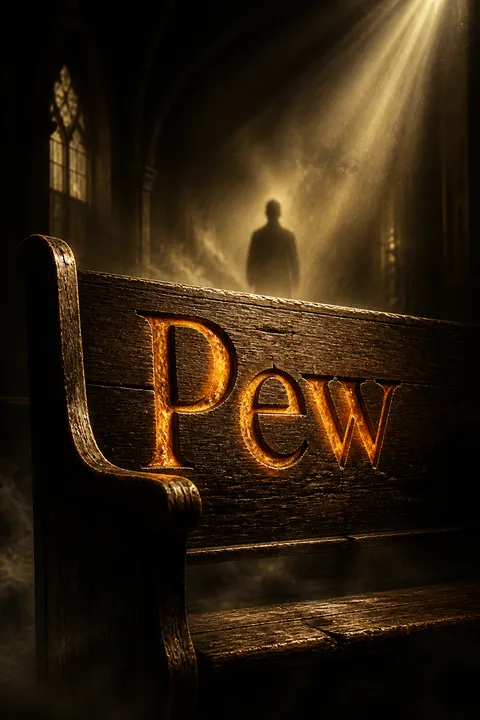
Pew, a nameless, genderless wanderer, wakes up on a church pew in a small Southern town, exhausted and disoriented. The congregation discovers Pew and, after initial confusion, decides to take them in, offering food and shelter. The church, a place of supposed refuge, becomes the first site of both hospitality and suspicion. Pew's presence unsettles the community, as their ambiguity—of race, gender, and origin—defies the town's need for clear categories. The churchgoers' kindness is tinged with curiosity and unease, setting the stage for a week of probing questions and attempts to define Pew. The sanctuary, meant for spiritual solace, becomes a stage for the town's anxieties about difference and belonging, and Pew's silence only deepens the mystery.
The Family's Unspoken Bargain
The Bonner family—Steven, Hilda, and their sons—offer Pew a place in their attic, shifting the burden of care from the church to their home. Their hospitality is conditional, shadowed by the expectation that Pew will eventually reveal their identity. The family's interactions are a dance of politeness and discomfort, as they try to coax answers from Pew while maintaining the appearance of Christian charity. The children, especially Jack, struggle with Pew's presence, projecting their own fears and prejudices onto the silent guest. The attic becomes both a refuge and a prison, a space where Pew is both cared for and surveilled. The family's kindness is genuine but fragile, easily threatened by Pew's refusal to conform.
Naming the Nameless
The Reverend, embodying the town's authority, insists on giving Pew a name—"Pew," after the church bench where they were found. This act of naming is both an attempt at inclusion and a subtle act of control, reducing Pew's complexity to a label. The town's leaders and caregivers—Roger the therapist, Mrs. Gladstone the widow, and others—take turns interrogating Pew, each projecting their own histories and traumas onto the silent figure. The act of naming, rather than clarifying, only deepens the sense of alienation. Pew's silence becomes a mirror, reflecting the townspeople's anxieties about identity, difference, and the limits of empathy.
The Town's Quiet Scrutiny
As Pew is passed from household to household, the community's curiosity intensifies. Each encounter—whether with the therapist Roger, the elderly Mrs. Gladstone, or the well-meaning but intrusive Kitty—reveals more about the townspeople than about Pew. Their stories of loss, regret, and longing spill out in monologues, as if Pew's silence invites confession. The town's attempts to "help" Pew are often self-serving, driven by a desire to feel righteous or to resolve their own discomfort. The scrutiny is relentless, and Pew's refusal to speak or define themselves becomes an act of quiet resistance, unsettling the town's fragile sense of order.
Stories of Confession and Sin
The town is haunted by its own history of violence, exclusion, and unspoken sins. Through stories told to Pew—Mrs. Gladstone's memories of her husband's racist violence, Roger's tales of trauma, and others—the community's collective guilt surfaces. These confessions are not always acts of contrition; sometimes they are attempts to justify, to seek absolution without change. The town's rituals of confession, both formal and informal, expose the limits of forgiveness and the persistence of harm. Pew, as a silent witness, absorbs these stories, becoming a vessel for the town's unresolved pain.
Drawing Out the Silence
Roger, the therapist, tries to draw Pew out through art therapy, encouraging them to express their feelings through drawing. The townspeople, frustrated by Pew's silence, oscillate between compassion and coercion. Medical professionals attempt to examine Pew, seeking physical evidence of identity, but Pew resists, refusing to be undressed or categorized. The silence becomes a battleground, with the community interpreting it as trauma, defiance, or even threat. Pew's refusal to speak or be defined is both a survival strategy and a challenge to the town's need for certainty.
The Festival Approaches
As the annual Forgiveness Festival nears, the town's anxieties intensify. The festival, a ritual of communal confession and absolution, is both a source of pride and a site of dread. Rumors swirl about the festival's true nature—some say it involves a human sacrifice, others insist it is merely symbolic. The town's divisions—of race, class, and history—become more pronounced, and Pew's presence is increasingly seen as a test of the community's values. The festival looms as a moment of reckoning, where the town's ideals of forgiveness and inclusion will be put to the test.
The Weight of Hospitality
The Bonners and other families struggle with the demands of hosting Pew. Their initial generosity gives way to fatigue, suspicion, and resentment. The act of caring for a stranger becomes a mirror for their own limitations and prejudices. The town debates what to do with Pew—whether to keep them, send them away, or pass them to another community. The burden of hospitality exposes the gap between the town's self-image as welcoming and the reality of its conditional acceptance. Pew's continued silence and ambiguity force the community to confront the limits of its compassion.
The Community's Reckoning
The town gathers at Kitty and Butch's house for a meeting to discuss Pew. The gathering is both a social event and a tribunal, where the townspeople air their fears, suspicions, and grievances. Debates erupt over Pew's identity, the meaning of their silence, and the risks they supposedly pose. Some advocate for compassion, others for caution or exclusion. The meeting reveals the town's deep divisions and the fragility of its unity. Pew, present but voiceless, becomes the object of the community's projections and anxieties, their fate to be decided by consensus or convenience.
The Children's Questions
The town's children, less invested in the rituals of order and exclusion, ask the questions adults avoid. Annie, Kitty's daughter, befriends Pew and voices her own doubts about gender, fairness, and the meaning of belonging. The children's curiosity and openness contrast with the adults' need for control and certainty. Their questions—about identity, justice, and the possibility of change—echo the book's central themes. Through their eyes, the arbitrariness of the town's rules and the cruelty of its rituals are laid bare.
Rituals of Forgiveness
The Forgiveness Festival arrives, and the town gathers in white robes for the ritual. Blindfolded, the townspeople confess their sins aloud, their voices mingling in a cacophony of guilt, shame, and longing for absolution. The ritual is both cathartic and hollow, a performance of unity that cannot erase the town's history of harm. Pew, swept up in the ritual, remains an outsider—both witness and scapegoat, included and excluded. The festival's promise of forgiveness is revealed as both necessary and insufficient, a temporary balm for wounds that run deep.
The Festival's Blindfold
The act of blindfolding during the festival symbolizes both equality and erasure. In darkness, the townspeople are meant to become indistinguishable, their confessions anonymous, their differences dissolved. Yet the ritual blindness also exposes the community's willful ignorance—their refusal to see the harm they perpetuate, the people they exclude, the truths they avoid. Pew's own ambiguity becomes a challenge to the ritual's logic: can true forgiveness exist without true seeing? The blindfold is both a shield and a barrier, a symbol of the town's longing for innocence and its inability to achieve it.
The Aftermath of Confession
As the festival ends, the town emerges into the light, changed and unchanged. Some feel relief, others emptiness or confusion. The ritual has provided a temporary sense of unity, but the underlying divisions and wounds persist. Pew, having witnessed the confessions and received the community's touch, remains unclaimed and undefined. The promise of forgiveness is revealed as fragile, dependent on forgetting rather than true reconciliation. The town disperses, returning to its routines, but the questions raised by Pew's presence linger.
The Search for Belonging
In the aftermath, Pew drifts through the town, encountering those who remain on the margins—children, outcasts, the elderly. Each encounter is marked by a longing for connection and a recognition of difference. Pew's search for belonging is mirrored by the town's own restless desire for wholeness, for a community without outsiders. Yet the very act of defining who belongs creates exclusion. Pew's journey becomes a meditation on the impossibility of perfect inclusion, the inevitability of loneliness, and the hope of fleeting moments of understanding.
The Limits of Knowing
The town's efforts to know, define, and claim Pew ultimately fail. Pew's refusal to speak, to be categorized, or to reveal a "true" identity becomes an act of resistance against the violence of certainty. The townspeople are left with their own projections, their own unresolved questions. The limits of empathy, the dangers of certainty, and the necessity of ambiguity are laid bare. Pew's presence exposes the town's need for scapegoats, for rituals that mask rather than heal, for stories that comfort rather than challenge.
The Vanishing Point
In the end, Pew disappears—whether by choice or by force is left unclear. Their absence is both a relief and a loss for the town, which quickly moves to forget the discomfort they brought. The story closes with a meditation on the impossibility of truly knowing another, the persistence of difference, and the hope that, somewhere, those who do not fit may find each other. The town returns to its routines, its rituals of forgetting, but the questions raised by Pew's presence—about identity, belonging, and the limits of forgiveness—remain unresolved, echoing in the silence left behind.
Analysis
A meditation on identity, exclusion, and the limits of forgivenessCatherine Lacey's Pew is a haunting parable about the violence of certainty and the fragility of community. Through the figure of Pew—a nameless, genderless, racially ambiguous stranger—the novel exposes the ways in which societies define themselves by who they exclude. The town's rituals of confession and forgiveness, meant to foster unity, are revealed as both necessary and insufficient, masking wounds that cannot be healed by ritual alone. Pew's silence is both a shield and a challenge, forcing the community to confront its own anxieties about difference, belonging, and the impossibility of perfect inclusion. The novel's refusal to resolve Pew's identity is its most radical gesture, insisting on the dignity of ambiguity and the necessity of living with uncertainty. In a world obsessed with categorization and control, Pew offers a powerful critique of the ways in which empathy can become coercion, and forgiveness can become forgetting. The lesson is both unsettling and urgent: true community requires not the erasure of difference, but the courage to face it without violence or denial.
Review Summary
People Also Read










Characters
Pew
Pew is the novel's central figure, a nameless, genderless, racially ambiguous stranger found sleeping in a church. Their refusal to speak or define themselves unsettles the town, exposing its anxieties about identity, belonging, and difference. Pew functions as a mirror, reflecting the fears, prejudices, and desires of those around them. Their silence is both a shield and a challenge, resisting the community's attempts at categorization and control. Psychologically, Pew embodies the experience of the outsider, the scapegoat, and the unknowable other. Their journey through the town is marked by both vulnerability and quiet defiance, and their ultimate disappearance leaves the community—and the reader—confronting the limits of empathy and the persistence of exclusion.
Hilda Bonner
Hilda is the matriarch of the family that first takes Pew in. She is torn between genuine compassion and the pressures of conformity, hospitality, and reputation. Hilda's kindness is sincere but brittle, easily overwhelmed by fear and the need for social approval. Her relationship with Pew is marked by a desire to help, but also by anxiety about what Pew's presence might mean for her family and standing in the community. Psychologically, Hilda is shaped by her own traumas and the legacy of her family's history, including violence and exclusion. Her struggle to reconcile her ideals with her limitations is emblematic of the town's broader moral dilemmas.
Steven Bonner
Steven, Hilda's husband, embodies the town's values of order, authority, and propriety. He is both protective and suspicious, eager to do the "right thing" but ultimately more concerned with appearances and control than with true understanding. Steven's interactions with Pew are marked by a paternalistic desire to define and manage, and his patience wears thin as Pew resists categorization. Psychologically, Steven is driven by a need for certainty and a fear of disruption, making him both a caretaker and an enforcer of the town's boundaries.
Jack Bonner
Jack, the Bonners' eldest son, is deeply unsettled by Pew's presence. His confusion and hostility reflect the town's anxieties about ambiguity and the unknown. Jack's reactions are shaped by both his upbringing and his own insecurities, and he becomes a conduit for the community's fears about contamination, danger, and the loss of order. Psychologically, Jack is caught between childhood innocence and the pressures of conformity, his aggression masking a deeper vulnerability.
The Reverend
The Reverend represents the town's religious and moral leadership. He is both welcoming and insistent, eager to include Pew but only on the town's terms. His attempts to name and define Pew are acts of both care and control, reflecting the community's need for order and clarity. Psychologically, the Reverend is driven by a belief in the power of ritual and confession, but his faith is tested by Pew's refusal to conform. He embodies the tension between inclusion and exclusion, forgiveness and judgment.
Roger
Roger is the town's therapist, tasked with drawing Pew out of their silence. He approaches Pew with professional curiosity and genuine concern, using art therapy and gentle questioning. However, his efforts are ultimately self-serving, as he seeks to fit Pew into familiar narratives of trauma and recovery. Psychologically, Roger is both empathetic and limited, his desire to help constrained by his own need for understanding and control.
Mrs. Gladstone
Mrs. Gladstone is an elderly widow who shares with Pew stories of her husband's past violence and her own complicity. Her confessions reveal the town's buried history of racism and harm, and her loneliness mirrors Pew's own isolation. Psychologically, Mrs. Gladstone is shaped by regret and a longing for absolution, seeking in Pew a witness to her pain and a chance for redemption.
Kitty Goodson
Kitty is a prominent townswoman, eager to display hospitality and maintain social harmony. Her interactions with Pew are marked by a frantic energy, as she tries to smooth over discomfort and avoid conflict. Psychologically, Kitty is driven by a need for approval and a fear of disruption, her cheerfulness masking deeper anxieties about difference and disorder.
Nelson
Nelson is a refugee adopted by Kitty's family, marked by his own history of loss and violence. He forms a tentative bond with Pew, recognizing in them a fellow outsider. Nelson's silence and resistance to assimilation mirror Pew's own, and his presence exposes the limits of the town's inclusivity. Psychologically, Nelson is both wounded and resilient, navigating the complexities of belonging and exclusion.
Annie Goodson
Annie, Kitty's daughter, befriends Pew and voices her own doubts about gender, justice, and the meaning of community. Her curiosity and openness contrast with the adults' need for certainty, and her questions challenge the town's assumptions. Psychologically, Annie represents the possibility of change, her willingness to question and imagine alternatives offering a glimmer of hope amid the town's rigidity.
Plot Devices
Ambiguity as Narrative Engine
The novel's central device is the radical ambiguity of Pew's identity—gender, race, age, and origin are all left undefined. This ambiguity unsettles the town and propels the narrative, forcing characters (and readers) to confront their own assumptions and prejudices. The refusal to resolve Pew's identity becomes a form of resistance, challenging the community's need for order and the violence of categorization. The narrative structure mirrors this ambiguity, unfolding in a series of encounters, confessions, and rituals that reveal more about the townspeople than about Pew.
Confession and Ritual
The town's rituals of confession—both in private stories and the public Forgiveness Festival—serve as both plot devices and thematic explorations. These rituals are meant to foster unity and absolution, but they also expose the limits of forgiveness and the persistence of harm. The festival's blindfolding, in particular, becomes a powerful metaphor for both equality and willful ignorance, highlighting the gap between the town's ideals and its realities.
Silence as Resistance
Pew's refusal to speak or be defined is a central plot device, transforming them from a passive victim to an active disruptor. Their silence frustrates the community's attempts at control and forces characters to reveal themselves. The narrative uses silence not as absence, but as a form of agency—a way to resist the violence of naming, confession, and assimilation.
Foreshadowing and Circularity
The novel is structured around the approach of the Forgiveness Festival, with rumors of sacrifice and exclusion foreshadowing the climax. The cyclical nature of the town's rituals—confession, forgiveness, forgetting—mirrors the persistence of harm and the difficulty of true change. The narrative's circularity, with Pew's journey beginning and ending in uncertainty, reinforces the themes of ambiguity and the limits of knowing.








































