
Plot Summary
House of Ancient Poison
Désamour, France, is rotten with secrets and power that spans generations. The Delacroix, Laurent, and other old houses rule with silent violence and public charity, their sins passed down and never truly forgotten. In this world, confessions at church are met with fear, not forgiveness. The children of these dynasties grow up watching parents calcify under guilt, and Ivy—a child on the edge of things, too sharp for her age—is already branded by her family's curse. When a priest warns of a codex of blood and a legendary "Butcher" who handles corrections, a dangerous legacy is established. The message is clear: in this world, love is an afterthought, and survival is the only gospel.
No More Pretending
Asher Delacroix is a prodigy, a celebrity, and heir to a criminal dynasty, but in his heart beats only restlessness and the yearning for freedom from a script written by generations before him. He is bound by invisible chains: family obligations, alliances (symbolized by a relationship with Camille), and public perception. Asher lands in France at his family's rotting estate, joined by his siblings and courted by Camille. He knows the town is a graveyard in cobblestones, that every handshake curses him with another weight. The only flashes of joy come from rebellious moments he steals for himself and opposing the path laid out—his contempt for doing things "as he should." It is clear: he wants off this ride.
Marriage, Mask, and Machinery
Ivy is newly married to Parker—a union devoid of love, heavy with expectation, and locked behind social armor. Instead of happiness, Ivy finds herself in a mausoleum of a house, her identity splintering between what she must appear to be and who she is beneath the script. The house is filled with ghosts, and the only comfort is routine: running, friends, and the banality of luxury. Parker delivers distance disguised as politeness; Ivy delivers resilience disguised as acceptance. When Asher, Parker's much younger yet fiercely enigmatic friend, enters her world, Ivy feels a jolt. He is sun-warmth and trouble incarnate. The tension is instantaneous—she recognizes a fellow haunted soul, sparking a dangerous curiosity neither can name.
Ghosts of Désamour
Both Asher and Ivy are shaped by the echoing trauma of their respective childhoods in power-sick families. Asher's life is a performance for his autocratic father and calculating twin Atlas, compelled to navigate criminal alliances, and required to keep vigil over his mother and siblings. Meanwhile, Ivy's own past—rife with abandonment, captivity, and loss—breeds a psychic armor. Both have learned: love is expensive, freedom an illusion, but the ghosts of their old worlds continue breathing down their necks. The only hope for escape lies in becoming what their parents fear most: unpredictable.
Winter Island Intrigues
The main cast converge on Veilarath, a snowbound island ruled by privacy and myth. Asher comes with his new, PR-perfect fiancée Camille (whose artifice is both armor and trap), Parker drags Ivy deeper into isolation, and Ivy's inner circle flock to shield (or expose) her. Here, the folklore is as real as the icy winds, and the old money elite gather for the first annual Winter Games—a thin cover for war games of reputation, dominance, and survival. The nostalgia and myth of the island's mountains mirror the tangled loyalties below. Everyone is watching. Especially the ghosts in mirrors.
Friends, Lovers, Strangers
Asher and Ivy are forced together by proximity and fate; their "friendship" is continually tested by needy banter, shared glances, and forbidden touches. Camille and Parker provide superficial comfort but are obstacles; Ivy's friends—Luce, Punk, and Jord—serve as Greek chorus, whispering warnings and truths Ivy isn't ready to hear. Dinners become war zones, and every interaction is flammable and loaded. Beneath every joke, every stinging flirtation, lies a recognition: they see one another fully, and that is terrifying. The chemistry is undeniable; the risk of mutual ruin grows with every shared secret.
Chained Histories Unravel
Ivy relives trauma: her father's murder, the years of captivity, and her "rescue" by the Butcher, Emeric, whose training will shape her forever. Asher's family legacy is a poison vine, with Parker as a false friend and Atlas circling as a judge. Their histories feed the compulsions driving them to (and from) each other—violence, addiction, escape, and the desperate promise of love as something you must steal rather than earn. In blending pain and want, they start to discover: the past doesn't chain you unless you let it, but it always leaves scars.
Subterranean Games Begin
The Games are a microcosm of their world: noblesse oblige, cruelty, and the necessity of performance. Asher's feats on the slopes are legendary, earning the envy and adulation of many—including Ivy, who wrestles with pride and possessiveness. The Games bring out the worst in Parker and Camille. The mansion is a pressure cooker, and every night is a new contest—board games, seduction, jealousy, and literal deadly games. In the black-rose garden, alliances shift, cracks deepen, and Asher and Ivy face the first open acknowledgment that their connection is not just chemistry: it is a threat.
Collision Course at Veilarath
Asher and Ivy's desire ceases to be deniable. Scenes of stolen affection, urgent sex, and whispered confessions unfold against the threat of exposure—from spouses, from friends, from the watchful house. The engagement of Asher and Camille (a façade, but still real), and Ivy's crumbling marriage to Parker create a powder keg. The rules of the script have burned, replaced with the primal urge to claim and be claimed. Yet, the shadow of their grimy inheritance—their families' crimes, the ghosts of victims and abusers—haunts every caress.
Betrayal at the Altar
At Ivy's thirtieth birthday—a symbolic threshold—house and heart are both arenas of final confrontation. Parker returns with a threat: he knows everything. The party is a masquerade in more ways than one, with everyone waiting for someone else's mask to slip. Ivy is given a diamond by Asher, and the act is final, desperate—his confession of love without words. Ivy and Asher, both determined not to be weak, nonetheless reveal their greatest frailty: what they feel for one another.
Assassin's Love Script
Ivy's assassin identity cannot be checked at the door. Her marriage was a mission, her skills honed as inheritance and survival. While her past trauma and calculated murders haunt her, it's not the violence that shatters her—it's the risk and reality of loving Asher. The pair bury their own rules as Ivy comes to accept that their love, like their pain, is monstrous but real. Yet, another script emerges: the pain becomes the play, and love is both escape and execution order.
The Price of Safety
Parker's duplicity and violence come full circle—he taunts Ivy, promising retaliation for her disloyalty, confessing his knowledge of all her secrets. Ivy realizes there will be no safety, no truce. The only route is to finish what began years ago: to kill her abuser, to kill her own weakness, to accept the kill as freedom, not simply closure. Asher's presence at the murder scene is a last testament: he is either her accomplice or her next victim.
Descent into Nightmares
After years of violence, Ivy must reckon with herself: is she irredeemable, or simply surviving in a world that demands monsters? Her trauma spirals—nightmares of Parker, of helplessness, of training under the Butcher. The final "job" is not an assassination but a reckoning with her own capacity to love and destroy. Ivy's therapist pushes her to name what she really is—a human who wields venom, but also anti-venom—her own healing, if she survives.
The Monster's Mirror
Ivy stares into the mirror, uncertain if what she sees is a lover, a killer, or both. Her body—tattooed, scarred, beautiful—bears witness to both her victories and her surrender to violence. Through therapy, friendship, and the echoes of Asher's absence, Ivy seeks identity in the aftermath. Is she doomed to loneliness? Is love an infection, violence the antidote, or vice versa? Her circle becomes her only semblance of truth, her punishment for loving at all.
All That We Burn
Ivy's grief is an acid, eating away the careful barriers that held her functional. Loss is both expected and unbearable, especially as her circle—Jord, Luce, Punk, Nonna, Leon—try to pull her back from oblivion. She recognizes, with agony, that vulnerability is not a weapon, but a wound. The only comfort is the knowledge that violence and affection are two sides of the same coin—her salvation lies in accepting both.
Outrunning the Bloodline
The final jobs come from Emeric, the original Butcher, who taught Ivy long ago that monsters are forged, not born. Ivy's new marks are "safe," routine—yet she finds no satisfaction. Killing, once an act of power and survival, now feels empty in the absence of purpose. She wonders if, in the end, this was all she was born for: death, not new beginnings.
Lies Carved in Snow
Ivy receives an invitation to another wedding assignment. After everything—love, murder, therapy, confession—she realizes the cycles never really end. But this time, the job will bring her full circle. She returns to Veilarath for one last assignment, feeling as if she is both hunter and hunted.
The Final Extraction
Ivy reunites with Leon, her original rescuer and closest friend in horror. Their exchange is one of violence, reminiscence, confession, and, ultimately, acceptance. Ivy's traumas are acknowledged, not erased. In training and memory with her "family" of assassins, she understands: purpose is survival, and her only duty is to those she chooses, not those who demand.
Sanctuary of Black Roses
Ivy at last finds herself somewhat at peace—a home in the woods, a circle of killers masquerading as a family, and a sense that, while she has burned everything else, she is still standing. Violence is a language between them, but so is care, and so is the memory of Asher, imprinted forever. She may never fully heal, but she learns to build sanctuaries from her scars.
The Devil's Consummation
Ivy is given another job, and she takes it without hesitation—old habits die hard. The assignment feels like routine until, on a Mediterranean jetty, she arrives for another forced "wedding." But this time, the groom is Asher, alive, older, and reincarnated into her story again. Their cycle is destined to repeat: love as poison, desire as its own punishment, but always, always together.
Loss and Resurrection
Asher's origin is revealed in a flashback—his early trauma, the party of masks, a chained girl who would haunt him forever. The sense of inevitability is palpable. Even from the start, monsters are not born; they are made, shaped by the pain and blood of others. Ivy and Asher, cursed and blessed, are bound by this truth: if love is a poison, it is the only one that feels real.
Heir to the Butcher
The series closes as the codex (House of the Butcher) is passed on. Emeric, the original Butcher, pronounces that the cycle is not over. Another wedding is coming; another bloodline is to be "corrected." Ivy is left both monster and heroine, assassin and lover, free and forever hunted. The only way to survive is to own the story—violence, heartbreak, and all.
Requiem for Poison Lovers
The final note is one of summation and warning: weddings, funerals, and murders are all the same in Ivy and Asher's world. To love is to risk everything, and monsters love as recklessly as they kill. Legacies are left bleeding, but a new generation of poison lovers rises, armed with their own scripts—and the scars of those who came before.
Analysis
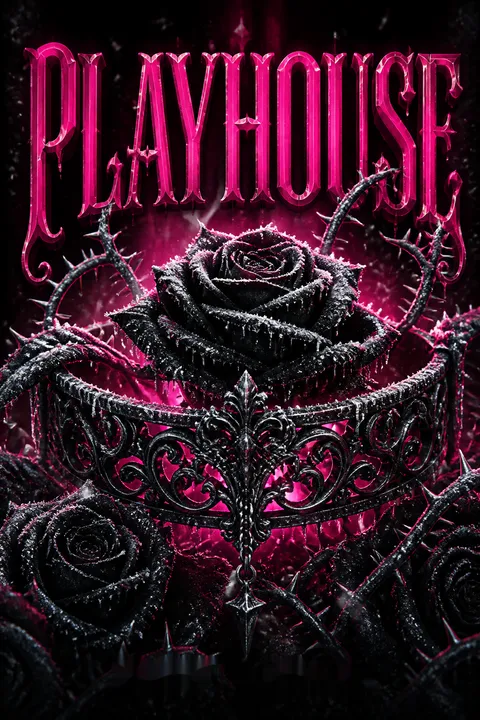
In Playhouse, Amo Jones crafts a tale where love and violence are two shades of the same poison, and survival demands both. The principal lesson is that trauma, legacy, and desire are inextricably linked; to escape one is to be consumed by the others. Ivy and Asher are mirrors—each the product of ancient rot, cycles of abuse, and the need to belong. Their love, often predatory and brutal, is entirely appropriate to the world that shaped them: they bond through pain and mayhem because normalcy is both impossible and suspect. The novel interrogates the scripts we inherit—gender, marriage, family, even violence—and the possibility (or illusion) of choosing our own lines.
What emerges is not so much a love story as a requiem for all who have loved before learning to survive. Ivy's arc—assassin, wife, victim, monster, healer—subverts the trope of the "fallen woman," and instead asks if survival itself can be heroic even when redemption is denied. Asher's fate as lover and (almost) victim/hero underscores the cost of truly defying the bloodline. Camille and Parker are not just rivals, but ciphers for all the expectations that destroy intimacy.
Jones leaves readers with the insight that "healing" is uneasy, never complete, and may demand as much violence as the crimes that birthed it. The ending, open, ambiguous, suggests that every ending is a new beginning—or just a new theater for old pain. In a world where love is weaponized and the only way out is through the fire, Playhouse insists that we cultivate sanctuaries, even if they must be built from scars. The novel's ultimate wisdom: nobody is completely innocent, but all are deserving of survival—even (and especially) the monsters we call our own.
Review Summary
Playhouse is widely praised for its intense dark romance, magnetic chemistry between protagonists Asher and Ivy, and signature mind-bending plot twists. Most readers celebrate the forbidden dynamic, rich world-building on the island of Veilarath, and the shocking cliffhanger ending. Common criticisms include pacing issues, underdeveloped relationship progression that feels rushed or told rather than shown, and occasional confusion with flashback chapters. The majority eagerly anticipate the sequel, Gravehouse, with many calling it the author's best work yet.
People Also Read

Characters
Ivy (Ivanya)
Ivy is at once prey and predator—a woman made hard by the traumas of her childhood, cultivated by a succession of fathers, mentors, and abusers. Her relationship with her own past is complicated: she was groomed, captive, and then trained by the Butcher, Emeric, to become an assassin able to cope with a world that wants her broken. Ivy marries Parker to fulfill a role that is both strategic and self-destructive, her pain cloaked in luxury and wit. She is capable of great violence but craves belonging; her yearning for love is inextricable from her capacity to harm. Psychologically, Ivy's reserve is a wall she cannot climb, except with Asher—he is the only person who sees through her poison mask to the humanity beneath. Her arc moves from brittle, hollow survival to uneasy, visceral acceptance of her contradictory nature: "clean or dirty, always venom." In the end, she is both executioner and healer, loyal to those she claims and deadly to those who cross her.
Asher Jameson Delacroix
Asher is a scion of the Delacroix crime family, raised in a world of cold privilege, expectation, and violence. He is a social chameleon—compulsively charming, publicly adored as a snowboarder, but internally burdened and angry at his prewritten fate. Asher's relationship with his father is fraught, his twin Atlas both a confidante and a rival. He seeks meaning beyond the gory script, finding it only with Ivy—a woman whose damage matches his own. For all his bravado and violence, Asher is driven by a search for authenticity, someone who will claim him, scars and all. His arc is one of reluctant inheritance: he tries to escape the family business, only to step into his own brand of darkness. With Ivy, he finds an anchor—a place dangerous and true. Psychologically, he is reckless because he cares, and caring is what terrifies him most. Ultimately, Asher is the only one willing to die for love, and (ironically) to kill to keep it safe.
Parker Lee
Parker wields politeness as a weapon and proximity as a means of control. On the surface, he is a successful, polished man; beneath, he is manipulative, cruel, and dangerous. His marriage to Ivy is one of power and utility. Parker's true face is revealed in the way he undermines, gaslights, and physically assaults Ivy—he knows who she is, but cannot quite believe she could destroy him in return. Psychologically, Parker is a narcissist—his sense of entitlement and rage manifest whenever Ivy steps outside her box. His arc is a warning: the real monsters wear masks of normalcy, using love as both lure and chain.
Camille Laurent
Camille is Asher's fiancée by arrangement, a woman whose pedigree, beauty, and ambition are simulacra of power rather than the thing itself. She is less a villain and more a symbol: someone who plays her expected role so deeply that she loses distinction from the machinery of control. Camille's jealousy of Ivy is both genuine and performative—she senses threat, but also wants to win the competition set for her by others. Psychologically, Camille is fragile, her agency limited by the scripts she tries desperately to please. Her arc collapses when faced with genuine connection—she loses to a love neither she nor the system can understand.
Atlas Jameson
Atlas is Asher's older twin, a "mirror that distorts." Where Asher is impulsive and disobedient, Atlas is calculating, emotionally cool, and almost amused by the chaos around him. He cares for Asher but fears the consequences of uncontained passion. While he participates in the family's criminal structure, Atlas is always at a slant—never quite taking the risk of authenticity, but also never fully supporting the stifling status quo. Psychologically, Atlas represents the part of the self that watches without committing, afraid to lose or love fully. His arc is one of reluctant loyalty.
Lucinda (Luce)
Lucinda is Ivy's best friend and chosen family—a woman as sharp as she is compassionate. She provides both comic relief and fierce protection, unafraid to challenge Ivy's self-delusions and call out bullshit in the men around her. Lucinda is a survivor of her own shadows, and her loyalty to Ivy is absolute. Psychologically, Luce represents the healthy possibility of loyalty, friendship, and empathy in a poisonous world. She is one of few who makes Ivy feel human and is not afraid to confront her with truths she doesn't want to hear.
Jord
Jord is Ivy's other best friend and the adopted brother figure—a man who keeps the group laughing and together when everything is falling apart. Beneath the humor is a deep intelligence and an ability to "read the room," switching focus to where it's needed and diffusing tension before it can explode. Jord is also trusted to the point of savagery, and his loyalty to Ivy is matched only by his own wounds. His role is to make family out of the broken, providing comfort and reality checks in equal measure.
Punk
Punk is Ivy's fiercely protective friend—nonbinary, iconoclastic, with unmatched digital skills and a deep sense of personal justice. Punk is both Ivy's shield and her sword when it comes to threats, manipulating information to keep the group two steps ahead and unearthing secrets that would otherwise stay buried. Punk's relationship with Atlas brings unexpected tenderness to the group; together, they amplify each other's strengths and weaknesses. Psychologically, Punk is the modern savant, believing that survival means adaptation but never compliance.
Emeric ("The Butcher")
Emeric is the Butcher—legendary, enigmatic, original architect of the assassin's codex that trains and orders new generations. He "rescues" Ivy, but at a price: her innocence for survival. Emeric is both savior and devil; his legitimacy is that he has lived through every horror, shaping the world from behind the scenes. Psychologically, Emeric embodies the ultimate pragmatist: monsters exist, the question is who will wield them. He respects Ivy's violence, but wishes for her peace—a blessing he knows cannot be given, only earned.
Leon
Leon is Ivy's anchor in violence—someone who knows her past, has shared in her survival, and cares for her beyond usefulness. He tempers the darkness in her soul with reminders of family and acceptance; he nurses her through trauma and calls her out when she slips. Leon, unlike others, doesn't demand clarity—he only asks for honesty. His arc is to remind Ivy (and us) that redemption is messy, and home is forged, not found.
Plot Devices
Codex and Cyclical Violence
The central plot device is the codex—a book, literal and metaphorical, in which names, secrets, and sins are written in blood. It functions as fate, prophecy, and threat: to be listed is to be doomed, yet refusing the script is also a death sentence. Violence repeats in cycles—parent to child, victim to survivor, love to loss—so that every character is both written by and writing the script.
Narrative Structure and Duality
The novel is told in alternating first-person chapters, switching between Ivy and Asher (with critical chapters given to supporting characters and flashbacks). This creates unreliable narration: each character's self-doubt, trauma, or bravado distorts events. The structure reveals the impossibility of clean escapes; history leaks forward, and love is always contaminated by violence.
Foreshadowing and Fragmented Memory
Repeated motifs—chained girls, masked parties, snow turned red, roses over graves—link childhood trauma to adult betrayal. Ivy and Asher's memories are triggered by sensory experiences, often blending with action and dialogue to foreshadow future ruptures (and the impossibility of full healing). The final wedding in Saint-Tropez is foreshadowed in the opening: all ceremonies are potentially funerals.
Symbolism of Black Roses and Chokers
The repeated imagery of black roses and iron chokers represents how love (and violence) is both sanctuary and prison. The choker Asher gives Ivy is beautiful, protective, but can't be removed—love as both claim and cage. Similarly, black roses grow only in certain soil—so, too, does Ivy's affection.
Privacy Laws and the Gaze
The lawless privacy of Veilarath is both refuge and threat: paparazzi and onlookers are always at the boundary, and secrets are exposed on social media, yet the house remains a stage. The text repeatedly thematizes the impossibility of true privacy—violation comes from lovers, friends, and the self.
The Winter Games
The Winter Games, a high-stakes snowboarding competition, serves as both literal contest and a metaphor for love, loyalty, and reputation. Every victory is costly; every risk can be fatal. The "games" in the house, from Monopoly to sex, mirror deeper struggles for dominance.
Trauma Response and Therapy
Therapy sessions, flashbacks, and trauma responses are rendered as settings and plot beats. Ivy's struggle to admit vulnerability is paralleled by her professional violence. Her therapy is messy, at times self-deceiving, but is itself a kind of plot mechanism—the only way to move forward is to return to pain.
Betrayal and Double Cross
Betrayal—by Parker, Camille, even Ivy herself—is always anticipated and yet shocking, underscoring the central lesson: trust kills, but mistrust is its own prison. By the climax, every character has betrayed another and themselves.
Climactic Paradox
The final murder (Parker), the attempted shooting of Asher, and the twist "wedding job" where Ivy finds Asher again, all operate on the logic of the paradox: the thing you destroy is the thing you most want to keep. There is no clean ending—only another cycle of love, violence, and survival.
Download PDF
Download EPUB
.epub digital book format is ideal for reading ebooks on phones, tablets, and e-readers.








































