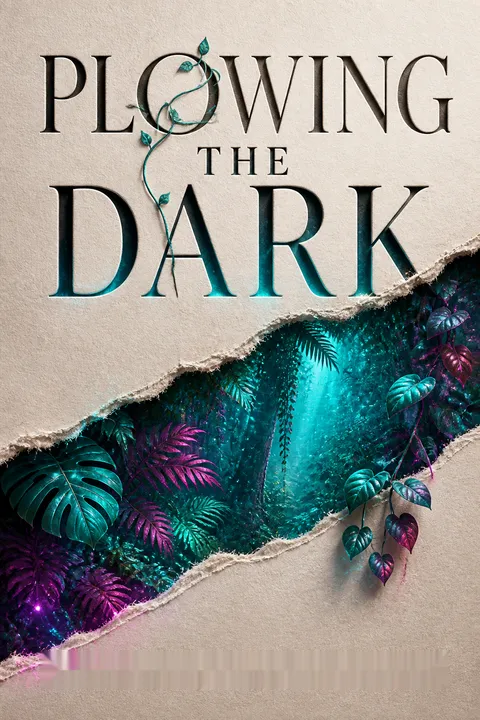

Plot Summary
Reunion in the Dark
Adie Klarpol, a once-promising artist, receives a late-night call from her college friend Steve Spiegel, now a software developer in Seattle. Their banter is tinged with nostalgia and regret, but Steve's invitation is more than a reunion—it's a lifeline. He wants Adie to join his team at the Realization Lab, where they're building a revolutionary virtual reality environment called the Cavern. Adie, disillusioned with art and life in New York, is hesitant but intrigued. The call stirs memories of lost ambitions and the possibility of rediscovering purpose. The city outside is indifferent, but inside, a dormant hope flickers. The past and future collide in this moment, setting Adie on a path that will test her creativity, her identity, and her capacity for belief.
Entering the Cavern
Adie arrives in Seattle, greeted by Steve and the promise of something extraordinary. The Realization Lab is a maze of technology and ambition, but the heart of it is the Cavern—a room-sized virtual reality simulator. Guided by Steve and the hardware wizard Spider Lim, Adie dons the gear and steps into a world that defies her expectations. The Crayon World, a childlike landscape of color and possibility, unfolds around her. She is both awed and unsettled by the seamless blend of art and code, the way imagination becomes tangible. The experience is playful, dizzying, and deeply moving. For the first time in years, Adie feels the pull of creation, the urge to shape a world. The Cavern is not just a machine; it's an invitation to dream again.
Crayon World's Innocence
Inside the Crayon World, everything is broad-stroked and innocent. The landscape is a gallery of childhood drawings—houses, trees, bees—rendered in vibrant, imperfect lines. There are no people, only the traces of human presence and the logic of play. The world loops on itself, endless and forgiving, a place to get lost and found. Adie is enchanted by its simplicity and the way it evokes lost innocence. Yet, beneath the surface, she senses the limitations—the absence of depth, the impossibility of true interaction. The Crayon World is a test, a prototype, but it awakens in Adie a longing for something more: a world that can hold complexity, pain, and beauty together. The seeds of ambition are sown in this digital playground.
Escape to War-Torn Beirut
While Adie's journey unfolds in Seattle, another narrative begins: Taimur Martin, an American teacher, flees a failed relationship and takes a job in Beirut, hoping for renewal. The city is recovering from civil war, but the scars are everywhere. Taimur is drawn to the intensity and resilience of his students, but beneath the surface, danger lurks. His attempt to escape personal pain leads him into a new kind of captivity. The chapter is suffused with irony and foreboding, as Taimur's optimism is gradually eroded by the realities of a fractured world. The sense of being out of place, of searching for meaning in chaos, echoes Adie's own dislocation. Both are about to be tested in ways they cannot imagine.
Dislocation and Decision
Adie returns to New York, but the city has turned hostile. She feels exposed, vulnerable, and out of sync. The memory of the Cavern haunts her dreams, offering a vision of escape and possibility. A series of unsettling encounters—harassment, violence, alienation—push her to the brink. When she finds a rental listing for a cottage in Seattle that matches her dream, she seizes the chance. The move is both a flight and a leap of faith. In Seattle, she finds a community of eccentric, driven creators at the Realization Lab. The work is demanding, the technology bewildering, but Adie is drawn in by the challenge and the camaraderie. She begins to see how art and science can converge, how imagination can be given form. The decision to stay is a commitment to transformation.
Building Virtual Eden
Adie becomes a key player in the Cavern project, collaborating with programmers, mathematicians, and fellow artists. Together, they tackle the challenge of making virtual objects—leaves, flowers, rooms—feel real, responsive, and alive. The process is both technical and philosophical: how to capture the complexity of nature, the unpredictability of life, in code? Adie learns to navigate the language of algorithms, to translate her artistic vision into data structures and behaviors. The team debates the nature of reality, the limits of simulation, the ethics of creation. As the virtual worlds grow more sophisticated, so do the questions they raise. The Cavern becomes a crucible for invention, a place where the boundaries between art and science, self and other, begin to blur.
Classroom Under Siege
Taimur's story takes a dark turn as he is kidnapped by armed men and plunged into a world of uncertainty and fear. Blindfolded, beaten, and interrogated, he struggles to maintain his sanity and sense of self. The routines of captivity—meals, exercise, negotiations—become both torture and lifeline. Taimur's mind turns inward, replaying memories, inventing stories, clinging to scraps of hope. The psychological toll is immense: time distorts, identity fractures, the line between reality and imagination blurs. Yet, in the midst of suffering, moments of connection and grace emerge—a kind word from a guard, a shared joke, a memory of love. The chapter explores the resilience of the human spirit and the ways in which imagination can be both refuge and prison.
Art and Algorithm
Back in Seattle, the Cavern team faces technical and creative hurdles. Adie and her colleagues wrestle with the problem of making virtual objects not just visible, but believable—imbued with weight, texture, and behavior. They debate the merits of different approaches: mathematical modeling, photographic sampling, procedural generation. The process is iterative, often frustrating, but also exhilarating. Each breakthrough brings new challenges, new questions about the nature of perception, the ethics of simulation, the purpose of art. Adie finds herself both exhilarated and unsettled by the power of the tools at her disposal. The line between creation and manipulation, between beauty and control, grows ever thinner.
Collision of Realities
As the Cavern's virtual worlds become more immersive, the team begins to experience strange side effects. Spider Lim, the hardware genius, develops psychosomatic symptoms—bruises, chills, even injuries—that mirror events in the simulation. The boundary between the digital and the physical, the imagined and the real, becomes porous. The team is both thrilled and disturbed by the implications. Meanwhile, Adie's work on a virtual jungle, inspired by Rousseau's paintings, becomes a site of collective obsession and projection. The Cavern is no longer just a tool; it is a mirror, a testing ground, a source of both wonder and anxiety. The collision of realities forces the team to confront the limits of their knowledge and the consequences of their ambitions.
The Jungle Room's Promise
The Jungle Room, Adie's masterpiece, is unveiled to the team. It is lush, vibrant, and haunting—a place of beauty and longing, but also of absence and loss. The team marvels at its technical achievements, but debates its meaning and value. Is it art, science, or something else? The room becomes a site of projection for the team's desires and fears. For Spider Lim, it is a place of erotic and existential longing. For Adie, it is both a triumph and a reminder of the impossibility of true escape. The Jungle Room promises paradise, but delivers only a simulacrum—a space where the boundaries between self and world, creator and creation, are forever in flux.
Captivity's Descent
Taimur's captivity grinds on, each day indistinguishable from the last. The routines that once offered solace become instruments of torment. Time loses meaning; the self begins to dissolve. Taimur clings to memories, stories, and scraps of language, but the effort is exhausting. The guards are alternately cruel and indifferent, their motives opaque. The outside world recedes, replaced by a claustrophobic present. Yet, in the depths of despair, moments of clarity and connection emerge—a shared meal, a glimpse of the sky, a remembered song. The chapter is a meditation on endurance, the limits of the body and mind, and the ways in which suffering can strip away illusion, leaving only the bare fact of existence.
Simulating the Future
The Cavern becomes a platform for ambitious new projects: economic simulations, weather models, molecular visualizations. Ronan O'Reilly, an Irish economist, uses the Cavern to model global markets, seeking patterns and predictions in the chaos of data. The team debates the power and danger of simulation—its ability to reveal hidden truths, but also to seduce and mislead. The virtual becomes a space for experimentation, for testing hypotheses and exploring possibilities. Yet, the more sophisticated the simulations become, the more they reveal the unpredictability and contingency of the real world. The future remains stubbornly opaque, resistant to control or prediction.
Economics of Imagination
O'Reilly's economic models grow ever more complex, incorporating feedback loops, agent-based interactions, and recursive algorithms. The simulations produce dazzling visualizations—maps of global trade, flows of energy and capital, emergent patterns of cooperation and conflict. Yet, the models are always incomplete, always haunted by the unknown. Political upheavals, technological breakthroughs, and human irrationality defy prediction. The team is forced to confront the limits of their knowledge and the hubris of their ambitions. The economics of imagination is both a source of power and a reminder of the world's irreducible complexity.
Ghosts and Copyists
Adie's work on the Cavern is haunted by ghosts—of lost friends, failed ambitions, and the weight of history. She reconnects with Karl Ebesen, a senior designer whose life is marked by loss and regret. Together, they reflect on the nature of art, the ethics of copying, and the impossibility of originality. The Cavern becomes a repository of memory, a place where the past is both preserved and transformed. Adie is forced to confront her own complicity in the machinery of representation, her longing for beauty, and her fear of harm. The chapter is a meditation on the power and danger of images, the allure of nostalgia, and the necessity of letting go.
Hostage's Calendar
Taimur invents elaborate systems for marking time—scratching days into the wall, rationing books, reciting verses. The calendar becomes both a lifeline and a torment, a way to impose order on chaos. Each day is a battle against despair, a test of endurance. The rituals of survival—exercise, hygiene, storytelling—become acts of resistance. Yet, the relentless passage of time erodes hope and identity. The calendar is both a record of suffering and a testament to the will to live. In the absence of freedom, the smallest acts of agency become precious.
Adventure and Invention
Jackdaw Acquerelli, the team's young programming prodigy, recalls his childhood obsession with text-based adventure games—Colossal Cave, Zork, and their descendants. These early virtual worlds were places of infinite possibility, where imagination could roam free. The longing for escape, for a world that responds to desire, is the engine of invention. The Cavern is the latest iteration of this dream—a space where the boundaries between player and world, self and other, are constantly renegotiated. The chapter is a celebration of play, creativity, and the enduring human need for adventure.
Summer of Revolution
As the Cavern team races to perfect their creation, the world outside is convulsed by revolution. The fall of the Berlin Wall, the collapse of the Soviet Union, the rise of people power—history accelerates, old certainties dissolve. The team is both inspired and unsettled by these events, which mirror their own efforts to build new worlds. The boundaries between inside and outside, virtual and actual, blur. The Cavern becomes both a refuge and a laboratory for imagining the future. The summer of revolution is a time of hope, anxiety, and transformation.
Art's New Genesis
The team embarks on their most ambitious project yet: a simulation of Hagia Sophia, the great church-turned-mosque of Byzantium. The work is painstaking, collaborative, and deeply symbolic. Each member brings their expertise—architecture, mathematics, art, code—to the task. The cathedral becomes a microcosm of the Cavern itself, a space where the sacred and the profane, the past and the future, converge. The process is both exhilarating and exhausting, a test of endurance and faith. The virtual cathedral is a testament to the power of collective creation, but also a reminder of the fragility of all human endeavors.
The Room of Imagination
The Cavern's rooms—Crayon World, Jungle Room, Bedroom at Arles, Hagia Sophia—are spaces of imagination, possibility, and longing. Each is a response to the inadequacy of the real, an attempt to build a world that can hold desire, beauty, and pain. Yet, each is also a reminder of the limits of creation—the impossibility of perfect escape, the persistence of suffering, the inevitability of loss. The room of imagination is both sanctuary and prison, a place where the self is both made and unmade. The chapter is a meditation on the paradoxes of art, technology, and the human condition.
Yeki Bood, Yeki Nabood
The Persian phrase "Yeki bood, yeki nabood"—it was so, and it was not so—captures the ambiguity at the heart of all storytelling. Taimur, in captivity, clings to stories as a way to survive, to make sense of the senseless. The act of narration becomes both salvation and torment, a way to impose order on chaos, but also a reminder of the limits of language. The search for meaning is endless, provisional, always haunted by doubt. The chapter is a meditation on the power and futility of stories, the necessity of hope, and the acceptance of uncertainty.
The World Machine Turns
The Cavern project accelerates, driven by competition, ambition, and the demands of the market. The team is caught up in a whirlwind of innovation, obsolescence, and hype. The world outside is equally turbulent—wars, revolutions, economic crises. The machine of progress grinds on, indifferent to individual hopes and fears. The team is both exhilarated and exhausted, their achievements always on the verge of being superseded. The world machine is both engine and monster, a source of possibility and peril. The chapter is a meditation on the costs of progress, the fragility of achievement, and the necessity of humility.
The Bedroom at Arles
Adie's most personal project is a recreation of Van Gogh's Bedroom at Arles—a space of memory, longing, and imagined peace. The process is both technical and emotional, a labor of love and grief. The virtual bedroom becomes a site of projection for Adie's childhood, her relationship with her father, her longing for safety and belonging. The act of recreation is both healing and painful, a way to confront loss and reclaim agency. The bedroom is a sanctuary, but also a reminder of the impossibility of return. The chapter is a meditation on the power of art to hold and transform pain.
Childhood's Painted Escape
Adie recalls her childhood games—lying in bed, imagining herself into paintings, moving the frames with her mind, escaping into worlds of her own making. The act of imagination is both a defense against trauma and a source of creativity. The boundaries between reality and fantasy, self and other, are fluid. The chapter is a meditation on the resilience of the child's mind, the necessity of play, and the ways in which art can both protect and endanger. The painted escape is both salvation and risk, a way to survive and a way to lose oneself.
The Bookless Prison
Taimur's captors deny him books, cutting him off from the world of words. The deprivation is both physical and existential—a starvation of the mind and soul. Taimur invents elaborate systems for remembering, reciting, and reconstructing stories. The hunger for meaning becomes a form of resistance, a way to assert humanity in the face of dehumanization. The arrival of a single book is both a miracle and a torment, a reminder of what has been lost and what can never be taken away. The chapter is a meditation on the power of language, the necessity of stories, and the endurance of hope.
Human Chain, Human Hope
The world outside the Cavern is convulsed by mass movements—human chains, revolutions, the collapse of old regimes. The team watches in awe and anxiety, wondering if real change is possible. The human chain becomes a symbol of solidarity, hope, and the power of collective action. Yet, the forces of reaction and violence are never far away. The chapter is a meditation on the fragility of hope, the necessity of courage, and the ways in which individual and collective destinies are intertwined.
The Thousand and One Nights
Taimur marks his thousandth night in captivity, a milestone both arbitrary and profound. The act of counting, of telling and retelling stories, becomes a way to survive, to assert identity, to resist annihilation. The thousand and one nights are both a prison and a lifeline, a way to endure the unendurable. The chapter is a meditation on the power of repetition, the endurance of the self, and the necessity of hope in the face of despair.
Therapy and Exposure
The Cavern is used for therapeutic purposes—exposing patients to their fears in controlled, virtual environments. The process is both healing and risky, a way to confront trauma and build resilience. The boundaries between simulation and reality, therapy and harm, are porous. The chapter is a meditation on the ethics of exposure, the power of controlled experience, and the ways in which technology can both heal and wound.
The Calendar of Survival
Taimur invents rituals—exercise, hygiene, storytelling—to impose order on chaos and sustain hope. The calendar becomes both a record of suffering and a testament to endurance. The smallest acts of agency—feeding a mouse, reciting a verse, marking a day—become precious. The chapter is a meditation on the power of routine, the necessity of discipline, and the ways in which survival is built from the accumulation of small acts.
The End of History
The world outside the Cavern is transformed by the end of the Cold War, the collapse of the Soviet Union, the rise of new conflicts. The team is both exhilarated and disoriented, their achievements always on the verge of being superseded. The end of history is both liberation and loss, a moment of possibility and anxiety. The chapter is a meditation on the fragility of meaning, the necessity of adaptation, and the search for purpose in a world without guarantees.
The Warm Room
The warm room is a fantasy of safety, comfort, and belonging—a place where all needs are met, all wounds healed. Yet, it is also a reminder of the impossibility of perfect escape, the persistence of suffering, the inevitability of loss. The warm room is both sanctuary and prison, a place where the self is both made and unmade. The chapter is a meditation on the paradoxes of comfort, the necessity of acceptance, and the limits of imagination.
The Blindfold and the Book
Taimur's captors vacillate between cruelty and kindness, granting him books and then taking them away. The act of reading becomes both salvation and torment, a way to assert humanity and a reminder of its fragility. The blindfold is both a tool of oppression and a shield against despair. The chapter is a meditation on the power of knowledge, the ethics of curiosity, and the ways in which understanding can both heal and harm.
The Infinite Story
Taimur's mind becomes a library of stories, letters, and memories—an infinite archive of experience. The act of narration is both a way to survive and a source of torment, a means of imposing order and a reminder of chaos. The search for closure is endless, provisional, always haunted by doubt. The chapter is a meditation on the power and futility of stories, the necessity of hope, and the acceptance of uncertainty.
The Room of Holy Wisdom
The team completes their simulation of Hagia Sophia, a space of beauty, history, and contradiction. The cathedral is both sanctuary and battleground, a site of creation and destruction, faith and doubt. The process of building is both exhilarating and exhausting, a test of endurance and faith. The room of holy wisdom is a testament to the power of collective creation, but also a reminder of the fragility of all human endeavors.
The Cave and the World
The Cavern's rooms are spaces of imagination, possibility, and longing, but they are also reminders of the limits of creation—the impossibility of perfect escape, the persistence of suffering, the inevitability of loss. The cave is both sanctuary and prison, a place where the self is both made and unmade. The chapter is a meditation on the paradoxes of art, technology, and the human condition.
The Demo and Departure
The Cavern is unveiled to the world, a triumph of collective effort and imagination. Yet, the costs are high—burnout, loss, disillusionment. Adie, exhausted and disillusioned, disappears, seeking renewal elsewhere. The team is left to grapple with the consequences of their creation, the limits of their achievement, and the necessity of letting go. The chapter is a meditation on the fragility of success, the inevitability of loss, and the search for new beginnings.
The Room That Holds You
Taimur is finally released, but the experience of captivity lingers. The room that held him is both prison and sanctuary, a place of suffering and transformation. The search for home is endless, provisional, always haunted by loss. The chapter is a meditation on the power of endurance, the necessity of hope, and the acceptance of uncertainty.
The Angel's Descent
In a moment of crisis, Taimur experiences a vision—a descent of an angel, a glimpse of grace that defies explanation. The experience is both healing and unsettling, a reminder of the limits of understanding and the necessity of acceptance. The chapter is a meditation on the power of mystery, the endurance of hope, and the ways in which suffering can open the self to transformation.
The Room of Shared Experience
The Cavern's final demo is a triumph of collective effort, but also a reminder of the limits of connection. The room of shared experience is both sanctuary and prison, a place where the self is both made and unmade. The search for meaning is endless, provisional, always haunted by doubt. The chapter is a meditation on the power and futility of stories, the necessity of hope, and the acceptance of uncertainty.
The Final Escape
Taimur is released at last, reunited with his family, but the experience of captivity lingers. The final escape is both liberation and loss, a return to the world and a reminder of its fragility. The search for home is endless, provisional, always haunted by loss. The chapter is a meditation on the power of endurance, the necessity of hope, and the acceptance of uncertainty.
Analysis
A meditation on creation, captivity, and the limits of imaginationPlowing the Dark is a profound exploration of the human drive to create, escape, and endure. Through its dual narrative—one tracing the birth of virtual worlds, the other the ordeal of a hostage—the novel interrogates the promises and perils of art, technology, and storytelling. Powers suggests that our greatest inventions—whether paintings, poems, or immersive simulations—are both sanctuaries and prisons, offering the hope of transcendence but always shadowed by loss and limitation. The novel is acutely aware of the costs of progress: the ways in which our creations can be co-opted for violence, the dangers of confusing simulation with reality, the inevitability of obsolescence and forgetting. Yet, it is also a celebration of resilience: the capacity to endure suffering, to find meaning in repetition and ritual, to connect across boundaries of time, space, and self. In an age of accelerating change and uncertainty, Plowing the Dark offers both a warning and a consolation: that the rooms we build—real or imagined—can hold both our deepest fears and our most enduring hopes, and that the act of telling, of making, of imagining, remains our most vital form of resistance and renewal.
Review Summary
Reviews of Plowing the Dark are mixed, averaging 3.65/5. Readers consistently praise the hostage narrative for its gripping, intimate portrayal of captivity, while the virtual reality storyline divides opinion—some find it intellectually stimulating, others bloated with technical jargon. The novel's dual narratives are widely acknowledged as thematically rich but tenuously connected, with the magical realist ending polarizing readers. Powers' prose is frequently described as dense yet beautiful, and his exploration of imagination, art, and reality is considered ambitious, if occasionally inaccessible.
People Also Read

Characters
Adie Klarpol
Adie is a gifted painter who has lost faith in art's power to matter. Haunted by past failures and the compromises of the art world, she is drawn into the Realization Lab's Cavern project by her old friend Steve Spiegel. Adie's journey is one of rediscovery—of creativity, connection, and the possibility of making something meaningful. She is both skeptical and passionate, fiercely independent yet deeply vulnerable. Her relationships—with Steve, with her colleagues, with her own past—are marked by longing, regret, and the search for belonging. Adie's arc is one of transformation: from isolation to collaboration, from despair to hope, from the limits of the real to the possibilities of the imagined.
Steve Spiegel
Steve is a poet-turned-programmer, a dreamer who believes in the power of technology to transform reality. He is charismatic, witty, and deeply loyal, but also prone to self-doubt and nostalgia. Steve's relationship with Adie is complex—a mix of friendship, love, rivalry, and mutual rescue. He is the glue that holds the Cavern team together, the one who sees the potential in others and in the project itself. Steve's arc is one of reconciliation: with his past, with his limitations, and with the costs of creation. He is both a builder and a mourner, a maker of worlds and a witness to their fragility.
Taimur Martin
Taimur is an American teacher who flees personal failure for a job in Beirut, only to be kidnapped and held hostage for years. His story is one of endurance, imagination, and the struggle to maintain identity in the face of dehumanization. Taimur's mind becomes both prison and sanctuary, a place of stories, memories, and desperate hope. His relationships—with his captors, with his lost love Gwen, with his own past—are marked by longing, regret, and the search for meaning. Taimur's arc is one of survival: from despair to acceptance, from isolation to connection, from the limits of the body to the possibilities of the mind.
Spider Lim
Spider is the Cavern's hardware wizard, a Korean-American engineer whose body and mind are deeply attuned to the machine. He is brilliant, eccentric, and sensitive, prone to psychosomatic symptoms that blur the line between simulation and reality. Spider's relationship with the Cavern is both creative and fraught—a source of pride, anxiety, and existential longing. He is both a builder and a victim of the worlds he helps create. Spider's arc is one of negotiation: between self and other, body and machine, reality and illusion.
Jackdaw Acquerelli
Jackdaw is a young, gifted coder whose childhood obsession with adventure games shapes his approach to the Cavern. He is shy, awkward, and deeply imaginative, more comfortable in virtual worlds than in the real one. Jackdaw's relationships—with Adie, with his colleagues, with his online fiancée—are marked by longing, projection, and the search for belonging. His arc is one of growth: from isolation to collaboration, from fantasy to reality, from the safety of code to the risks of love.
Ronan O'Reilly
Ronan is an Irish economist who uses the Cavern to simulate global markets, seeking patterns and predictions in the chaos of data. He is witty, cynical, and haunted by loss—of home, of love, of certainty. Ronan's relationships—with his colleagues, with his lost love Maura, with the world itself—are marked by irony, longing, and the search for meaning. His arc is one of reckoning: with the limits of knowledge, the costs of ambition, and the necessity of humility.
Karl Ebesen
Karl is a senior designer at the Realization Lab, a man marked by grief, regret, and the weight of history. He is a master craftsman, a copyist, and a keeper of stories. Karl's relationships—with Adie, with his lost love Gail, with his own past—are marked by longing, guilt, and the search for redemption. His arc is one of acceptance: of loss, of imperfection, of the necessity of letting go.
Sue Loque
Sue is a software engineer with a punk aesthetic and a sharp tongue. She is a bridge between worlds—art and code, male and female, insider and outsider. Sue's relationships—with Adie, with her colleagues, with the technology itself—are marked by wit, skepticism, and the search for agency. Her arc is one of negotiation: between conformity and rebellion, creation and critique, self and system.
Ari Kaladjian
Ari is an Armenian mathematician whose passion for formal beauty and rigor shapes his approach to the Cavern. He is brilliant, abrasive, and haunted by the limits of knowledge. Ari's relationships—with his colleagues, with the world, with himself—are marked by conflict, irony, and the search for meaning. His arc is one of reckoning: with the costs of ambition, the fragility of achievement, and the necessity of humility.
Gwen Devins
Gwen is Taimur's former partner, a presence that haunts his captivity and his imagination. She is complex, wounded, and fiercely independent, both a source of longing and a reminder of loss. Gwen's relationship with Taimur is marked by love, conflict, and the impossibility of perfect understanding. Her arc is one of absence: a figure who shapes the story through her distance, her silence, and the ache of what might have been.
Plot Devices
Dual Narrative Structure
The novel alternates between two main storylines: Adie Klarpol's journey as an artist-turned-virtual-reality-designer in Seattle, and Taimur Martin's ordeal as a hostage in Beirut. This dual structure allows Powers to explore themes of freedom and confinement, creation and destruction, imagination and survival. The narratives echo and refract each other, with motifs—rooms, stories, longing—crossing the divide. The structure creates a dialogue between the personal and the political, the technological and the existential, highlighting the ways in which art and suffering, invention and endurance, are intertwined.
Recursive Metafiction
The novel is deeply self-referential, with characters inventing, inhabiting, and escaping into stories, games, and virtual worlds. The Cavern itself is a metaphor for the act of storytelling, a space where imagination becomes tangible, but also a reminder of the limits of creation. The narrative is recursive, looping back on itself, questioning its own premises, and inviting the reader to reflect on the nature of fiction, memory, and reality. This metafictional approach deepens the novel's exploration of the power and danger of stories, the necessity of hope, and the acceptance of uncertainty.
Symbolic Rooms and Spaces
Rooms—real, virtual, imagined—are central to the novel's structure and meaning. Each room is a site of creation and confinement, a space where the self is both made and unmade. The Crayon World, the Jungle Room, the Bedroom at Arles, Hagia Sophia, the hostage's cell—all are spaces of longing, memory, and transformation. The rooms are both sanctuaries and prisons, reminders of the impossibility of perfect escape and the necessity of acceptance. The motif of the room allows Powers to explore themes of identity, belonging, and the limits of imagination.
Foreshadowing and Echo
The novel is rich in foreshadowing and echo, with events, images, and phrases recurring across narratives and timelines. The act of creation is always shadowed by destruction; the promise of escape is always haunted by the reality of confinement. The stories characters tell themselves and each other are both lifelines and traps, sources of hope and reminders of loss. This patterning creates a sense of inevitability and resonance, deepening the novel's exploration of time, memory, and the search for meaning.
Intertextual Allusion
The novel is dense with allusions—to Yeats, Van Gogh, Rousseau, the Arabian Nights, and more. These references serve both as touchstones and as mirrors, reflecting and refracting the characters' struggles. The allusions deepen the novel's meditation on the power and danger of art, the necessity of stories, and the endurance of hope. They also situate the characters' personal journeys within a larger cultural and historical context, highlighting the ways in which individual and collective destinies are intertwined.
Download PDF
Download EPUB
.epub digital book format is ideal for reading ebooks on phones, tablets, and e-readers.








































