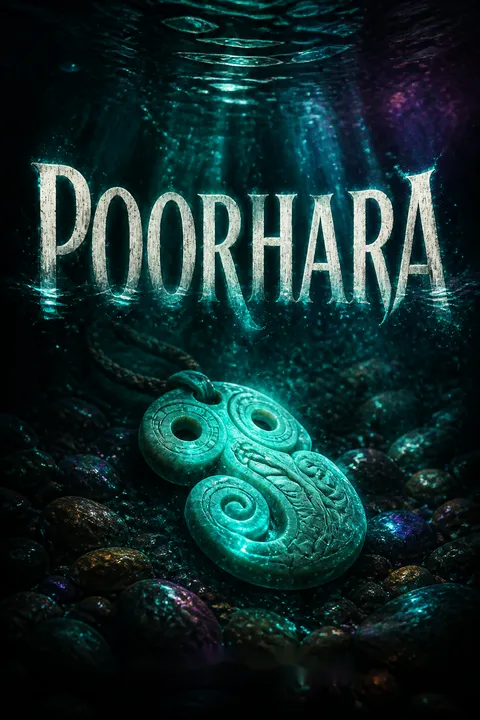

Plot Summary
The Ceiling's Slow Collapse
Erin notices a swelling bulge in her bedroom ceiling, a silent threat to her whaanau's fragile tenancy. The house, once a haven, now creaks and leaks, echoing the family's unspoken anxieties. Erin's interactions with her cousins and aunties are laced with tension, humor, and the ever-present fear of being uprooted. The physical deterioration of their home becomes a metaphor for the slow unraveling of their family's stability, as each member tries to hold things together in their own way, hiding pain and secrets beneath the surface.
Messages from Home
Erin's phone buzzes with messages from her cousin, urging her to come home for Koro's 70th birthday. The banter is sharp, loving, and laced with the dark humor of those who've survived together. Through texts, we glimpse the family's dynamics: guilt, longing, and the pressure to perform normalcy. Erin's reluctance to return is tangled with shame and the fear of disappointing her elders. The digital conversation is both a lifeline and a battleground, where trauma and affection are exchanged in equal measure.
Cleaning for Strangers
Erin accompanies her Aunty Ann, who is Deaf, to clean a wealthy couple's house. The job is menial but loaded with meaning: Ann is treated as invisible, her labor undervalued, her difference misunderstood. Erin tries to shield her aunty from the owners' microaggressions, translating and softening their words. The encounter is humiliating, yet it also reveals Erin's fierce loyalty and the quiet dignity with which Ann endures. The episode underscores the family's precarity and the daily negotiations required to survive in a world that doesn't see them.
Family in Fragments
Back home, Erin finds her family on edge. Aunties and uncles bicker, children cry, and everyone seems to be nursing old wounds. The upcoming birthday party for Koro is both a celebration and a source of anxiety, dredging up memories of loss and disappointment. Erin feels the weight of expectations—her own and others'—and struggles to find her place among relatives who are themselves adrift. The house, crowded and chaotic, becomes a crucible for the family's unresolved grief and longing for connection.
Star's Return
Star, Erin's older cousin, wakes hungover in his car, haunted by debt, addiction, and the ache of estrangement. His journey back to the family home is fraught with shame and nostalgia. The village he returns to is both familiar and alien, its streets and faces changed by time and hardship. Star's interactions with his cousins and aunties are awkward, tinged with the pain of absence and the impossibility of truly coming home. His presence stirs old rivalries and exposes the fractures running through the whaanau.
The Birthday Gathering
The family assembles for Koro's 70th, a rare moment of togetherness. The party is tense, with laughter and tears in equal measure. Old grievances surface: who is the favorite, who has left, who has stayed. Erin and Star navigate the minefield of family politics, each seeking validation and belonging. The elders' authority is both revered and resented, their stories a mix of wisdom and denial. The birthday becomes a reckoning, forcing everyone to confront what has been lost and what remains.
Ghosts in the Shed
Erin retreats to the shed, once her Koro's domain, now emptied of its treasures. She is surrounded by memories—of her mother, of childhood games, of secrets whispered in the dark. The shed is a liminal space, where the past presses in on the present. Erin's longing for her mother is palpable, her grief raw and unresolved. She collects bones, literal and metaphorical, trying to piece together a sense of self from the fragments left behind. The ghosts of the family's history linger, shaping the lives of those who remain.
The Garden's Empty Roots
Star and his cousin Max survey the family garden, once lush under Aunty Tanea's care, now stripped bare. The destruction of the garden is a symbol of the family's disintegration, the loss of a matriarch who held them together. Star mourns not just the plants but the possibility of continuity, of roots that might anchor him. The conversation with Max is awkward, full of things unsaid—regret, envy, the fear of repeating old mistakes. The garden's emptiness is a wound that refuses to heal.
Sibling Confessions
Star and his half-brother Robbie reconnect in the city, their bond complicated by shared trauma and divergent paths. Robbie's resilience is both inspiring and unsettling to Star, who feels adrift. Their late-night conversation is a confession of pain, guilt, and the struggle to survive. The brothers circle around the truth of their family's dysfunction, each carrying scars that cannot be easily named. Their honesty is a rare gift, a moment of solidarity in a world that often demands silence.
The Milk War
At the birthday dinner, a fight erupts over a bottle of milk—who gets it, who deserves it, who is left out. The argument is absurd, yet it quickly escalates, exposing the family's underlying resentments and the scarcity that shapes their lives. Erin's outburst is both a cry for recognition and a refusal to accept her assigned role. The spilled milk becomes a symbol of all that cannot be contained: anger, grief, the longing for love. The family's attempts at reconciliation are clumsy, but the need for connection persists.
Leaving and Longing
Erin and Star, each in their own way, set out from home—Erin to her Aunty Huia's, Star to deliver a dog that is not his. Their travels are marked by mishaps, misunderstandings, and moments of grace. Along the way, they encounter other lost souls: cousins struggling with addiction, aunties burdened by secrets, strangers who offer help or harm. The road is both escape and exile, a place where the past is never far behind. Their longing for belonging drives them forward, even as they fear what they might find.
The Road North
Erin and Star decide to journey to their ancestral land, hoping to find healing or at least understanding. The trip is fraught with obstacles: a broken-down car, a lost dog, hunger, and the ever-present threat of running out of money. Along the way, they confront their own limitations and the weight of intergenerational trauma. The land they seek is both real and mythical, a place of origin and a site of loss. Their pilgrimage is as much about survival as it is about discovery.
Cousins and Consequences
At cousin Nat's house, Erin and Star witness the cycles of violence, poverty, and resilience that define their whaanau. Nat's struggles with addiction, motherhood, and mental health are laid bare, as are the ways the system fails those most in need. Erin bonds with the children, finding moments of joy amid the chaos. Star is drawn into Nat's world, both repelled and fascinated by her strength and vulnerability. The consequences of past choices ripple through the family, shaping the futures of the next generation.
The Marae That Wasn't
Erin and Star's journey to the marae—their spiritual home—ends in disappointment. The place is empty, neglected, a shell of what it once was. Their hopes for reconnection and renewal are dashed, replaced by the realization that home is not a place but a process, a set of relationships that must be continually rebuilt. The marae's absence is a metaphor for the loss of language, culture, and belonging that haunts their family. Yet, in their shared disappointment, Erin and Star find a measure of solidarity.
The Dog's Disappearance
The stray dog that has accompanied Erin and Star vanishes, leaving them bereft and guilty. The dog's absence is a reminder of all they have failed to protect—each other, themselves, their family's legacy. Their search for the dog becomes a search for meaning, for a way to make sense of suffering. The loss is keenly felt, yet it also prompts moments of tenderness and care between the cousins. Their grief is both personal and collective, part of a larger pattern of abandonment and survival.
The River's Cold Embrace
Erin and Star find respite in a river, washing away the grime of their journey. The swim is both literal and symbolic—a baptism, a moment of renewal. Yet, the cold water cannot erase the pain they carry: Erin's recent assault, Star's festering tooth, the scars of their upbringing. They share stories, comfort each other, and for a moment, feel the possibility of transformation. But the world outside the river remains unchanged, and the journey must continue.
The Hospital Vigil
Star's infected tooth lands him in the hospital, hovering between life and death. The family gathers, their differences momentarily set aside by fear and hope. Erin keeps vigil, reading to him, holding his hand, willing him to survive. The hospital is a liminal space, where time stretches and the boundaries between past and present blur. In the quiet, Erin reflects on her own pain and the burdens carried by each member of the whaanau. The possibility of loss sharpens the need for connection.
Coming Home, Again
Star recovers and prepares to leave, uncertain if he can stay or must go. Erin pleads with him to remain, but the pull of the wider world—and the wounds that have not healed—draw him away. Their farewell is tender, laced with promises and regrets. The family home is unchanged, yet everything is different. Erin and Star are marked by their journey, their scars both visible and hidden. The story ends with laughter and tears, the sound of whaanau echoing through the summer air—a reminder that, despite everything, they are still here.
Analysis
A raw, unflinching portrait of intergenerational trauma, resilience, and the search for belongingPoorhara is a novel that refuses easy answers or tidy resolutions. Through the intertwined journeys of Erin and Star, Michelle Rahurahu exposes the deep wounds left by colonization, poverty, and family secrets, while also celebrating the stubborn persistence of love and hope. The novel's structure—fragmented, polyphonic, and deeply embodied—mirrors the lived reality of its characters, who must navigate a world that is often hostile or indifferent to their pain. The use of Māori myth and language grounds the story in a specific cultural context, yet its themes are universal: the longing for home, the burden of inheritance, the possibility of healing. Rahurahu's prose is both lyrical and brutal, capturing the humor, rage, and tenderness that coexist in families marked by loss. Ultimately, Poorhara is a testament to survival—not as triumph, but as the ongoing, messy work of holding on to each other, even when everything else falls away.
Review Summary
Reviews of Poorhara are largely positive, averaging 4.08/5. Readers praise its authentic, immersive portrayal of Māori life, intergenerational trauma, colonisation, and poverty, with strong characters and fluid writing. Many highlight the compelling road trip narrative between cousins Star and Erin, and appreciate the structural use of text messages and mythological passages. Some found it relentlessly bleak, with insufficient humour to balance the darkness. Common criticisms include indecipherable text-speak, dropped storylines, and a desire for content warnings given the graphic nature of certain scenes.
People Also Read

Characters
Erin Fearn
Erin is a young woman caught between adolescence and adulthood, struggling to find her place in a fractured whaanau. She is sharp-tongued, creative, and deeply sensitive, using humor and self-deprecation to mask her pain. Erin's relationship with her mother's memory is central—her grief is raw, her longing for connection palpable. She is both caretaker and outcast, often tasked with looking after younger cousins while feeling unseen by the adults. Erin's journey is one of survival: she endures bullying, poverty, and sexual assault, yet continues to seek meaning and belonging. Her bond with Star is profound—they are two halves of a broken whole, each carrying the family's burdens in different ways. Erin's psychological landscape is marked by self-doubt, self-harm, and a desperate hope that things can be better, if only she can find the right place or person to anchor her.
Star (Te Whetuu Maarama Fearn-O'Connor)
Star is Erin's older cousin, a young man adrift between worlds—urban and rural, Pākehā and Māori, past and present. He is intelligent, sensitive, and deeply wounded by family trauma, addiction, and the weight of expectations. Star's relationship with his father is fraught: he is both the favored son and the family disappointment, unable to live up to the myth of the eldest boy. His sexuality and mental health struggles set him apart, fueling his sense of alienation. Star's journey home is a reluctant pilgrimage, driven by guilt, nostalgia, and the hope of redemption. He is both protector and liability to Erin, their dynamic oscillating between care and conflict. Star's psychological arc is one of reckoning—with his own complicity, his family's secrets, and the possibility of forgiveness.
Aunty Ann
Ann is Erin's Deaf aunty, a figure of quiet resilience and dignity. She is often overlooked or misunderstood by the family and her employers, yet she persists, working hard to provide and maintain connection. Ann's relationship with Erin is special—they share a private language, both literal and emotional. Ann's presence is grounding, her care understated but vital. She embodies the challenges faced by those who are doubly marginalized—by disability and by poverty—yet she remains a source of wisdom and comfort.
Aunty Magdalena (Mags)
Mags is one of the family's matriarchs, fiercely protective yet often harsh. She is haunted by the loss of her sister Tanea and struggles to fill the void left behind. Mags's need for order and recognition often puts her at odds with Erin and the younger generation. Her love is real but conditional, expressed through criticism and control. Mags's psychological complexity lies in her inability to grieve openly, channeling her pain into the management of others.
Koro
Koro is the family's elder, a figure both revered and resented. His approval is sought by all, yet he remains emotionally distant, locked in his own decline. Koro's presence at the birthday gathering is both a blessing and a burden, forcing the family to confront their own failures and hopes. He is a living symbol of tradition and loss, his silence echoing the things the family cannot say.
Aunty Huia
Huia is Erin's favorite aunty, a woman who has broken with tradition and paid the price. Her queerness and refusal to conform have made her both a role model and a cautionary tale. Huia's relationship with Erin is marked by tough love and mutual recognition—they see each other's pain and potential. Huia's psychological depth comes from her struggle to reconcile her own needs with the demands of family, culture, and survival.
Nat
Nat is a cousin whose life is a testament to both the resilience and the damage wrought by poverty, addiction, and systemic neglect. She is fiercely protective of her children, yet often overwhelmed by her circumstances. Nat's relationship with Erin and Star is complicated—she is both a source of chaos and a mirror of their own struggles. Her psychological arc is one of endurance, marked by moments of vulnerability and rage.
Max
Max is Star's cousin, a man whose bravado masks deep insecurity and pain. He is quick with a joke or a hustle, yet his life is marked by addiction, health scares, and the struggle to be seen as more than a failure. Max's relationship with Star is competitive but affectionate, their banter a way of coping with disappointment. Max's psychological journey is one of seeking validation and a place in the family.
Robbie
Robbie is Star's half-brother, a steady presence amid the family's chaos. He has endured his own share of trauma but remains grounded, working odd jobs and supporting his mother. Robbie's relationship with Star is marked by unspoken understanding and shared pain. He is a survivor, doing what he must to get by, yet his resilience is tinged with resignation.
The Dog
The stray dog that accompanies Erin and Star on their journey is more than an animal—it is a living metaphor for their own sense of displacement and longing for care. The dog's fate mirrors their own: lost, found, and lost again. Its presence prompts moments of tenderness, guilt, and reflection, serving as a silent witness to the cousins' struggles.
Plot Devices
Interwoven Narratives and Shifting Perspectives
The novel employs a dual narrative, alternating between Erin and Star's perspectives, often blending text messages, social media posts, and interior monologue. This structure mirrors the fragmentation of the family and the multiplicity of truths within it. The use of digital communication as both connection and barrier is central, highlighting generational divides and the ways trauma is transmitted and masked.
Symbolism of Place and Object
The physical spaces—houses, sheds, gardens, marae—are laden with symbolic weight, representing both sanctuary and loss. Objects like bones, shells, and the dog serve as tangible links to the past and to identity. The recurring motif of the broken or decaying home reflects the family's precariousness and the difficulty of maintaining connection across generations.
Myth and Folklore
The novel weaves Māori myth and folklore throughout, using them as both counterpoint and commentary on the characters' struggles. The stories of the fern children, the dark sister, and the waka are retold and reinterpreted, offering both solace and critique. These myths serve as a means of understanding trauma, resilience, and the cyclical nature of suffering and survival.
Cycles of Violence and Care
The narrative is structured around cycles—of poverty, addiction, abuse, and healing. The repetition of family gatherings, arguments, and departures underscores the difficulty of breaking free from inherited pain. Yet, within these cycles, moments of care and solidarity emerge, suggesting the possibility of change, however incremental.
Liminal Spaces and Thresholds
The road trip, the river, the hospital, and the marae are all liminal spaces where characters confront their own boundaries and the limits of family, culture, and self. These thresholds are sites of both danger and potential, where old identities are shed and new ones tentatively formed.
Download PDF
Download EPUB
.epub digital book format is ideal for reading ebooks on phones, tablets, and e-readers.








































