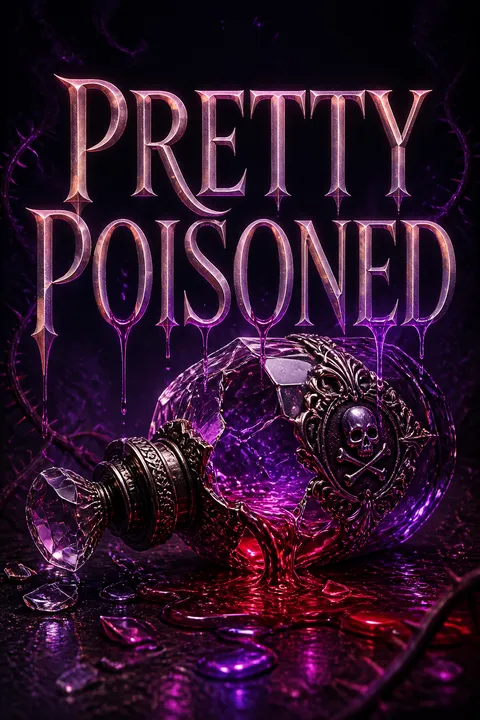
Plot Summary
Outcast With A Mission
Teagan Townsend is a true crime-obsessed outcast, desperate to prove herself as more than a disappointment to her family. She's fixated on the enigmatic rock band, Gods of Tomorrow, convinced they're connected to a string of missing women and ritualistic violence. Her relationships are fraught—her only friend, Hunter, leaves after a fight, and her sister Blakely is exasperated by Teagan's refusal to live a "normal" life. Teagan's determination to expose the band's secrets is fueled by her own alienation and a hunger for meaning, validation, and connection. She secures a backstage pass, intent on infiltrating the band's inner circle, not realizing she's about to enter a world where her darkest fascinations become reality.
Blood, Fame, and Seduction
At the concert, Teagan's plan to get close to the band works—she catches the attention of Luca De Rossi, the alluring, tattooed guitarist. The band's performances are a blend of sex, violence, and ritual, with blood-drinking and knife play blurring the line between performance and reality. Teagan is both repulsed and aroused by the spectacle, drawn to Luca's dangerous charisma and the band's cult-like following. She quickly realizes that the rumors are true: blood is currency, and devotion is measured in pain. The backstage world is a fever dream of drugs, sex, and blurred consent, where Teagan's outsider status makes her both a target and a prize.
Initiation Into Darkness
After a failed first attempt to fully join the band's inner circle, Teagan follows them to San Francisco, determined not to give up. She's confronted by Declan, the band's cold, controlling frontman, who subjects her to invasive tests—blood draws, STD screenings, and psychological games. The "family" of groupies and lovers is tightly controlled, bound by blood rituals and Declan's rules. Teagan is forced to submit, her autonomy stripped away as she's drugged, manipulated, and physically marked. Yet, she's also seduced by the sense of belonging and the intoxicating power dynamics, even as she senses the danger lurking beneath the surface.
The Family's Bloody Rules
Life on the tour bus and in the band's Idaho mansion is governed by strict, often arbitrary rules: no phones, no outside contact, and absolute loyalty to the "family." Blood rituals are commonplace, and every member is tested—physically, emotionally, and sexually. Teagan witnesses the psychological toll on the other women, especially Layla, who is unraveling under Declan's manipulations. The group's polyamorous, violent sexuality is both liberating and destructive, and Teagan is forced to confront her own boundaries and desires. The family's love is conditional, and punishment for disobedience is swift and brutal.
Dangerous Obsessions Unveiled
As Teagan becomes more enmeshed, the band's obsessions—love, power, pain—are revealed as both their strength and their undoing. Luca's need for love is insatiable and destructive, while Declan's addiction to power manifests in psychological games and orchestrated suffering. Teagan's own obsession with the band and her need for validation make her vulnerable to their manipulations. Jealousies flare, old wounds are reopened, and the group's rituals become increasingly dangerous. The line between devotion and destruction blurs, and Teagan realizes that survival means embracing the darkness within herself.
Forbidden Desires Ignite
Teagan's relationships with Luca, Declan, and the other women become increasingly intense and transgressive. Sex is inseparable from violence—knife play, bloodletting, and public acts of submission and dominance are the norm. Teagan is both empowered and broken by her willingness to bleed, to be marked, and to mark others. The family's love is possessive and consuming, and Teagan finds herself both craving and fearing the loss of control. Her own desires become a weapon, and she learns to wield them even as she's shaped by the men who claim her.
Rituals, Power, and Pain
The band's rituals—blood-drinking, knife play, and sexual initiations—are revealed as both bonding and traumatizing. Teagan is forced to participate in increasingly extreme acts to prove her loyalty, culminating in being physically marked with Luca and Declan's initials. The rituals are a means of control, binding the family together through shared trauma and complicity. Teagan's sense of self is eroded as she becomes both victim and perpetrator, complicit in the group's violence and secrecy. The cost of belonging is high, and the threat of exile—or worse—looms over everyone.
Breaking and Belonging
The psychological games intensify as Declan tests Teagan's limits, orchestrating betrayals, punishments, and moments of tenderness. Teagan is forced to confront her own capacity for violence and her need for love, even as she's pushed to the brink of psychological collapse. The family's dysfunction is laid bare—jealousy, abandonment, and trauma haunt every member. Yet, in her brokenness, Teagan finds a twisted sense of belonging. She is both captive and cherished, her pain and devotion making her indispensable to the family's dark mythology.
The Price of Devotion
The cost of devotion becomes literal as Layla, driven to despair by Declan's manipulations, kills herself in a ritualistic act. The family is forced to bury her body, and Teagan is made complicit in the cover-up. The trauma bonds the group, but also fractures it—guilt, grief, and fear ripple through the survivors. Teagan's complicity deepens her dependence on the family, even as she questions her own morality. The threat of exposure and violence from outside forces grows, and the family closes ranks, demanding ever greater sacrifices from its members.
Love, Violence, and Control
Teagan's relationships with Luca and Declan reach new heights of intensity and danger. Love is expressed through violence—handcuffs, knives, and blood are tokens of devotion. Teagan is both lover and captive, her autonomy eroded by the men who claim her. The family's rules are enforced through pain and humiliation, and Teagan learns to find pleasure in submission and suffering. Yet, she also discovers her own power, using her sexuality and willingness to bleed as tools of survival and influence.
Sacrifice and Survival
The outside world closes in as the band's crimes threaten to be exposed. Teagan is forced to kill in self-defense, saving Luca from an attack by a vengeful outsider. The act shatters her remaining innocence, but also cements her place in the family. The group is forced to flee, abandoning their old lives and identities. Teagan's survival instincts are sharpened by trauma, and she becomes both protector and destroyer. The family's bonds are tested by loss, betrayal, and the ever-present threat of violence.
The Poisoned Heart
As the family flees across the country, hunted by law enforcement and haunted by their own crimes, Teagan is forced to confront the true cost of her devotion. Friends are killed, lovers are wounded, and Teagan is left alone, betrayed by the very people who promised she'd never be abandoned. Her heart is poisoned by love and loss, and she is forced to reckon with the darkness within herself. The promise of freedom is revealed as an illusion, and Teagan is left to mourn the death of her old self.
Escape, Betrayal, and Loss
The group's desperate escape ends in tragedy—Brady and Rhett are killed, River and Hazel are captured, and Teagan is left behind as Declan and Luca flee. Teagan is arrested, interrogated, and abandoned, forced to confront the reality that her devotion has left her utterly alone. The family's promises of loyalty and protection are exposed as lies, and Teagan is left to grieve the loss of her chosen family and the person she became with them. The world's gaze turns on her, and she is both vilified and idolized by the band's fanatical followers.
Alone Among Monsters
Imprisoned and interrogated, Teagan is forced to relive her trauma and defend herself against accusations of complicity and madness. The outside world is both fascinated and horrified by her story, and Teagan is left to question her own sanity and morality. The promise of family and freedom is revealed as a trap, and Teagan is left to reckon with the monsters—both real and imagined—that shaped her. Her only solace is the memory of love, even as she doubts its reality.
Everything Dies
Teagan is released into psychiatric care, her fate uncertain. The world outside is in chaos, obsessed with the band's mythology and the violence that surrounded them. Teagan is both a symbol and a casualty, her story unfinished. The promise of reunion, redemption, or destruction hangs in the air, as Teagan is left to wonder if she will ever escape the poison that binds her to the family she chose—and the darkness within herself. The story ends on a cliffhanger, with Teagan's future—and the family's—uncertain, but the cycle of obsession, violence, and longing destined to continue.
Analysis
A modern gothic of trauma, obsession, and the hunger for belongingPretty Poisoned is a dark, transgressive exploration of the ways trauma, alienation, and the longing for connection can drive people to seek family and meaning in the most dangerous places. The novel uses the structure of a cult and the aesthetics of rock-and-roll excess to interrogate the seductive power of violence, ritual, and taboo. At its core, the story is about the price of belonging—how love, when entwined with power and pain, can become both salvation and poison. The characters are deeply flawed, their relationships toxic and codependent, yet their hunger for love and meaning is achingly real. The novel refuses easy answers or moral clarity, instead immersing the reader in the psychological complexity of its world. It is a cautionary tale about the dangers of seeking validation and family among monsters, but also a testament to the resilience of those who survive—and the ways even the most broken hearts can find beauty, if not redemption, in the darkness.
Review Summary
Pretty Poisoned receives polarizing reviews, averaging 4.16/5 stars. Most readers praise its intensely dark, unhinged blend of rockstar romance, cult mystery, blood/knife play, and why-choose dynamics, calling it unputdownable with jaw-dropping plot twists. Many highlight the compelling brothers Luca and Declan alongside a thrilling murder mystery. However, critical reviewers found it deeply disturbing, citing romanticized abuse, problematic character behavior, and excessive darkness beyond typical dark romance. Nearly all reviewers emphasize checking trigger warnings before reading, and most fans eagerly anticipate the second book.
Characters
Teagan Townsend
Teagan is a true crime-obsessed outsider, driven by a desperate need for validation, belonging, and meaning. Her relationships are fraught—she's estranged from her family, friendless, and haunted by past trauma. Teagan's psychological complexity is rooted in her alienation and her fascination with darkness; she is both repelled and drawn to violence, power, and taboo. As she's initiated into the band's world, Teagan is broken and remade, her boundaries eroded by manipulation, ritual, and trauma. She is both victim and perpetrator, her complicity deepening as she seeks love and family among monsters. Teagan's journey is one of self-destruction and survival, her heart poisoned by longing and loss, yet she remains fiercely resilient, refusing to be defined by her suffering.
Luca De Rossi
Luca is the band's seductive, tattooed guitarist, whose charm masks deep wounds and instability. Scarred by childhood abuse and a twisted first love, Luca is obsessed with love as both a drug and a weapon. His relationships are intense, possessive, and often destructive—he craves devotion but is incapable of healthy attachment. Luca's need for love drives him to dangerous extremes, and his sexuality is inseparable from violence and pain. He is both protector and predator, his tenderness laced with threat. Luca's arc is one of self-destruction and longing, his love for Teagan both saving and dooming them both.
Declan De Rossi
Declan is the band's enigmatic frontman and the true architect of the family's rituals and rules. He is emotionally detached, manipulative, and obsessed with control—over himself, the family, and Teagan. Declan's psychological complexity lies in his need to orchestrate suffering and devotion, testing the limits of those around him. He is both sadist and savior, his love expressed through violence, punishment, and psychological games. Declan's arc is one of dominance and vulnerability—his need for power is both his strength and his undoing, and his connection to Teagan reveals the cracks in his armor.
River
River is one of the family's core members, a former nurse who acts as caretaker and confidante. She is fiercely loyal, loving, and open, but haunted by past abuse and the trauma of the family's rituals. River's relationship with Hazel is a rare source of stability and genuine affection, but she is also drawn to Teagan's darkness. River's arc is one of survival and adaptation—she is both victim and enabler, her optimism masking deep wounds.
Hazel
Hazel is River's wife and another core member of the family. She is protective, passionate, and skilled at navigating the family's violent dynamics. Hazel's love for River is her anchor, but she is also complicit in the group's rituals and violence. Hazel's arc is one of loyalty and compromise—she is willing to do whatever it takes to protect those she loves, even at the cost of her own morality.
Layla
Layla is a long-standing member of the family, once Declan's favorite. Her devotion is absolute, but she is destroyed by jealousy, abandonment, and the psychological games that define the family's love. Layla's arc is one of descent—her suicide is both a sacrifice and a final act of agency, exposing the cost of devotion in a world where love and violence are inseparable.
Brady
Brady is one of the few men in the family outside the band, deeply in love with Rhett and struggling with jealousy and insecurity. He is sensitive and loyal, but haunted by the violence and trauma that define the family. Brady's arc is one of longing and loss—his desire for a normal life is at odds with the reality of the world he inhabits, and his fate is a casualty of the family's destruction.
Rhett
Rhett is the band's drummer and Brady's partner, a source of humor and warmth in the family. He is loving and playful, but also complicit in the group's violence and rituals. Rhett's arc is one of conflict—his desire for love and normalcy is undermined by the family's dysfunction, and his fate is tied to Brady's in tragedy.
Alana
Alana is a newer member of the family, ambitious and eager to please. She adapts quickly to the group's rituals, but ultimately chooses self-preservation over loyalty, leaving before the family's destruction. Alana's arc is one of survival—she is a reminder that escape is possible, but not without cost.
Blakely
Blakely is Teagan's older sister, a symbol of the "normal" life Teagan rejects. She is judgmental, anxious, and desperate to save Teagan from herself, but ultimately powerless to intervene. Blakely's arc is one of frustration and loss—her inability to understand or help Teagan is a source of pain for them both, and her rejection cements Teagan's isolation.
Plot Devices
Cult Dynamics and Ritualized Violence
The novel uses the structure of a cult—complete with rituals, rules, and charismatic leaders—to explore themes of power, devotion, and trauma. Bloodletting, knife play, and sexual initiations are both literal and symbolic, binding the family together through shared suffering and complicity. The cult's hierarchy is enforced through psychological manipulation, punishment, and the constant threat of exile or death. These devices create a claustrophobic, inescapable world where love and violence are inseparable, and survival depends on submission and complicity.
Unreliable Narration and Psychological Games
The story is filtered through Teagan's perspective, which is shaped by trauma, obsession, and manipulation. The band's leaders—especially Declan—use psychological games, gaslighting, and shifting rules to control Teagan and the other members. The line between reality and performance is constantly blurred, and the reader is forced to question what is true, what is fantasy, and what is survival strategy. This device heightens the sense of danger and instability, making every relationship and event suspect.
Foreshadowing and Symbolism
The novel is rich in foreshadowing and symbolism—blood is both life and death, knives are tools of both pleasure and destruction, and scars are marks of both belonging and trauma. The family's rituals and the physical marks they leave on each other are constant reminders of the cost of devotion and the inevitability of violence. The recurring motif of "poison" symbolizes the way love, longing, and trauma infect and transform the characters, binding them together even as it destroys them.
Cliffhangers and Fragmented Structure
The narrative is structured in short, intense chapters that mirror Teagan's fractured psyche and the instability of the family's world. Cliffhangers and abrupt transitions keep the reader off-balance, mirroring the characters' own sense of uncertainty and danger. The story ends on a major cliffhanger, with Teagan's fate—and the family's—unresolved, ensuring that the cycle of obsession, violence, and longing will continue.
Download PDF
Download EPUB
.epub digital book format is ideal for reading ebooks on phones, tablets, and e-readers.








































