Plot Summary
1. Portal Homecoming and Shifting Alliances
Suraya Saab returns triumphantly to her home village, Coban, alongside King Roshan, her lover and Oryndhrian monarch, after a bloody rebellion and the defeat of oppressive rulers. A former tavern girl, she's now a powerful magi, the prophesied Starkeeper, wielding starlit magic born from the cosmic simurgh within. Royal celebration is laced with anxiety: Suraya, burdened by her power, must accompany Roshan on a grand tour to unify the realm against brewing unrest among the Houses. Though yearning for rest, she's swept up in politics, performing public acts of strength and mercy—yet each action further entwines her fate with both Roshan and the realm she's sworn to protect.
2. Shadows, Assassins, and Unforgivable Choices
A clandestine attack on the village interrupts the brief peace, orchestrated by traitorous nobles who despise the new regime. Suraya and Roshan's passionate, fraught relationship is tested as violence erupts; hostages are taken, and the "oracle" is named as enemy mastermind. Faced with a moral crossroads—kill the attackers to secure her king's rule or risk wider bloodshed—Suraya's starlight magic is weaponized in a public execution. The merciless display traumatizes her, turning her into an object of fear. That night, she's shattered by nightmares and guilt, questioning whether she's savior or monster, her conscience haunted by the cost of peace.
3. Nightmares, Prophecy, and Guilt
Haunted by nightmares and a cryptic prophecy foretelling a godslayer, Suraya's sleep offers no peace. As the realm celebrates Roshan's charismatic rule, Suraya struggles to reconcile her newfound power and her role as both consort and executioner. The ruling Houses are restive, the "oracle" works in shadow, and a drug called Jade ravages the realm. Suraya is plagued by tensions with Roshan—love mingled with control, trust fraying as she's increasingly treated as a weapon of state. The emotional intimacy they once shared grows brittle, even as threats—both mortal and divine—fester on the horizon.
4. Caged by Love and Power
Roshan's protective obsession mounts; Suraya is paraded as an emblem of his power before nobles who both revere and fear her. Her longing for autonomy sharpens—each magical execution demanded of her for the "greater good" carves away at her humanity. Her closest confidants serve the king's wishes above her own, adding to her sense of isolation. Political intrigue intensifies: the azdaha—a tortured, magical beast—remains trapped as a bargaining chip in potential war with Everlea, a rival kingdom. Suraya, desperate for agency, defies Roshan to heal the azdaha and uncovers depths of her empathic magic... but her defiance is punished with magical shackles—her power is now his to command.
5. Chains of Betrayal Unleashed
Drugged and fitted with runic bracers suppressing her will and magic, Suraya is imprisoned by the man she loves. The cuffs, crafted with traces of her own power and Roshan's blood, allow him to wield her as an automaton—her magic used to murder traitors and enforce order. The king claims it's for her own good, but the act is a fundamental betrayal. Suraya's pleas and resistance are dismissed; rage and heartbreak consume her. Her only solace is in furtive dream-visits—haunted by a mysterious, kind "night king" who offers comfort amidst despair.
6. The Manticore's Curse Awakes
As Anahima—Roshan's magi cousin and supposed ally—hatches deeper plots, Suraya's dreams become more corporeal. Her nocturnal comforter is revealed as Darrius Nightsong, Everlea's sovereign cursed to become a deadly manticore each time he feels intense emotion. Both drawn and repelled by their bond, their paths are destined to intertwine. "Soul-fated" by the gods, Suraya's starlight and Darrius's shadow are magnetized. Meanwhile, court conspiracies, threats from the "oracle," and the unrest of magical and mundane powers all spiral toward an inevitable collision.
7. Forbidden Bonds and Eclipsed Desires
Suraya attempts escape with the help of palace rival Helena, but falls into a deadly arena ambush—her magic still suppressed. Only in extremity does her blood awaken the azdaha, the mythical beast, and together they break free. She's whisked across the barrier between realms, waking in Everlea—bereft of memory, identity fragmented, and at the mercy of King Darrius. He's suspicious, she's lost, and their mutual attraction is undeniable. Somewhere, the "oracle" continues to manipulate both kingdoms toward catastrophe.
8. The Ailing Azdaha's Secret
Nursed by Everlean healers, Suraya—her memory piecemeal—bonds with Darrius and his court. Her attempts to recall her past are fraught, but the kindness and respect she receives contrast her prior captivity. Darrius's curse looms, Anahima's schemes abound, and the ailing azdaha's fate is a pivot for peace or destruction. Suraya learns of Everlea's rich, living magic, and slowly reclaims fragments of her identity. Trust builds, romantic tensions soar, but revelations of a wider, supernatural war begin to surface.
9. Storms of Jealousy and Escape
Darrius's curse intensifies, and court suspicion lands on Suraya. Meanwhile, the political pressure mounts for Darrius to wed for alliance—prompting jealousy, longing, and a turbulent, transformative intimacy between him and Suraya. Soul-fated magic surges, promising power and peril. Meanwhile, betrayal from within the Everlean court is revealed: Anahima, spurred by old wounds and lust for power, is at the heart of the "oracle's" intrigues. Roshan, far away, is haunted by Suraya's absence, his own love poisoned by Fero's lurking presence.
10. The Princess: Friend, Traitor, Oracle
Revelation shatters Suraya's faith: Anahima, long a friend, is the "oracle," orchestrator of plague and necromancy driving the "rot"—a supernatural infection spreading among magical creatures and humans. Her ambition springs from envy, denied birthright, and ancient pain. Abducting Suraya's father and leveraging poison, she coerces Suraya to tear down magical wards and threaten both realms. The rot, now empowered by the devoured essence of god Fero, gives Anahima near-unstoppable might. The story crystallizes: this is not just a political war—it is a contest for the soul and magic of the world itself.
11. Plague, Rebellion, and the Rot
Plague spreads; revenant armies rise. While Everlea's and Oryndhr's rulers close ranks, the azdaha become both victims and symbols of hope. Roshan, now partially immortal and suffused with the god Saru's light, forms an alliance with Darrius. The two kings—one Suraya's soulmate, the other her chosen—forgo jealousy, focusing first on survival and duty. Across conquered cities, nobles and soldiers alike must reckon with themes of forgiveness, mercy, and the historic wounds dividing their lands. Ferociously, the realms muster for the final battle—duty and desire braided together with magic.
12. The Battle for Magic's Soul
Alliances fracture and reform as a three-headed demon—Azhi, a beast of legend—devastates the battlefield. Suraya and Darrius (now soul-fated by ritual, their magic utterly joined) lead the fight in the skies; below, Roshan, restored and ablaze with god-magic, fulfills ancient prophecy as the "godslayer." The evil of Anahima—fuelled by rot and blood magic—returns with new horror, and Suraya alone, wielding shadow and starlight, delivers the mercy of oblivion to her one-time friend. The cost of victory is measured in blood and heartbreak, but hope refuses to die.
13. Three-Headed Doom, Three-Hearted Love
An epic gamble: with all seems lost, Suraya, Darrius, and Roshan unite—magic, sword, and flesh—to destroy the demon Azhi. Love is their aegis: Darrius's shadows, Suraya's starlight, and Roshan's golden radiance (now bearing Saru's touch) converge. Through courage and willingness to sacrifice, both for love and for the world, the three become something more than mortals, more than rulers—transcending borders, gods, and fate. Their triumph over darkness is also a triumph over division, resentment, and the limits of tradition.
14. Gods, Monsters, and The Bond
With the final sunrise, Everlea and Oryndhr rebuild—not through tyranny, but through community. Roshan abdicates his crown to found a republic, choosing service over power. Darrius, haunted but healing, creates schools for girls in honor of his lost sister. Suraya is celebrated as queen, not by blood but by choice. Their love, freely chosen and divinely sanctioned, defies the constraints of fate and gender—polyamory as healing and hope. Together, they forge a new model of rule and partnership: strength expressed through empathy, vulnerability, and the courage to love.
15. A Future Forged in Flame
Suraya's family and friends, once threatened by war and betrayal, rediscover joy at Coban's humble wedding—an ending and a beginning. Her two kings (light and shadow, sun and star) stand beside her, equals in love and loyalty. The door to the future is open: the realms joined by magic, old wounds mending, new paths for women and the forgotten forged. Suraya, Darrius, and Roshan choose each other and their people, loving not in spite of flaws and agony but because of them. The simurgh soars: power, forgiveness, and love have remade the world.
Analysis
A modern myth on trauma, agency, and the radical hope of love
Queen of the Night Sky is more than a romance or fantasy; it is a bold, emotionally raw meditation on the intertwined nature of love, power, and pain. Howard's narrative interrogates the meaning of consent and agency in a world where even the supernatural is politicized—Suraya's struggle not to be weaponized, Roshan's repentance, and Darrius's embrace of his curse are all facets of a wider psychological reckoning.
The novel refuses easy binaries: its villains are tragic, its heroes deeply flawed, and forgiveness always costs. The central polyamorous relationship—one soul-fated, the other consciously chosen—destabilizes the monoculture of predestined, heteronormative love so common in fantasy and offers a vision of "both/and" abundance, where healing and vulnerability are strengths. The conclusion, in which monarchy becomes republic, power is decentralized, and the future belongs to the many (not the few), stands as a radical reimagining of fantasy politics for our time. Howard's tale insists that real redemption (for individuals and realms alike) lies not in conquest but in mercy, mutuality, and the willingness to re-make the world, again and again, in love's image.
Review Summary
People Also Read


Characters
Suraya Saab
Suraya is the beating heart of the novel—a young woman marked by cosmic destiny as the Starkeeper. Once a humble tavern girl, she is transformed into a vessel of star-magic (akasha) and the simurgh's living avatar. Deeply empathic but fierce, Suraya wrestles with the trauma of weaponization; her magic is used for mercy and atrocity alike. Her relationships with Roshan (first love, betrayal, forgiveness) and Darrius (soul-fated, monstrous, passionate) are both emotional crucibles and sources of strength. Trauma, autonomy, and trust shape her journey as much as romance and battle do. Ultimately, she chooses a polyamorous bond—shattering boundaries and forging her own fate.
King Roshan Acharia
Roshan evolves from rebellious prince to monarch beset by conspiracy, paranoia, and (literal) god-possession. His adoration of Suraya is sincere, but warped by his fear of losing her and the need to maintain power. When he betrays her (imprisonment, magical shackling), Roshan becomes an object of both scorn and pity. His soul nearly consumed by the god Fero, it is only through Suraya's forgiveness and his own willingness to let go of power—turning monarchy into republic—that he attains redemption. With god-magic (Saru's light) and humility, he becomes a symbol of loving atonement.
King Darrius Nightsong
Darrius rules Everlea, marked by both immense magical power and a terrible curse: strong emotion transforms him into a deadly manticore. He is at once icy, disciplined, and darkly sexy—yet deeply lonely and burdened by family trauma (his jealous sister, soul-fated love denied by his nature). His bond with Suraya—soul-fated by the gods, then chosen by ritual—is passionate and tumultuous. When Suraya's love teaches him to accept his monstrous side, he embraces both godhood and vulnerability, helping to shift Everlea's traditions and ultimately accepting a plural love that heals old wounds.
Anahima (Ani)
Anahima, Darrius's sister, is a complex figure of envy, genius, and manipulation. Gifted in mind magic, blood magic, and illusion, her claims to power are denied in a patriarchal system. Her bitterness festers—when soul-fated love is twisted and lost, she becomes the "oracle," orchestrating plague, revolution, and death magic. Both victim and villain, she exemplifies the tragedy of unaddressed pain, the destructive power of exclusion, and the lure of resentment. In the end, she is undone not just by Suraya, but by her own rejection of humanity.
The Simurgh
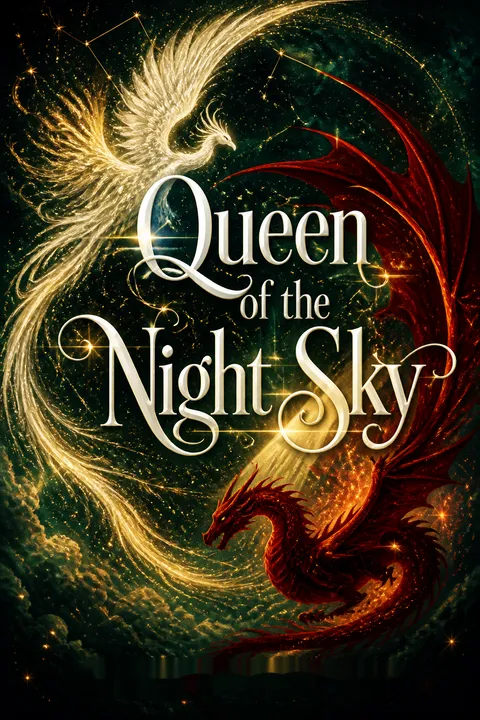
The simurgh is both literal—a magical being bonded to Suraya—and symbolic: a mirror of Suraya's conscience, her source of healing, and the mythic force guiding the story's philosophy on power and compassion. It represents integrated selfhood, divine care, and the potential to use great power for both creation and destruction, depending on the wielder's heart.
Razulek (the Azdaha)
Razulek, the ancient dragon-like azdaha, is both a magical creature in need of rescue and a wisdom figure. His bond with Suraya (through blood and magic) draws together Everlea and Oryndhr, and his suffering reflects the world's own wounds. As the story evolves, he becomes a symbol of kinship, resistance, and the costs of empathy and healing.
Laleh
Laleh begins as Suraya's loyal companion but is tragically killed, then resurrected by necromancy as a revenant in the service of the "oracle". Blending humor and heartbreak, Laleh's arc—her loss, reanimation, and eventual destruction—encapsulates the core wound of Suraya's past and the personal cost of magical and political violence.
Aran
Roshan's cousin, magi, and master runecaster, Aran is both complicit in wrongdoing (creating the magical bracers that imprison Suraya) and wracked with shame and the drive to make amends. His psyche oscillates between hope for utopian magic and the realities of governance and betrayal. His attempts to atone are crucial to the ultimate healing of both protagonists and realm.
Clem
Clem, one-time competitor, then bodyguard and confidante, navigates fierce loyalty to Roshan and rational, compassionate care for Suraya. Her psyche is defined by the struggle between following orders and protecting what is right; she is both ally and unwitting participant in Suraya's pain. Her arc reflects the moral ambiguity of "greater good" politics.
Ve (Vena/Venant, Royal Star)
The Royal Star is a mentor, messenger, and cosmic trickster—appearing throughout Suraya's journey to deliver cryptic prophecy, healing, and hard truths. Neither wholly benevolent nor entirely comprehensible, Ve's guidance sharpens the story's philosophical edge, confronting protagonists with the paradoxes of fate, choice, and the mutable nature of destiny.
Plot Devices
Power as Both Weapon and Burden
Queen of the Night Sky plays constantly with the paradox of power. Suraya's starlit magic (symbolic of divine favor) is both gift and curse, called to heal but also to execute. Magical devices—runic bracers, soul-bonds, blood-forged swords—foreshadow both enslavement and liberation. Prophecy, dreams, and fragmented memory are structural motifs: dreams link Suraya to her soul-fated, memory loss propels her into new alliances, and cryptic oracles shape the stakes.
The novel's structure is cyclical, reflecting trauma's pattern: moments of peace shattered by betrayal, trust rebuilt through personal sacrifice, and healing only occurring when characters choose deeper connection. The political is inseparable from the personal—magical oppression echoes familial wounds, and healing the realm requires healing the self and one's relationships.
Download PDF
Download EPUB
.epub digital book format is ideal for reading ebooks on phones, tablets, and e-readers.








































