
Plot Summary
Prologue
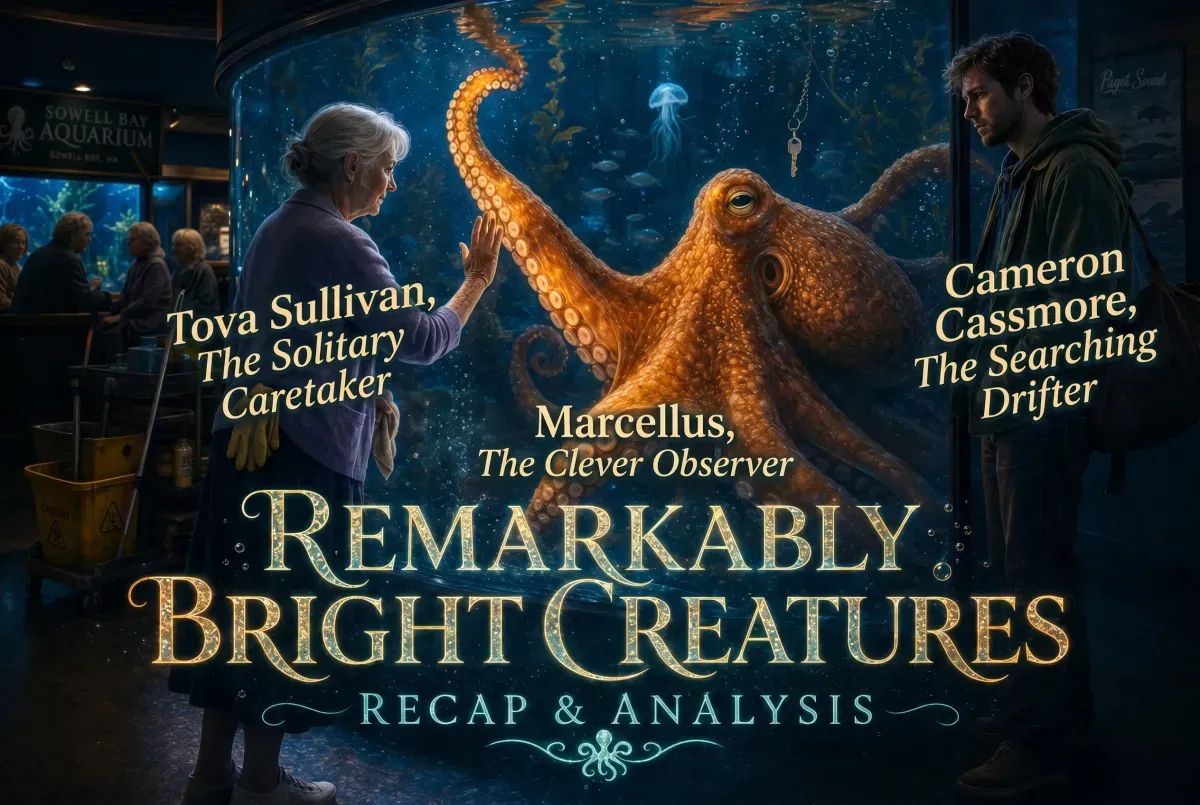
From the almost-darkness of his tank, a giant Pacific octopus named Marcellus3 introduces himself. He can read the plaque on his enclosure, remembers every fingerprint and every key, and resents the defrosted herring his captors feed him. He explains that his species lives only about four years, which means roughly one hundred and sixty days remain before his sentence ends.
Brought to the Sowell Bay Aquarium as an injured juvenile, he expects to die in this glass box. He keeps secrets, including one carried up from the bottom of the sea, and warns that his time with us may be brief. Darkness, he insists, suits him.
Van Pelt's boldest gambit is handing the narration to a dying cephalopod, and the prologue establishes his voice as wry, erudite, and quietly mournful. By foregrounding his lifespan, the book installs a ticking clock that lends every subsequent kindness urgency. Marcellus embodies confinement and intelligence trapped without outlet, a mirror for the human characters who are equally boxed in by grief and self-sabotage. His claim to keep a secret from the seafloor plants the central mystery without revealing it. The octopus's contempt for human dullness is comic, but his loneliness is the emotional thesis: connection, however improbable, is the only antidote to imprisonment.
The Tangled Escape Artist
Seventy-year-old Tova Sullivan,1 who mops the Sowell Bay Aquarium floors at night to outrun the silence of widowhood, finds Marcellus3 loose in the break room, an arm cinched in power cords. She unplugs him, and he winds around her wrist, leaving sucker bruises and a strange new intimacy.
That same stretch of days, a recorded message informs her that her estranged brother Lars has died in a Bellingham care home. Tova,1 who lost her son Erik8 to the sea three decades earlier and her husband Will11 to cancer, absorbs both events with her usual brittle composure. The octopus3 becomes the one creature she truly talks to, and a friendship with no name begins beneath the blue tank lights.
The opening braids Tova's three losses (son, husband, brother) into a portrait of accumulated grief managed through compulsive order. Cleaning is her liturgy, busyness her defense against feeling. The octopus encounter punctures that defense: a wild creature reaches for her, and she reaches back. Van Pelt frames connection as physical and involuntary, a grip rather than a choice. Lars's death matters less for sentiment than for what it reactivates, the unfinished business of family. Tova's refusal to grieve aloud, contrasted with the Knit-Wits' performative sympathy, marks her as someone whose interior life is sealed shut, waiting for an improbable key.
A Ring in the Junk Box
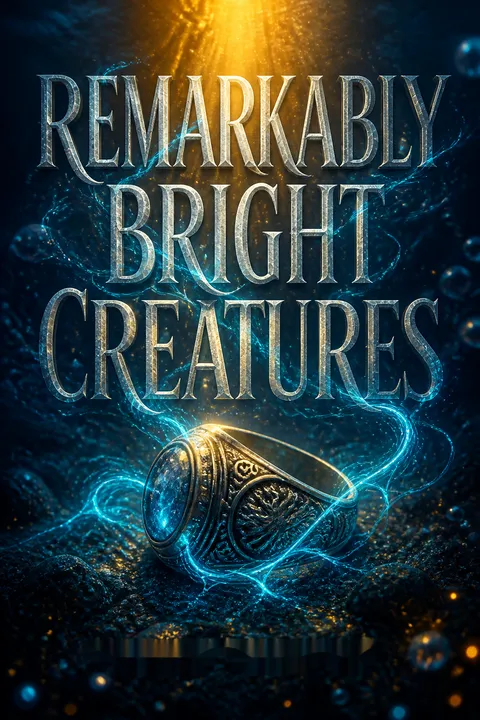
In Modesto, thirty-year-old Cameron Cassmore2 loses another construction job, gets evicted by his girlfriend Katie, and crashes with married friends Brad and Elizabeth.14 His aunt Jeanne,7 who raised him after his addict mother Daphne9 abandoned him at nine, hands him a box of his mother's old things. Inside, wrapped in a photo, sits a Sowell Bay High class ring.
The picture shows young Daphne9 in the arms of a man, later identified through an online yearbook as Simon Brinks,10 now a wealthy Seattle real estate developer. Cameron,2 a brilliant underachiever who hoards useless facts and squanders chances, convinces himself Brinks10 is the deadbeat father who owes him eighteen years of support, and books a predawn flight north.
Cameron is Tova's structural twin: where she over-controls, he free-falls. His chronic self-sabotage is rooted in maternal abandonment, a wound he converts into grievance rather than grief. The ring functions as a fairy-tale token, the orphan's proof of secret lineage, and Cameron weaponizes it into a revenge fantasy aimed at extracting money. Notice the displacement: he wants child support, not a father, because wanting love openly would expose how much the abandonment still hurts. His encyclopedic mind, unsupported by any belief he deserves good things, dramatizes how intelligence without self-worth becomes a curse. The journey north is less a search for a parent than a flight from his own unworthiness.
Stranded in Sowell Bay
Cameron's2 plan unravels fast. The airline ships his duffel, containing the pawnable jewelry, to Italy by mistake, forcing him to borrow two thousand dollars from Aunt Jeanne,7 money meant for her dream Alaskan cruise. He buys a rickety camper, drives north, and finds Brinks Development locked and empty.
A flat tire strands him at the Shop-Way, where the gregarious owner Ethan Mack4 tows the camper to his own driveway and feeds him whiskey. Ethan4 steers Cameron2 toward a maintenance opening at the aquarium. After a joke-filled fake application backfires, the director Terry5 hires him anyway as a favor to Ethan,4 mostly to fill in for an injured night cleaner. Cameron2 starts chopping bait and mopping floors, telling himself it is temporary.
This section turns a quest into a sojourn, the engine of most transformation narratives. Cameron's misfortunes are comic, but they steadily strip his pretenses: no jewelry, no leverage, no Brinks, just honest labor he secretly does not hate. Ethan and Terry function as accidental mentors, men who extend trust Cameron has not earned, planting the book's argument that grace precedes deserving. The borrowed cruise money is a moral stake, a debt to the one person who loved him unconditionally, ensuring his redemption will be measured in repayment. Crucially, Cameron now occupies Tova's exact job, a structural rhyme that lets the octopus, who watches both, begin assembling a truth the humans cannot see.
There Was a Girl
Tova's1 quiet routines crack open through chance encounters. After helping a cyclist named Adam Wright with her crossword at the park, she meets him again at Mary Ann Minetti's farewell luncheon. Loose with martinis, Adam recalls that Erik8 had been secretly seeing a girl the summer he vanished, a detail the grieving mother1 never knew.
Tova1 has never believed the official verdict that her son8 took his own life by cutting a boat's anchor line, and this revelation electrifies her. If Erik8 was happy, in love, why would he die deliberately? The Knit-Wits gasp when Sandy, Adam's partner, lets slip that Tova1 has secretly listed her house. Rattled, Tova1 drives home consumed by a single phrase she cannot stop repeating: there was a girl.
Van Pelt reanimates a cold case through the unreliable archaeology of memory and alcohol. The revelation reframes Erik not as a suicide statistic but as a person with an unrecorded inner life, restoring Tova's long-suppressed conviction that the story is incomplete. Her obsession with the unnamed girl is displaced maternal love seeking any remaining thread of her son. The luncheon scene also exposes Tova's secret plan to disappear into a care facility, juxtaposing her search for the past against her flight from the future. The community's gossip, usually intrusive, here becomes the unlikely delivery system for buried truth, a recurring motif that small-town surveillance can wound and heal in the same breath.
Two Cleaners Strike a Pact
Visiting after hours, Tova1 discovers Cameron2 jabbing a broomstick at Marcellus,3 who has wedged himself on a high shelf during an escape attempt. She scrambles onto the table and coaxes the creature down with bare hands, stunning the young man.2
Recognizing a kindred troublemaker, she agrees to keep his presence secret if he keeps hers, since Terry5 would euthanize a chronically escaping octopus as a liability. The unlikely pair begins working evenings together, Tova1 mentoring Cameron2 in proper trash liners and cotton cloths while teasing emerges between them.
When he absently quotes Hamlet, she freezes: it was her dead son's8 favorite line. Marcellus,3 watching, recognizes their identical gaits, dimples, and golden-flecked eyes, and concludes the two are blood relatives.
The meeting of grandmother and grandson, unknown to both, is the book's tender center, played as comedy and quiet ache. Tova's fearless tenderness toward Marcellus contrasts with Cameron's flinching, marking her capacity for the very intimacy he resists. Their shared secret forges an alliance built on mutual protection, a small family unit formed before either knows it is one. The Hamlet echo operates as dramatic irony of the highest order, the reader and the octopus already sensing what the grieving mother cannot. Van Pelt uses the cephalopod's superhuman pattern recognition to make heredity literally legible, transforming a sentimental coincidence into a question of perception: who is paying close enough attention to see?
Selling the House of Ghosts
Convinced no one will care for her when she fails, Tova1 accelerates her plan to sell her father's hand-built house and move to the upscale Charter Village facility she scouted while collecting Lars's belongings. She sorts the attic into piles, donating Erik's8 toys and her mother's Swedish china, keeping only the painted Dala Horses.
Janice12 and Barb13 beg her to reconsider, insisting she is not a burden, but Tova1 refuses to depend on friends or impose her decline on anyone. A stray gray cat she names Cat has adopted her, complicating the departure. Beneath the practicality runs terror: without children or grandchildren, she fears dying alone with no one to file the paperwork, a fear Will's death11 taught her to dread.
Tova's relocation embodies a distinctly modern dread, the autonomy-obsessed refusal to be a burden curdling into self-erasure. She frames Charter Village as practical, but it is really a controlled surrender, choosing the manner of her vanishing the way she chose Will's spare epitaph. The attic purge is a woman dismantling the evidence of a lineage she believes ended. The Dala Horses, kept against logic, betray her unspoken hope that something deserves to be passed on. Van Pelt sharpens the tragedy through dramatic irony: the reader knows an heir already mops beside her. Tova's fear of dying unwitnessed is precisely the fear about to be answered, if only she can stay long enough to learn it.
The Octopus Plays Detective
Certain the humans will never connect themselves, the dying octopus3 takes matters into his arms. Cameron2 leaves his driver's license in Terry's5 office after a photocopier jams. That night Marcellus3 escapes his tank, hauls the plastic card down the corridor despite the rapidly mounting Consequences of being out of water, and tucks it beneath the bronze sea lion statue's tail, the one spot Tova1 compulsively cleans.
The errand nearly kills him; his arms numb and his color drains as he barely makes it back. He reasons that Tova1 holds the only loose end, a name and a birth date, and that filling the hole in her single human heart is worth the gamble. He waits, confident she will not leave without saying goodbye.
Here the magical-realist conceit pays its narrative debt: the octopus becomes an active agent of revelation rather than a passive observer. His self-endangerment reframes the entire creature-human bond as reciprocal love, not mere whimsy. Van Pelt stages intelligence as moral responsibility, Marcellus cannot bear to die leaving a story unfinished, an impulse that mirrors the reader's own desire for resolution. The detail of the sea lion's tail, a spot only Tova tends, weaponizes her compulsions for good, suggesting that even our smallest rituals can be the channels through which grace arrives. The contrast between his three hearts and her one underscores the book's quiet equation of love with vulnerability.
The Girl's Name Is Daphne
In the Shop-Way produce section, Sandy delivers what Adam withheld: the name of Erik's8 secret sweetheart was Daphne,9 a girl from his high school class. Tova1 abandons her cherries and races home, tearing through her half-packed attic for the 1989 Sowell Bay yearbook.
Hands trembling, glasses jammed on, she runs her finger down the index until she reaches a single matching entry: Cassmore, Daphne A.9 The name detonates quietly.
Meanwhile Ethan,4 who has linked the surname to an old bounced check and an online ancestry trail, realizes Daphne Cassmore9 is Cameron's2 mother and that town gossip is about to connect the dots in cruel ways. He invites Tova1 to dinner intending to tell her gently, but the evening derails over a ruined Grateful Dead shirt.
The reveal arrives through the same gossip network that has dogged Tova all her life, now functioning as fate's courier. Van Pelt withholds the final synthesis, letting reader and octopus stay ahead of the humans, sustaining exquisite tension. The Cassmore surname is a depth charge because the reader already knows Cameron, transforming an abstract search into an imminent collision. Ethan's parallel investigation, born of affection rather than nosiness, complicates the moral status of small-town curiosity. The ruined concert shirt subplot, seemingly trivial, dramatizes Tova's compulsive over-correction and her capacity for extravagant amends, foreshadowing the larger reparations the story is steering toward. Knowledge, the book suggests, is rarely delivered cleanly; it arrives mid-errand, between the milk and the grapefruit.
The License Under the Statue
Cleaning beside Cameron,2 Tova1 slides her rag beneath the sea lion's tail and recovers his driver's license, exactly where Marcellus3 left it. She asks his mother's name; he says Daphne Cassmore.9 The pieces lock: the girl Erik8 loved was Cameron's2 mother, and Cameron's2 February birth date falls roughly nine months after Erik8 vanished.
She tells Cameron2 gently that his mother was the girl her son8 was seeing, then lets him narrate his abandonment, the years with no birthday card, the conviction that Simon Brinks10 must be his father. Tova1 does not yet voice the wild arithmetic forming in her mind, that this young man2 beside her might be Erik's son,8 her grandson,2 because it seems too miraculous, and she has never believed in miracles.
This is the hinge of recognition, withheld from full articulation to honor Tova's hard-won skepticism. Van Pelt understands that hope is the most dangerous emotion for the bereaved, and Tova rations it like a woman who has been disappointed by the universe before. The scene's power lies in proximity without disclosure: she suspects, he does not, and the reader aches across the gap. Cameron's recital of the missing birthday cards exposes the abandonment wound he masks with bravado, while Tova's maternal instinct, dormant thirty years, stirs toward him. The dramatic irony tightens unbearably, because the true father he never sought is dead, and the family he craves sits inches away holding his license.
The Speakeasy Dead End
Cameron2 finally meets Simon Brinks10 in a hidden Capitol Hill cocktail bar the developer10 built in honor of Daphne,9 his brilliant best friend, never his lover. Brinks10 gently dismantles the fantasy: he is not the father, the ring is not his, and Daphne9 hid the man's identity even from him.
He praises Cameron's2 mind as Daphne's9 inheritance and reveals she loved her son2 fiercely. Devastated, Cameron2 drives back to Sowell Bay, hurls the EELS-engraved ring into the wolf eel tank, and quits via a scrawled note.
Compounding the collapse, he believes Avery,6 the paddle-shop owner he has fallen for, is ghosting him, not knowing her teenage son Marco15 lied about his canceled date. Convinced nothing here is real, Cameron2 points the camper south toward California.
The anticlimax is the point: the father quest was always a misdirection, a story Cameron told to avoid the harder truth that his mother loved him and still left. Brinks functions as a benevolent mirror, a fatherless boy from the wrong side of the highway who succeeded, refuting Cameron's belief that bad origins doom a life. The discarded ring, engraved EELS, is the unrecognized key, tossed away in despair just as the answer nears. Van Pelt stacks misunderstandings (Marco's lie, the missing phone) to dramatize how self-fulfilling Cameron's pessimism is; primed to be rejected, he flees before anyone can choose him. Rock bottom, however, finally clears the way for genuine reckoning rather than fantasy.
EELS, Not Eels
On Tova's1 final shift, Marcellus,3 near death, performs one last feat: he braves the wolf eel tank that once cost him an arm and his freedom, retrieves Cameron's2 discarded ring, and drags himself and the ring to the lobby, collapsing pale and sticky by the door. Tova1 revives him with tank water and a mop bucket, then spots the gold ring he carried.
She had assumed the engraving read eels, the marine creature, as Cameron2 did. Wiping it clean, she reads the truth: EELS stands for Erik Ernest Lindgren Sullivan,8 her son's full name. The ring was Erik's,8 given to Daphne.9 The arithmetic completes itself. Cameron2 is her grandson, the child Erik never knew he made,8 and Marcellus3 knew all along.
The misread engraving is the book's masterstroke, a clue hidden in plain sight whose meaning depends entirely on knowing the dead. Cameron lacked the context; only Tova could decode it, making the revelation an act of belonging rather than detection. Marcellus's final errand, returning to the den of his original maiming, is a redemptive inversion of his origin wound, spending his last strength to mend a human's broken lineage. Van Pelt fuses the two plots and the mystery into a single image: a creature who carries secrets from the seafloor surrendering the last one. Tova's grief, frozen for thirty years, finally has somewhere to flow, transformed from absence into inheritance.
Carried Back to the Sea
Knowing Marcellus3 has only days left and refusing to let him die in glass, Tova1 hauls the sixty-pound octopus3 in her yellow mop bucket down the boardwalk to the jetty at extreme low tide. Along the way she thanks him aloud for leading her to her grandson,2 for stealing the license, for the secret he carried up from the seafloor where Erik's8 bones long ago dissolved.
She tips the bucket; his arm clings to her wrist a final moment, then releases into the black water. On the pier afterward she meets Avery,6 who confesses she once talked a woman down from that railing years ago, a woman raving about a boom and an accident, giving Tova1 at last a plausible, gentler account of Erik's death.8
The release scene is the emotional climax, an act of radical empathy: Tova grants the captive the freedom she denied herself by planning her own institutionalization. Their farewell reframes love as letting go, the lesson Aunt Jeanne and Avery both voiced about Daphne. Avery's pier confession lands like absolution, recasting Erik's death as accident, not suicide, vindicating Tova's thirty-year refusal to accept the verdict and freeing her from the guilt of the broken Dala Horse and the imposed summer job. Van Pelt threads the suicidal stranger (Daphne) and the boom together so the reader infers what Tova intuits. Grief here completes its metabolism, becoming knowledge, peace, and a reason to stay alive.
A Grandson on the Doorstep
Cameron2 repairs his camper's snapped belt on a California-bound shoulder, then reverses course, driving back to do things right, to apologize and reclaim the job Tova1 secretly preserved by pocketing his resignation note.
He arrives at her emptying house hours before the sale closes. Tova1 hands him Erik's8 class ring and explains the engraving: his father was Erik Ernest Lindgren Sullivan.8 They embrace, grandmother1 and grandson,2 and she shows him the bedroom where his father8 grew up.
Cameron,2 spotting a mismatched floorboard, pries it up to reveal Erik's8 hidden cache: petrified snack cakes and the long-missing sixth Dala Horse, lovingly repaired. Tova1 cancels Charter Village. Neither will disappear. Marcellus,3 she tells him, gave the ring back.
The reunion resolves both protagonists' core wounds simultaneously: Cameron, abandoned, is finally chosen and rooted; Tova, heirless, gains the future she had begun erasing. His return, prompted by Tova's earlier insistence that he is better than a quitter, marks the first time he completes a hard thing, evidence that being believed in can rewire a self-sabotaging life. The hidden floorboard, discovered through Cameron's inherited eye for craft, literalizes buried legacy and quietly proves the bloodline through shared aptitude. The repaired Dala Horse, Erik's secret act of repair, becomes a symbol of restoration across generations. Van Pelt closes the loop the octopus opened, kindness rippling outward from one freed creature to a reassembled family.
Epilogue
Months later Tova1 lives in a waterfront condo, hosting Scrabble nights with Cameron,2 who now works construction and plans engineering classes, and Ethan,4 who treasures the rare concert shirt Tova replaced. Cameron2 has reconciled with Avery6 and her son,15 mended ties with Aunt Jeanne,7 and become honorary grandson to Brad and Elizabeth's14 new baby.
Tova1 volunteers at the aquarium beside Pippa, the rescued young octopus who inhabits Marcellus's3 old tank, and she funds a bronze octopus statue. Marcellus,3 freed, spent his final days in the dark deep beside the dissolved bones of the son8 Tova1 mourned. On the pier, Tova1 whispers that she misses them both, then turns back toward her waiting, improbable family.
The denouement distributes the harvest of connection: every isolated figure now belongs to a chosen, blended family that defies blood-only definitions. Pippa, the new rescue, ensures the cycle of captivity and care continues, while the octopus statue memorializes the creature who refused to let a story end unfinished. Marcellus's final narration, dying free among Erik's remains, fuses the human and animal arcs into a single image of homecoming and acceptance. Van Pelt resists tidy romance for Tova and Ethan, offering instead the gentler triumph of community and purpose. The closing whisper on the pier transforms mourning from paralysis into ritual, proving the book's thesis: we survive loss not by recovering but by remaining, and by being remarkably attentive to one another.
Analysis
Van Pelt's debut weds magical realism to the quiet machinery of a small-town reconciliation, using a dying octopus to interrogate captivity in all its forms: glass tanks, grief, addiction, self-sabotage, and the autonomy that curdles into self-erasure. Marcellus,3 who can read heredity in a face but cannot escape his box, embodies the book's central paradox, that intelligence and love are useless without connection. The two human protagonists are studies in opposite defenses against the same wound, loss. Tova1 over-controls, scrubbing and packing toward a managed disappearance; Cameron2 free-falls, converting maternal abandonment into grievance and flight. Both are imprisoned by stories they tell themselves: that the bloodline ended, that the world dealt a losing hand. The novel's structural genius is the EELS ring, a clue hidden in plain sight whose meaning depends entirely on intimate knowledge of the dead, dramatizing the theme that belonging is what makes the world legible. Recognition, not detection, solves the mystery. Van Pelt is generous with her thesis that grace precedes deserving: Terry5 hires Cameron,2 Ethan4 feeds him, Tova1 preserves his job, all before he earns it, and that unearned trust is precisely what rewires a self-sabotaging life. Against contemporary loneliness and the cult of independence, the book argues for chosen, blended family and for the redemptive nosiness of community, where gossip both wounds and heals. The octopus's final errand, returning to the den that once maimed him, reframes trauma as the very site of redemption. The closing image, Tova1 whispering to the bay rather than fleeing it, reframes mourning as ongoing ritual rather than a problem to solve. We survive loss, Van Pelt suggests, not by recovering but by remaining, and by paying remarkably bright attention to one another.
Review Summary
Remarkably Bright Creatures receives mostly positive reviews, with readers praising its heartwarming story, unique octopus perspective, and well-developed characters. Many find Marcellus the octopus charming and insightful. Tova's character is widely appreciated, while Cameron receives mixed reactions. Some readers find the plot predictable but enjoyable, while others criticize its slow pace and simplistic writing. The book's themes of grief, loneliness, and friendship resonate with many readers. Overall, it's considered a feel-good, quirky read that offers a refreshing take on human-animal connections.
People Also Read








Characters
Tova Sullivan
Grieving night-shift cleanerA seventy-year-old Swedish American widow who mops the aquarium floors to fill the silence left by three deaths: her son Erik8, vanished at eighteen; her husband Will11, lost to cancer; and her estranged brother Lars. Stoic, fastidious, and allergic to self-pity, Tova channels grief into relentless order and refuses to be anyone's burden. Beneath her brisk competence runs a thirty-year refusal to accept the official story of Erik's death8. Her unlikely tenderness toward Marcellus3 the octopus reveals a capacity for intimacy she withholds from people. Tova's arc traces a woman deciding whether to vanish quietly into managed old age or risk the vulnerability of staying, hoping, and belonging again.
Cameron Cassmore
Brilliant drifting screwupA thirty-year-old Californian with an encyclopedic memory and a talent for losing jobs, girlfriends, and chances. Abandoned at nine by his addict mother Daphne9 and raised by his aunt Jeanne7, Cameron masks an abandonment wound with sarcasm, grievance, and a fantasy that a rich absent father owes him. He plays guitar in a dying band, lives one couch ahead of homelessness, and believes the world dealt him a losing hand. His pilgrimage to Sowell Bay to confront a supposed father10 becomes an unplanned reckoning with worth, work, and love. Cameron's growth hinges on a deceptively simple discovery: that being trusted and chosen can interrupt a lifetime of self-sabotage.
Marcellus
Captive genius octopusA giant Pacific octopus held at the Sowell Bay Aquarium, narrating portions of the story in a voice both haughty and tender. He reads, escapes his tank nightly through a pump gap, hoards a secret Collection of lost human treasures, and reads heredity in faces the way humans read letters. Aware his four-year lifespan nears its end, Marcellus is lonely, contemptuous of human dullness, yet quietly devoted to the cleaning woman1 who talks to him. He carries a secret retrieved from the seafloor years ago. His arc transforms passive observation into active love, as he spends his dwindling strength trying to mend the broken family only he can see.
Ethan Mack
Smitten Scottish grocerThe chatty, kindhearted Scottish owner of the Shop-Way, a former longshoreman who chased a woman to America forty years ago and stayed. A lover of vinyl, gossip, and Islay whisky, Ethan has quietly pined for Tova1 for two years, pressing his collar before her late-night visits. He befriends Cameron2, offers his driveway and counsel, and meddles with good intentions. His warmth and loneliness make him the community's beating heart.
Terry Bailey
Devoted aquarium directorThe aquarium's director, a Jamaican-raised marine biologist who earned his degree summa cum laude after being given chances by people who believed in him. He pays that forward by hiring Cameron2 despite a ridiculous application. Fond of Tova1 and protective of his animals, Terry suspects Marcellus's3 escapes and frets over liability, but his generosity quietly shapes the plot's outcomes.
Avery
Self-made paddle-shop ownerA thirty-two-year-old single mother who runs the Sowell Bay Paddle Shop and raises her teenage son Marco15 alone. Capable, warm, and no-nonsense, she became a parent at seventeen and built an independent life. She is drawn to Cameron2 despite his rough edges, and once talked a despairing stranger down from the pier. Her honesty about motherhood and letting go reframes Cameron's2 bitterness.
Aunt Jeanne
The aunt who stayedCameron's2 frog-collecting, plain-spoken aunt who took him in at nine when her sister Daphne9 disappeared. She lives in a cluttered trailer park, works the county reception desk, and loves Cameron2 fiercely while refusing to coddle his excuses. Saving for a dream Alaskan cruise, she lends him money he must repay. Her tough tenderness is the closest thing he has to a mother.
Erik Sullivan
The vanished sonTova's1 only child, an accomplished, popular eighteen-year-old sailor and student who disappeared one summer night in 1989 while working the ferry ticket booth. His boat washed up with its anchor line cut, and the town ruled it suicide, a verdict Tova1 never accepted. His unrecorded secret life haunts the entire narrative.
Daphne Cassmore
The mother who leftCameron's2 mother, a brilliant, troubled woman from the wrong side of Sowell Bay who ran away as a teenager, later struggled with addiction, and abandoned her son2. Privately bright and secretive, she hid the identity of Cameron's2 father even from her closest friend. She exists in memory and rumor, the absent hinge connecting both families.
Simon Brinks
Wealthy supposed fatherA self-made Seattle real estate developer and speakeasy owner who grew up poor alongside Daphne9. Cameron2 mistakes him for his father based on a photo and ring. Gracious rather than guilty, Brinks gently corrects the error, reveals he was Daphne's9 best friend, and refutes Cameron's2 belief that bad origins predetermine failure.
Will Sullivan
Tova's late husbandTova's1 easygoing husband of forty-seven years, a maker of clutter and lover of ballgames, who died of pancreatic cancer. He suspected Erik8 had a girlfriend and replaced the attic window after a grief-stricken incident.
Janice Kim
Loyal Knit-Wit friendA sitcom-quoting, tech-savvy member of Tova's1 lunching circle who pushes a cell phone on her, helps with online tasks, and gently fights Tova's1 plan to leave town, insisting she is never a burden.
Barb Vanderhoof
Gossipy Knit-Wit friendAn elephant-collecting, spike-haired member of the Knit-Wits, prone to inserting herself into others' dramas, who ultimately reveals an unexpected soft spot, including for a certain stray cat.
Ethan's protégé Cameron's friends Brad and Elizabeth
Cameron's chosen siblingsCameron's2 lifelong best friends, now married and expecting their first child. Elizabeth, his kindergarten friend, nudges him toward adventure and self-reflection; Brad, the band's departing singer, hosts him and tolerates his couch-crashing with affectionate exasperation.
Marco
Avery's guarded teenage sonAvery's6 fifteen-year-old son, sullen and protective, whose small lie about a missed message helps drive Cameron2 away at a crucial moment, illustrating how easily misunderstandings cascade.
Plot Devices
The Octopus Narrator
Omniscient nonhuman witnessMarcellus's3 first-person interludes, labeled by day of captivity, give readers privileged knowledge the human characters lack. His superhuman observation lets him detect heredity in faces, gaits, and dimples, allowing him to deduce the central kinship long before anyone else. This generates sustained dramatic irony, since the reader and octopus race ahead of Tova1 and Cameron2. The device also imports philosophical reflection on freedom, intelligence, and loneliness, framing captivity as the book's master metaphor. Crucially, the narrator is not passive; his knowledge becomes motive, and his dwindling lifespan converts observation into urgent action, turning a clever conceit into the engine that resolves the plot.
The EELS Class Ring
Misread identity tokenA 1989 Sowell Bay High class ring, found wrapped in a photo among Daphne's9 belongings, drives Cameron's2 entire journey north. Engraved EELS, it is universally misread as the school's marine mascot, including by Cameron2, who assumes it belonged to a father. The ring's true meaning, an acronym of a full name, is legible only to someone who knew the dead intimately. Van Pelt hides the answer in plain sight, making the climax depend on context rather than detection. The ring passes from a teenage romance to the seafloor to a junk box to a wolf eel tank, its journey mirroring the buried family history it secretly encodes.
The Bronze Sea Lion's Tail
Ritual-driven hiding spotA life-sized bronze sea lion statue in the aquarium alcove holds sentimental weight for Tova1, who always pauses to touch it, remembering Erik8 riding it as a boy, and compulsively cleans beneath its tail, a spot only she tends. This established habit becomes a deliberate dead-drop: a clue placed there is guaranteed to reach her and no one else. The device demonstrates Van Pelt's setup-and-payoff craftsmanship, repurposing a character's smallest compulsion into the mechanism of revelation. It also embodies a theme, that our private rituals, often dismissed as quirks, can become the precise channels through which connection and grace unexpectedly arrive.
Parallel Cleaner Roles
Structural mirroringCameron2 is hired to fill Tova's1 exact night-cleaning job after her injury, placing grandmother1 and grandson2 in identical roles before either knows they are related. This structural rhyme lets them work side by side, lets Marcellus3 compare their matching gaits and humming, and lets shared traits surface organically through labor rather than exposition. The device externalizes inheritance: aptitude, mannerism, and temperament become visible through parallel action. It also stages the book's thesis that meaningful bonds form through ordinary, repeated proximity rather than dramatic encounter, mopping floors together until intimacy accumulates like the calcium they scrub from the tank rims.
Marcellus's Lifespan Clock
Ticking mortality timerFrom the opening page, the octopus3 announces his species lives only about four years, and his chapter headings count days of captivity toward a known end. This countdown imposes urgency on every act of connection and frames his decision to intervene as a literal dying wish. The Consequences he suffers when out of water for too long add escalating physical stakes to his self-endangering errands. The clock binds the magical-realist premise to genuine suspense, ensuring his cleverness must produce results before time runs out. It also rhymes with Tova's1 own contemplation of endings, linking the creature's mortality to the human characters' choices about how, and whether, to keep living.
FAQ
Synopsis & Basic Details
What is Remarkably Bright Creatures about?
- Intertwined lives connect: The story follows a giant Pacific octopus named Marcellus in captivity, an elderly cleaning lady named Tova grappling with loss, and a young man named Cameron searching for his father, revealing how their lives unexpectedly intertwine.
- Themes of connection and loss: The narrative explores themes of grief, loneliness, and the search for belonging, highlighting the unexpected connections that can form between different beings.
- A journey of self-discovery: Through their interactions, the characters embark on a journey of self-discovery, confronting their pasts and embracing new possibilities for the future.
Why should I read Remarkably Bright Creatures?
- Unique narrative perspective: The story is partly narrated by an octopus, offering a fresh and insightful perspective on human behavior and emotions.
- Heartwarming and thought-provoking: The novel blends humor, sadness, and mystery, creating a heartwarming and thought-provoking reading experience.
- Exploration of complex themes: It delves into complex themes of grief, family, and the search for meaning, making it a compelling and emotionally resonant read.
What is the background of Remarkably Bright Creatures?
- Setting in the Pacific Northwest: The story is set in the fictional town of Sowell Bay, Washington, a coastal community that provides a backdrop of natural beauty and small-town charm.
- Focus on marine life: The Sowell Bay Aquarium serves as a central location, highlighting the importance of marine life and the natural world in the characters' lives.
- Exploration of grief and loss: The story is set against a backdrop of personal loss and the search for closure, reflecting the emotional landscape of the characters.
What are the most memorable quotes in Remarkably Bright Creatures?
- "Darkness suits me.": This opening line from Marcellus establishes his unique perspective and his connection to the depths of the sea, highlighting his introspective nature.
- "Sometimes there is simply a correct way to do things.": This quote from Tova reflects her meticulous nature and her need for order, revealing her coping mechanisms for dealing with grief.
- "You are only human, after all.": Marcellus's frequent use of this phrase underscores his observations of human behavior, highlighting his intelligence and his understanding of their limitations.
What writing style, narrative choices, and literary techniques does Shelby Van Pelt use?
- Alternating perspectives: Van Pelt employs alternating perspectives between Marcellus, Tova, and Cameron, providing a multifaceted view of the story and its themes.
- Introspective narration: The narrative is characterized by introspective passages, particularly from Marcellus, which offer philosophical insights and emotional depth.
- Subtle foreshadowing and callbacks: Van Pelt uses subtle foreshadowing and callbacks to create a sense of interconnectedness and to enhance the reader's understanding of the characters' journeys.
Hidden Details & Subtle Connections
What are some minor details that add significant meaning?
- The silver-dollar scar: Tova's silver-dollar-sized bruise from Marcellus's tentacle becomes a recurring motif, symbolizing her connection to the octopus and the lingering impact of their encounter.
- The Dala Horse: The broken Dala Horse, a Swedish folk art figure, represents Tova's connection to her past and her grief over Erik, later becoming a symbol of healing and family.
- The "EELS" engraving: The "EELS" engraving on the class ring, initially thought to be a reference to the school mascot, is later revealed to be a clue to Erik's identity, connecting him to Cameron.
What are some subtle foreshadowing and callbacks?
- The mention of a girl: Early mentions of a girl in Erik's past foreshadow the revelation of Daphne Cassmore's identity and her connection to Cameron.
- The broken step stool: The broken step stool in the pump room foreshadows Tova's fall and her subsequent injury, which leads to Cameron's temporary job at the aquarium.
- The recurring phrase "It's something to do": Tova's repeated use of this phrase highlights her need for purpose and routine, which is challenged by her growing connection with Cameron and Marcellus.
What are some unexpected character connections?
- Tova and Cameron's familial link: The revelation that Cameron is Tova's grandson is an unexpected twist, connecting their lives in a profound and meaningful way.
- Ethan's connection to Tova's past: Ethan's knowledge of Tova's past and his connection to her through her late husband, Will, adds depth to his character and his relationship with Tova.
- Simon Brinks and Daphne Cassmore's friendship: The revelation that Simon Brinks and Daphne Cassmore were best friends, not lovers, adds a layer of complexity to Cameron's search for his father.
Who are the most significant supporting characters?
- Ethan Mack: Ethan's role as a friend and confidant to both Tova and Cameron provides a sense of community and support, highlighting the importance of human connection.
- Avery: Avery's presence in Cameron's life offers a glimpse of hope and the possibility of love, challenging his cynicism and providing a sense of belonging.
- Janice Kim and Barb Vanderhoof: As Tova's friends, the Knit-Wits provide a sense of continuity and support, highlighting the importance of female friendships and community.
Psychological, Emotional, & Relational Analysis
What are some unspoken motivations of the characters?
- Tova's need for purpose: Tova's meticulous cleaning routine is driven by an unspoken need for purpose and control in the face of her grief and loneliness.
- Cameron's desire for belonging: Cameron's search for his father is fueled by an unspoken desire for belonging and a sense of identity, stemming from his abandonment as a child.
- Marcellus's longing for freedom: Marcellus's secret escapes are driven by an unspoken longing for freedom and a desire to experience the world beyond his tank.
What psychological complexities do the characters exhibit?
- Tova's stoicism and grief: Tova's stoic exterior masks a deep well of grief and longing for her lost son, revealing the complexities of her emotional landscape.
- Cameron's self-sabotage and vulnerability: Cameron's self-sabotaging behavior and his vulnerability reveal his internal struggles with self-worth and his fear of failure.
- Marcellus's intelligence and loneliness: Marcellus's intelligence and his ability to observe human behavior are juxtaposed with his loneliness and his longing for connection, highlighting his complex emotional state.
What are the major emotional turning points?
- Tova's discovery of Cameron's identity: The revelation that Cameron is her grandson is a major emotional turning point for Tova, offering her a sense of hope and purpose.
- Cameron's acceptance of his past: Cameron's acceptance of his past and his connection to Tova marks a turning point in his journey, allowing him to embrace his identity and find a sense of belonging.
- Marcellus's final act of freedom: Marcellus's final escape and return to the sea is a poignant emotional turning point, symbolizing his liberation and his lasting impact on Tova and Cameron.
How do relationship dynamics evolve?
- Tova and Cameron's bond: The relationship between Tova and Cameron evolves from a chance encounter to a deep familial bond, highlighting the transformative power of connection and empathy.
- Tova and Marcellus's unique understanding: The relationship between Tova and Marcellus evolves from a simple observation to a deep understanding, highlighting the power of nonverbal communication and mutual respect.
- Cameron and Avery's evolving connection: The relationship between Cameron and Avery evolves from a casual encounter to a deeper connection, highlighting the possibility of love and support in unexpected places.
Interpretation & Debate
Which parts of the story remain ambiguous or open-ended?
- The circumstances of Erik's death: The exact circumstances of Erik's death remain ambiguous, leaving the reader to ponder the possibility of an accident or suicide.
- Daphne Cassmore's fate: The fate of Daphne Cassmore, Cameron's mother, is left open-ended, leaving the reader to wonder about her life and her reasons for abandoning her son.
- The future of the aquarium: The future of the Sowell Bay Aquarium is left somewhat open-ended, leaving the reader to imagine how the characters will continue to shape its legacy.
What are some debatable, controversial scenes or moments in Remarkably Bright Creatures?
- Tova's decision to move to Charter Village: Tova's decision to move to a retirement community is debatable, as it raises questions about her independence and her connection to her community.
- Cameron's initial pursuit of Simon Brinks: Cameron's initial pursuit of Simon Brinks for financial gain is a controversial aspect of his character, raising questions about his motivations and his moral compass.
- Marcellus's escapes and their consequences: Marcellus's secret escapes and their potential consequences for the aquarium and its staff raise questions about the ethics of captivity and the value of freedom.
Remarkably Bright Creatures Ending Explained: How It Ends & What It Means
- Marcellus's return to the sea: Marcellus's return to the sea symbolizes his ultimate freedom and the completion of his journey, highlighting the importance of autonomy and self-determination.
- Tova's decision to stay in Sowell Bay: Tova's decision to stay in Sowell Bay and embrace her role as Cameron's grandmother signifies her acceptance of her past and her commitment to her new family.
- Cameron's new path: Cameron's decision to stay in Sowell Bay and pursue a new career path symbolizes his growth and his newfound sense of belonging, highlighting the transformative power of connection and empathy.
Download PDF
Download EPUB
.epub digital book format is ideal for reading ebooks on phones, tablets, and e-readers.








































