
Key Takeaways
1. Empathy and Trust as Foundational Healthcare
"You have to let us retrain you. If you come in with your doctor questions, you won’t learn anything. You have to learn to listen to these patients."
Unconventional training. Dr. Jim O'Connell, a Harvard Medical School graduate, was initially "conscripted" into caring for Boston's homeless population. His conventional medical training was challenged by veteran nurse Barbara McInnis, who insisted on a radical shift in approach: prioritizing listening and building trust over immediate clinical intervention. This "retraining" began with Jim soaking patients' feet, a humbling act that fostered connection.
Building rapport. This patient-centered philosophy was crucial for a population often traumatized and deeply distrustful of authority. Jim learned that many homeless individuals, like Mr. Carr, who had resisted treatment for years, would open up after consistent, non-judgmental engagement. The simple act of foot soaking became a metaphor for meeting patients "where they are," both physically and emotionally, and was far more effective than traditional methods.
Beyond symptoms. The goal extended beyond merely treating physical ailments; it aimed to acknowledge the individual's humanity and the complex context of their lives. This approach, which Jim likened to a "bartender's art," allowed him to gain profound insights into patients' stories, leading to more effective care and a deeper understanding of their multifaceted needs, far beyond what a quick medical diagnosis could provide.
2. "Upside-Down Medicine" for the Underserved
"Medicine is not efficient. It’s not supposed to be efficient. It has nothing to do with efficiency."
Challenging norms. The Boston Health Care for the Homeless Program (BHCHP), co-founded by Jim, inverted conventional medical practice, which increasingly prioritized efficiency and productivity. Jim and his colleagues were free to spend ample, unhurried time with each patient, a necessity for a population that often avoided doctors and hospitals due to past negative experiences and the sheer difficulty of navigating the mainstream system.
Complex interventions. Many homeless patients presented with severe, long-neglected health issues, requiring complex and time-consuming interventions. These included:
- Advanced cancers and hernias
- Untreated tuberculosis (TB) and AIDS
- Complex social problems intertwined with medical conditions
- Extensive persuasion to accept and adhere to care
Continuity of care. A core principle was ensuring patients saw familiar faces, fostering trust and consistent treatment. This meant that if one provider was unavailable, another team member who knew the patient's history could step in. This "upside-down" model, though seemingly inefficient by traditional metrics, proved more effective for this vulnerable population, ultimately reducing the burden on emergency services and providing more humane care.
3. The Enduring Influence of Barbara McInnis
"This work is way too interesting to be looked at as saintly."
Guiding philosophy. Barbara McInnis, a nurse and lay Franciscan, was Jim's primary mentor, profoundly shaping his approach to homeless healthcare. She instilled in him the belief that the work, while challenging, was inherently "interesting" and deeply human, rather than a path to sainthood or a mere charitable act. Her pragmatic wisdom emphasized presence, simplicity, and unconditional kindness.
Practical wisdom. Barbara taught Jim crucial lessons that became foundational to the Program's ethos:
- "Just give love. The soul will take that love and put it where it can best be used."
- "You’re a doctor. You’re not God. There are things you can’t fix. You just have to do your work."
- "We don’t want saints and zealots. We want flawed human beings who do their jobs. Just make this an ordinary job that people like to do."
Lasting legacy. Her influence extended beyond direct teaching; the Program's first medical respite was named the Barbara McInnis House, a testament to her spirit. Even after her death, Jim continued to quote her, using her pragmatic and compassionate philosophy to navigate the complexities of the work and counter criticisms about the Program's role in the "homelessness industry."
4. Homelessness as a Symptom of Systemic Failures
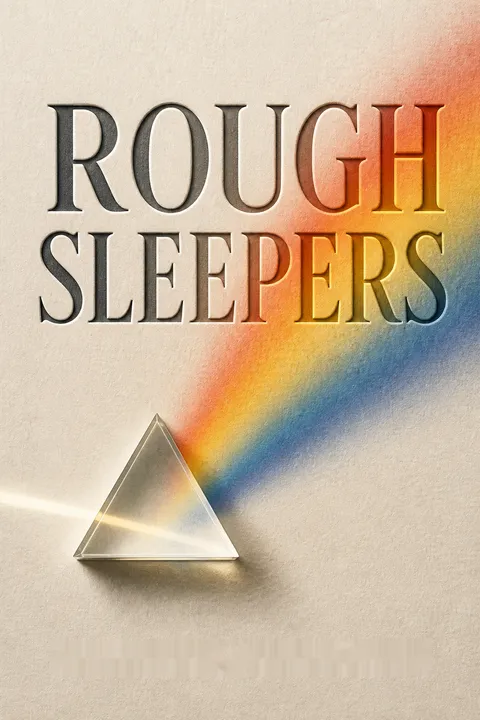
"I like to think of this problem of homelessness as a prism held up to society, and what we see refracted are the weaknesses in our health care system, our public health system, our housing system, but especially in our welfare system, our educational system, and our legal system—and our corrections system."
Societal reflection. Jim viewed homelessness not as an isolated issue but as a stark reflection of profound flaws across multiple societal systems. This "prism" metaphor highlights how inadequate provisions and systemic weaknesses in various sectors converge to create and perpetuate the problem, making it far more complex than simply a lack of housing.
Interconnected failures. Key systemic weaknesses contributing to homelessness include:
- Housing: Decline in affordable housing, widespread gentrification, restrictive zoning laws.
- Healthcare: Grossly inadequate mental health services, fragmented care for the poor, high costs.
- Welfare/Legal: Complex Social Security disability applications, punitive sex offender laws, racially disproportionate evictions.
- Corrections: High incarceration rates, difficulty reintegrating ex-offenders into society.
Beyond individual blame. This perspective challenges the notion that homelessness is primarily a result of individual choices or moral failings, as suggested by figures like Ronald Reagan. Instead, it points to a broader societal responsibility, emphasizing that addressing homelessness requires comprehensive, multi-sectoral reforms rather than isolated interventions.
5. The Complexities and Limitations of "Housing First"
"Housing turns out to be more complicated than medicine. I wish we had a cocktail of drugs that would cure people of being homeless."
Beyond a simple solution. While housing is a fundamental right and necessity, Jim learned that for many chronically homeless individuals, it is not a standalone cure. The "Housing First" model, which prioritizes housing before addressing other issues, proved effective for some, but often fell short without robust, long-term support services.
Challenges of transition. The initial "Housing First" experiment with 24 vouchers for rough sleepers yielded disheartening results over ten years. Many struggled with the transition to indoor living, facing issues such as:
- Difficulty with domestic skills (cleaning, cooking, bill-paying)
- Social isolation or, conversely, inviting disruptive friends leading to evictions
- Underlying health issues exacerbated by the change, sometimes leading to "death by housing"
Insufficient support. The key takeaway was that housing without adequate "Permanent Supportive Housing" (PSH) – including mental health treatment, addiction recovery, life skills training, and community integration – was often insufficient. The success stories, like the man who flourished in a "high-opportunity" suburb, highlighted the critical role of comprehensive support and environment in making housing truly transformative.
6. Redefining Success in Chronic Care
"I think if you don’t enjoy rolling the rock up the hill, this is not the job for you."
Embracing the Sisyphean. Jim often invoked the myth of Sisyphus to describe the cyclical nature of their work, where progress was often temporary and problems recurred. Instead of despairing, he encouraged his team to find "joy and fulfillment" in the ongoing "process" of care, even when grand, measurable successes were infrequent or elusive.
Palliative approach. For many patients with chronic, incurable illnesses and deep-seated social problems, the Street Team's work often amounted to "good palliative care." This meant focusing less on trying to cure those illnesses and more on alleviating suffering, improving daily life, and providing comfort, rather than solely aiming for definitive cures or permanent solutions.
Small victories. Success was redefined in smaller, more personal terms, offering moments of hope and affirmation:
- A patient staying sober for a few hours ("sobriety in hours")
- A request for "button-down shirts" as a sign of renewed self-respect
- A patient like John Cotrone finding a stable apartment and some peace
- The "beauty of human connection" itself, offering dignity and companionship
This perspective allowed the team to sustain their commitment in the face of overwhelming challenges, finding meaning in consistent presence and care.
7. The Human Cost of Life on the Streets
"In the world’s wealthiest country, the rich and poor are also starkly divided by their teeth."
Visible disparities. The physical toll of homelessness is starkly evident, from the "gnarled" noses of fighters to the "stark division" of teeth between the housed and unhoused. Rough sleepers, despite receiving care from BHCHP, died at about ten times the normal rate, often from preventable diseases exacerbated by exposure, addiction, and lack of consistent hygiene.
Trauma and neglect. Many patients carried deep scars from childhood trauma, abuse, and mental illness, which often led to self-medication through drugs and alcohol. Decades of neglect resulted in severe conditions:
- Wounds full of maggots, trench foot, frostbite leading to amputations
- Advanced cancers, untreated infections, and chronic diseases like diabetes and hypertension
- Mental health crises, paranoia, and the inability to function in conventional society
Lost potential. Jim often reflected on the "what could have been" for patients like Tony Columbo, a man of intelligence and charisma whose life was derailed by a traumatic childhood and a punitive legal system. The stories of former professors and talented individuals underscored the tragic waste of human potential inherent in chronic homelessness, highlighting lives cut short or severely diminished.
8. The Street Team: A Community of Care
"It’s a system of friends. And that’s where the joy comes from, I think."
Beyond professional boundaries. Jim realized that conventional medical boundaries ("be friendly but not a friend") were often ineffective with this population. Instead, the Street Team fostered a "system of friends," where deep, personal connections with patients were not just tolerated but actively encouraged, becoming a source of mutual support and "joy" for both providers and patients.
Shared burden. The team, comprising doctors, nurses, psychiatrists, and recovery coaches, operated as a close-knit unit. They shared the emotional burden of the work, discussed complex patient cases in detail, and provided mutual support, recognizing that no single individual could bear the weight of their patients' struggles alone. This collaborative spirit was essential for navigating the high-stress environment.
Patient integration. Patients, in turn, often became part of this extended community. Tony Columbo, for example, took on roles as "social director" and "secret agent" at McInnis House, mediating disputes and reporting on illicit activities. This reciprocal relationship, where patients contributed to the community, further blurred traditional lines and strengthened the bonds of care, creating a unique and supportive environment.
9. Tony Columbo: A Microcosm of Homelessness
"His condemnation was to be on the street, but once he got there he really was a protector."
Complex biography. Tony Columbo's life encapsulated many of the book's themes: a childhood marked by extreme trauma (domestic violence, sexual abuse, murder), early involvement in crime, two decades in prison, and a subsequent struggle with addiction and homelessness. His story highlighted the deep roots of chronic homelessness and the systemic failures that perpetuate it, making him a poignant example of the population Jim served.
Resilience and purpose. Despite his struggles, Tony possessed remarkable charisma, intelligence, and a fierce desire for purpose. In prison, he became a "protector" and informal counselor to younger inmates. On the streets, he tried to maintain order, care for vulnerable friends like BJ, and even clean public spaces. He yearned for a legitimate role, often imagining himself as Jim's assistant or a milieu director at McInnis House, demonstrating an innate drive to contribute.
The "Law of Pariahs." Tony's status as a "level-three sex offender" became an insurmountable barrier to a stable life. This classification, publicly available and carrying severe restrictions, effectively condemned him to homelessness, despite his efforts to reform. His repeated arrests for failing to register, often due to the logistical challenges of street life, trapped him in a cycle of legal jeopardy. His death from an overdose, after a period of intense physical pain and emotional resurfacing of past trauma, underscored the fragility of life on the streets and the profound impact of unresolved pasts.
10. The Personal Toll and Sustained Commitment
"I don’t get despairing. But it’s much easier to just go take care of people."
Managing despair. Jim acknowledged the "depressing" long-term view of homelessness, but found his personal antidote in the daily act of caring for people. This pragmatic focus on immediate action, rather than dwelling on the overwhelming scale of the problem, allowed him to sustain his commitment and find "joy" in the work, embodying a philosophy of practical engagement over existential angst.
Work-life balance. The demanding nature of the job took a significant toll on Jim's personal life, contributing to the failure of his first marriage. However, the unexpected arrival of his daughter, Gabriella, later in life, provided a new source of joy and a reminder of what he almost missed, prompting him to reflect on his "living life backwards" and the importance of family.
Enduring dedication. Despite his own health issues (an autoimmune disorder, a pacemaker) and the board's suggestions to "step back," Jim remained deeply engaged. He continued to doctor rough sleepers, feeling an obligation to "stand with" his long-term patients. His dedication, and that of his team, exemplified a profound commitment to human connection and care, even in the face of seemingly intractable societal problems.
Review Summary
Reviews of Rough Sleepers are overwhelmingly positive, averaging 4.34/5. Readers praise Kidder's humanizing portrayal of Boston's unhoused population and his immersive storytelling. Dr. Jim O'Connell is widely celebrated as an inspirational figure whose compassionate, patient-centered approach challenges conventional medicine. Tony Colombo's story resonates deeply, offering a personal lens into systemic failures. Some critics note structural inconsistencies and tonal disconnects. Many readers report the book changed their perceptions of homelessness, with several drawing connections to their own professional work in healthcare and social services.
People Also Read





About the Author


Download PDF
Download EPUB
.epub digital book format is ideal for reading ebooks on phones, tablets, and e-readers.








































