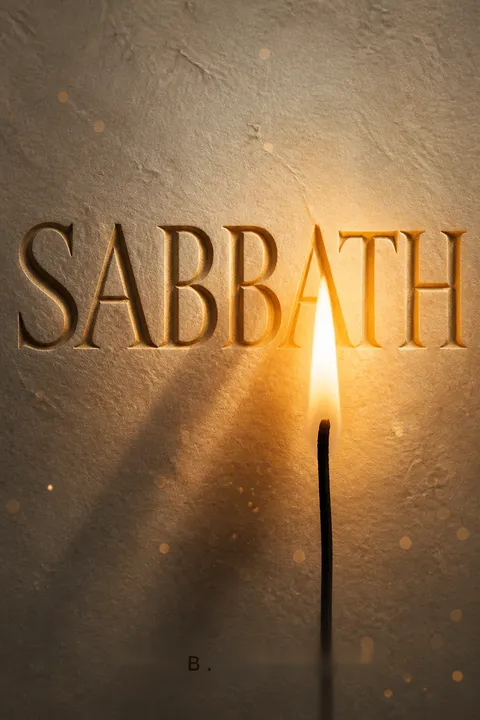

Key Takeaways
1. Sabbath is a Divine Command for Delight, Not Just Rest
Sabbath rest is not an option; it is a commandment.
More than a break. The Sabbath is often misconstrued as merely a day off or a pious duty. However, it's a divine commandment, as serious as prohibitions against stealing, elevating it to a non-negotiable mandate in God's design. This challenges the common perception of Sabbath as optional or merely beneficial.
Joy, not legalism. God intends the Sabbath for profound delight, not tedious religious observance. It's a day to feast, play, dance, and fully experience creation, anticipating eternity, rather than being burdened by legalistic rules. Many inadvertently ruin it with worrisome fences that protect the Sabbath but destroy its delight.
Intentional holiness. To "sanctify" the Sabbath means setting it apart as holy. This requires a deliberate choice to embrace joy, celebrating God's glory and faithfulness amidst life's complexities and darkness. It's an invitation to taste eternity, refusing to be bound by the mundane.
2. Our Resistance to Sabbath Stems from Pride, Distraction, and Fear of Joy
We are far more than distracted from our observance of the Sabbath; we are afraid.
Pride in busyness. Modern society often boasts about busyness, equating constant work with status and importance. This pride in Herculean demands prevents us from dismounting our "high horse" of productivity, making Sabbath rest seem like a weakness or an infringement on our perceived power. We secretly believe we can outmaster fate through endless toil.
Constant distractions. Our lives are filled with endless distractions, from urgent work calls to social engagements and entertainment. These demands often override any intention to observe the Sabbath, as we prioritize tying up loose ends from the past week or preparing for the next. The Sabbath becomes just another "break" rather than a sacred time.
Fear of delight. Deeper than distraction is a profound fear of joy itself. Many are uncomfortable with a day dedicated solely to delight, preferring the familiar rhythm of work and problem-solving. Opening oneself to delight can feel terrifying, exposing unfulfilled dreams and the pain of past disappointments, making distraction a safer alternative.
3. Sabbath Redefines Rest as Joyous Repose and Celebration
God didn’t rest in the sense of taking a nap or chilling out; instead, God celebrated and delighted in his creation.
Menuha, not mere cessation. The biblical concept of God's rest on the seventh day (Genesis 2:1-3) isn't about weariness or inactivity. Jewish commentators suggest "menuha," meaning joyous repose, tranquility, or delight. God celebrated and delighted in His creation, setting it free to exist connected yet separate from the artist.
Gazing in rapture. God's rest is likened to parents gazing in rapture at their newborn child, distinct yet deeply bonded. This divine gaze, full of wonder and joy, is the essence of Sabbath. It's a time to marvel at creation, recognizing its beauty as a tangible gift of God's love, rather than merely recovering from labor.
Beyond downtime. Sabbath is not simply "downtime" or a "mini-vacation" to recharge for more work. It's an encounter with God's delight, a day to experience the kingdom of God as a present reality. This profound, life-giving delight is meant to spill into the other six days, preventing idolatrous overwork and riotous pleasure.
4. Embrace Time as a Sacred Rhythm, Not a Commodity to Be Managed
Time doesn’t have to be redeemed or used or stolen or made or spent; instead, we are called to submit to time as the medium in which we live.
Time-troubled era. Modern society views time as a fleeting commodity to be managed, stolen, or spent, leading to chronic overwork and exhaustion. This industrial-age perspective, where clocks replaced the sun as regulators, makes us feel rushed and controlled by time, rather than living in harmony with it.
Time's true nature. Contrary to popular belief, time is not fleeting but solid and beyond our control. It's space that perishes within time, not the other way around. We are called to submit to time as a constant medium, honoring it as a gift rather than attempting to master or manipulate it for advantage.
Sabbath's weekly marker. The Sabbath provides a weekly rhythm, a bridge between past and future, remembering creation and anticipating re-creation. It challenges linear views of time, inviting us to experience moments of being "lost in time" – where our rhythm aligns with time's heartbeat, bringing exhilaration and freedom.
5. Sabbath is a Communal, Sensual Feast Reflecting God's Beauty
The Sabbath is a day of sensuality when we say to one another, “Taste and see that the LORD is good.”
Holiness and sensuality. The Sabbath is meant to be the most sensual day of the week, a riot of senses celebrating smell, touch, hearing, seeing, and taste. It challenges the tragic division between holiness and sensuality, inviting us to experience God's glory through the tangible beauty of creation.
Beauty's allure. True beauty, reflecting the Trinity's unity and diversity, attracts and awakens desire, joy, and wonder. It's not merely subjective but a form created by God, best exemplified by the incarnation of Jesus. Encountering beauty, whether in nature or human connection, humbles us and propels us to gratitude and worship.
Feasting in communion. The Sabbath is a communal feast, a dance with God and others, where all senses are engaged. It's a time to share sumptuous meals, music, and stories, remembering Eden and anticipating the kingdom feast. This shared celebration, especially with those we love, becomes a taste of lavish, sensuous delight and superabundance.
6. Sabbath is a Day of Liberating, Risky Play with God
Sabbath is not a break from work; it is a redefinition of how we work, why we work, and how we create freedom through our work.
God's playful creation. In God's economy, creation itself is an act of play, born not of necessity but of delight, displaying His glory. The Sabbath, therefore, is our play day, celebrating God's superabundant, creative love. It redefines our understanding of work and freedom, moving beyond mere recuperation.
Liberating, risky play. Play, in its deepest sense, involves risk, chance, and exposing oneself to hazard. It redistributes power, allowing for new configurations and unexpected outcomes, much like an underdog winning. The Sabbath invites us to this risky play, challenging the status quo and opening up creative freedom and future alternatives.
Playing with God. The Sabbath is a call to play with God, not just to be quiet or pious. This can be terrifying, as it involves surrendering control and embracing vulnerability. Like a mother playfully hiding from her child, God's apparent absence in play deepens our longing, preparing us for the joy of reunion and the regenerative power of shared delight.
7. Sabbath Transforms Division into Shalom and Reconciliation
Sabbath is a day that celebrates the one and true day of reconciliation.
Conquering division. Division, fueled by accusation and self-justifying narratives, is a primary tool of evil that wears down our hearts. It creates fissures in relationships, leading to bitterness and vengeance. The Sabbath offers a radical counter-narrative, inviting us to transcend these destructive patterns and embrace unity.
Father's welcome. The Sabbath is the day to receive and extend the Father's invitation to reconciliation, celebrating new life in Christ. It's a day to put aside tension and strife, pretending that all is well, and that our enemies are not at war with us. This "holy fiction" anticipates the eternal peace we will one day share.
Practicing eternity. To practice eternity on the Sabbath means approaching relationships with curiosity, coziness, and care. It involves looking at others through the lens of their future glory, seeing them as they will one day be in God's kingdom. This perspective allows us to engage with profound respect, fostering reconciliation and peace.
8. Sabbath Overcomes Destitution with Gratitude and Abundance
Abundance is not about possession; it is utterly, completely, and solely about gratitude.
Middle-class destitution. Beyond material poverty, the middle class experiences destitution through an uncertain future (financial precarity, relational anxieties) and an unrealized present (unfulfilled dreams, envy). This leads to striving, addiction to status, and a hollow pursuit of "more," trapping us in a cycle of dissatisfaction.
Creation's bounty. The earth itself teems with God's abundance, a "bubbling" presence that invites praise and gratitude. This natural bounty is amplified in the promise of re-creation, where mountains drip with wine and arid valleys burst with life. The Sabbath offers a glimpse of this inexhaustible glory, a chance to fill our "thimble of faith."
Feasting with gratitude. The Sabbath is a grateful celebration, not a mere vacation. It's a time to offer and receive "bread and wine," symbolizing Christ's body and the sweet intoxication of God's love. This involves sharing meals, expressing gratitude to those who've shaped us, and offering "non-thing gifts" of care and reflection, fostering true abundance.
9. Sabbath Replaces Despair with Joy, Even Amidst Suffering
Joy is a conundrum that often, like delight, is too terrifying to embrace.
Despair's insidious grip. Despair, a "hatred of hope," quietly seeps into our lives, often manifesting as regret (dark fruit of accusation) and worry (dark fruit of emptiness). These destructive forces prevent us from grieving the past or anticipating a new future, trapping us in a cycle of cynicism, conventionality, and consumerism.
Gratitude's transformative power. Gratitude is the antidote to despair, opening the heart to wonder and freedom. Receiving life as a gift conceives a "debt" in us, compelling us to grow and eventually give the gift away. This process transforms us, allowing us to become equal to the gift received, fostering true joy.
Joy in suffering. Sabbath joy is deeper than mere pleasure; it's a "sweet madness" found when God feels intimately close, often amidst heartache and confusion. It's a defiant celebration that death doesn't win, a "drink offering" poured out to give life. Choosing joy means consciously mocking despair, even when it feels terrifying, and embracing the greater story of redemption.
10. Act Out Sabbath Through Intentional Rituals and Symbols
We must attempt to capture the beauty of the Sabbath in transformative symbols and rituals that become the props, costumes, and stage for the drama of Sabbath.
Life as theater. The world is a stage, and we are all actors in God's eternal drama. The Sabbath provides a unique opportunity to consciously "act out" a new play of redemption, where we pretend the new heavens and earth have dawned. This involves moving from a conventional script to improvisation, discovering our true roles in God's story.
Rituals for peace. Sabbath rituals and symbols are the props and costumes for this divine drama, offering condensed experiences of peace, abundance, and joy. For peace, lighting candles symbolizes light and invitation, while blessing each other with words of glory counters contempt. These intentional acts transform the mundane into the sacred.
Symbols for abundance and joy. Abundance is symbolized by a festive Shabbat meal with fine food and drink, chosen with gratitude, not luxury. Joy is found in recognizing God's face in others, even enemies, and in rituals like watching films that celebrate redemption. These practices help us see beyond daily struggles to the greater truth of God's love and coming kingdom.
11. Cultivate Sabbath Silence to Hear God's Voice and Confront Inner Noise
We must enter silence to confront the foul and foreign voices before Sabbath.
Noise-bound age. We live in an era saturated with noise, constantly filling quiet spaces with media and busyness. This aversion to silence prevents us from hearing the deeper cacophony within – the voices of regret, worry, contempt, and loss. The Sabbath invites us to intentionally choose silence, not as punishment, but as a gift.
Confronting inner voices. Silence sets the stage for these internal antagonists to surface. To truly hear God's "still, small voice," we must first confront the "voices of evil" – contempt that condemns us to isolation, and loss that keeps us from grief. Naming these voices and their origins begins to strip them of their power.
Meditation and prayer. Sabbath silence opens doors to meditation and prayer, allowing us to "chew over" God's kindness until it becomes sweet in our hearts. Prayer on the Sabbath shifts from petition to praise and invitation, asking God to speak artfully and passionately of His delight in us. It's an invitation to join God in Sabbath joy, listening for His unique blessing.
12. Sabbath Justice Extends Freedom and Delight to All
The Sabbath is a time to celebrate repentance and to delight in its fruit—freedom.
Jubilee's revolution. The Sabbath, and its ultimate expression in the Jubilee year, is a revolutionary event designed to reset societal equilibrium. It proclaims freedom for all – slaves, foreigners, and even the land – challenging the tyranny of injustice and inequality. It's a weekly reminder that delight and joy should overthrow powerlessness.
Remembering slavery. The command to rest "as you do" extends equality to all in the household, including servants and foreigners, remembering our common history of slavery in Egypt. This remembrance frees us from allegiance to oppressive systems and fosters gratitude. It also cultivates a "discontent" that desires delight for others.
Relentless invitation. Sabbath justice is a relentless invitation to party, celebrating God's freedom from slavery and the hope of a new, just future. It's a day to renounce activities that impoverish or demean, and instead, to nourish and give. This involves dreaming of expanding the "garden party" to others, translating gratitude into action for global justice and mercy.
Review Summary
Reviews of Sabbath are generally positive, averaging 3.93/5. Readers appreciate Allender's reframing of Sabbath as active delight rather than passive rest, with his central question—"What would I do for twenty-four hours if the only criteria was to pursue my deepest joy?"—resonating deeply. Many found the book transformative in shifting their perspective on rest and God's invitation to delight. Common criticisms include overly poetic, sometimes unclear prose, lack of practical application, and grandiose personal anecdotes that feel unrelatable. Several reviewers recommend pairing it with more practical works by John Mark Comer.
People Also Read




About the Author
Other books by Dan B. Allender





Download PDF
Download EPUB
.epub digital book format is ideal for reading ebooks on phones, tablets, and e-readers.








































