


Plot Summary
Prologue
Colton Knox2 sits at the head of his dining table while Raylee1 kneels before him, wrists bound with his belt, performing for an audience of his three closest friends. He denies her release again and again, hands her over to be used, yet forbids her from finding pleasure with anyone but him.
He records the scene, contemptuous and possessive in equal measure, insisting he loathes this woman he cannot stop wanting. She is his stepsister, his rival, his addiction. The reader learns this is one skirmish in a years-long war of hate and desire, and that Colton,2 a patient strategist, has quietly kept the footage for a purpose he has not yet revealed.
The opening weaponizes degradation to establish the book's central paradox: intimacy expressed as annihilation. Colton frames control as love's substitute, insisting hatred sharpens desire, yet his refusal to share Raylee's pleasure betrays a proprietary tenderness he cannot name. The recording is the crucial seed, an act of surveillance disguised as arousal that will detonate the plot. Tessier signals an unreliable emotional register, where consent, cruelty, and craving blur deliberately. Psychologically, both characters use humiliation as armor, converting vulnerability into performance. The scene primes readers to distrust every stated feeling, since the war between these two is fought with pleasure as ammunition and pride as the prize.
The Lamborghini Bonfire
After Colton2 uploads their recorded encounter online, drawing over a million views, Raylee1 arrives at his party in her mother's10 heels, shatters the window of his prized Lamborghini with a bat, douses the interior in gasoline, and torches it while partygoers scatter and film. She confronts him on the porch, unafraid, promising he should not have shared that video.
Colton,2 shirtless and freshly interrupted mid-hookup, seethes but refuses to retaliate before witnesses. The reader learns their history: her mother10 married his billionaire father11 when they were teenagers, and Colton2 offered her a room in his house only to torment her. Their mutual loathing masks a compulsive attraction neither can quit.
The arson is spectacle as self-defense, Raylee refusing the victim role by out-escalating her humiliator. Fire becomes her signature language, public and unignorable, matching Colton's public exposure with public destruction. The scene establishes the reciprocal economy of their relationship: every violation demands a counterstrike, and both keep score. Tessier stages the confrontation as theater, each performing fearlessness for an audience, because reputation is currency in their world. Crucially, Colton's restraint reveals strategy over impulse, foreshadowing that his cruelty is calculated. The tape's timing hints at hidden motive, transforming a petty revenge plot into something more deliberate and possessive beneath the pyrotechnics.
The Charged Phone Trap
Raylee1 had stolen the phone of her boyfriend Nate3 to delay him seeing the viral video. Colton,2 ever the tactician, retrieves it from her car, charges it, and hands it back to Nate3 over breakfast with feigned generosity. Minutes later Nate3 watches the footage, storms in, and brands Raylee1 a cheap whore before storming out.
Colton2 reveals he timed the leak precisely to sabotage the longest relationship he had ever permitted her. Humiliated but defiant, Raylee1 slaps Colton2 and refuses to be shamed for enjoying sex. The scene exposes his method: he does not merely want her, he systematically dismantles any man who tries to keep her, treating her exes as obstacles to be cleared.
Colton's genius is patience, and the phone gambit shows sabotage as courtship. He does not confront rivals directly; he engineers their self-destruction, letting shame do his work. The scene interrogates the double standard Raylee resents: her appetites make her a whore while male promiscuity earns applause. Nate's disgust is less moral than wounded ego, and Tessier uses him as the ordinary man who cannot meet Raylee's needs or accept them. Raylee's slap is her refusal of imposed guilt, a woman insisting her desire is not a defect. The manipulation deepens the reader's understanding that Colton's love, if it exists, expresses itself only as ownership.
Calling A Truce
Now single, Raylee1 finds herself repeatedly pulled back to Colton.2 He follows her from a tense family lunch to her childhood bedroom, and between rounds of rough, wine-soaked encounters he proposes a truce: they fuck the hatred out of one another, anytime, anywhere. She agrees, telling herself she is merely using him for pleasure no other man can supply.
Interwoven flashbacks reveal how deep the roots run, that Colton2 has for years paid boys to humiliate her and beaten off suitors to keep her isolated. Raylee1 reflects that every relationship she has attempted has collapsed, and begins to suspect Colton2 engineered them all. Their bargain feels less like peace than a ceasefire between two people addicted to their own destruction.
The truce reframes compulsion as agreement, letting both pretend they choose what they cannot resist. Tessier explores the psychology of trauma-bonded intensity, where familiarity of pain reads as safety and only Colton can decode Raylee's body. The flashback reveals his sabotage as long-term grooming of her isolation, a chilling literalization of possessive love. Raylee's dawning suspicion that he ruined her relationships marks her first movement toward seeing the cage she lives in. Yet she rationalizes agency, insisting she is the user, not the used. The chapter's irony is that a ceasefire between addicts is not recovery; it is permission to keep relapsing together.
The Laundry Room Origin
Flashbacks fill in the beginning. Six years earlier, sixteen-year-old Raylee1 walked into the Knox kitchen and ignited Colton's2 obsession, though his father11 forbade him from touching her. A year later, learning she had lost her virginity to a classmate named Mike8 who fled when she bled, Colton2 cornered her in the laundry room, jealous and possessive, and initiated the sexual dynamic that would define them.
Over three days while their parents traveled, he trained her body to crave submission, then reverted to public cruelty. Raylee1 recognizes that his hateful language becomes something else entirely when they are alone, a private tongue only she understands. She hates that no other man has ever satisfied her the way he does.
This origin story recasts the entire relationship as a wound dressed as desire. Tessier locates the genesis in adolescence, in forbidden proximity and paternal prohibition, giving Colton's fixation an incestuous-adjacent transgressiveness that fuels its charge. The laundry room scene dramatizes how domination filled a void of belonging for a girl who was invisible in her stepfamily. Raylee frames her kink as authentic self-knowledge rather than damage, resisting the reader's impulse to pathologize her. Yet the power imbalance, an older stepbrother imprinting on a lonely teenager, complicates that autonomy. The private language motif suggests intimacy built entirely from cruelty, a bond legible only to its two prisoners.
The Lords In The Cathedral
A parallel thread reveals what Raylee1 does not know: Colton,2 Finn,4 Alex,5 and Jenks6 work for Tyson Crawford,7 a ruthless operator tied to a shadowy society called the Lords. Recruited senior year and branded with a hidden triangle tattoo that grants access to Tyson's7 club Blackout and a Cathedral used for torture and disposal, the four abduct and murder targets for pay.
On one job they seize a banker being groomed alongside his daughter; Colton2 drugs the fierce redhead rather than kill her, and Tyson7 warns she is dangerous. These men move between college life and organized violence with ease, and their brotherhood is sealed in blood, obedience, and the threat of death for any betrayal.
The criminal subplot elevates the domestic drama into gothic danger, revealing the men Raylee lives with as executioners. Tessier builds a mythology of coerced loyalty, where the brand functions as both membership and manacle, exit possible only through death. This world explains Colton's comfort with control and consequence; violence is his vocabulary in every arena. The banker's daughter subplot plants seeds for the wider series while underscoring the theme of women bred into brutal worlds who refuse to break. Crucially, the reader now holds knowledge Raylee lacks, generating dread. The men's casual lethality reframes Colton's possessiveness as genuinely lethal, raising the stakes of every jealous impulse.
Branded At The Party
At a party thrown by Mike's8 preppy twin Mitch,13 Nate3 grabs Raylee1 and tries to drag her out. Colton2 intervenes, spirits her to Mike's8 back-property suite, and stages a humiliation before his bound friends and a restrained Nate:3 he makes Raylee1 confess her cravings aloud, edges and denies her, then brings her to shattering release to prove Nate3 never could.
His friends assault Nate,3 ejaculating on him as revenge. Finally, while Raylee1 drifts in and out of exhausted consciousness, Colton2 carves his name into her backside with a razor blade, branding her as his. He leaves Nate3 tied to a chair and carries her home, tending to her in his bath, gentler than he has ever been.
The party scene is the possessive impulse made permanent, love as literal inscription on flesh. Tessier pushes the dark romance conceit to its extremity: consent blurred by intoxication and adoration, ownership marked in scar tissue. The branding is both violation and, in the book's twisted grammar, devotion, a claim Colton believes no rival can overwrite. His subsequent tenderness in the bath exposes the caretaker beneath the tyrant, the same duality that makes him irresistible and monstrous. The humiliation of Nate is territorial theater, but it also plants the seed of catastrophe, since a humiliated man seeking revenge becomes the story's true predator. Cruelty here breeds consequence.
The Rejected Confession
Waking naked in Colton's2 bed, Raylee1 discovers his name carved into her skin and erupts. Colton,2 uncharacteristically raw, confesses he loves her and has since the day they met, admits he ruined her relationships, and offers her his pocketknife to carve her own name into his chest as proof they belong to each other.
He tells her no man will ever love or satisfy her as he does. Terrified and confused, Raylee1 refuses, insisting she does not love him and that sex is not the same as love. Wounded by her rejection, Colton2 snaps and orders her out of his room. She packs a bag and flees the house in tears, determined to stay at her mother's.10
The confession inverts their power dynamic: the dominator becomes the exposed one, and Raylee's refusal is her sole moment of genuine control. The offered knife literalizes reciprocity, love demanded as mutual mutilation, which she cannot yet give. Tessier captures the terror of being truly seen after years of armored hatred; sincerity frightens Raylee more than any degradation. Her denial is self-protection, a refusal to concede the war she has told herself she is winning. Colton's collapse into anger reveals his fragility, the boy who cannot bear rejection wielding banishment as retaliation. The tragedy is timing: their mutual truth arrives just before external violence steals the chance to act on it.
Nate's Roadside Ambush
Driving away rattled and searching her memory for what she confessed the night before, Raylee1 is stalked by a truck that repeatedly forces her off the road, then brake-checks her into a violent collision. Nate,3 humiliated and vengeful after the party assault, drags her bleeding from the wreck, knocks her unconscious with his elbow, and hauls her to Mike's8 borrowed suite.
He tapes her wrists, strips and gags her, and reveals a monstrous plan: rape her, let his friends use her, then dismember her body and feed it to animals in the woods. Mike8 arrives, complicit but nervous about the Lords, warns Nate3 not to leave evidence, and departs to establish an alibi, leaving Raylee1 alone with her attacker.
The narrative pivots from erotic power play to genuine horror, exposing the gulf between Colton's consensual cruelty and Nate's predation. Tessier draws a deliberate contrast: the branding was possession within a shared dynamic, while Nate seeks annihilation, punishing Raylee for a humiliation inflicted by other men. His transformation from wounded ex to killer indicts fragile masculinity that curdles into violence when denied. Mike's cowardly complicity, calculating exposure rather than morality, compounds the menace. The scene strips away the fantasy insulation of the earlier chapters, reminding readers that real danger looks nothing like eroticized dominance. Raylee, so recently in control by refusing love, is now utterly powerless, the stakes made lethal.
The Nail Gun Escape
Feigning unconsciousness to conserve strength, Raylee1 endures Nate3 slamming her face into the coffee table, choking her, and beginning to rape her while recording it on his phone. Refusing to die, she headbutts him, works her taped wrists in front of her body, and crawls toward the construction tools Mike8 left scattered.
Discovering a Paslode nail gun, she finally grasps its safety mechanism and fires nail after nail into Nate's3 chest, face, and skull until he collapses dead. When Mike8 returns and approaches, she shoots him too, then huddles naked against the couch, the weapon trained on the door, and refuses to surrender it until Mike,8 bleeding, phones Colton2 for help.
Raylee's survival is the book's fiercest assertion of agency, the branded object becoming the executioner. Tessier reclaims the nail gun, a builder's tool, as an instrument of self-authorship, transforming victimhood into lethal refusal. The detail that she must learn the tool's mechanism mid-fight underscores improvised resilience over fantasy competence. Her insistence on keeping the weapon afterward, distrusting even rescue, dramatizes trauma's hypervigilance; she will not outsource her safety again. Nate's recording, meant to complete his revenge, instead becomes evidence of her strength. The scene answers the prologue's bound helplessness with its mirror image: a woman who, given any weapon, will not be used. Survival here is character, not luck.
Rescue And Reckoning
Colton2 and his crew arrive to find Raylee1 traumatized and armed; he coaxes the nail gun from her hands and carries her to the Cathedral, where the Lords' doctor Gavin12 treats her wounds. She admits Nate3 raped her before she killed him, and exposes Mike's8 full complicity in the murder plot, prompting Colton2 to have him held for later.
Recovering in Colton's2 bath, Raylee1 asks whether he truly sabotaged her relationships and kills for a living; he answers yes to both, and confesses again that he loves her. This time she chooses him, initiating sex to reclaim her body from Nate,3 weeping through it, and finally telling Colton2 she loves him too.
The rescue collapses the fantasy of hatred, forcing both to stand in unguarded truth. Colton's competence in crisis, his tenderness and his lethal resources, is precisely what makes him a viable protector in this brutal world, however troubling that logic is. Raylee's disclosure of the rape, delivered with defiant chin held high, refuses the shame Nate weaponized. Her decision to reclaim her body through chosen intimacy dramatizes trauma recovery as reassertion of authorship rather than avoidance. Tessier suggests love here is not redemption but recognition: two damaged people accepting each other's darkness whole. The confession Raylee once refused now arrives as survival's aftermath, sincerity purchased with blood and terror.
Epilogue
Weeks later, in the Lords' forest cemetery behind the Cathedral, Colton2 and his friends deliver Mike,8 whom Tyson7 has kept alive, bound and gagged. Finn4 hands Raylee1 the same model nail gun, now fully charged, and she takes her revenge deliberately this time, stripping and humiliating Mike8 before firing nails into his body until she collapses, screaming and weeping, into Colton's2 arms.
He kisses her and takes her home. A loose thread lingers: Raylee1 worries about her friend Raven14 and a much older man named Rick, sending Alex5 storming off. Colton2 reflects that he will finally tell their parents about them, proud at last to love her openly.
The epilogue closes the survival arc by converting terror into agency: the nail gun that once saved Raylee now serves her chosen vengeance, this time on her terms, safe and unhurried. Yet her collapse into sobs reveals that revenge does not cauterize trauma; it merely completes a circuit. Tessier frames the couple's bond as symbiosis, each pulling the other between darkness and light. Colton's resolve to go public reframes their love from secret shame to claimed identity, a small redemption within a monstrous world. The Raven and Rick thread seeds the wider Lords saga, promising that this brutal universe extends beyond one couple's private war.
Analysis
Sabotage stages love as warfare, asking whether obsession dressed as devotion can ever be distinguished from control. Tessier's central provocation is the contrast between two forms of male dominance: Colton's2 calculated, consensual cruelty and Nate's3 genuine predation. By escalating from eroticized humiliation to actual sexual violence, the book draws a line its own genre often blurs, insisting that the fantasy of the possessive antihero depends entirely on a partner who chooses the dynamic. Raylee's1 arc is a study in wounded autonomy. She insists throughout that she is the user rather than the used, that her kinks are self-knowledge rather than damage, even as flashbacks reveal her desires were shaped in adolescent isolation by the very man who claims her. The novel refuses to resolve this tension, letting her agency and her conditioning coexist uncomfortably. Her survival with the nail gun is the thematic fulcrum: the branded object becomes the author of her own rescue, converting victimhood into lethal refusal. The recurring motifs of fire, recordings, brands, and blood construct a grammar of marking and being marked, in which intimacy is always documented, weaponized, and permanent. The Lords subplot expands the domestic drama into gothic danger, revealing that Colton's2 jealous impulses carry real lethal weight, and that this world runs on coerced loyalty enforced by death. Ultimately the book offers not redemption but recognition, two damaged people accepting each other's darkness whole, love as symbiosis between people who pull one another between light and shadow. The epilogue's ambivalence, revenge completed yet ending in sobs, honestly acknowledges that vengeance does not cauterize trauma. Tessier writes squarely within dark romance conventions, but the sharp distinction she draws between chosen cruelty and true violation gives the fantasy a self-aware moral edge.
Review Summary
Sabotage received mixed reviews, with ratings ranging from 1 to 5 stars. Many readers found the book extremely dark, toxic, and lacking in plot, focusing heavily on explicit sexual content and degradation. Some appreciated the intense chemistry and taboo elements, while others felt it crossed lines of consent and character development. The book's themes of forbidden love, enemies-to-lovers, and step-sibling romance were divisive. Readers praised the author's ability to write steamy scenes but criticized the lack of emotional depth and resolution.
People Also Read








Characters
Raylee
Defiant stepsister survivorA senior at Barrington University and stepdaughter to Colton's2 billionaire father11, Raylee is fierce, theatrical, and unapologetically sexual, refusing the shame society heaps on women who enjoy desire. Raised by a hopeless-romantic mother10 to fight fire with fire, she channels rage into spectacle, from arson to razor-sharp comebacks. Beneath the bravado lies profound loneliness; invisible in her stepfamily as a teenager, she found identity in submission to the one person who saw her. She craves being owned yet fears losing herself, and mistakes intensity for control. Loyal to her best friend Tatum9, protective of women wronged by men, Raylee is a study in wounded autonomy, insisting on agency even inside a cage she suspects was built for her.
Colton (Colt)
Obsessive possessive stepbrotherA privileged Barrington graduate working for his father's business11 and, secretly, for a lethal society, Colton is the over-the-top, jealous, possessive antihero who claimed Raylee1 the moment they met at sixteen and seventeen. Patient and manipulative, he plays what he calls the long game, sabotaging her relationships and isolating her rather than confessing feelings he refuses to name as love. His cruelty is calculated theater, but a caretaker hides beneath it, tending her wounds with startling gentleness. Motherless since childhood, he equates control with devotion and cannot tolerate rejection. Colton embodies the book's central paradox: a man who expresses tenderness only through domination, whose obsession is indistinguishable from both worship and threat, dangerous precisely because he is capable and unrepentant.
Nate
Humiliated vengeful boyfriendA Barrington alumnus and Raylee's1 longest-lasting boyfriend at five weeks, Nate is polished, conventional, and sexually incompatible with her, dismissing the kinks she openly shares. His wounded pride curdles dangerously when publicly shamed. He represents ordinary masculinity unable to meet or accept a woman's desire, and the fragile ego that turns rejection into rage.
Finn
Knife-loving loyal friendOne of Colton's2 three housemates and fellow society operative, Finn is the flippant, joint-smoking joker who twirls a pocketknife and lightens grim moments. Yet he is perceptive and blunt, the one who tells Colton2 hard truths about love and fear. He handles the video, the recording, and cleanup with unsettling competence.
Alex
Hot-tempered crew memberHousemate, society partner, and brother to Raylee's1 best friend Tatum9, Alex is quick to anger and prone to sarcasm, often clashing with their boss7. He carries an on-again, off-again history with Raven14 and reacts violently to threats against her, revealing loyalty beneath his cynicism.
Jenks
Easygoing fourth housemateThe fourth member of Colton's2 crew, Jenks is laid-back, always smoking or on his phone, and reliably follows orders. He assists in the group's darker work without hesitation, embodying the casual normalization of violence that defines their brotherhood.
Tyson Crawford
Sadistic society handlerOwner of the club Blackout and the crew's ruthless boss, Tyson recruited the four men into a shadowy world of abduction and murder. Cold, theatrical in his threats, and utterly without mercy, he treats loyalty as absolute and betrayal as a death sentence, yet operates by a rigid code of his own.
Mike
Cowardly complicit twinThe reckless twin of preppy Mitch13 and the boy who took Raylee's1 virginity years earlier before fleeing, Mike is a washed-out former society member expelled from Barrington. Calculating and self-preserving, he weighs exposure over morality when confronted with cruelty, making his complicity especially chilling.
Tatum
Ride-or-die best friendAlex's5 sister and Raylee's1 fiercely loyal confidante, Tatum knows all her secrets and stands ready to throw punches beside her. She endures her own toxic on-and-off relationship with the cheating Billy, mirroring Raylee's1 cycles.
Tiffany
Romantic remarried motherRaylee's1 mother, a former overworked server who married the billionaire Cliff11, is a warm hopeless romantic who adores Colton2 and remains oblivious to the war raging between her daughter1 and stepson2.
Cliff
Oblivious wealthy stepfatherColton's2 father and Tiffany's10 husband, a fit, charming billionaire who forbade his teenage son2 from touching Raylee1 and remains unaware of the dynamic between them, praising Colton2 as the perfect gentleman.
Gavin
Society's discreet doctorAn older physician who operates the Lords' hidden underground triage, Gavin treats injuries without questions, sedating and stitching patients in secrecy to keep the organization's violence off official records.
Mitch
Preppy responsible twinMike's8 straight-A twin brother, well-mannered and friendly with Colton2, who hosts parties and stays deliberately clear of both his brother's8 chaos and the secret society, offering Colton2 discreet help when needed.
Raven
Wild endangered friendAlex's5 crazy on-and-off girlfriend, petite and bold, who arrives at a party dating an unsettling older man named Rick, prompting worry that seeds a future storyline.
Plot Devices
The Sex Tape
Catalyst and weaponFootage Colton2 records six weeks before the story opens and holds in reserve, waiting for the moment it can do maximum damage. When Raylee1 starts dating Nate3, Colton2 uploads a trimmed ten-second clip to drive the boyfriend3 away and mark her publicly as his. Its release ignites the entire plot: Raylee's1 arson, Nate's3 discovery via the returned phone, and his eventual humiliation and rage. The tape embodies the book's obsession with surveillance as control, intimacy converted into ammunition. Its existence also normalizes recording as domination, setting up the later, far darker recording that mirrors and inverts it, so that the motif returns transformed from spectacle into evidence of survival.
The Lords
Hidden lethal underworldA secretive blood-bound society into which Colton2, Finn4, Alex5, and Jenks6 are recruited, working under Tyson7 to abduct and kill targets. Membership is sealed with a branded triangle tattoo hidden beneath a watch, granting access to the club Blackout and the Cathedral, a decommissioned church with an underground triage and a private cemetery for disposal. The only exit is death. This world runs parallel to the romance, invisible to Raylee1 until crisis forces its revelation, and it explains Colton's2 ease with control, violence, and cleanup. It provides the rescue infrastructure and the mechanism for revenge, transforming a dark campus romance into a gothic thriller with genuine lethal stakes.
The Carved Name
Permanent possession markUsing a razor blade during the party humiliation, Colton2 carves his name into Raylee's1 flesh while she drifts in and out of consciousness, branding her as irrevocably his. The act crystallizes his possessive love into literal scar tissue, a claim meant to overwrite any rival. Its discovery the next morning triggers Raylee's1 fury, his failed confession, and her flight from the house, which places her directly in her attacker's3 path. The brand functions as both the peak of the book's dark eroticism and the hinge of its tragedy, since the rejection it provokes strands Raylee1 alone at the worst possible moment. It also underscores the couple's grammar of love as marking and being marked.
The Nail Gun
Instrument of survivalA Paslode nail gun left among construction tools in Mike's8 unfinished suite becomes Raylee's1 salvation and, later, her instrument of vengeance. Bound and assaulted, she must decode its safety mechanism mid-struggle before firing nail after nail to kill her attacker3, then wound the returning accomplice8. The weapon transforms her from branded object into executioner, the book's fiercest assertion of agency. Its return in the epilogue, handed to her deliberately and fully charged, closes the arc by letting her repeat the act on her own unhurried terms. Tessier repurposes a builder's tool as a symbol of self-authorship, the thing that constructs becoming the thing that destroys those who would consume her.
Phones And Recordings
Surveillance and controlCell phones recur as levers of power throughout the story. Raylee1 steals Nate's3 phone to delay his discovery of the tape; Colton2 retrieves and charges it to ensure the reverse. He reads Raylee's1 texts and deletes Nate's3 messages while she sleeps, curating her reality. Later, the attacker3 films his assault as an intended trophy to send Colton2, and Mike's8 texts expose the full murder plan. Recovered phones from the wreck become evidence the crew must scrub. The motif dramatizes how intimacy in this world is perpetually mediated, weaponized, and archived, and how the same tool that enables domination can, once turned, document a victim's transformation into a survivor.
FAQ
Synopsis & Basic Details
What is Sabotage about?
- Obsessive Stepbrother Romance: Sabotage explores the toxic relationship between Raylee and her stepbrother, Colton, filled with power dynamics, jealousy, and dark desires.
- Retaliation and Escalation: The story follows their dangerous game of sabotage, escalating from public humiliation to violence, as they struggle for control and dominance over each other.
- Secret Society Intrigue: Colton's involvement with a secret society, the Lords, adds a layer of mystery and danger, influencing his actions and threatening Raylee's safety.
Why should I read Sabotage?
- Dark and Edgy Romance: Readers seeking a thrilling and unconventional love story with intense emotions, power plays, and morally gray characters will find Sabotage captivating.
- Exploration of Complex Themes: The novel delves into themes of obsession, control, revenge, and redemption, offering a thought-provoking exploration of human nature and relationships.
- Unpredictable Plot Twists: Sabotage keeps readers on the edge of their seats with its unexpected twists and turns, ensuring a gripping and suspenseful reading experience.
What is the background of Sabotage?
- Elite College Setting: The story unfolds against the backdrop of Barrington University, an elite college for the wealthy, highlighting the characters' privileged backgrounds and the dark underbelly of high society.
- Secret Society Influence: The Lords, a clandestine organization, wield significant power and influence, shaping the characters' actions and adding a layer of danger and intrigue to the narrative.
- Psychological Power Dynamics: The novel explores the psychological complexities of the characters, particularly Colton's possessiveness and Raylee's defiance, revealing the roots of their toxic relationship.
What are the most memorable quotes in Sabotage?
- "We are hate sex at its finest.": This quote encapsulates the core of Raylee and Colton's relationship, highlighting the intense passion and animosity that fuel their connection.
- "I'm prepared to go to war with her. And I don't lose. No matter what I have to do.": This quote reveals Colton's unwavering determination to control Raylee and win their twisted game, showcasing his obsessive nature.
- "You're my fucking toy to use and pass around.": This quote exemplifies Colton's objectification of Raylee and his desire to exert dominance over her, highlighting the toxic power dynamics in their relationship.
What writing style, narrative choices, and literary techniques does Shantel Tessier use?
- Multiple Points of View: The story is told from multiple perspectives, primarily Raylee and Colton, providing insight into their conflicting thoughts, motivations, and emotions.
- Dark and Provocative Tone: Tessier employs a dark and edgy writing style, using explicit language and graphic descriptions to create a sense of danger, intensity, and moral ambiguity.
- Foreshadowing and Suspense: The author utilizes foreshadowing and suspenseful pacing to build tension and keep readers engaged, hinting at future events and creating a sense of unease.
Hidden Details & Subtle Connections
What are some minor details that add significant meaning?
- Raylee's Red Lipstick: Raylee's signature Ruby Woo lipstick symbolizes her defiance and control over her image, even in the face of Colton's attempts to dominate her. It's a mask and a weapon.
- Colton's Car: The Lamborghini Sian, costing $3.6 million, represents Colton's wealth and privilege, but also becomes a target for Raylee's rage, highlighting the destructive nature of their relationship.
- The Playlist: The songs listed at the beginning foreshadow the emotional beats and plot developments, acting as a subtle soundtrack to their tumultuous relationship.
What are some subtle foreshadowing and callbacks?
- Prologue's Power Dynamic: The prologue, depicting Colton's control over Raylee, foreshadows the central power struggle that defines their relationship throughout the novel.
- The Dining Room Scene: The events in the dining room, where Colton shares Raylee with his friends, are referenced multiple times, serving as a constant reminder of her humiliation and his possessiveness.
- The Carving: Colton carving his name into Raylee's skin is foreshadowed by his earlier thoughts of branding her, solidifying his claim over her and escalating their toxic dynamic.
What are some unexpected character connections?
- Mike's Past with the Lords: The revelation that Mike was once a Lord adds a layer of complexity to his character and highlights the pervasive influence of the secret society.
- Tatum's Relationship with Alex: Tatum's status as Alex's sister creates a complex dynamic, as she is both Raylee's best friend and connected to Colton's inner circle.
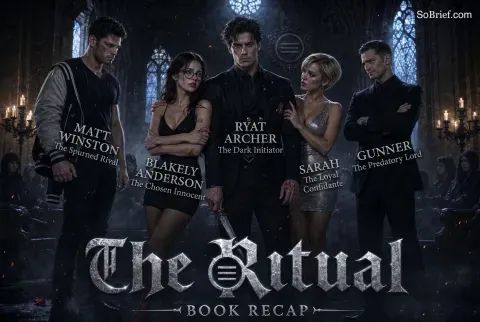
- Ryat Archer's Involvement: Ryat's presence as a Lord and his connection to Tyson Crawford hint at a larger network of power and influence, extending beyond the immediate characters.
Who are the most significant supporting characters?
- Finn: As Colton's closest confidant and fellow Lord, Finn plays a crucial role in executing Colton's plans and providing insight into his motivations.
- Alex: Alex's loyalty to Colton and his own violent tendencies make him a key player in the power dynamics and conflicts that unfold.
- Tatum: As Raylee's best friend, Tatum offers support and perspective, serving as a voice of reason and highlighting the impact of the toxic relationship on Raylee's life.
Psychological, Emotional, & Relational Analysis
What are some unspoken motivations of the characters?
- Colton's Fear of Loss: Beneath his possessiveness, Colton fears losing Raylee, driving him to exert control and sabotage her relationships to keep her within his orbit.
- Raylee's Need for Control: Raylee's defiance and acts of rebellion stem from a desire to reclaim control over her life and challenge Colton's dominance, even if it means engaging in self-destructive behavior.
- Nate's Insecurity: Nate's vengeful actions are fueled by his insecurity and inability to satisfy Raylee's desires, leading him to seek validation through violence and humiliation.
What psychological complexities do the characters exhibit?
- Colton's Sadomasochistic Tendencies: Colton's enjoyment of both inflicting and receiving pain reveals a complex psychological profile, blurring the lines between love, hate, and control.
- Raylee's Stockholm Syndrome: Raylee's attraction to Colton, despite his abusive behavior, hints at elements of Stockholm syndrome, where she develops a bond with her captor as a survival mechanism.
- Nate's Narcissism: Nate's inability to accept rejection and his need for validation through violence suggest narcissistic tendencies, driving his destructive actions and lack of empathy.
What are the major emotional turning points?
- Raylee Burning Colton's Car: This act marks a significant turning point, as Raylee asserts her agency and retaliates against Colton's control, escalating their conflict to a new level.
- Colton Confessing His Love: Colton's declaration of love reveals his vulnerability and challenges Raylee's perception of him, forcing her to confront her own feelings and the possibility of a future with him.
- Raylee's Abduction and Assault: This traumatic event forces Raylee to confront her deepest fears and triggers a transformation, leading her to seek healing and reclaim her life.
How do relationship dynamics evolve?
- From Hate to Love: The relationship between Raylee and Colton evolves from a toxic mix of hate and desire to a complex bond of love, forgiveness, and acceptance, albeit still unconventional.
- From Control to Partnership: Colton's journey involves relinquishing control and learning to respect Raylee's autonomy, transforming their dynamic from one of dominance and submission to a more equal partnership.
- From Rejection to Acceptance: Raylee's initial rejection of Colton's love gradually transforms into acceptance and reciprocation, as she recognizes his genuine desire to change and their undeniable connection.
Interpretation & Debate
Which parts of the story remain ambiguous or open-ended?
- The Future of the Lords: The extent of the Lords' influence and their future actions remain ambiguous, leaving open the possibility of continued danger and challenges for Raylee and Colton.
- The Long-Term Impact of Trauma: The novel leaves open the question of how Raylee and Colton will continue to cope with the trauma they have experienced and whether their relationship can truly heal.
- The Definition of Love: The story challenges conventional notions of love, leaving readers to debate whether the intense and often destructive connection between Raylee and Colton can be considered a healthy or sustainable form of love.
What are some debatable, controversial scenes or moments in Sabotage?
- The Dining Room Scene: The scene where Colton shares Raylee with his friends is highly controversial, raising questions about consent, objectification, and the boundaries of their relationship.
- Colton's Violence Towards Raylee: Colton's physical and emotional abuse of Raylee is a source of debate, with some readers questioning whether his actions can be justified or forgiven.
- Raylee's Retaliation: Raylee's violent acts of revenge, such as setting Colton's car on fire, are also debatable, raising questions about the morality of her actions and the cycle of violence.
Sabotage Ending Explained: How It Ends & What It Means
- Raylee's Agency: The ending emphasizes Raylee's agency and her decision to choose Colton, despite the challenges and trauma they have faced, highlighting her strength and resilience.
- Colton's Transformation: Colton's willingness to sever ties with the Lords and commit to changing for Raylee signifies his genuine desire for redemption and a future with her.
- Unconventional Love: The ending suggests that love can take many forms, even in the darkest of circumstances, and that forgiveness and acceptance are essential for healing and growth.
L.O.R.D.S. Series

About the Author
Other books by Shantel Tessier




Download PDF
Download EPUB
.epub digital book format is ideal for reading ebooks on phones, tablets, and e-readers.








































