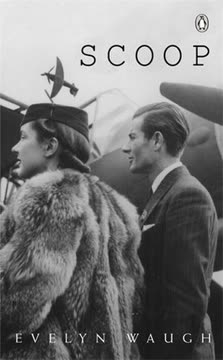
Plot Summary
Invitation to Ishmaelia
William Boot, a timid and unworldly nature writer for London's Daily Beast, finds himself entangled by circumstances when influential socialite Mrs. Stitch secures him an international reporting assignment in Ishmaelia, Africa. Mistaken for his distant, glamorous cousin John Boot, William is summoned to Lord Copper, the vain and pompous owner of the Beast, who wants "Boot" to report on civil unrest in Ishmaelia. Entrapped by office confusion and Lord Copper's bluster, William's reluctance is overpowered by fear of losing even his modest country-column job—the wheels of fate have begun to turn, and the wrong Boot is on his way to make international headlines.
Mistaken Identity Unleashed
An innocent mix-up within the bustling, absurd machinery of the Beast's editorial staff snowballs into William's departure. The London elite, never truly listening but always eager to impress, send praise and pressure down the line. William's confusion is matched only by the office's ignorance of the real John Boot's identity. Behind the mishap is a parodic reflection of English class, clerical incompetence, and Fleet Street's habitual disregard for the truth as long as a good story is possible. William, hopelessly out of his depth, is swept away by currents of power and miscommunication, setting out with the wrong equipment—and the wrong expectations—for a distant and dangerous world.
Reluctant Correspondent Departs
Despite feeling like an exile departing for foreign punishment, William proceeds to gather exotic—and useless—supplies for his trip, including absurd items like cleft sticks for dispatches and a canoe. His send-off through London is as surreal as his home life, populated with eccentric family members who do not understand his sudden importance. On the journey to Ishmaelia, William is bewildered by fellow correspondents, journalists perpetually inventing news to outdo each other in preposterous scoops. Every step is marked by misadventure, confusion, and the sense that William is being churned through a system that values appearance and sensation over substance or truth.
Disasters at Home and Abroad
Arriving finally in Ishmaelia, William is thrust into a bizarre community of foreign reporters, each more ruthless and inventive than the last. The "war" turns out to be elusive and the conditions miserable: luggage lost, weather foul, and news non-existent. The town is packed with journalists—each inventing color and drama to satisfy newspapers back home. Petty rivalries and blundering incompetence abound, as everyone chases rumors or fabricates them. William's awkwardness is overshadowed by veterans cynically manipulating stories, and with the true conflict in Ishmaelia hidden or irrelevant, "news" becomes whatever matches the editorial expectations in London.
Into the Heart of Chaos
Communication between London and Ishmaelia fractures reality further; wires hum with contradictory orders, confusion, and cries for "hard news." On the ground, the journalists' inability to distinguish informant from impostor further clouds their view. Meanwhile, Ishmaelia itself is a confusion of Jacksons—a ruling family running the country for their own benefit—though now splintering through revolution and bureaucratic subterfuge. William's repeated attempts to understand or send legitimate news are met with disaster; absent permission, government stonewalling, or journalistic sabotage, the only stories printed are manufactured or distorted. To survive, one must master the art of fiction as fact.
Journalists at War—With Each Other
When rumors surface of a Soviet agent's arrival (thanks to one journalist's overactive imagination), the press pack is whipped into a frenzy. Scoop-hungry, competitors undercut each other, alliances shift, stories are invented then denied—again and again. Foreign correspondents oscillate between cooperation and sabotage, with local authorities playing them off for their own ends while offering little access or information. William's tips and true stories are either dismissed or lost amid the noise. Paranoia and comic self-destruction replace camaraderie, and international affairs descend into a farce of press releases, fabricated threats, and shouted accusations.
Laku: The Phantom Destination
A false lead about a town called "Laku" (which does not exist, its name being local slang for "I don't know") ignites the journalists' mania. Determined to "get to the front," correspondents scramble to organize expeditions to Laku, acquiring ludicrous quantities of equipment and native servants. William, ordered to stay behind, watches as the rest race off, only to return frustrated after encountering insurmountable physical and bureaucratic barriers—or simply getting lost in the mud. The "front" evaporates; the entire journey is revealed as a literal wild goose chase, symbolizing Fleet Street's relentless, self-defeating pursuit for a scoop at any cost.
Love and Exploitation Intertwined
Amid chaos, William finds an unlikely romantic distraction—Kätchen, a German woman stranded by her absentee husband, who freelances as an "informant" in exchange for gifts and money. Their relationship is a blend of genuine longing for companionship and mutual exploitation: William, for emotional refuge; Kätchen, to support herself. Both are caught in circumstances beyond their control—she in a cycle of loneliness and dependence, he in a system that converts every connection into a commodity or story. Their brief happiness flourishes before being swept away by the same forces closing in on the wider world of Ishmaelia.
Coup Amid the Rain and Sun
With the journalists away chasing phantoms, Ishmaelia undergoes an abrupt and farcical coup. President Jackson is overthrown by a "revolutionary" clique led by Benito and a mysterious Russian agent. The town is draped in red banners, and proclamations fly—but the local populace is largely apathetic, following any change with a collective shrug, more interested in spectacle than substance. Meanwhile, the actual violence and import of these events elude the foreign correspondents, who are themselves marooned in mud or flummoxed by local bureaucracy. William, by accident and persistence, stumbles into the real story—almost in spite of himself.
News Triumphs and Truth Twisted
By luck—rather than cunning—William becomes the only journalist on the scene for the real coup, learning details from Kätchen and the British Consul. His exaggerated report—filled with news of revolution, gold, and red intrigue—is the only copy to reach London, since all other correspondents are stranded. The Beast, gleeful, splashes his "scoop" on the front page and lionizes Boot as a journalistic hero. In truth, the story is both garbled and partly specious, but the uncritical hunger for sensation renders accuracy irrelevant. William's career is miraculously saved by the very blend of error, luck, and opportunism that sent him forth.
Mystery Financier Revealed
Behind the visible shambles, a mysterious financier, "Baldwin," emerges as the real puppeteer. Charming, shadowy, and British, this man (parachuted in, literally) reveals to William he has engineered Ishmaelia's political crises for personal gain, selling its resources to the highest bidder while manipulating international interests to his favor. He tidies up the coup (restoring the Jacksons to power with money and spectacle) and even ghostwrites William's climactic article before moving on. In one smooth motion, the farce is recast as Britain's triumph, protecting her financial empire—oblivious to the lives upended in the process.
Farcical Revolutions, Formal Banquets
At home, the Beast's success is met by self-congratulation and absurd reward—a knighthood is accidentally offered to the wrong Boot, a grand banquet is planned, and all Fleet Street scrambles to seize credit, shift blame, and erase inconvenient details. Uncle Theodore, William's eccentric relative, bluffs his way into the banquet as the wrong Boot, causing confusion and comic embarrassment. Meanwhile, those actually involved in Ishmaelia's turmoil—soldiers, locals, and foreign casualties—are promptly forgotten, their roles erased behind the "Big News" curtain. Glory is thus shown to be arbitrary, the fruit both of accident and social theater.
Return of the Prodigal Boot
William, soul-weary, disillusioned, and unmoved by celebrity, quietly returns to his beloved Boot Magna. He is greeted with faint interest by his eccentric family, indifferent to his accidental global significance. Lush Places resumes its small, gentle trajectory in the back of the Beast, and William shuns honors, banquets, and new assignments, preferring duck ponds and "maternal rodents" to metropolitan madness. The chapter's gentle anticlimax asks: what, finally, is of value in a world that celebrates noise and confusion? For William Boot, it is the silent beauty of the English countryside, untouched by international farce.
Recognition, Banquet, and Unmasking
The Beast's backslapping banquet for "Boot" (now the wrong Boot—Uncle Theodore) becomes its own comic spectacle, exposing the vast gap between those who seek the limelight and those who blunder into it. Lord Copper, unable to admit or correct his error, presses on with the charade, turning a celebration of journalistic triumph into a farce of class, patronage, and institutional absurdity. The inner workings of power—based on error, presumption, and pretense—are quietly unmasked: to the reader's delight, no one involved actually knows whom or what they are celebrating, but the banquet "must go on."
Who Deserves the Credit?
As journalists at the Beast and rival papers feud over which Boot deserves recognition, as contracts and careers are offered, retracted, and offered again in confusion, Waugh's satire intensifies. Rewards land on those with the right name at the right time or those who can outbluff the system. The "real" William is quietly shunted aside, refusing further attention, while even more dashing (but unrelated) Boots are praised elsewhere. The system's preference for appearance over substance lets the error stand, highlighting Fleet Street's and the Establishment's emptiness.
A Boot, By Any Name
The Boot affair spirals into new comic territory: the family and officials in London search for the "right" Boot to knight, banquet, or blame, with no one interested in truth. Office politics, social climbing, and rank ineptitude ensure the cycle of error is self-perpetuating and self-justifying. The lesson emerges: institutions reward continuity and noise, not character or accomplishment. With Uncle Theodore installed as the Beast's latest oddity and William safely hidden in the countryside, the name "Boot" becomes a blank slate, its meaning determined only by the needs of the moment.
The Future Is Lush Places
William, surrounded by the enduring eccentricities of Boot Magna and English rural life, slowly resumes his nature columns. Reflecting on the farce, he finds solace not in public glory but in the familiar rhythms of home—seasons, animals, and mundane domestic comedies. It is only here, removed from the world's shifting fictions, that he feels whole. The final vision—of lamps, moonlight, and owl-hunted rodents—affirms the ultimate irrelevance of the clangor of Fleet Street and the empty promise of fame. The true scoop, Waugh implies, lies not in grabbing headlines, but in remaining uncorrupted by the news.
Analysis
A timeless satire exposing media, empire, and modernity's farcical heartScoop endures as one of the sharpest, funniest, and most prescient satires of the twentieth century—a masterclass in exposing the absurdities of news, bureaucracy, and British imperial self-delusion. Waugh's Ishmaelia stands for all postcolonial states and "foreign stories" flattened, packaged, and misunderstood by powerful outsiders. News, he shows, is less the pursuit of truth than of sensation—a scramble for headlines in which journalists invent danger and drama while being themselves manipulated by larger geopolitical and financial machinations. At every turn, bureaucratic confusion, vanity, and the blind pursuit of "scoops" supersede real reporting or moral insight. The revolving cast of British high-society fixers, office drones, manipulators, and hapless functionaries underscores how chance, error, and performance shape public life as much as (or more than) integrity or expertise. In the end, Waugh suggests, the real wisdom lies in opting out: William Boot's retreat to Lush Places and rural obscurity is a gentle but pointed rebuke to modernity's noisy self-regard—a lesson still vital in an age of 24-hour news cycles, celebrity journalism, and institutional incompetence.
Review Summary
Reviews of Scoop are generally positive, averaging 3.78/5. Readers praise Waugh's sharp, witty satire of journalism, fake news, and colonial politics, noting its continued relevance today. Many highlight the comedic plot involving William Boot, a nature columnist mistakenly sent to cover a fictional African war. However, several readers express discomfort with Waugh's racist and antisemitic language, viewing it as a significant flaw. Comparisons to Brideshead Revisited are common, with some finding Scoop lighter and less refined, though still an entertaining, skillfully crafted satirical novel.
People Also Read
Characters
William Boot
William Boot is an unworldly, bumbling nature writer more at home writing about voles and marshes than about politics or war. Shot into the heart of Africa through an administrative blunder, he is utterly ill-equipped for journalism's cutthroat demands. Shy, honest, and fundamentally decent, William finds the world of foreign correspondence—a madhouse of ambition, lies, and improvisation—staggeringly alien. His growing bewilderment slides into ironic resignation as the story unfolds, with his "scoop" the unplanned fruit of accident and persistence. At heart, William symbolizes innocence battered by institutional absurdity, and his arc turns not on triumph over adversity, but in surviving it with a sense of humor and retreating gratefully into obscurity.
Lord Copper
An amalgam of contemporary press barons, Lord Copper is at once grandiose, bullying, and childlike—craving adulation, ignorant of reality, and shielded by sycophants who never dare correct him ("Definitely, Lord Copper" / "Up to a point, Lord Copper"). Copper's whims drive the Beast's coverage and set farcical bureaucratic machinery in motion. He is obsessed with appearances, campaigns for policy-aligned news at any cost, and is the embodiment of institutional detachment from fact or consequence. Ultimately, his "leadership" results in institutional farce, mistaken honors, and a hollow banquet for the wrong man.
Mrs Stitch (Julia Stitch)
Pragmatic, clever, and connected, Mrs Stitch is "the Stitch Service" incarnate: a fixer who navigates the criss-crossing lines between government, journalism, and society. It is her favor that accidentally sets William's trip in motion. With a knack for arranging things behind the scenes, she personifies the lubricating influence of style and connection over substance in pre-war English society. She recognizes William's innocence ("sweet, undamaged") but is also too busy for sentimentality, a comic contrast to the muddle and self-deception of her milieu.
Kätchen
Kätchen is a transient German woman stranded in Ishmaelia, oscillating between need and resourcefulness. Her ambiguous relationship with William is defined by both emotional connection and material necessity—she leverages her beauty and misfortune to extract gifts and aid while genuinely longing for rescue. She represents the collateral casualties of state intrigue and foreign intervention: drifting, without power, seeking shelter wherever possible. Her personal drama—tragicomic, never truly resolved—echoes the larger uncertainties engulfing Ishmaelia, and William's connection with her brings real emotion and pain to the farce around him.
Corker
Corker is the archetypal hard-boiled British journalist, a creature of practical jokes, barroom tales, and inventive reporting. Worldly and deeply pragmatic, Corker tutors William in the realities (and amorality) of the trade: news is about beating the other fellow, and if nothing happens, one invents something quickly. His bluster masks the hollowness and insecurity at the heart of the "scoop" culture—always racing, always second-guessing, never satisfied. His fortunes, like William's, are subject to the arbitrary tides of office whim and physical mishap.
Dr Benito
Benito is the slick, Western-educated face of Ishmaelia's bureaucratic apparatus, at once servile and cunning, charming and menacing. He handles the press with professional ease—offering, revoking, and manipulating permissions, smoothing over coups, and ultimately aligning with the highest bidder. Benito is the personification of local adaptation to foreign meddling: he survives by knowing which way the wind blows, presenting Ishmaelia's "progressive" face to whichever power—Russian, British, or local—holds sway.
The Jacksons
The Jackson family—presidents, generals, ministers, and "aunties"—are both the butt and engine of Ishmaelia's politics. A clan whose name is synonymous with the country and its government, they are resilient, self-interested, and eminently replaceable: coups and votes alike are mere vehicles for their continued prominence. Their shifting alliances and dynastic feuds parody the reduction of national governance to a revolving cast of similar personalities, acting out "democracy" for a colonial audience.
"Baldwin" (The Mystery Financier)
Cunning, affable, and entirely amoral, "Baldwin" is revealed as the orchestrator of the Ishmaelite crisis. British to the core, he is the quiet power broker, able to buy governments, stage revolutions, and tidy up the mess to suit his—and Britain's—commercial needs. In his hands, politics and news alike are toys. His ghostwriting of William's final scoop is the apotheosis of power's indifference to fact: he can create reality by decree, and the world will print his story.
Uncle Theodore Boot
William's uncle is comic relief incarnate: given to wild stories, grandiose schemes, and social blunders. His accidental attendance (and enjoyment) of the Beast's celebratory banquet, in place of William, crystallizes the theme of mistaken identity, misrecognition, and empty ceremony. He stands for the untethered, self-deluding side of Englishness: expansive, clueless, perpetually unbothered.
Mr Salter
Salter is Lord Copper's long-suffering Foreign Editor, perennially shifting blame and agreement ("Up to a point..."). Insecure, panicky, yet eager to please, he attempts—always unsuccessfully—to manage chaos from above. A middle-tier functionary who embodies the beast's institutional confusion, he is both victim and enforcer of arbitrary authority. His psychological disintegration—culminating in his disastrous trip to Boot Magna—mirrors the unraveling of the Beast's competence behind the façade of grandeur.
Plot Devices
Mistaken Identity and Bureaucratic Absurdity
The most important structural device is the confusion between William and John Boot, which launches the entire plot. This confusion is enabled by the bureaucratic machinery's inertia and relentless focus on image over substance. In Waugh's narrative, committees, editors, secretaries, and society figures endlessly pass the "Boot" problem along, nobody ever truly checking the facts. The machinery's logic is one of self-sustaining farce: as soon as an error occurs, all energies are spent preserving the appearance of purpose, never the underlying truth.
Satirical Exaggeration and Caricature
Waugh employs exaggeration—particularly in dialogue and circumstance—to expose the ridiculousness of Fleet Street, the British social system, and imperial politics. His journalists, officials, and socialites are grotesque parodies (never subtle), and the scenery itself is sketched in with a sense of distortion and unreality. This device creates a mood of escalating chaos and detachment, inviting the reader to acknowledge that the "real world" being satirized is not a tale of individual vice but of institutional madness.
Journalistic Competition and Self-Sabotage
Journalistic rivalry is the engine of the plot's escalation: correspondents compete, sabotage, and "scoop" one another, even as the actual events in Ishmaelia remain ambiguous or fabricated. The use of service messages, codenames, and endless cabals within the press act as both running gag and commentary on the mechanics of sensationalism. Information grows ever more unreliable as the pressure to be first outweighs the duty to be correct, creating a world where news and fiction are indistinguishable.
Farce and the Circular Structure
Waugh structures key events in absurd, repetitive cycles: the journalists' doomed quest for Laku; the endless return of permits, messages, and "scoops" that are always refuted or denied; the return of the Jacksons to power; the suspension of consequence for error. This structure reinforces the emptiness of institutional action—empires, newspapers, and even romantic relationships accomplish little, always coming back to where they began, slightly more worn and disillusioned.
Climax via Ghostwritten "Scoop"
The story's final resolution comes not through William's skill or heroism, but because a real power—"Baldwin"—ghostwrites the "exclusive" that the Beast so desperately craves. The "victory" is a performance, not a discovery; William's report is written for him by the very person who manufactured the events in the first place. This device lays bare the final irony: the mechanisms of journalism and empire are equally stage-managed, and the "truth" they produce is whatever satisfies the needs of power at the moment.








































