Key Takeaways
1. El fin del sueño soviético: una civilización perdida en la transición
Estamos rindiendo homenaje a la era soviética. Cortando lazos con nuestra antigua vida. Intento escuchar con honestidad a todos los protagonistas del drama socialista…
La desaparición de una civilización. El libro narra el colapso de la civilización soviética, un mundo construido sobre los ideales del comunismo, el colectivismo y un destino compartido. Esta civilización, con sus valores únicos, su léxico propio y su particular relación con la muerte, desapareció, dejando a su pueblo a la deriva en un paisaje nuevo y desconocido.
Huella del pasado. Alexievich busca capturar las huellas de ese mundo perdido, sus rostros familiares y los innumerables detalles de la vida cotidiana. Su objetivo es comprender cómo el socialismo habitaba en el alma de las personas, enfocándose en el individuo como el pequeño universo donde realmente sucede todo.
Un ajuste de cuentas honesto. La autora subraya la importancia de escuchar con sinceridad a todos los participantes del drama socialista, tanto víctimas como verdugos, para entender la magnitud completa de esta transformación histórica. Esto implica reconocer los logros y sacrificios hechos en nombre de la idea soviética, aun cuando se expongan sus fracasos y horrores.
2. Las ilusiones de la libertad: de la liberación a la desilusión
La libertad surgió de la nada: todos estaban embriagados por ella, pero nadie estaba realmente preparado.
Incapaces ante la libertad. La llegada repentina de la libertad tras décadas de dominio soviético dejó a muchos desorientados y sin preparación. Estaban embriagados por las posibilidades, pero carecían del conocimiento, las habilidades y los valores necesarios para navegar ese nuevo mundo.
La traición de las expectativas. La promesa de una vida mejor, igualdad y justicia fue reemplazada por las duras realidades del capitalismo: desigualdad, pobreza y el dominio del dinero. Esto provocó una desilusión generalizada y un sentimiento de traición entre quienes habían abrazado la perestroika.
Anhelo del pasado. Muchas personas comenzaron a añorar la estabilidad y seguridad percibidas en la era soviética, a pesar de sus limitaciones y represiones. Esta nostalgia refleja un deseo profundo de pertenencia, propósito y valores compartidos que se perdieron en la transición.
3. El Homo Sovieticus: una nueva especie a la deriva en un mundo nuevo
El comunismo tenía un plan insensato: rehacer la “vieja raza humana”, el antiguo Adán. Y realmente funcionó… Quizás fue el único logro del comunismo.
El hombre soviético. El libro explora el surgimiento de un nuevo tipo de persona, el Homo sovieticus, moldeado por más de setenta años de ideología marxista-leninista. Este individuo, ya sea visto como trágico o como un sovok, posee un léxico único, concepciones propias del bien y el mal, y una relación especial con la muerte.
Memoria colectiva. El Homo sovieticus comparte una memoria colectiva comunista, una historia común de gulags, guerra, colectivización y deportaciones masivas. Esta memoria los une, aunque ahora vivan en países distintos y hablen diferentes idiomas.
Pérdida de identidad. El colapso de la Unión Soviética dejó al Homo sovieticus sin una identidad clara ni propósito. Lucharon por adaptarse a los nuevos valores del individualismo, el consumismo y la competencia, sintiéndose extraños en su propia tierra.
4. El dominio de la nostalgia: la seducción de un pasado reimaginado
Hay una nueva demanda por todo lo soviético. Por el culto a Stalin.
Memoria selectiva. La nostalgia por la era soviética suele implicar una memoria selectiva, enfocándose en los aspectos positivos mientras minimiza o ignora los negativos. Esto puede conducir a una visión romántica y distorsionada del pasado.
El renacer soviético. El resurgimiento de símbolos, temas y productos culturales soviéticos refleja un anhelo por una identidad, pertenencia y valores compartidos que se perdieron en la transición al capitalismo. Esto incluye:
- “Cafés al estilo soviético” con nombres y platos típicos
- Dulces y salamis “soviéticos”
- Programas de televisión y sitios web con temática soviética
El culto a Stalin. El renovado interés en Stalin, especialmente entre las generaciones más jóvenes, es una tendencia preocupante. Refleja un deseo de liderazgo fuerte, orden y estabilidad, incluso a costa de la libertad y los derechos humanos.
5. Las cicatrices de la historia: víctimas, verdugos y un legado sin resolver
Víctima y verdugo son igualmente innobles; la lección de los campos es la hermandad en la abyección.
Culpa compartida. El libro profundiza en la compleja relación entre víctimas y verdugos en la historia soviética, destacando la culpa compartida y los compromisos morales que impregnaron la sociedad. Todos fueron víctimas, cómplices o ambos.
Compromisos morales. La necesidad de sobrevivir en un sistema totalitario a menudo obligó a las personas a tomar decisiones difíciles, difuminando las líneas entre el bien y el mal. Esto generó una cultura de miedo, desconfianza y traición, donde incluso los familiares se volvieron unos contra otros.
Trauma no resuelto. La incapacidad para confrontar y reconciliar plenamente los horrores del pasado soviético ha dejado profundas heridas en la sociedad rusa. Este trauma no resuelto sigue moldeando el presente, alimentando divisiones políticas y dificultando el desarrollo de una identidad nacional compartida.
6. El precio del progreso: materialismo versus ideales en una Rusia cambiante
La libertad resultó ser la rehabilitación de la existencia burguesa, tradicionalmente reprimida en Rusia.
El atractivo del materialismo. El colapso del comunismo desató una ola de consumismo y materialismo, mientras la gente abrazaba con entusiasmo los bienes y libertades que les habían sido negados por tanto tiempo. Esto provocó un cambio de valores, donde el dinero y el éxito se convirtieron en las principales medidas de valía.
Vacío espiritual. La búsqueda de riqueza material a menudo se hizo a costa de las aspiraciones espirituales e intelectuales. Bibliotecas y teatros quedaron vacíos, mientras mercados y tiendas prosperaban. Esto creó una sensación de vacío y pérdida de sentido en la vida.
La difícil situación de la intelligentsia. La intelligentsia rusa, antes venerada como la conciencia de la nación, se encontró marginada y empobrecida en el nuevo orden capitalista. Sus valores tradicionales de intelectualismo, justicia social e integridad moral fueron vistos a menudo como irrelevantes o incluso perjudiciales para el éxito.
7. Los ecos de la guerra: trauma, memoria y la búsqueda de sentido
En el fondo, estamos hechos para la guerra. Siempre estuvimos luchando o preparándonos para luchar. Nunca conocimos otra cosa; de ahí nuestra psicología bélica.
Psicología de guerra. El libro examina el impacto duradero de la guerra en la psique rusa, destacando la larga historia de conflictos y la tendencia a ver la vida a través de una lente militarizada. Esta psicología bélica ha moldeado los valores, actitudes y comportamientos del país.
La Gran Guerra Patria. La memoria de la Segunda Guerra Mundial, conocida en Rusia como la Gran Guerra Patria, sigue siendo una fuerza poderosa en la formación de la identidad y los valores nacionales. Los sacrificios y el heroísmo del pueblo soviético durante la guerra se invocan a menudo para justificar políticas y acciones actuales.
Las guerras chechenas. Las guerras chechenas de los años 90 y 2000 traumatizaron aún más a la sociedad rusa, exponiendo la brutalidad y el sinsentido del conflicto. Estas guerras también revelaron tensiones étnicas profundas y agravios no resueltos que continúan afectando al país.
8. El futuro que se despliega: navegar un mundo sin certezas
Y el futuro parece haber dejado de ocupar su lugar adecuado.
Incertidumbre y ansiedad. El libro concluye con un sentimiento de incertidumbre y ansiedad sobre el futuro de Rusia. Las viejas certezas de la era soviética han desaparecido, pero no ha surgido una visión clara que las reemplace.
La búsqueda de un nuevo camino. Rusia sigue buscando su lugar en el mundo, enfrentando preguntas sobre identidad, valores y propósito. La relación del país con Occidente, su papel en la economía global y sus dinámicas políticas internas permanecen sin resolver.
El papel del artista. La autora destaca la importancia del arte y la literatura para ayudar a las personas a dar sentido a sus vidas y navegar las complejidades del mundo moderno. Contando historias, explorando emociones y desafiando la sabiduría convencional, los artistas pueden iluminar el camino hacia adelante.
Review Summary
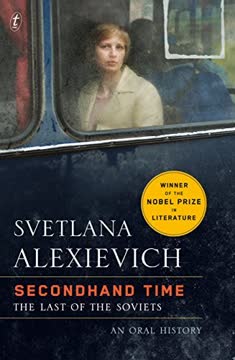
Secondhand Time: Los últimos soviéticos es una historia oral poderosa sobre la Rusia postsoviética, que recoge entrevistas con ciudadanos comunes. Los lectores destacan la habilidad de Alexievich para captar las emociones complejas y las vivencias de quienes enfrentan el colapso de la URSS y la transición al capitalismo. El libro se describe como profundamente conmovedor, a menudo trágico, y fundamental para comprender la Rusia moderna. Muchos críticos lo consideran un desafío emocional, pero también una experiencia muy enriquecedora, que ofrece perspectivas únicas sobre la mentalidad soviética y postsoviética a través de relatos personales.
People Also Read
FAQ
1. What is Secondhand Time: The Last of the Soviets by Svetlana Alexievich about?
- Oral history of Soviet collapse: The book is a collection of personal testimonies from people who lived through the final decades of the Soviet Union and its aftermath, capturing the emotional and social upheaval of the era.
- Focus on individual experience: Rather than a traditional historical account, Alexievich presents intimate stories about love, war, repression, and survival, revealing how Soviet ideology shaped lives and how its collapse affected identities.
- Themes of memory and loss: The narrative explores the collective memory of the Soviet era, the trauma of repression, and the nostalgia for a vanished world, highlighting the legacy of contradictions and broken dreams.
- Polyphonic narrative: Built from interviews, the book weaves together diverse voices, offering a complex, multi-layered portrait of Soviet and post-Soviet life.
2. Why should I read Secondhand Time: The Last of the Soviets by Svetlana Alexievich?
- Unique narrative style: Alexievich’s oral history method provides a deeply human perspective on historical events, making abstract political and social changes tangible and relatable.
- Insight into Soviet and post-Soviet life: The book offers a nuanced view of life under communism and the chaotic transition to capitalism, challenging simplistic narratives about the Soviet Union and its demise.
- Exploration of universal themes: Beyond its historical context, the book delves into faith, identity, love, death, and the search for meaning, inviting readers to reflect on how ideology shapes human lives.
- Award-winning literature: Alexievich’s work, recognized with the Nobel Prize in Literature, is both a historical document and a literary achievement, celebrated for its emotional depth and courage.
3. What are the key takeaways from Secondhand Time: The Last of the Soviets by Svetlana Alexievich?
- Human cost of collapse: The fall of the Soviet Union was not just political but deeply personal, causing trauma, displacement, and identity loss for millions.
- Power and limits of words: The book highlights how, in the Soviet era, words were powerful tools of truth and resistance, but in the post-Soviet world, they lost their potency amid cynicism and materialism.
- Enduring Soviet legacy: The testimonies reveal how the Soviet past continues to shape identities, politics, and daily life in Russia, mixing nostalgia, regret, and critique.
- Resilience and adaptation: The stories underscore the resilience of individuals facing upheaval, as well as the challenges of adapting to rapid social and economic change.
4. How does Svetlana Alexievich use oral history in Secondhand Time: The Last of the Soviets?
- Extensive interviews: Alexievich conducts in-depth interviews with a wide range of people—soldiers, prisoners, workers, intellectuals, women, and children—preserving their language, emotions, and contradictions.
- Polyphonic structure: The book is built from multiple, sometimes contradictory voices, creating a chorus of perspectives that reflect the complexity of history.
- Emotional truth over chronology: Alexievich prioritizes the emotional and psychological reality of her subjects, capturing moments of pain, joy, confusion, and hope.
- Challenge to official history: By focusing on personal testimonies, the book questions monolithic narratives and exposes silences, lies, and forgotten truths.
5. What is Homo sovieticus as described in Secondhand Time: The Last of the Soviets by Svetlana Alexievich?
- Definition and origin: Homo sovieticus refers to the "new man" created by the Soviet system, shaped by decades of socialist ideology and lived experience.
- Distinct worldview: This figure shares a unique lexicon, values, and relationship with authority, death, and suffering, embodying the collective memory of socialism.
- Psychological imprint: Marked by a wartime mentality and a tendency to accept or even embrace subjugation, Homo sovieticus is deeply entangled with the state as their entire cosmos.
- Key to Soviet legacy: Understanding this concept is central to grasping the psychological and cultural impact of Soviet rule and its collapse.
6. How does Secondhand Time: The Last of the Soviets by Svetlana Alexievich portray the collapse of the Soviet Union and its aftermath?
- Chaos and disillusionment: The book captures the shock, confusion, and social upheaval following the Soviet collapse, including the failed 1991 coup and the rise of capitalism.
- Personal stories of loss: Interviewees describe feelings of betrayal, loss of identity, and the painful transition from a collective to a fragmented society.
- Nostalgia and revival: There is a notable resurgence of Soviet nostalgia, including a new cult of Stalin and Soviet symbols, reflecting unresolved tensions in Russian society.
- Freedom’s complexity: The book explores differing perceptions of freedom, showing generational divides and the challenges of adapting to new realities.
7. What are the main themes explored in Secondhand Time: The Last of the Soviets by Svetlana Alexievich?
- Memory and history: The book delves into the contested and fragile nature of memory, showing how the Soviet past is remembered, forgotten, or reinterpreted.
- Love and suffering: Many narratives intertwine love and pain, portraying love as both a source of hope and a site of suffering in harsh times.
- Violence and trauma: The stories reveal the enduring impact of war, repression, and social breakdown, including the legacy of the Gulag and the Chechen wars.
- Identity and adaptation: The book examines the struggle to find meaning and identity amid rapid social, economic, and political change.
8. How does Secondhand Time: The Last of the Soviets by Svetlana Alexievich depict the role of personal testimonies and individual voices?
- Voices of the ordinary: The book is built from interviews with a diverse range of people, giving a polyphonic view of history that humanizes historical events.
- Emotional depth: The narratives convey a wide range of emotions—love, fear, hope, despair, and resilience—showing how individuals made sense of their circumstances.
- Contradictory perspectives: By presenting multiple, sometimes conflicting voices, the book challenges official histories and encourages critical engagement with the past.
- Preservation of memory: The testimonies act as a repository of memory, preserving voices that might otherwise be lost to history.
9. What are some of the most powerful personal stories featured in Secondhand Time: The Last of the Soviets by Svetlana Alexievich?
- Refugee experiences: Stories include a mother fleeing ethnic violence in Baku, facing discrimination and hardship in Moscow, highlighting ethnic tensions and the struggles of migrants.
- Victims of terrorism: Accounts from survivors of the Moscow Metro terrorist attack reveal trauma, ongoing fear, and societal attitudes toward victims.
- Love in adversity: Narratives such as Lena’s marriage to a life-sentenced prisoner illustrate love’s complexity, social stigma, and personal sacrifice.
- War and survival: Testimonies from soldiers, nurses, and families affected by the Chechen wars and World War II reveal the psychological scars and moral dilemmas of conflict.
10. How does Secondhand Time: The Last of the Soviets by Svetlana Alexievich address the theme of freedom in post-Soviet Russia?
- Generational divide: Older generations often see freedom as the absence of fear and repression, while younger people associate it with love, inner peace, and material well-being.
- Freedom’s contradictions: Many Russians were unprepared for freedom, which quickly became linked to consumerism and inequality rather than political or spiritual liberation.
- Philosophical reflections: The book draws on Dostoevsky’s "The Legend of the Grand Inquisitor" to discuss the burden of freedom and the human tendency to seek authority.
- Social impact: The transition to freedom brought both hope and hardship, with many longing for the order and collective purpose of the Soviet era.
11. What are the best quotes from Secondhand Time: The Last of the Soviets by Svetlana Alexievich and what do they mean?
- “Pain is a bridge between people”: This quote reflects the book’s theme that suffering connects individuals across divides, fostering empathy and shared humanity.
- “The word was everything”: Highlights the importance of speech and truth-telling in Soviet dissent, contrasting with the post-Soviet era’s cynicism.
- “A man without his homeland is like a nightingale without a garden”: Expresses the deep sense of loss and alienation felt by displaced people, especially migrants.
- “Only a Soviet can understand another Soviet”: Emphasizes the unique collective memory and experience that binds those who lived under socialism.
12. What is the significance of the title Secondhand Time in Svetlana Alexievich’s book?
- Time experienced indirectly: The title suggests that people’s stories are about living through the aftermath of a great historical event—the Soviet collapse—rather than shaping it directly.
- Memory and legacy: The book deals with how memories of the Soviet past and the trauma of transition are passed down and carried forward, with past and present intertwined.
- Metaphor for loss and survival: “Secondhand time” evokes the idea of living in a borrowed or diminished era, where people struggle to find their place amid dislocation and adaptation.
- Exploration of identity: The title encapsulates the book’s exploration of how individuals endure and redefine themselves in the wake of historical upheaval.
Voces de la utopía Series
Download PDF
Download EPUB
.epub digital book format is ideal for reading ebooks on phones, tablets, and e-readers.








































