Plot Summary
1. Runways and Red Flags
The story opens aboard a private FBI jet, with profiler Freya on the cusp of a new challenge. Once a criminal asset and now officially part of the FBI, Freya is thrown together with River—the agent she's falling for—and the rest of her unconventional team: Oz, Jude, and Eli. The joy of "legitimacy" is quickly shadowed by the fact that the serial killer they hunt is none other than Freya's own father. Tensions simmer with old secrets, power struggles, and dark loyalties, all while the allure between Freya and her partners sizzles under the surface. Jokes act as armor, but the gravity of their mission—finding Maxwell before he kills again—threatens to dismantle their fragile balance.
2. Reunion at Oz's Home
Arriving in Oz's peaceful Californian hometown, the team finds solace in the embrace of his loving family, a slice of normalcy disturbingly close to the site of Maxwell's latest murder. Freya, unaccustomed to home-style affection, is both charmed and unsettled by parental warmth and sibling banter. Yet the case follows: the latest victim was close to Oz's family, making the hunt exquisitely personal. There's talk of dreams, guilt, and shifting alliances as everyone sniffs out secrets. Laughter in the kitchen mingles with dread—danger, just on the doorstep.
3. Nightmares Return, Secrets Deepen
Freya cannot escape the nightmares clawing at her peace—themes of a missing mother, of guilt, of being watched. Stranger still, her twin sister Angelica—believed institutionalized—contacts Freya from the dark: "Do you remember our mother?" This chilling message ignites old wounds and flares mistrust, as long-guarded trauma begins leaking into the present investigation. Nightmares become clues. The lines between memory, dream, and warning blur dangerously, hinting that the answers to the case lie within—but at a cost.
4. Family Ties and Threats
During a rare reprieve—baking cookies and family games—the illusion of safety is shattered. Oz's rebellious teen sister Layla doesn't return home. Panic spreads as the team splits to search, their strengths stretched thin by personal demons: Eli withdraws in bitter guilt, Freya relives old terrors, and Oz battles helplessness. Although Layla is found safe—this time—everyone realizes how vulnerable they are. The threat is no longer abstract. Outwardly they hold each other closer, but cracks of strain widen below the surface.
5. A Sister Disappears
Another body surfaces—a mother, killed in Maxwell's classic style. The timeline and proximity twist the knife: the killer is now directly threatening the team and their loved ones, not just strangers. As Oz's fear for Layla intensifies, Freya's own suppressed guilt and memories render her more shadow than partner. The past refuses to stay buried; the danger, once merely professional, is now deeply personal and intimately close. The sense of being hunted is suffocating.
6. Fractures and Forgiveness
The spiral of trauma, secrets, and near-misses forces the group's hidden wounds to the open—most wrenchingly between Freya and River. Eli and Freya's relationship strains to its snapping point as Eli reveals his intention, if given the chance, to kill Maxwell himself. As fighting and fragmented trust threaten to splinter them for good, River and Freya's confrontation explodes into both violence and catharsis—a scene of dominance, forgiveness, and mutual surrender. Through pain and punishment, they relearn trust: not perfection, but the promise not to walk away.
7. On the Trail Again
With Layla safe (for now) and group dynamics tentatively restored, the team focuses on profiling Maxwell anew. Family visits weave into investigation, revealing patterns: the killer may be replaying obsessions tied to Freya's elusive mother. Each agent's past and pain become as relevant as forensics; old nightmares, half-recalled faces, and buried trauma start to point at the killer's motives and future moves. Yet as the group edges closer to the truth, the gulf between Freya's public bravado and private horror widens.
8. A Mother's Shadow
The investigation pivots: catching Maxwell may hinge on unearthing Freya's lost mother, whose identity is tangled in cult ties and family shame. Hypnotic interviews and cognitive digs unearth long-locked memories—a dream of a mother's argument with Maxwell, a shadowy violent event, a child's terror. Each recall is fraught, pulling Freya closer to mental collapse but also closer to the solution. The emotional cost is high: memory as weapon and wound. The tension becomes not just catching a killer, but facing what it takes to remember.
9. Memory as Map
Pushed by her partners, Freya confronts her own mind. Under hypnotic and sensual guidance by Oz, she descends into the memory of childhood trauma—her mother's fear, Maxwell's manipulation, and the dark footsteps of a brother she did not remember having. The interviews reveal that some trauma is so severe it fragments memory itself. The group realizes Maxwell's endgame may be not just murder, but a final act related to his lost obsession and the children he warped as weapons. Freya's mind, now reluctantly open, becomes the central map.
10. Undercover in LA
The hunt carries the team to LA and the glitzy, loveless mansion of Jude's family—another mirror of secrets, pressure, and dissatisfaction. The next victim is killed perilously close to Jude's family, making the case a threat to every team member's roots. As they work the crime scene, dark family pasts collide: lies Jude was forced to live, neurodivergence misunderstood, and traumas perpetuated by "appearances-above-all" parenting. The opulence of LA only highlights the rot beneath. Trust in each other and the investigation is more crucial—and more fragile—than ever.
11. Lovers Entwined, Haunted Hearts
The group's wounds, both emotional and physical, are soothed and exacerbated through sex—raw, consensual, frequently transgressive. BDSM dynamics—punishment, surrender, and rough play—are used as both therapy and challenge, each partner finding comfort and restoration through their chosen roles. But pleasure can only distract so long; trauma and terror return. The group struggles to balance comfort and confrontation, desire and danger, knowing that their love for each other is both their greatest weapon and most vulnerable point.
12. A Deadly Profile Emerges
Through evidence, family stories, and intuition, the team realizes Maxwell's pattern: his victims are surrogates for Freya's mother, herself a survivor of a cult known as the Dying Angels. As details from the past collide with their working profiles, the investigation homes in on a web of cult abuse, generational trauma, and the killer's rage at failed familial "perfection." Yet just as they close in, betrayal from within the organization—corrupt officials, stolen phone records, forged signatures—threaten not only the case but the team's very existence.
13. Confronting the Darkest Lineage
Uncovering Freya's mother means infiltrating a cult compound and making dangerous bargains with teenage runaways. The revelation: Freya has not just a sister, but a brother—Jeremiah Lock's child—who may be as dangerous as Maxwell himself. Each step closer to truth is a layer deeper in generational brokenness: sibling rivalry, favoritism, and the looping cruelty of trying to please, or destroy, a father. The killer's "partner" is revealed to be Zach, Farrah's PA and Freya's half-brother, working his own sick games in the shadow of the patriarchs.
14. Explosions and Escapes
With revelations swirling, the group splits to save Layla after a trap set by Zach—a rigged safe house, a staged rescue, and explosive violence that maims two agents and kills local officers. Psychopath Zach takes both Layla and Freya hostage, using Layla's life as a lever to force Freya's compliance. The helplessness of watching instead of acting rattles even the most controlled: trust is shattered, and each member risks their life for family. It's a literal and emotional explosion that scatters survivors and redefines what's worth dying, or lying, for.
15. The Betrayer Is Blood
As Zach reveals himself as both betrayer and kin, he torments Freya with psychological warfare—forcing her into the role of sacrificial "queen", mirroring a childhood lost and a present under siege. The group scrambles to keep up: communications jammed, safe houses compromised, and the realization that no one is safe, not even from within. The final showdown requires Freya to relive the worst of her trauma—memories of sibling abuse, of being preyed on while helpless—all to save another innocent. In the end, she chooses others' lives over her own happiness.
16. The Queen's Sacrifice
The cost for Layla's safety, and future peace, is Freya's own freedom. Zach requires that she disappear—cutting ties with everyone she loves, for the promise that no more blood will be spilled because of her. After rescuing Layla and facing down her brother, Freya writes a note to River—her only explanation for her betrayal—and quietly walks away from love, family, and hope. This conscious sacrifice fulfills both her lifelong training (to become the perfect weapon) and her newly discovered agency: to choose, even at unbearable cost.
17. Layla's Fate
Freed but bruised, Layla's return brings a bittersweet peace to Oz's family. The cost is high—physical wounds, trauma, the knowledge that favoring one loved one can mean losing another. Family bonds are re-knit but never the same. For Freya, observing the ordinary happiness she has forfeited is a blade to the heart. Rejection, even in service to love, leaves indelible scars.
18. Family Ties Severed
In the aftermath, family means as much pain as joy. Despite the group's best efforts to heal each other, the damage wrought by the past—and by their own choices—remains. Traitors are still at large; wounds are still open. In the quiet after chaos, Freya's sacrifice forces every survivor to reexamine the meaning of love, worth, and whether true family is found, made, or lost forever.
Analysis
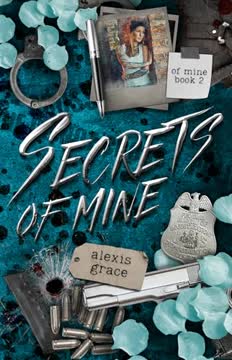
Secrets of Mineis a dark, provocative interrogation of trauma, resilience, and the high price of survival in both family and institutional structures. Through the lens of suspense and dark romance, Alexis Grace crafts a psychological labyrinth where generational pain is inescapable yet not insurmountable. The book's primary lesson is that agency, though hard-won and easily lost, is an ongoing choice—one forged through truth-telling, mutual reliance, and even the breaking of old vows. The oscillation between erotic play and violence, family comfort and betrayal, highlights the impossibility of clear-cut healing; instead, all healing is provisional, always in negotiation with pain. By structuring the plot as a chess match—moves, countermoves, heroes forced to sacrifice—it underlines that sometimes survival means relinquishing what we love most, in order to protect it. The ending's cliffhanger, with Freya's deliberate self-removal, warns us that the cost of peace is often personal, but also affirms that sacrifice made with agency is not defeat, but a new kind of hope. In modern terms: The cycles of violence can be interrupted, even if they cannot yet be broken. Chosen family, self-knowledge, and courage remain as bulwarks against the dark.
Characters
Freya Danvers
Freya is the emotional and narrative core: a woman who has survived serial killer father Maxwell, cult upbringings, childhood and sibling abuse, and still manages to harness her damage into both keen profiling and fierce loyalty. Her relationships with River, Oz, Jude, and Eli form a web of mutual healing and risk, with each partner touching different elements of her psyche—dominance and submission, comfort and confrontation. Freya's central wound is her feeling of "too much" darkness to deserve love. Throughout the novel, her journey is one of agency—using her pain as a tool, daring to love even when she believes she must ultimately sacrifice everything. Her self-worth flickers, given shape and strength in the crucible of her chosen family and her willingness to break cycles, even at a staggering personal price.
River Park
River is the dominant, alpha leader—FBI team head and survivor of his own criminal parents. His need for structure, rules, and obedience disguises an intense vulnerability: the terror of abandonment, the inability to forgive betrayal, but also the depth of devotion to those he loves. In his relationship with Freya, he is both her strictest enforcer and her most patient redeemer. River's character arc bends toward learning that control can't prevent pain, and that true leadership (and love) is forged not from perfection but from showing up after every failure. His ultimate test is accepting Freya's autonomy, even when it terrifies him.
Oz Reynolds
Heart, brain, and steadying hand, Oz is the nerdy wunderkind whose gentle humor masks the scars of early internet darkness and FBI cynicism. He is the first to fully accept Freya, offering both affection and a roadmap to normality—a home, a loving family, the promise of real life beyond trauma. Oz's journey is about learning to fight for what he loves, and to believe in hope despite a world thick with cruelty. When the innocent are threatened—especially his sister Layla—his calm is replaced by a ferocity bordering on violence. He is the crucial pacemaker in group dynamics.
Jude Elroy
Jude's sunshine persona masks battles with ADHD and familial rejection from a privileged but icy background. His flair for reading people, defusing tension, and turning serious into silly belies his keen mind and subtle pain. In love, he is extraordinarily safe—Freya's "happy place"—and also the team's bridge. Jude's private battles, including facing down a toxic family dynamic, crest in the moment he chooses Freya and the found family over blood ties and inherited shame.
Eli March
Eli is the team's darkness: a southern drawl, a history of loss (his mother a victim of Maxwell), and a relentless drive to connect justice and violence. His pull toward Freya is equal parts attraction and guilt; he both wants her and fears what being with her means. The trauma of his own family overlays the case, and his ultimate act—killing Maxwell—strips away any hope of moral clarity, leaving raw love and unhealed rage. His arc is about learning to let himself be loved despite his damage and poisonous intent.
Arthur Maxwell
The notorious "Cross-Cut Killer," Maxwell is both plot engine and psychological architecture. His power lies not just in violence, but in the ways he designs children as weapons: Freya and Angelica as twins "raised as one," Zach as a rival-scion. His psychopathy is shown through calculation, manipulation, and the multigenerational horror he orchestrates. He is, in Freya's words, "a small man"—made huge by the evil, but ultimately vulnerable to the children he broke.
Angelica (Allie) Maxwell
Freya's institutionalized twin is a mirror and a warning. Angelica's complicity and pain are intertwined: sometimes victim, sometimes tool of their father, sometimes an unreliable but pivotal informant. Her messages prompt major plot pivots and she embodies the cost of untreated trauma. Angelica's lines are blurred—she is both the path to lost mother and the lingering anchor for family secrets yet unearthed.
Zachariah (Zach) Lock
Zach is Maxwell's protégé from afar: son of Hannah and cult leader Jeremiah Lock, raised in insularity and forged by jealousy. As Farrah's PA, he infiltrates the FBI to sabotage from within, motivated by the rage of being "second best" in every father's eyes. Cold, precise, and ultimately monstrous, his intimacy with Freya is the deepest betrayal. Zach personifies the cycle of inherited brokenness: no one is safe, especially not family.
Hannah Munroe / Lock
Freya's mother is at once the key to the mystery and the symbol of the long-term costs of generational abuse. A woman who tried to escape a cult, failed to protect all her children, and suffered immeasurable loss, she is both a cautionary tale and a flicker of hope. Her impact on the living—Freya, Zach, Angelica—is as profound as any present character. The ambiguity of her choices and survival creates the tormented rhythm for all the characters' pain and longing.
Layla Reynolds
Layla, Oz's younger sister, is the plot's pressure point: her abduction brings childhood, family, and true innocence into rupture. She is both the test for the adults' effectiveness at protection and the possible next victim to generational violence. Layla's survival—and return—signals the high price, and rare reward, of hope.
Plot Devices
Found Family as Survival Mechanism
The narrative weaves together romantic, erotic, and chosen-family bonds to face the legacy of abuse, crime, and cult trauma. Each partner's love is both a shield and a trigger, turning the group into both Freya's weakness and strength.
Trauma as Both Hurdle and Map
The plot is propelled by the concept of locked (and recovered) memories: trauma obscures, then reveals, the key to both criminal and emotional resolutions. Flashbacks, nightmares, and cognitive interviews act as both psychological warfare and investigative breakthrough.
Parallelism of Cycles
The same patterns of abuse, neglect, craving, and violence resurface in each generation. The narrative structure mirrors chess: fathers raise queens as pawns, only to lose to their own design. Characters battle not just criminals, but the circular logic of family trauma.
Subversion of Power and Control
The book utilizes explicit sex scenes, BDSM dynamics, and role-play not just for eroticism but as means to regain agency and process the powerlessness of past abuse.
Betrayal and False Refuge
The most secure locations (familial homes, safe houses, mental institutions, the FBI itself) are infiltrated or used as traps. No home is safe; no ally beyond suspicion. Forged signatures, hacked surveillance, and twisted loyalties keep every "shelter" provisional and every solution vulnerable.
The Chess Motif
Freya is "the queen" multiple times, forced by Zach's game to literally sacrifice herself—mirroring the narrative structure, where each move forward is paid for in blocks of personal happiness.
Generational Echoes
Children mirror their parents' traumas and strengths: Eli perpetuates violence for justice; Freya splits into agent and asset; Zach obsesses over replacing the absent or abusive father. The book's structure underscores the cyclical nature of family, creator and destroyer.








































