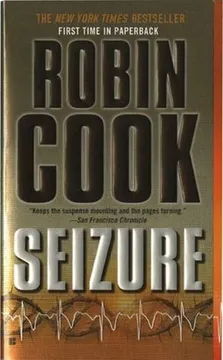

Plot Summary
Scientific Ambition Collides With Power
On a warm winter day, Dr. Daniel Lowell, a brilliant but restless scientist at Harvard, confirms his plan to leave academia for a biotech startup, seeking recognition and material reward for his breakthroughs in therapeutic cloning. His ambition and irreverence quickly find a nemesis in the powerful Senator Ashley Butler, a populist Southern demagogue. While Daniel wrestles with disruptive office politics and smoldering academic resentments, Ashley conceals his own terror—mysterious neurological symptoms that foreshadow his fall from political grace. Their paths are destined to tangle catastrophically.
The Senator's Secret Illness
Butler's outward confidence masks growing desperation. Diagnosed with rapidly advancing Parkinson's disease—a curse that once devastated his own brother—he's overwhelmed by both physical decay and the fear his limitation will destroy his presidential ambitions. Even as he maintains his populist persona, privately he scrambles for treatment options and absolute secrecy, aware any hint of frailty could topple his political future.
Ethics Under Fire
Daniel and his partner, Stephanie D'Agostino, prepare to testify at a congressional hearing on the controversial biotech procedure he's pioneered. The hearing is a battlefield. Butler artfully manipulates public paranoia, equating breakthroughs in therapeutic cloning to Frankensteinian horrors. Daniel's defense of science is passionate but fraught—his composure cracks, and Stephanie's mob-tied family connection surfaces, giving ammunition to Butler and threatening Daniel's startup. Both leave Washington reeling, their romantic and professional partnership stressed by betrayal and impending ruin.
Bargains and Blackmail
Just when defeat seems certain and hope dissolves, Stephanie receives a cryptic message—Butler's chief of staff wants a clandestine meeting. In a shadowy car ride, Butler stuns Daniel: in exchange for experimental therapy—using Daniel's as-yet-untested cloning technique—Butler will kill the legislation that would end Daniel's company. The price is secrecy, audacity, and moral compromise. But Butler's superstitious faith demands one more twist: the curative DNA must come from a legendary Christian relic, the blood of the Shroud of Turin.
The Faustian Proposal
Daniel and Stephanie deliberate over Butler's proposal, teetering between peril and opportunity. Saving their startup, achieving fame, and advancing medicine hinge on violating ethical prohibitions and forging impossible logistics. To get DNA from the Shroud, Daniel leverages political and religious favors, threading through layers of intrigue involving the Catholic Church and European bureaucracy. Meanwhile, at home, corporate vultures circle and underworld lenders flex muscle.
The Shroud Deal
Dashing through Italy, Daniel and Stephanie outmaneuver clerical gatekeepers, secure a precious sliver of the Turin Shroud, and evade both religious investigators and security mishaps. The journey is fraught with near-misses, betrayals, and the constant risk that secular and sacred powers will converge to crush them. Every step toward their hidden goal tightens moral knots, exposing vulnerabilities in faith, science, and trust.
Underworld Entanglements
As Daniel and Stephanie work feverishly to assemble their scientific miracle in the Caribbean, their experimental ambition binds them not only to Butler's political duress but to Stephanie's mob-connected brother and his ruthless associates. Threats escalate: Daniel is assaulted, intimidated, and warned that failure means not just bankruptcy but physical harm. The couple becomes prisoners of their own secrets—haunted by loyalty, fear, and guilt—but driven by what feels like destiny.
Secret Arrangements in Nassau
In Nassau, they settle at the Wingate Clinic, a haven for experimental, unregulated infertility and stem-cell procedures. Here, medical ethics evaporate. Their hosts provide everything for the Butler experiment—tools, anonymous egg donors, procedural discretion—for a price. But the line blurs between collaborator and criminal. Stephanie and Daniel's relationship frays under pressure, with Daniel rationalizing every compromise and Stephanie's conscience smoldering.
The Wingate Clinic's Dark Side
Stephanie's investigative instincts take her deep into the clinic's bowels, exposing a disturbing "egg room" where the procurement crosses into atrocity—fetuses are harvested for oocytes, and egg donors are paid to be impregnated and aborted. The discovery upends her last vestiges of rationalization. Before she can act, Wingate's thuggish Security Chief violently detains her, intensifying the couple's sense of isolation and peril. Meanwhile, Daniel, battered by goons sent by Stephanie's anxious family partners, struggles with resentment and betrayal.
Conscience and Compromise
The couple tries to reunite, but constant surveillance, violence, and the revelation of what they're helping to abet at Wingate roil their partnership. Daniel's rationalizations escalate as success nears, insisting they must see it through despite the ever-mounting cost to their souls and their relationship. Stephanie is torn, alienated, and traumatized by her violation, while Daniel—fixated on success—grows cold. The looming arrival of Butler brings dread and hope in equal measure.
Violence Shadows the Experiment
As Daniel and Stephanie glimpse victory—finalizing the dopamine-producing neural cells to cure Butler's brain—death arrives on the breeze. Ordered by Stephanie's mobbed-up family partners, a hitman (Gaetano) pursues Daniel, their debt collector turned killer. Only an even more sinister force—Wingate's security—prevents tragedy, executing the assassin before Daniel becomes collateral damage. The lovers' safety is now as fragile as law and reason in their offshore refuge.
Ethical Boundaries Broken
Butler, at last in Nassau, is implanted with the dubious miracle therapy. The operation itself is a microcosm of chaos—miscommunications, equipment oversights, and amateurish errors culminate when the precious neurons are wrongly deposited in his temporal lobe rather than their target. Seizures erupt; Butler's mind recedes into religious delusion, then swings toward euphoria and aggression. As Daniel and Stephanie realize the extent of their error and the risk for Butler's future, they find the cost is not just ethical but mortal.
Tragedy in the Cloister
Daniel and Stephanie's relationship—increasingly brittle—shatters as the emotional and physical risks peak. Pursued by the mob, beset by guilt and regret, they take a rare moment to seek solace in the moonlit Bahamas, only to be hunted. In a moment as surreal as any Greek tragedy, Daniel's would-be assassin confronts them—only to be abruptly shot by a hidden hand (the clinic's security chief), sparing their lives but deepening the darkness pooling at their feet.
Medical Miracle, Human Cost
As Butler's symptoms miraculously abate—his physical vigor restored suddenly and inexplicably—Daniel and Stephanie realize the unplanned pathway of their therapy may have opened new medical frontiers, but created unforeseen psychological peril. Butler spirals into psychosis and violence, finally culminating in tragedy: in the grip of a seizure, he drags Daniel with him to their deaths over a thirty-second-story balcony. The experiment's conclusion is catastrophic.
Fallout and Aftermath
Stephanie and Carol, both witnesses and survivors, are left in emotional and legal limbo. The authorities circle, but the political magnitude of a dead senator ensures swift, quiet, opaque containment. Media exposure, business collapse, and further violence threaten, yet in the shadow of Greek tragedy, those left behind are forced to reckon with their roles—victims, accomplices, and—perhaps—future survivors with a mandate to reflect and change.
Cassandra's Lament
In the aftermath, Stephanie and Carol share their perspective—each served as a Cassandra, warning but going unheeded. As they grieve, the story reveals itself as one not of scientific hubris alone, but of the perilous collision between ambition, power, unethical compromise, and the human longing for miracles. What remains is the echo of tragedy—lives and futures shattered—and sobering questions about the boundaries of science, the susceptibility of politics and faith to manipulation, and the cost of confusing ends with means.
Analysis
With a scalpel's precision, Seizure dissects the risks at the crossroads of scientific innovation, political ambition, and personal compromise in a society where the greater good is endlessly debated but rarely served. Robin Cook's narrative leverages the interplay of psychology and plot to show how even the best intentions can be unraveled by self-justification, rivalry, or fear. The march from idealistic ambition to moral catastrophe is neither abrupt nor melodramatic; it is chillingly plausible. The novel is less about the dangers of "cloning" per se and more a meditation on what happens when individuals confuse means and ends, allow ego or desperation to justify each incremental breach of ethics, and fail to listen to the warning voices—often women—who serve as society's uneasy conscience. Cook argues that the real danger facing biomedicine is not technological hubris, but the willingness of both politicians and scientists to leverage one another's secrets for personal gain, all while violence and criminality hover just out of sight. Ultimately, the story is a cautionary fable for an era of accelerating biological progress: without transparent, apolitical, representative oversight—such as Cook's idealized vision of British regulation—science and society are vulnerable to the very dangers of secrecy, greed, and wishful thinking their worst critics have always feared.
Review Summary
Characters
Daniel Lowell
Daniel is a supremely gifted molecular biologist, charismatic yet impatient, driven by a need for recognition and a deep-seated fear of failure rooted in a punishing family dynamic. He pursues the dream of curing incurable diseases—especially Parkinson's—through his revolutionary HTSR cloning technique. However, his need for affirmation and the fruits of success makes him susceptible to moral compromise; he rationalizes ethical lines for the prospect of fame, riches, or survival. His relationship with Stephanie is one of both love and friction—her conscience jabs at his single-mindedness and his intolerance of dissent. Daniel's psychology is marked by an ability to focus on "the big picture" even as his humanity toward others recedes. In the end, he is both victim and instrument of hubris, incapable of pulling back once set on his path, with disastrous results.
Stephanie D'Agostino
Stephanie is a formidable scientist and Daniel's professional equal and partner, but comes from a working-class, Italian-American background shadowed by mob associations and family secrecy. Brilliant at cellular manipulation, she battles with loyalty to Daniel, the ambition of their project, and ever-greater pangs of guilt regarding ethical corners cut and human suffering created. Straddling the line between scientific rationalism and inherited faith, her intuition—a Cassandra's voice—often goes unheeded. She undergoes the most vivid transformation: from excited collaborator to traumatized, violated, and finally, morally awakened witness. Her relationship with Daniel deteriorates as events spiral and their vulnerabilities, traumas, and unresolved resentments come to the fore. By the end, Stephanie is marked by loss, guilt, and a clear-er if painful moral vision.
Ashley Butler
Butler is both larger-than-life and deeply human in his contradiction: a "man of the people," ruthlessly wielding power, whose populism cloaks his deepest fear of decline and irrelevance. His public persona is that of Southern demagogue; privately, he's beset by illness and willing to abandon principle for self-preservation. He is manipulative, blending religion and science in a self-serving mythology (the Shroud of Turin), using Daniel as both salvation and pawn. Butler's psychological complexity lies in his profound love of power for its own sake, fear of mortality, and penchant for self-dramatization bordering on the histrionic. In his final unraveling, he succumbs to neurological and moral breakdown—half martyr, half monstrous.
Carol Manning
Butler's longtime chief of staff is outwardly dedicated, competent, and emotionally controlled, yet as the story unfolds, her own suppressed ambitions and resentments simmer. She is loyal to Butler but conflicted, slowly becoming a Cassandra warning of the dangers he and Daniel court. Throughout, she bears the burden of managing the collateral damage of power—shuttling between complicity and skepticism—and emerges as a survivor, pondering political opportunity in the aftermath of tragedy.
Paul Saunders
The "head of research" at the Wingate Clinic is a caricature of the unscrupulous biomedical entrepreneur—ambitious but lacking genuine expertise. He is concerned above all with profit, notoriety, and the promise of stem-cell therapy, regardless of proven benefit or ethical foundation. Paul's "research" is a sham, built on manipulated, poorly-documented "results," a willingness to use or discard human beings as it serves his experimental fictions. He craves prestige from his association with Daniel's real science, but his venality and amorality leave him both dangerous and pathetic.
Spencer Wingate
As founder of the Wingate Clinic, Spencer presents as a suave, charismatic figure, expert at self-promotion and social seduction. However, beneath the cultivated surface lies vanity, egotism, and a willingness to commodify anything—bodies, bioethics, reputations—for profit and pleasure. His pursuit of Stephanie exposes his predatory tendencies, while his business decisions reflect utter disregard for medical ethics or patient well-being. He acts out of self-interest but always cloaks it in the language of scientific progress.
Kurt Hermann
The clinic's security chief—and part-time cleaner of ethical "messes"—embodies suppressed violence and misogyny, shaped by military trauma and a damaged upbringing. He sees the world in predator-prey terms, has few scruples, and is drawn to women he simultaneously desires and hates. Kurt's surveillance and eventual murder of an outside assassin reveals both his competence and disquieting detachment. He lives to serve the institution by any means necessary, making him perhaps the most quietly menacing figure in the story.
Tony D'Agostino
Stephanie's brother represents the inescapable pull of blood loyalty and old-world codes, intertwined with mob culture. Tony is not stupid but lacks insight; he orchestrates "help" for his sister that only complicates her life, pulling Daniel into a cycle of threat and violence. His world abides by hard rules of debt, retribution, and "messages," his tragic flaw being a lack of understanding of consequence until it's too late.
Gaetano Baresse
The Castiglianos' assassin is a creature of brute force and simple purpose. His psychology is marked by a love for violence, a sense of invulnerability, and a bottomless sense of entitlement that renders him both menacing and limited—he cannot anticipate a world with more complicated forms of danger than his fists and gun. Ultimately, he is undone not by Daniel or Stephanie, but by the machinery of corruption larger than his own ambition.
The Castigliano Brothers (Sal and Lou)
The twins are emblematic of faceless organized crime—a cold fusion of financial instrument and threat. They lack warmth, principle, or sentimentality, acting only as forces of consequence, their presence exposing the vulnerable spaces in seemingly modern, scientific endeavors.
Plot Devices
Science Versus Political Power
The novel's structure pits the relentless forward thrust of biological innovation against the entrenched, reactionary force of political self-preservation. This interplay is fueled by lurking secrets: Butler's rapidly progressing illness and Daniel's entrepreneurial risk both hinge on choices that cross ethical and legal boundaries, offering both dramatic tension and deep psycho-social exploration.
Faustian Bargain and Blackmail
The "deal" at the center—curing Butler in exchange for political sabotage of anti-cloning legislation—is emblematic of Faustian bargains: both parties are convinced they're outmaneuvering the other while spiraling into inextricable compromise. The deal pulls in faith and science, personal legacy and political legacy, and is constantly threatened by exposure, legal peril, and collapse.
The Shroud of Turin as MacGuffin
Butler's insistence on the Shroud as the source of "divine DNA" injects irrationality, superstition, and religious myth into the heart of rational science, serving simultaneously as a spiritual placebo, a scientific challenge, and a plot MacGuffin—everything swirls around its acquisition and use.
Parallelism and Psychological Doubling
Daniel and Butler, mirrored in their family backgrounds, sibling rivalries, quest for exceptionalism, and underlying fears, serve as psychological doubles. Their journeys, intercut with mutual manipulation, self-justification, and ultimate destruction, highlight themes of ambition, hubris, and the dangers of unchecked ego.
Ethical Degeneration and the Slippery Slope
The narrative employs progressive foreshadowing: each compromise—whether a small lie, a tacit acceptance of mob money, or a rationalization about dubious eggs—diminishes resistance to the next, larger breach. The pattern is reinforced by escalating events—violence against Daniel, Stephanie's sexual violation, and the culminating medical catastrophe—driving home the dangers of the slippery slope.
Greek Tragedy Structure and Irony
The story is structured with the relentless, inexorable feeling of Greek tragedy. Warnings (Cassandra figures: Stephanie, Carol) are ignored; the audience sees the "tragic flaw" long before the protagonists do. Every choice seeds its own disaster, culminating in the literal fall of both principal men to their deaths—propelled less by malice than by their own inability to see beyond desire.
Download PDF
Download EPUB
.epub digital book format is ideal for reading ebooks on phones, tablets, and e-readers.








































