Key Takeaways
1. Shadow work is the gritty, necessary alternative to toxic positivity and spiritual bypassing.
No one comes to shadow work without first being unfulfilled or hurt by the light.
Bypassing real pain. Mainstream spirituality often traps seekers in a honeymoon phase of "good vibes only," which acts as an anesthetic rather than a cure. When we ignore our darker impulses and painful histories, we engage in spiritual bypassing, which ultimately leads to cognitive dissonance and self-blame.
Tending the soil. Shadow work is not about destroying the parts of ourselves we deem unpalatable, but rather learning the art of psychological gardening. It requires us to look beneath the surface at our root systems to understand why we react, self-sabotage, or feel disconnected.
A balanced ecosystem. True wholeness requires a partnership between lightwork and shadow work, recognizing that we are made of both brilliant stars and terrifying black holes. To cultivate a healthy inner life, we must:
- Reject the delusion that we can control reality solely through positive thinking
- Accept our negative traits without moral judgment
- View our shadow as a portal of truth rather than a threat
- Balance barefaced hope with the gritty reality of our history
2. Core wounds stem from the trauma of exile and the desperate search for home.
The human spirit is so determined to feel safe, to feel like it belongs, that it can commit great acts of kindness or great acts of atrocities in the name of seeking to feel how it wants to feel.
The wound of exile. At the root of every specific core wound—whether it manifests as abandonment, betrayal, or rejection—lies the fundamental trauma of emotional exile. This occurs when our natural connection to wholeness is severed early in life, leaving us with a persistent, painful yearning to return "home."
Vulnerability to exploitation. Because the desire to belong is our most powerful driving force, an unexamined Wounded Self will blindly seek external saviors. This desperate search makes us highly vulnerable to toxic dynamics, such as:
- Abusive relationships that mimic the promise of early belonging
- Cults and manipulative groups that exploit our need for acceptance
- Corporate environments that use "family" terminology to extract labor
- Idealized romantic narratives that ignore red flags
Divesting from trauma. Healing requires us to stop returning to the source of our wounds for comfort, such as reaching out to an abusive ex or seeking validation from neglectful parents. We must consciously redirect our finite energy away from self-sabotaging loops and invest it into genuine self-care, supportive friendships, and personal passions.
3. The Higher Self uses intuition and synchronicity to guide us through the dark.
You cannot wait for confirmation when the confirmation is the thing your intuition is trying to keep you away from.
The intuitive compass. The Higher Self is the exalted, spiritually connected aspect of our being that operates beyond the physical limitations of time and space. It communicates through our intuitive senses, known as the "clairs," which act as a direct translation system for divine wisdom.
Navigating the clairs. By identifying and developing our dominant intuitive pathways, we can receive clear guidance on how to integrate our shadow and heal our wounds. These pathways manifest in distinct sensory experiences:
- Clairvoyance: Clear seeing through mental images, visions, or dreams
- Clairsentience: Clear feeling of physical sensations and emotional energies
- Clairaudience: Clear hearing of internal messages, ringing, or musical frequencies
- Claircognizance: Clear knowing that bypasses logical explanation
Trusting the breadcrumbs. Synchronicity and dreamwork serve as a practical map designed by the Higher Self to validate our healing journey. To utilize this guidance, we must cultivate radical trust in our instincts before receiving external confirmation, allowing us to make aligned decisions without cognitive delay.
4. Healing requires reparenting our inner child and resolving mother and father wounds.
Soul loss is an acknowledgment of pain, and in realizing that there is simply too much pain for a person to process at once, it breaks away.
Reclaiming lost fragments. When we experience childhood trauma, parts of our soul break away as a survival mechanism, remaining frozen at the age of the wounding. Reintegrating these inner children requires us to step into the parental role ourselves, providing the emotional safety and structure we never received.
Mother and father wounds. Our core patterns are heavily shaped by the specific deficits of our early caregivers, which we must actively reparent. We can categorize these developmental needs into two distinct energetic structures:
- The Mother Wound: A lack of nurturing, emotional validation, and safe emotional space
- The Father Wound: A lack of protective structure, stability, and encouragement to take action
Breaking generational cycles. Many of the wounds we carry are inherited lineages of trauma passed down through generations without our conscious consent. By practicing self-compassion and performing small daily acts of service for our future selves, we create ripples of healing that transform our entire family line.
5. We must confront power dynamics by understanding our inner predator and prey.
The most dangerous shadow is the one whose truth and origin is repressed.
The spectrum of survival. Every human psyche contains both predator and prey archetypes, which develop as survival responses to early power imbalances. Society forces these base dynamics into the shadows, but ignoring them only allows them to run our lives through unconscious manipulation and self-sabotage.
Predator and prey dynamics. To reclaim our power, we must honestly examine how these two internal forces operate within our relationships and behaviors:
- The Prey Archetype: The victimized, oppressed part of us that feels helpless and trapped
- The Predator Archetype: The protective, aggressive part of us that uses power to prevent further hurt
Interrupting the loop. When we are triggered, our brains automatically default to worn neural pathways of manipulation or submission. We can interrupt these toxic loops by pressing pause, stepping away from high-pressure situations, verbalizing our triggers out loud, and physically shaking out the adrenaline.
6. Honoring our energetic capacity and neurodivergent traits prevents retraumatization.
Your Energetic Self doesn’t work in wishes and dreams.
Respecting our limits. Energetic capacity is our window of tolerance, which is heavily restricted by our core wounds, trauma history, and physical health. Pushing ourselves to heal faster than our nervous system can process often backfires, leading to severe dysregulation and retraumatization.
Accommodating neurodivergence. Standard self-help advice is often written for neurotypical brains and fails to account for hypersensitive or neurodivergent traits. To protect our finite energy, we must actively accommodate our unique systems by:
- Taking on shadow work in small, digestible pieces to avoid overstimulation
- Recognizing when our social battery is drained and allowing ourselves to isolate
- Establishing firm, verbalized boundaries with people-pleasing tendencies
- Limiting our exposure to information overload and digital doomscrolling
Individualism and community. While modern society overemphasizes hyper-individualism, true healing requires a balanced support system. We must learn to navigate the spectrum between isolating ourselves as a trauma response and overextending our energy to please others at the cost of our own well-being.
7. Somatic practices and "going feral" release trauma stored in the physical body.
Only nature can hold all of you.
The body's record. Trauma is not merely a mental construct; it lives physically in our cells, muscles, and connective tissues, often manifesting as chronic pain, fatigue, or illness. Because the body plays catch-up with the mind, we must use somatic practices to physically release this trapped energy.
Rewilding the self. "Going feral" or rewilding is the intentional act of stripping away social expectations to reconnect with the earth's natural cycles. Nature provides a neutral, judgment-free container that can withstand and absorb our deepest emotional releases through activities like:
- Hiking, wild swimming, or walking barefoot on the earth
- Screaming, singing, or crying without restraint in open spaces
- Engaging in sensory-rich environments to ground a dissociated mind
- Tracking our physical responses to natural elements like fire and water
Tending the inner fire. Our primal instincts, such as anger and passion, are forms of fire energy that must be transmuted rather than repressed. By performing somatic meditations, we can locate where these intense energies are blocked in our bodies and safely channel them into healthy physical outlets.
8. Creative expression and artistic veils allow us to safely witness our deepest pain.
The purpose here is not to create 'good' art, it is to explore and process your own feelings and wounding.
The artistic veil. When a core wound is too raw to confront directly, the Creative Self can construct a thin veil of metaphor and art to protect us. This separation allows us to explore our trauma with a sense of anonymity and safety, preventing our defense mechanisms from shutting down the healing process.
Vehicles of externalization. Any creative medium can serve as a powerful alchemical tool to translate our internal chaos into tangible form. We can utilize various creative outlets to safely witness our pain:
- Writing fictional stories or poetry to explore personal origin stories
- Painting, sculpting, or using color psychology to express unspeakable emotions
- Designing our physical living spaces to provide the comfort our inner child lacked
- Using intentional travel to break routine and spark fresh perspectives
Art as a portal. Even if we do not consider ourselves artistic, we can use the creative works of others as a portal for self-discovery. Resonating deeply with specific movies, music, or fictional characters helps us identify our own archetypes and communicate our complex inner landscapes to loved ones.
9. Healing is an ongoing spiral of integration where true belonging is found within.
The Healed Self is not a finished journey nor a finished person.
The spiral path. Healing is not a linear progression from sickness to a permanent state of perfection, but an ongoing spiral. As we grow, we will inevitably circle back to the same core wounds, but each pass allows us to address a deeper layer with greater wisdom and better tools.
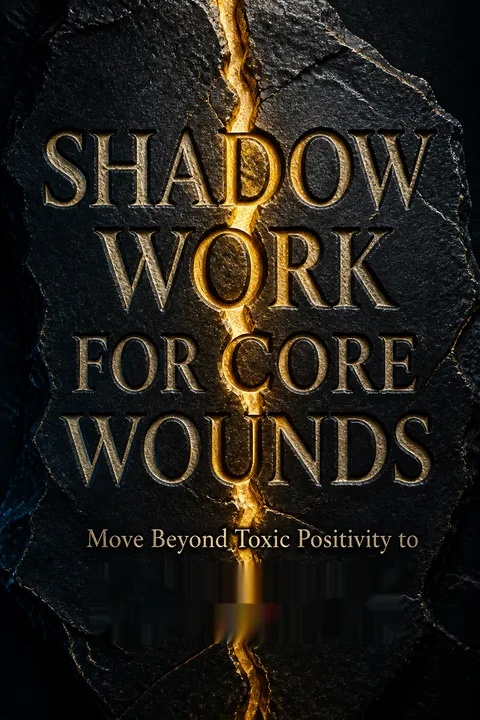
Belonging within. True belonging is not found in the perfect external environment, relationship, or spiritual community, but in our relationship with ourselves. When we can look at our broken pieces and glue them back together with the gold of self-acceptance, we realize that we are already home.
Integrating the archetypes. The Healed Self is the wise coordinator of all our internal archetypes, balancing our shadow, light, power, and primal instincts. By maintaining this integration, we can:
- Respond to critical self-talk with compassionate, reparenting dialogue
- Navigate life's inevitable losses and relationship shifts with stability
- Balance deep shadow work with light, humor, and levity
- Live authentically as beautifully broken, yet entirely whole, beings








































