
Plot Summary
1. Olympus on the Brink
The city of Olympus teeters on the edge of destruction as Circe, once thought dead, returns with an army of exiles and the common people at her back. The ruling Thirteen scramble to maintain control, but their power is slipping. Hermes, the city's trickster and spy, races to save as many as possible, torn between her revolutionary ambitions and the people she cares for. The city's protective barrier has fallen, leaving Olympus vulnerable to both internal and external threats. As the population divides between those seeking sanctuary and those clinging to old power, the stage is set for a reckoning that will change everything.
2. Allies and Betrayals
Hermes and Atalanta, longtime co-conspirators, struggle to keep their plans on track as Circe's return throws everything into disarray. Trust is in short supply, and even the closest allies question each other's motives. The Thirteen, fractured and paranoid, refuse to unite, each clinging to their own interests. Atalanta's loyalty is tested as she navigates the shifting allegiances of the city's power players. The cost of revolution becomes clear: personal happiness and safety are sacrificed for the greater good, and every relationship is shadowed by the threat of betrayal.
3. Circe's Return
Circe, once Hera and now a vengeful force, returns to Olympus not just to reclaim her place but to burn the old order to the ground. She allies with Demeter, leveraging the latter's influence over the people. Circe's trauma and rage fuel her quest for justice, but her methods are ruthless. She orchestrates public trials for the Thirteen and legacy families, determined to make them pay for their complicity in her suffering. Her presence is both a rallying cry for the oppressed and a harbinger of violence for the city's elite.
4. The First Execution
Circe stages a dramatic public execution of Peitho, the former Aphrodite, blaming her for complicity in Circe's abuse. The trial is a farce, a performance for the masses hungry for retribution. Eros, Peitho's son, tries to intervene and is killed by Circe in front of the crowd. The spectacle galvanizes the mob, turning them into a weapon Circe can wield. Hermes, caught between her love for Circe and her loyalty to her friends, fails to prevent the bloodshed. The city's appetite for violence is awakened, and the line between justice and vengeance blurs.
5. Mob Justice Unleashed
The execution sparks a wave of mob violence. The citizens, once passive, now demand more blood. Circe's control over the crowd is tenuous; she has unleashed a force she cannot fully command. The Thirteen retreat behind barriers, but nowhere is truly safe. Allies become enemies, and old grievances resurface. The mob's fury threatens to consume not just the ruling class but anyone associated with them. The revolution spirals, and the cost of change becomes horrifyingly clear.
6. Fractured Loyalties
Atalanta is exposed as a traitor and forced to flee, her loyalty to Hermes and the cause questioned by all sides. The Thirteen turn on each other, desperate to survive. Hermes is captured by Circe, and their complicated history resurfaces in a moment of vulnerability and passion. Atalanta risks everything to rescue Hermes, but the wounds—physical and emotional—run deep. The trio's tangled relationships threaten to unravel as love, jealousy, and guilt collide.
7. The Cost of Vengeance
Circe's campaign of retribution claims more victims, including Artemis and other members of the Thirteen. Demeter, once Circe's ally, begins to doubt the path they are on. The city is awash in blood and fear, and the revolutionaries question whether the ends justify the means. Hermes and Atalanta, both scarred by recent events, struggle to reconcile their feelings for each other and for Circe. The price of vengeance is steep, and no one escapes unscathed.
8. Prisoners and Rescues
Hermes, drugged and imprisoned by Circe, is torn between her old love and her new loyalties. Atalanta, wounded but relentless, infiltrates Circe's stronghold to save Hermes. Their escape is fraught with danger, and both are forced to confront the depth of their feelings—and the impossibility of a simple resolution. Meanwhile, Demeter maneuvers behind the scenes, preparing to betray Circe for the sake of her daughters and the city's future.
9. Blood on the Stage
Atalanta and Circe face off in a brutal knife fight, each testing the other's resolve and skill. The battle is as much about power and pride as it is about survival. Both women are changed by the encounter, and a grudging respect emerges alongside their rivalry. The city's fate hangs in the balance as the revolutionaries realize that violence alone cannot build a better world. The need for a new vision becomes urgent.
10. Knife Fights and Confessions
In the aftermath of violence, the trio—Hermes, Atalanta, and Circe—are forced to confront their tangled emotions. Confessions of love, regret, and longing surface as they seek comfort in each other. Their bond deepens, but so do the complications. The revolution has made them both heroes and monsters, and the line between right and wrong is blurred by desire and trauma. They must decide if they can trust each other enough to build something new from the ashes.
11. Demeter's Gambit
Demeter, seeing the destruction wrought by Circe's vengeance, turns on her former ally. In a public confrontation, she calls for a new form of government and is killed for her defiance. Her death becomes a rallying point, shifting public sentiment and breaking the spell of mob violence. The revolution's leaders realize that true change requires more than blood—it demands sacrifice, vision, and unity. Demeter's martyrdom opens the door for a new future.
12. River of No Return
As the mob turns on Circe, she is forced to flee, nearly drowning in the river that once almost claimed her life. Hermes and Atalanta risk everything to save her, and the trio hide together, nursing wounds both physical and emotional. The city burns behind them, and the old order is truly dead. In the safety of their hideout, they find solace in each other, forging a bond that is both a refuge and a promise of something more.
13. Aftermath and Reckoning
With the Thirteen scattered and the city in chaos, Hermes, Atalanta, and Circe must decide what comes next. The cost of their actions weighs heavily, and the survivors mourn the dead. Demeter's sacrifice inspires a movement for real change, and the trio realize that their personal happiness is tied to the fate of Olympus. They begin to envision a new order—one built on representation, justice, and hope rather than fear and violence.
14. Three Hearts Entwined
In the quiet after the storm, Hermes, Atalanta, and Circe confront the depth of their feelings for each other. Old wounds are tended, apologies made, and forgiveness offered. Their love is messy, imperfect, and hard-won, but it is real. Together, they imagine a future where they can be more than weapons or martyrs—a future where love is possible, even after so much loss.
15. Revolution's Endgame
Guided by Demeter's example and Hermes's vision, the survivors of Olympus gather to form a new council. Representation is given to the upper city, lower city, and countryside, and the era of the Thirteen ends. The legacy families and former rulers are exiled, and the city begins the slow process of healing. The trio, having played their part, prepare to leave, knowing their work is done and their future lies elsewhere.
16. A New Olympus
Hermes, Atalanta, and Circe leave Olympus behind, carrying both scars and hope. They settle in a new place, uncertain but together. The world is wide, and their skills—once used for revolution—may find new purpose. The possibility of happiness, once unthinkable, is now within reach. Their love, forged in fire, becomes the foundation for whatever comes next.
17. Exiles and New Beginnings
In their new life, the trio faces the challenge of building something lasting from the ruins of their past. The temptation of old habits and the lure of new adventures beckon. Together, they decide to use their talents not for destruction, but to fight injustice wherever they find it. Their story is not one of perfect endings, but of resilience, love, and the courage to begin again.
Analysis
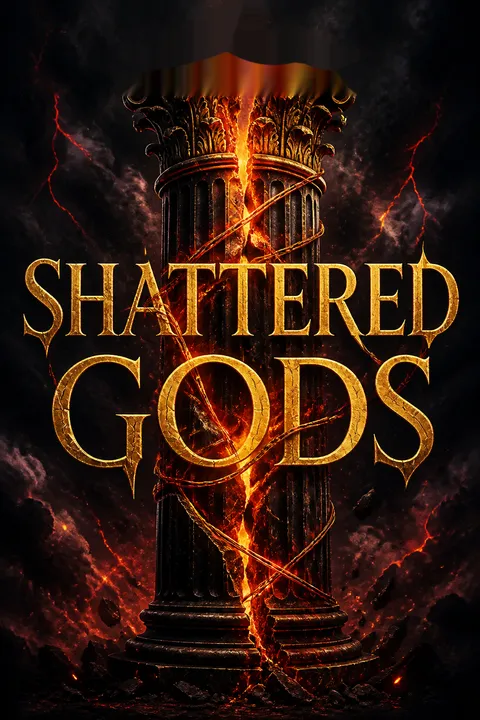
Shattered Gods is a searing, polyamorous reimagining of revolution, trauma, and the cost of justice. Katee Robert's narrative interrogates the seductive allure of vengeance and the dangers of unchecked power, both in the hands of the elite and the masses. The book's emotional core is the evolving relationship between Hermes, Atalanta, and Circe—a triad forged in violence, betrayal, and ultimately, forgiveness. Their journey mirrors the city's: from pain and division to the possibility of healing and new beginnings. The story refuses easy answers, showing that revolutions are messy, that justice and vengeance are often indistinguishable, and that love is both a refuge and a risk. By exiling the old order and embracing a new, representative government, the survivors of Olympus choose hope over fear, even as they carry the scars of what it took to get there. The ultimate lesson is that true change requires not just the destruction of corrupt systems, but the courage to imagine—and build—something better, together.
Review Summary
Shattered Gods receives mixed reviews, averaging 3.38/5 stars. Many longtime fans of the Dark Olympus series feel disappointed by the conclusion, citing rushed pacing, an underwhelming political resolution, and difficulty connecting with protagonist Circe. Common criticisms include underdeveloped chemistry within the central throuple, an abrupt ending that leaves beloved series characters without closure, and a conflict resolution that felt unearned after ten books of buildup. Positive reviews praise the audiobook narration, the ambitious scope, and the satisfying wrap-up of Olympus's political turmoil.
Characters
Hermes / Hecate
Hermes, born Hecate, is the city's master spy and the architect of the revolution. Haunted by the loss of her first love, Circe, she channels her grief into a decade-long plan to dismantle the corrupt Thirteen. Her wit, resourcefulness, and ability to move unseen make her both invaluable and dangerous. Psychologically, she is driven by guilt, longing, and a fierce sense of justice, but her emotional walls are high. Her relationships with Atalanta and Circe are fraught with unresolved feelings, jealousy, and the fear of happiness. Over the course of the story, Hermes learns to accept love and vulnerability, realizing that true change requires both sacrifice and connection.
Atalanta
Atalanta is Hermes's closest ally and confidante, a warrior who has sacrificed personal happiness for the cause. Scarred by betrayal and violence, she is fiercely loyal but struggles with feelings of inadequacy and jealousy, especially regarding Hermes's unresolved love for Circe. Atalanta's strength lies in her unwavering sense of right and wrong, even as the revolution forces her to compromise. Her journey is one of self-acceptance, learning to demand more from life and love, and ultimately embracing the possibility of happiness with both Hermes and Circe.
Circe
Circe, once Hera, returns to Olympus as a force of nature, determined to destroy the system that destroyed her. Her trauma at the hands of Zeus and the Thirteen fuels her ruthless pursuit of justice, but her methods are often brutal. Circe is both charismatic and deeply wounded, capable of inspiring devotion and fear. Her love for Hermes is complicated by betrayal and loss, and her rivalry with Atalanta evolves into respect and desire. Over time, Circe confronts the limits of vengeance and the need for forgiveness, finding healing in the unlikely family she forms with Hermes and Atalanta.
Demeter
Demeter is a master manipulator, always seeking advantage for herself and her daughters. Initially allied with Circe, she ultimately sacrifices herself to stop the cycle of violence and inspire true change. Her love for her family is genuine, but often at odds with her ambition. Demeter's death becomes the turning point for the revolution, her martyrdom galvanizing the city to seek a better future.
Eros
Eros, son of Peitho, is caught between loyalty to his mother and love for his wife, Psyche. Groomed as a weapon, he seeks redemption but is ultimately killed by Circe in a moment of chaos. His death is a catalyst for the unraveling of Circe's control and a symbol of the revolution's cost. Eros's fate haunts Hermes and the others, a reminder that no one escapes the consequences of violence.
Antigone
Antigone is Circe's right hand, unwavering in her devotion. She is both protector and enforcer, willing to do whatever it takes to see Circe's vision realized. Her death at the hands of the mob marks the end of Circe's power and the revolution's descent into chaos. Antigone's loyalty and sacrifice highlight the personal costs of leadership and the dangers of blind devotion.
Demeter's Daughters (Persephone, Callisto, Psyche, Hera)
The daughters of Demeter each represent different facets of Olympus's legacy: Persephone as the bridge between worlds, Callisto as the reluctant queen, Psyche as the grieving widow, and Hera as the pregnant survivor. Their relationships with their mother and each other are fraught with love, resentment, and the scars of political machinations. They are both pawns and players, ultimately finding agency in the new order.
The Thirteen
The Thirteen are the embodiment of Olympus's rot: powerful, insulated, and willing to sacrifice anyone to maintain control. Individually, they are complex—some honorable, some monstrous—but as a group, they are the revolution's primary target. Their downfall is both necessary and tragic, as even the best among them are tainted by the system they uphold.
Nerissa
Nerissa is one of Circe's most trusted advisors, skilled in logistics and manipulation. She survives the revolution's bloodiest moments, her pragmatism and loyalty keeping her alive. Nerissa represents the ordinary people swept up in the ambitions of others, and her fate is a barometer for the revolution's success or failure.
Apollo, Athena, Hades, Zeus, Poseidon
These members of the Thirteen each grapple with the end of their era. Some resist to the bitter end, others accept exile or death. Their psychological journeys reflect the difficulty of letting go of power and the fear of an uncertain future. Their relationships with the main trio are marked by betrayal, regret, and, in some cases, respect.
Plot Devices
Duality of Justice and Vengeance
The narrative constantly interrogates whether violence can ever be justified in the pursuit of justice. Circe's public executions and the mob's bloodlust force characters to confront the consequences of their actions. The revolutionaries must decide if they are building something new or simply perpetuating the cycle of violence. This tension drives the plot and the characters' development, culminating in Demeter's sacrificial pivot from vengeance to hope.
Triadic Relationship Structure
The emotional core of the story is the evolving relationship between Hermes, Atalanta, and Circe. Their love triangle is not just romantic but symbolic of the competing desires for justice, safety, and forgiveness. The narrative uses their shifting alliances, betrayals, and reconciliations to explore themes of trauma, trust, and the possibility of healing after violence.
Mob as Uncontrollable Force
The revolution unleashes the mob as a plot device—first as a tool for justice, then as a danger to all. The mob's unpredictable violence escalates the stakes and forces the characters to adapt. The narrative structure uses the mob to show how revolutions can spiral beyond the control of their architects, demanding new solutions and sacrifices.
Public Trials and Spectacle
Circe's staged executions are both plot events and commentary on the power of spectacle. The trials are designed to sway public opinion, but they also expose the dangers of mob justice and the ease with which violence becomes entertainment. The narrative uses these spectacles to critique both the old order and the revolutionaries themselves.
Exile and New Beginnings
The story's structure moves from destruction to exile to rebirth. The forced exile of the Thirteen and the main trio's departure from Olympus symbolize the end of an era and the hope for something better. The narrative uses exile as both punishment and liberation, allowing characters to redefine themselves and their purpose.
Confession and Vulnerability
Key moments hinge on characters confessing their traumas, regrets, and desires. These confessions—whether in private or broadcast to the city—are plot devices that break cycles of violence and open the door to healing. The narrative structure rewards vulnerability, showing that true revolution requires honesty as much as courage.
Dark Olympus Series Series








About the Author



Download PDF
Download EPUB
.epub digital book format is ideal for reading ebooks on phones, tablets, and e-readers.








































