Plot Summary
Raftbound Hopes and Nightmares
On a makeshift raft, Ellie and Seth, fugitives from a drowned city, play a game of hopes to distract themselves from hunger and fear. Seth's dreams blur the line between boy and sea-creature, hinting at his godly nature. Their friendship is strained by isolation and the trauma of their past, especially the Enemy—a god of destruction that once tried to possess Ellie. As they near a mysterious island, both are desperate for belonging and safety, but the shadow of pursuit and the Enemy's lingering presence threaten their fragile peace. The chapter sets the emotional stakes: hope, longing, and the ever-present threat of old evils resurfacing.
Arrival at Shipwreck Island
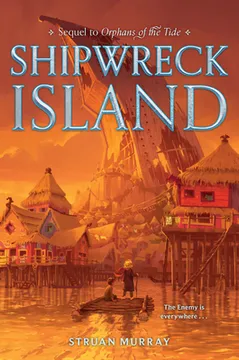
Ellie and Seth reach Shipwreck Island, dominated by a colossal Ark and a stilted, colorful village. The locals praise their Queen, a Vessel believed to house a benevolent god. The island's beauty is tinged with unease—rituals, statues, and a sense of surveillance. Ellie is drawn to the Queen's legend, hoping for acceptance and purpose, while Seth remains wary, scarred by past betrayals. Their arrival is marked by both hospitality and suspicion, and the promise of a new beginning is shadowed by the possibility that the island's peace is fragile and conditional.
The Queen's Secret Power
Ellie learns the Queen is not a god herself, but a Vessel—host to the god of life, whose power is waning. The island's prosperity depends on the Queen's ability to perform miracles at the Festival of Life, but each act drains her. Ellie, herself a Vessel to the Enemy, is both fascinated and fearful, seeing in the Queen a possible mentor or savior. The Queen's power is both a blessing and a curse, and the island's faith in her is absolute, setting up a dangerous expectation for salvation that may be impossible to fulfill.
New Friends, Old Shadows
Ellie and Seth befriend Viola, a rebellious sailor, and Molworth, a precocious innkeeper. While Seth finds camaraderie among the sailors, Ellie struggles with loneliness and the feeling of being overlooked. The Enemy's influence lingers, manifesting as a bandaged child that taunts Ellie's insecurities. The past is never far: Seth's visions connect him to the Ark's ancient history, and Ellie's inventions are haunted by memories of her mother and brother. The chapter explores the tension between forging new bonds and the inescapable pull of old wounds.
The Vile Oak's Welcome
Settling at the Vile Oak inn, Ellie and Seth experience both comfort and alienation. Seth is celebrated for his fishing prowess, while Ellie is marginalized, her talents dismissed. The inn's community is lively but divided by class, faith, and suspicion of outsiders. Ellie's longing for recognition and usefulness grows, as does her envy of Seth's easy acceptance. The Vile Oak becomes a microcosm of the island: vibrant, yet riven by hidden resentments and the threat of upheaval.
The Enemy's Whisper
The Enemy, weakened but persistent, manipulates Ellie's fears and desires, appearing as a child wrapped in bandages. It offers help in exchange for wishes, preying on her loneliness and guilt. Ellie resists, clinging to memories of her brother Finn and the hope that friendship can save her. The Enemy's presence is both supernatural and psychological, embodying Ellie's internal struggle with trauma, self-worth, and the seductive allure of easy solutions to impossible problems.
Inventions and Isolation
Desperate to prove herself, Ellie throws herself into inventing machines to help the island—tillers, fertilizer sprayers, and fireworks. Her efforts are met with skepticism or outright rejection, deepening her sense of isolation. Seth's powers, meanwhile, attract awe and suspicion. Their friendship frays under the strain of unmet expectations and unspoken resentments. Ellie's inventions become both a lifeline and a source of alienation, as she seeks validation in a society that values miracles over ingenuity.
Loren's Schemes Unveiled
Loren, a charismatic courtier, manipulates public opinion and positions himself as the Queen's successor. He sabotages Ellie's inventions, poisons the fields, and orchestrates riots to undermine the Queen's authority. Ellie, Kate (the Queen), Seth, and their friends uncover Loren's network of spies and blackmail, risking their lives to expose him. The island's faith in its leaders is shaken, and the threat of mob violence looms. Loren's ambition and cunning reveal the fragility of power and the ease with which hope can be weaponized.
Letters and Ghosts
Ellie discovers a passage of letters—testaments to love, friendship, and grief—mirroring her own struggles with connection and abandonment. The Enemy exploits these vulnerabilities, manifesting as both a literal and figurative ghost. Ellie's confrontation with the Enemy is a battle for her soul, fought through memory, willpower, and the invocation of her brother's love. The chapter explores the interplay of memory, trauma, and the enduring power of relationships to both wound and heal.
The Mines and the Miracle
When a miner is trapped, Ellie uses her homemade explosives to save him, but is injured in the process. Her act of heroism brings her before the Queen and the Royal Court, where she is both celebrated and condemned. The island's need for miracles clashes with the dangers of innovation, and Ellie's fate hangs in the balance. The episode crystallizes the island's contradictions: its hunger for salvation, its fear of change, and the perilous cost of standing out.
The Queen Unmasked
In the palace, Ellie befriends Kate, discovering the Queen's insecurities, loneliness, and the crushing weight of expectation. Their bond deepens through shared vulnerability and creative collaboration, but is threatened by secrets and the ever-present specter of the Enemy. Kate's inability to access her godly powers becomes a source of shame and desperation, driving her to increasingly reckless decisions. The chapter explores the complexities of leadership, the hunger for validation, and the corrosive effects of fear.
Workshop Bonds and Rivalries
Ellie and Kate's partnership flourishes in the workshop, blending invention with emotional intimacy. Yet, jealousy and rivalry simmer beneath the surface—over Seth, over recognition, over the right to define what it means to be special. Their creative successes are shadowed by personal failures, misunderstandings, and the ever-tightening grip of external threats. The workshop becomes a crucible for both hope and heartbreak, as the boundaries between friend, rival, and savior blur.
The Festival Approaches
As the Festival of Life nears, the island's tensions reach a breaking point. Loren's sabotage poisons the fields, and Kate is forced to rely on Ellie's inventions to maintain the illusion of divine power. The public's faith wavers, and the threat of violence grows. Ellie and her friends race to expose Loren's treachery, but are ensnared in a web of secrets, betrayals, and impossible choices. The festival becomes a stage for both redemption and ruin, as the island's fate hangs in the balance.
The Volcano's Conspiracy
Ellie and Kate infiltrate Loren's secret council in the volcano, uncovering his plot to seize power and destroy the Queen. Betrayed and hunted, they are forced to flee, pursued by Loren's followers and the Enemy's manipulations. The volcano becomes a crucible of violence and revelation, as old wounds are reopened and new alliances are forged in desperation. The Enemy's influence grows, feeding on fear, guilt, and the island's unraveling order.
The Drowning's Truth
Through visions and Leila's diary, Seth learns the devastating truth: he, as a god, caused the Drowning that destroyed the old world, manipulated by the Enemy. The revelation shatters him, plunging him into despair and self-loathing. Ellie's faith in him is tested, but she refuses to abandon him, insisting that guilt does not define worth. The chapter explores the limits of forgiveness, the weight of history, and the possibility of healing even the deepest wounds.
Betrayal and Broken Minds
Kate, desperate to reclaim her lost divinity, betrays Ellie and Seth, using violence and manipulation to force Seth to part the sea and expose the underwater place where her mother lost her powers. Ellie, heartbroken and disillusioned, is forced to confront the Enemy's ultimate trick: the realization that suffering cannot be destroyed, only endured. The chapter is a crucible of betrayal, loss, and the shattering of illusions, as friendship and hope are tested to their limits.
The Sea Parts
Under duress, Seth unleashes his full power, parting the sea in a cataclysmic act that exposes the ocean floor and threatens the island's very existence. The act is both miracle and disaster, a testament to the dangers of unchecked power and the impossibility of controlling forces beyond human understanding. Ellie's intervention saves Seth from destruction, but the cost is immense: the world is irrevocably changed, and the boundaries between friend and enemy, savior and destroyer, are blurred beyond recognition.
The Enemy Within
In the aftermath, Ellie faces the Enemy—now wearing her own face—and the realization that suffering, guilt, and the hunger for power are inescapable parts of the human condition. Kate, corrupted by ambition and fear, turns on Ellie, seeking to claim the Enemy's power for herself. Ellie escapes, wounded but unbroken, vowing to find the place where gods can die and end the Enemy's cycle of suffering. The story closes on a note of hard-won resolve: hope is not the absence of pain, but the courage to keep fighting for a better world.
Analysis
Struan Murray's Shipwreck Island is a profound meditation on the nature of suffering, power, and hope, wrapped in the trappings of a fantasy adventure. At its heart, the novel interrogates what it means to be chosen—by gods, by fate, by trauma—and the costs of that chosenness. Vesselhood, both literal and metaphorical, becomes a lens through which the story examines the burdens of leadership, the hunger for validation, and the corrosive effects of shame and fear. The Enemy, as both supernatural antagonist and psychological force, embodies the inescapable reality of suffering and the seductive allure of easy answers. The novel's greatest strength lies in its refusal to offer simple solutions: miracles come at a price, inventions are no panacea, and even love and friendship are fraught with pain and betrayal. Yet, in the end, Shipwreck Island insists that hope is not the absence of suffering, but the courage to keep fighting for a better world, even when the odds seem insurmountable. The story's emotional arc—Ellie's journey from longing and guilt to hard-won resolve—offers a powerful lesson for modern readers: that the enemy within can be faced, if not defeated, and that the act of striving for connection and meaning is itself a kind of miracle.
Characters
Ellie Lancaster
Ellie is a fiercely intelligent, inventive girl marked by trauma and resilience. As the Vessel of the Enemy, she carries a burden of guilt, shame, and the constant threat of being overtaken by a god of destruction. Her relationship with Seth is both anchor and source of pain, complicated by jealousy, longing, and the scars of past betrayals. Ellie's drive to be useful and recognized is both her strength and her vulnerability, leading her to risk everything for acceptance and love. Her arc is one of self-discovery, as she learns that hope is not found in miracles or validation, but in the messy, painful work of connection and forgiveness.
Seth (Varu)
Seth is a boy with the soul of a god, haunted by fragmented memories of past lives and the knowledge that he caused the Drowning. His powers are both gift and curse, connecting him to the suffering of the drowned world and isolating him from those he loves. Seth's relationship with Ellie is central—she is his tether to humanity, even as he fears his own capacity for destruction. His arc is one of reckoning with guilt, accepting the limits of forgiveness, and choosing to fight for hope despite overwhelming despair.
Kate (The Queen)
Kate is the Queen of Shipwreck Island, believed to be a Vessel but secretly powerless. Her longing for connection and validation drives her to reckless ambition, manipulation, and ultimately betrayal. Her friendship with Ellie is genuine but fraught, as she oscillates between vulnerability and ruthlessness. Kate's arc is a study in the corrosive effects of fear, shame, and the hunger for control. Her tragedy lies in her inability to accept her own limitations, leading her to sacrifice love and friendship for the illusion of power.
The Enemy (Bandaged Child)
The Enemy is both a literal god of destruction and a psychological force, manifesting as a bandaged child that taunts, tempts, and undermines Ellie. It feeds on wishes, guilt, and the desire to escape pain, offering easy solutions at terrible cost. The Enemy's true power lies in its ability to exploit the darkest parts of its victims, turning their own fears and desires against them. Its final transformation—wearing Ellie's own face—underscores the story's central theme: the enemy within is often the hardest to defeat.
Viola
Viola is a bold, outspoken sailor who dreams of revolution and justice. Her friendship with Ellie and Seth is marked by loyalty, humor, and a willingness to challenge authority. Viola's arc is one of disillusionment and growth, as she confronts the limits of idealism and the complexities of power. Her relationship with Seth is particularly poignant, as she grapples with the revelation of his godhood and the fear that comes with it.
Molworth
Molworth is a twelve-year-old innkeeper whose devotion to the Queen borders on fanaticism. He provides comic relief and a child's perspective on the island's upheavals, but also embodies the longing for stability and meaning in a world of chaos. Molworth's arc is one of growing up—learning to question authority, confront disappointment, and find his own place in the world.
Loren Alexander
Loren is a master of public opinion, using charm, blackmail, and sabotage to position himself as the Queen's successor. His schemes drive much of the island's turmoil, exposing the fragility of faith and the dangers of unchecked ambition. Loren's downfall is both satisfying and cautionary, illustrating the perils of power pursued for its own sake.
Leila
Leila's diary provides a window into the Ark's ancient history and the origins of the gods. Her friendship with Varu (Seth) and the Crone is a touchstone for the present, offering lessons in resilience, sacrifice, and the enduring power of hope. Leila's arc is one of survival and legacy, as her story shapes the choices of those who come after.
The Crone
The Crone is a Vessel to the god of life, guiding Leila and Varu through the aftermath of the Drowning. Her wisdom is hard-won, and her teachings about the nature of power, suffering, and the divine are central to the story's philosophical core. The Crone's arc is one of acceptance—of mortality, loss, and the limits of even the greatest power.
Hargrath
Hargrath is a survivor of the Enemy's City, obsessed with destroying the Enemy's Vessel. His pursuit of Ellie is both terrifying and pitiable, driven by trauma and a desperate need for meaning. Hargrath's arc is a cautionary tale about the dangers of fanaticism and the ways in which the pursuit of justice can become indistinguishable from the evil it seeks to destroy.
Plot Devices
Vesselhood and Divine Power
The concept of Vesselhood—humans hosting gods—drives the narrative's exploration of power, identity, and sacrifice. Vesselhood is both blessing and curse, offering the possibility of miracles but demanding a terrible price: the erosion of self, the risk of possession, and the burden of others' expectations. The contrast between Ellie (Vessel to the Enemy), Seth (a god in human form), and Kate (a powerless Queen) allows for nuanced exploration of what it means to be chosen, to be special, and to be responsible for others' fates.
The Enemy as Psychological Horror
The Enemy operates on both supernatural and psychological levels, appearing as a bandaged child that embodies Ellie's deepest fears and insecurities. Its power is rooted in manipulation, temptation, and the exploitation of suffering. The Enemy's shifting forms and voices—sometimes Finn, sometimes Ellie herself—underscore the story's central theme: the greatest battles are often internal, fought against the parts of ourselves we most fear.
Memory, Guilt, and Redemption
Seth's visions of past lives, Leila's diary, and the recurring motif of letters and memories serve as both plot devices and thematic anchors. The past is never truly past; it shapes the present, haunts the characters, and offers both warnings and hope. Redemption is possible, but only through the painful work of confronting and accepting one's history.
Political Intrigue and Social Upheaval
Loren's machinations, the Festival of Life, and the island's social hierarchies provide a backdrop of political intrigue and social unrest. The story uses these elements to explore the dangers of charismatic leadership, the volatility of public opinion, and the ease with which hope can be weaponized for personal gain. The Festival serves as both climax and crucible, where personal and political stakes converge.
Invention and the Limits of Science
Ellie's inventions—tillers, fertilizer machines, fireworks, and flying devices—symbolize both the promise and peril of human ingenuity. They offer hope for a better world, but are also vulnerable to sabotage, misunderstanding, and the limits of what technology can achieve in the face of supernatural forces. The tension between science and miracle, innovation and tradition, is a recurring motif.
Foreshadowing and Narrative Structure
The narrative is structured around cycles—of hope and despair, power and loss, friendship and betrayal. Foreshadowing is used extensively: early dreams and visions hint at later revelations; the Enemy's whispers anticipate future betrayals; the history of the Ark and the Drowning echoes in the present. The story's structure reinforces its central message: suffering is inescapable, but hope endures in the struggle to create meaning and connection.