Key Takeaways
1. A leadership mindset is a way of thinking that drives effective leadership behaviors
A leadership mindset is a way of looking at the world borne out of our experiences that leads to a set of behaviours.
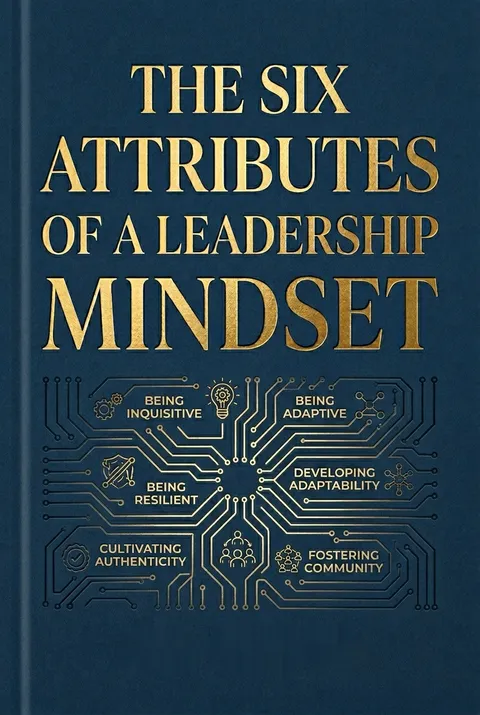
Mindset shapes actions. A leadership mindset is not about techniques or skills, but a perspective that informs how leaders approach situations. It's developed through experiences that challenge assumptions and broaden one's worldview. Key attributes of a leadership mindset include:
- Mindfulness
- Genuine curiosity
- Flexibility of mind
- Resilience
- Creating leaders
- Enterprise thinking
These attributes work together to enable effective leadership. By cultivating these ways of thinking, leaders develop behaviors that inspire and empower others. The mindset becomes a lens through which leaders view challenges and opportunities.
2. Mindfulness allows leaders to see situations clearly and respond thoughtfully
Mindfulness is central to a leadership mindset because the stillness of mind that it brings creates a fertile landscape in which to grow the other five attributes.
Awareness enables clarity. Mindfulness helps leaders pause between stimulus and response, creating space to see situations more objectively. This allows leaders to:
- Notice subtle dynamics in meetings and interactions
- Recognize their own biases and emotional reactions
- Make decisions based on clear perception rather than habit
Leaders can practice mindfulness through meditation, but also by intentionally bringing awareness to everyday activities. Even brief moments of mindful attention throughout the day can increase a leader's ability to respond thoughtfully rather than react automatically.
3. Genuine curiosity opens leaders to new perspectives and possibilities
Genuine curiosity is about learning in all its forms. We're curious about what we can learn from a mistake, about why we do things the way we do, and about what else is possible.
Questions drive discovery. Genuine curiosity moves beyond seeking information to gain something. It's about exploring ideas with an open mind, even when they challenge existing beliefs. Curious leaders:
- Ask "what if?" to imagine new possibilities
- State the obvious to challenge assumptions
- Demonstrate generosity of spirit in hearing others' views
This curiosity allows leaders to see beyond their own perspective and uncover innovative solutions. It also creates an environment where others feel comfortable sharing ideas, fostering creativity and engagement across the organization.
4. Flexibility of mind enables leaders to adapt and find creative solutions
Flexibility of mind matters because it's about having the mental dexterity to pivot our thinking quickly to find that bigger idea.
Adaptability fuels innovation. Flexibility of mind allows leaders to:
- Entertain the possibility of being wrong
- Recognize that there's more than one valid idea
- Creatively combine ideas into new solutions
This mental agility is crucial in a rapidly changing business environment. Leaders with flexibility of mind can:
- Quickly adapt strategies when circumstances change
- Find unexpected connections between seemingly unrelated ideas
- Create "bigger ideas" by combining multiple perspectives
By modeling this flexibility, leaders encourage innovative thinking throughout their organizations.
5. Resilience helps leaders persevere through challenges and setbacks
Resilience is often demonstrated in our darkest moments. Late at night, all alone, with a problem in our lap and energies failing, resilience is choosing to get up the next day and persevere.
Persistence overcomes obstacles. Resilient leaders demonstrate:
- Bouncebackability - the ability to recover quickly from setbacks
- Discipline - consistently taking action toward goals
- Keeping eyes on the prize - maintaining focus on long-term objectives
Resilience is not about avoiding failure, but about learning and growing from challenges. Leaders can build resilience by:
- Identifying their "why" - their core purpose and motivation
- Challenging self-limiting beliefs
- Cultivating a growth mindset that sees setbacks as opportunities to learn
By modeling resilience, leaders inspire their teams to persist through difficulties and emerge stronger.
6. Creating leaders empowers others and multiplies leadership impact
Great leaders don't have the most followers, they create the most leaders.
Empowerment multiplies impact. Creating leaders involves:
- Empowering others to think and act independently
- Positioning others for leadership through mentoring and opportunities
Leaders who focus on creating other leaders:
- Ask questions that provoke thought rather than giving answers
- Provide parameters within which others can make decisions
- Create opportunities for others to lead projects and initiatives
This approach not only develops the capabilities of individuals but also creates a more agile and innovative organization. By multiplying leadership throughout the organization, leaders exponentially increase their impact and create a sustainable leadership pipeline.
7. Enterprise thinking connects individual actions to the bigger organizational picture
Enterprise thinking is about caring about the business and how the business operates. We care as enterprise leaders because we feel like the business is our own, or at least an extension of who we are.
Alignment drives results. Enterprise thinking involves:
- Understanding our connection to the larger organization
- Living our place in the bigger picture
Leaders who embody enterprise thinking:
- Collaborate across departments and functions
- Make decisions based on what's best for the entire organization
- Help their teams see how their work contributes to larger goals
This perspective allows leaders to break down silos and create synergies across the organization. By helping everyone understand how their work fits into the bigger picture, enterprise thinking increases engagement and alignment, driving better overall results for the organization.
Download PDF
Download EPUB
.epub digital book format is ideal for reading ebooks on phones, tablets, and e-readers.








































