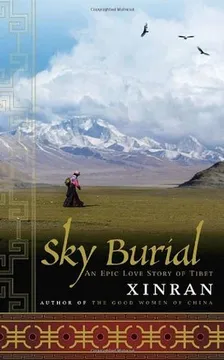
Plot Summary
Love Sparks in Nanjing
In post-revolutionary China, young medical student Shu Wen meets her peer Kejun in Nanjing. Their paths cross in a dissection class, where Kejun's patient guidance kindles a bond of deep affection. For Shu Wen, Kejun soon becomes her compass, his gentle kindness merging with a shared idealism about a new China. Their backgrounds differ, but both are propelled by dreams of progress and service, buoyed by a society in transformation. They fall quickly in love, symbolizing hope and modernity. Their brief courtship, drenched in passion and promise, culminates in a modest yet exuberant marriage—a union that offers Wen a glimpse of domestic happiness amidst a world still in upheaval from war and revolution.
Torn Apart by War
The newlyweds' happiness is shattered when Kejun, acting on his sense of duty, is dispatched as an army doctor to Tibet. Within a mere hundred days of marriage, Wen's life is upended by a terse notification: Kejun is lost, presumed dead. Doubt gnaws at her—how could her vibrant husband so suddenly vanish, especially amid shifting, unreliable reports from the war-torn front? Wen is devastated but refuses resignation; the agony of not knowing eclipses the pain of confirmed loss. Clinging to love and hope, Wen resolves to search for Kejun herself, embarking on a journey that will reshape her existence far beyond what she can imagine.
Into the Tibetan Unknown
Leaving behind family, comfort, and the world she knows, Wen joins the army as a doctor, leveraging her skills to traverse the bureaucratic and physical barriers of 1950s China. Her travels are arduous—a succession of crowded trains, shaky trucks, and unending wildernesses—each mile taking her deeper from civilization and closer to the enigmatic high plateau. Wen's grief and yearning lend her a singular focus, but Tibet resists her intrusion, both through language and the land itself. Beset by suspicion, xenophobia, and environmental extremes, Wen's journey is both outward and inward, her identity gradually unraveling in the alien cold.
Zhuoma's Arrival
On a perilous convoy through the Tibetan mountains, Wen's unit is stalked by mysterious, nightly deaths—soldiers murdered by unseen hands. In this climate of mounting fear and racial hatred, a half-dead Tibetan woman, Zhuoma, is found. Wen nurses her back to life, earning Zhuoma's eternal gratitude, even as the soldiers press for her execution. Wen's defense of Zhuoma forges a tenuous alliance and cracks open the possibility of understanding. Through Zhuoma's story, Wen glimpses Tibet's nobility, tragedy, and the ways love is both elevated and thwarted by custom. Zhuoma's presence opens a new channel for survival and connection.
Broken Convoy, Broken Hearts
As the convoy is ambushed and forced apart, Wen and Zhuoma become separated from the Chinese soldiers, left vulnerable in an immense and hostile land. Their dependence on each other deepens—Zhuoma's knowledge of the land and Wen's medical skills become their twin anchors. They are eventually taken in by Tibetan nomads, marking the true beginning of Wen's transformation. The violence and trauma suffered en route bind them as sisters in exile. Together, they face hunger, storms, and the ever-present specter of death, forging a quiet resilience against the surrounding chaos.
Among Nomads, Becoming Other
Welcomed into a nomadic Tibetan family led by Gela and his wife Saierbao, Wen and Zhuoma begin the slow process of adaptation. Stripped of language and autonomy, Wen becomes as much a child as an outsider, gradually accepting the rhythms of nomadic existence—milking yaks, churning butter, gathering dung, and participating in ancient rituals. Under the silent tutelage of her hosts, Wen's old world recedes as she learns the meaning of belonging, cooperation, and faith. The family's resilience, polyandrous customs, and deep spirituality challenge every notion she held as a Han Chinese woman.
The Harshness of Belonging
Day by day, Wen's identity dissolves—no longer fully Chinese, yet never entirely Tibetan. Deep bonds emerge, especially with Saierbao and her children, but so does agony: Zhuoma disappears, likely kidnapped; young Ni dies from untreated illness, her funeral marked by unfamiliar rites. Wen is emotionally battered, forced to endure not just loss but the silence and impotence of outsider status. Even as she takes comfort in routine and prayer, the pain of separation from Kejun and her old life sharpens, her quest steadily evolving from search into survival, and finally, to acceptance.
Grief, Survival, and Silence
Time collapses into a swirl of seasons, further eroding Wen's sense of self. Her longing for Kejun is pressed into a diary—her lifeline to memory and language—written over pages of a cherished Chinese book. Isolation is compounded by the family's restraint, their pain expressed in prayer rather than words. Wen finds surprising solace in ritual and nature, discovering a spiritual calm amid the bleakness. Yet grief is never far; deaths, departures, and the absence of news from the outside world mark each year, and love becomes indistinguishable from endurance.
Lost and Found in Faith
Years pass. With the help of Ge'er and Pad, Wen begins a new journey through Tibet's sacred landscapes, seeking traces of both Kejun and Zhuoma. Pilgrimages to holy mountains and encounters with monks, lamas, and stonecutters reveal Tibet's wild diversity—shattering the illusion of cultural uniformity and reinforcing how deeply Wen has unknowingly become "one of them." Along the way, Ge'er's family splinters: Pad finds love, starts her own life, and Ge'er returns to his clan, while Wen pursues ever-fainter clues, faith her only remaining map.
Endless Searching, Silent Years
The passage of time becomes fluid; Wen grows older amid strangers, her search increasingly sustained by ritual rather than hope of reunion. Periodic encounters with other Chinese—settlers, teachers, technicians—reveal to Wen how much China and Tibet have changed, and that the wider world has continued indifferent to her suffering. Yet, these contacts are emotionally jarring, only underscoring how much she has become a hybrid, living between worlds with no true homeland left.
Echoes on the Holy Mountains
Wen's search draws her to Tibet's holy mountains, where messages are left and found on mani stones. With the help of Tiananmen, the long-lost groom-turned-lama, and through the wisdom of fate, Wen is finally reunited with Zhuoma by following a line of written prayers. The reunion is bittersweet: both women are changed beyond recognition, their losses etched in silence. Yet, solidarity triumphs—together, they vow to fulfill what remains of each other's quests, their friendship now forged in the knowledge that love and faith intertwine across time and catastrophe.
Letters and Revelations
The hermit Qiangba, whose life Wen's husband saved years ago, entrusts Wen with an old, battered bundle—a diary and letters written by Kejun before his death. The words are achingly alive with longing and hope, carrying explanations and confessions. The truth emerges: Kejun died not in battle but in an act of self-sacrifice, offering himself as an atonement for the violence between Tibetans and Chinese, seeking, in his death, to redeem misunderstanding and hatred. The diary is both closure and a wound—a bridge to the departed and an acceptance of irreversible loss.
A Husband's Ultimate Sacrifice
In passages heartbreaking in their clarity, Kejun's diary details how, following a misunderstanding during a sky burial, he gave his life to stop further slaughter. His final actions—offering his body to the sacred vultures and speaking words of peace to both Tibetans and soldiers—break the cycle of violence, a self-immolation that purchases a kind of redemption. Wen learns that Kejun chose conscious martyrdom over accident, his death a rare merging of faith, science, and compassion, echoing both Tibetan and Chinese traditions of sacrifice.
A Sky Burial of Love
Wen witnesses firsthand the Tibetan ritual of sky burial, confronted by its spiritual, ecological, and symbolic profundity. Kejun's remains become not just a loss, but a part of Tibetan belief—a physical joining with the heavens, an ultimate dissolution of self by which hate is redeemed and love becomes part of the land. Wen's private grief opens onto a broader realization: identity is not fixed, but flows and merges, and love—like the corpse offered to the sky—is both an end and a transformation.
Return to a Changed World
Decades later, Wen, aided by Zhuoma and Tiananmen, travels to Lhasa and finally back to China. Modernity and the passing of time have erased every trace of her old world—her family dispersed, her city unrecognizable, customs and people foreign. She is stranger, even outcast, marked by the smells and habits of Tibet. The past cannot be reclaimed; memory is all that is left. Bureaucratic recognition of her loss comes as cold comfort; China's progress has come at the price of forgetfulness, and Wen must embrace a double homelessness.
Identity in the Ruins
Wen's homecoming is empty—her house gone, her family unreachable, her identity card obsolete. She is no longer "Chinese," nor ever fully Tibetan; she is a living palimpsest, her sense of belonging torn between places and cultures. China's rapid change and Tibet's timelessness have both claims on her, but neither can receive her whole. In the gap between the worlds, Wen finally grieves not only her husband and lost years but the loss of a simpler self. She finds solace in ritual, prayer, and the memory of love, even as the past dissolves into myth.
Memory, Home, and Letting Go
In a final gesture of farewell, Wen divides her treasured, overwritten book—half left behind in Tibet with Qiangba, half returned with her to China. Memories and words are her only real inheritance, love's final trace lingering as survival itself. Acceptance follows anguish, as Wen internalizes the lesson that to endure is itself a form of victory. Her life—a fusion of two civilizations, and a testament to love's power to transcend and transform—is left open, unsettled, and forever searching, just as the geese overhead keep flying toward home.
Analysis
Sky Burial is at its heart a meditation on love, endurance, and the dissolution of boundaries—between cultures, faiths, and even selfhood
Xinran's retelling elevates the historical romance into an emotional epic, using Wen's thirty-year search not merely as a quest for closure, but as an exploration of what it means to be transformed by loss and by encounter with the Other. The fervor of Wen's love for Kejun, mirrored by Zhuoma's yearning, becomes a force that compels not only survival but radical adaptation; in the end, it is love—more than blood, birth, or nation—that defines belonging. Xinran's text balances the brutality of history—the violence of empire, prejudice, and war—with moments of radical compassion, mediated by acts of translation, hospitality, and shared suffering. What is lost is not just people but worlds; what survives is memory, the capacity to witness and to be changed. The lessons the author offers are at once particular—about the cost of political violence—and universal: that genuine understanding, reconciliation, and healing are possible only through surrender, humility, and the willingness to let go. Sky Burial thus endures as an epic of both the heart and the spirit, relevant to any era torn by the challenge of difference and the hope for redemption.
Review Summary
Sky Burial receives an overall positive reception, with readers praising its vivid portrayal of Tibetan culture, nomadic life, and Buddhist spirituality. Many appreciate the remarkable true story of Shu Wen's 30-year search for her husband across Tibet's vast landscape. Some critics note the flat, understated prose and question its marketing as non-fiction. A few readers detect a pro-Chinese political undercurrent, while others find the love story less epic than advertised. Despite mixed feelings about narrative style, most agree it offers a uniquely fascinating window into Tibetan traditions and geography.
People Also Read



Characters
Shu Wen
Wen is both the protagonist and emotional anchor of the story. Trained as a doctor, Wen's life is upended by loss and longing when her husband disappears during a military campaign in Tibet. Her relentless search for Kejun propels her into a world radically unlike her own, and her identity is gradually remade through suffering, compassion, and assimilation. She becomes a living liminal space—never entirely Chinese or Tibetan, always a stranger, yet eventually at peace with her hybrid nature. Her psychological journey is one of transformation: from love-struck youth, through survivor, to wise witness, her endurance forged by grief and the slow accumulation of insight into self, culture, and humanity.
Kejun
Kejun's presence in the story is spectral but foundational. Initially seen through Wen's adoring memory, he emerges as a figure of both tenderness and incorruptible idealism. His letters and diary reveal a man both rational and deeply moral, unwilling to allow misunderstanding and violence to define his life or death. In the end, Kejun's self-sacrifice—submitting to a sky burial to redeem a cultural mistake—elevates him from victim to redeemer, his actions sowing the seeds of reconciliation between two worlds. His greatest legacy is his love for Wen, which sustains her through decades of hardship.
Zhuoma
Zhuoma is the story's second anchor—a Tibetan woman of aristocratic origin whose own journey mirrors Wen's in tragedy and endurance. Having lost her family, status, and lover, Zhuoma becomes Wen's protector, guide, and emotional twin. She embodies the complexities of Tibetan womanhood—simultaneously strong and vulnerable, burdened by both history and longing. Her presence repeatedly rescues Wen, and her eventual reunion with Tiananmen closes a circle of dispossession and yearning. Zhuoma's psychological growth is in acceptance and redefinition of self through suffering and connection with others.
Gela & Saierbao
As heads of the family that shelters Wen, Gela and Saierbao are models of resilience, order, and compassion—if also inscrutable. Gela moves with quiet authority; Saierbao is tireless, dignified, and maternal. Their polyandrous marriage and pragmatic spirituality challenge Wen's preconceptions. Psychologically, their kindness expands the boundaries of family and home; their routines serve as Wen's emotional ballast, while their acceptance smooths—and, at times, deepens—her sense of otherness.
Ge'er
Gela's brother and Saierbao's co-husband, Ge'er is exceptionally reserved, communicating by action rather than words. His skill with hand and needle and his deep sense of duty make him the practical backbone of the group. His decision to aid Wen's quest for Kejun reveals an underlying empathy. Ge'er's personality demonstrates the power of silent care and the deep strength of those resigned to supporting others, even at the cost of personal fulfillment.
Ni
Gela's oldest daughter, Ni is initially lively and cheerful, her presence a spark in Wen's constrained daily life. Her early death from untreated illness thrusts Wen into despair and helplessness, highlighting both the strength and inequality of remote life. Ni symbolizes the cost of ignorance, as her avoidable death haunts Wen and elevates Ni to a symbol of lost possibility—a grief that never fully resolves.
Pad
The younger daughter, Pad is quiet, observant, and sometimes prescient—seeming at times attuned to the patterns of fate. She assists Wen and eventually forms her own family. Pad is an emblem of continuity, carrying forward both Tibetan tradition and the legacy of cross-cultural bonds, especially in her interactions with Zawang and Wen.
Tiananmen
Once Zhuoma's family's groom, Tiananmen's love for Zhuoma is steadfast but ultimately sublimated into spiritual devotion; he becomes a hermit and holy man. His journey reflects the redirection of romantic love into broader spiritual commitment. Psychologically, he is a model of patience, stoicism, and quiet strength, instrumental in the search for Zhuoma and Wen's closure.
Qiangba
Once rescued by Kejun from a botched sky burial, Qiangba survives to become both hermit and symbol. His testimony delivers the essential truth of Kejun's fate to Wen, while his own life, bound up with Wen's story, becomes an act of gratitude and commemoration. He personifies the interwoven destinies of Chinese and Tibetans, his role oscillating between witness, messenger, and spiritual catalyst.
Xinran (Narrator)
As the journalist who discovers Wen's story, Xinran's brief but persistent presence frames the narrative. Her pursuit echoes Wen's own searching, and she serves as a modern witness and interpreter, contextualizing events for readers and inviting them to bear compassionate witness to a life shaped by endurance, love, and reconciliation.
Plot Devices
Frame Narration & Testimony
The book opens and closes from the point of view of Xinran—a journalist who records Wen's story through interviews—providing a frame that straddles history and myth. This narrative device lends credibility while also signaling that all we know is filtered, partial, and constructed. The use of testimony offers intimacy and immediacy, framing Wen's odyssey as both unique and emblematic of many untold lives.
Epistolary Fragments and Diaries
Vital to the narrative are the letters and diaries left behind by Kejun and Wen. These fragments bridge immense temporal and cultural gaps, allowing characters (and readers) to glimpse the inner worlds of those long lost. The device crystallizes memory, longing, and despair, serving both as plot reveals and emotional anchors.
Cultural Immersion & Transformation
The plot is propelled by Wen's gradual immersion in Tibetan life, dramatizing the erasure and reconstruction of identity. Language (or lack thereof) shapes every interaction; Wen's initial outsider status emphasizes alienation, while her slow acquisition of language and custom marks a hard-won belonging. This transformation is both the book's arc and its core theme.
Symbolism of Ritual and Landscape
The recurring rituals—prayer wheels, sky burials, oaths, and pilgrimages—are devices that symbolize both cultural difference and universal human needs. Landscape itself (mountains, rivers, winds) becomes a living character, its harshness both a threat and a means of spiritual revelation. These rituals are more than local color; they dramatize the permeability of self, the persistence of faith, and the sanctity of survival.
Foreshadowing & Circularity
Early warnings—Wen's family's gift of food, the insistent memories, even Wang Liang's advice about survival—echo throughout Wen's journey. The narrative circles back on itself: Wen's search for her husband becomes a quest for meaning; events recur with variations (loss, abduction, rescue), and closure is partial, echoing the Buddhist conception of cyclical existence.
Download PDF
Download EPUB
.epub digital book format is ideal for reading ebooks on phones, tablets, and e-readers.








































