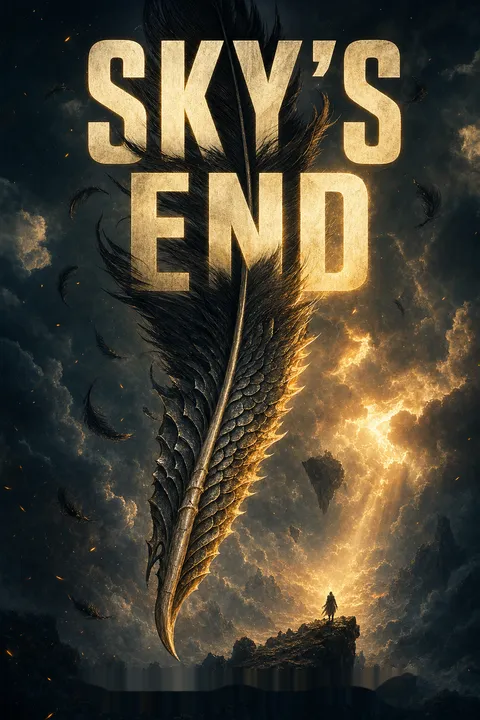
Plot Summary
Crows and Sky-Serpents
In the attic above a rundown tavern, Conrad remembers loss. Once high-born, now he nurses his ailing mother while starved by Holmstead's brutal class system. Sky-serpents, or gorgantauns, haunt their skies—devouring, descending, reminders of the powerful always feeding on the weak. Bitterness twists Conrad as he stares at the Manor that was his birthright, now run by his treacherous Uncle. When his mother's illness turns dire, desperation drives him up through the mountain's levels—risking everything in search of his lost sister, Ella, and any scrap of hope. That night, as snow and danger close in, Conrad's resolve to change their fate hardens. Yet, violence, sorrow, and revenge begin to mark the boy within, setting him on a path entangled with ancient feuds and monstrous threats.
Exile and Vows
Conrad's treacherous climb ends in capture—dragged before Ulrich, his merciless Archduke uncle. Ulrich offers survival, but at a cost: "Enter the Selection, prove your worth for Urwin blood." Refusing, Conrad is condemned, about to be thrown off the floating island when gorgantauns strike. Cities burn. Conrad's family, his only warmth, is razed along with Holmstead's Lows. In the smoking aftermath, guilt and fury intertwine. With his mother's death, a final, haunted lesson is left: "Kindness must endure, even in hell." Keeping her cane and coins as inheritance, Conrad swears a vow—rise by any means, save his sister, and never, ever become the shadow of those who betrayed him. But the lesson's cost is a hard edge in his heart—his kindness, battered to near extinction.
Desperate Struggle in the Lows
After the apocalyptic devastation, Conrad is rebuilt by grief and vengeance. He gambles inheritance in blood-soaked duels, now hardened by hunger and streetwise brutality. As he claws toward the island's heights, scorned by the world above and resented by those below, Conrad both suffers and perpetuates the cycle: sometimes the victim, sometimes the crab in the bucket. Yet as new connections spark—unexpected kindness from old friends and wary encounters with others who have lost—it's clear Conrad's path will twist between empathy and fury. In the shadow of ancient rivalries, and amid fresh wounds, he inches toward redemption—still raw, still unyielding. The city's broken bones echo his own, both aching to heal and to strike back.
The Archduke's Bargain
Ulrich, ever the puppet-master, manipulates Conrad from the shadows. Dangling the keys to power, he forces the "Urwin experiment"—pressuring Conrad into the competing worlds of duel and Selection: prove yourself in the trades, or stay nothing. But rising in Holmstead is rigged—those born high stay high; the rest serve as fodder in an endless meritocratic churn. Shadows lengthen as Ulrich, desperate for heirs and legitimacy, gives Conrad one hope: "Rise and I'll return your sister." Even as hatred curdles in Conrad's veins, he knows—if true power comes, it will be neither granted nor graciously surrendered. The family's legacy is both a weapon and a curse, one that will drive Conrad to either monstrous greatness or annihilation.
Mother's Last Song
Mother's loss is a grave Conrad tumbles into, again and again. Amid her funeral in the bitter sky, compassion wars with rage. A box of secrets—her cane, rare coins—offers both legacy and challenge. Ella's memory, now sacred, propels Conrad, but without Mother's gentling hand, he is left to decide which side of himself survives: her forgiveness, or Father's taste for iron and blood. As island refugees wander and Lows turn vicious, the young man sees clear. He will save Ella—if it means becoming as merciless as the Highs who ruined them. Yet the echo of Mother's song warns: rise too far, lose your soul. And so, Conrad steps forward, half-angel, half-dragon.
The Dueling Arena
The Arena, heart of Holmstead's brutal meritocracy, swells with violence and spectacle. Conrad watches the infamous Atwoods duel, their family's fate on every strike. Ulrich, ever cunning, pulls strings, orchestrating rivals' falls with coin and the threat of public humiliation. Conrad zeros in: dueling offers power—but the rules are theater for the masses, masks for the violence the Highs unleash. Allies and rivals, such as Pound, emerge, each fight fueling feuds that stretch generations. As the crowd cheers and groans, Conrad sees the truth: to rise isn't to win honor—it is to survive, to manipulate, and sometimes, to destroy. And in every duel, the past's blood stains the present's sand.
Selection Day Secrets
Selection Day, the supposed hope for social mobility, is revealed as another game in the sky's cruel hierarchy. Conrad stands among hundreds—Highs, Mids, Lows—each gambling their future, their family's fate for a trade's approval. The risks are lethal: Hunter or Order mean glory, but also death. The system, rotten with nepotism, favoritism, and hidden sabotage, gives Conrad his chance—at the cost of entering a world more treacherous than the Lows. Betrayed alliances, brutal tests, and the looming shadow of his uncle's expectations sculpt the threat: fail, and die forgotten in the sky. Survive, and perhaps win respect from enemies and ghosts alike.
Choices and Betrayals
Training at Venator for the Hunter's Gauntlet brings Conrad face-to-face with deadly lessons. Allies like Bryce and Pound, rivals like Sebastian, Roderick as awkward friend—each form the web of fragile trust and hidden agendas. Training is merciless: real beasts, sabotage, and the endless threat of the Gauntlet cull the weak. Amid battles and betrayals, old wounds resurface. Who among them can truly be trusted? Conrad learns painful truths: victories cost lives, compassion is mistaken for weakness, and the urge to rise can twist hearts into monsters. Yet, even in the darkness, loyalty flickers, and friendships may sometimes save more than ships.
The Hunter's Gauntlet
Conrad's makeshift crew—misfits all, bound by competition and bruised hopes—enters the deadly sky competition. Each role is a test: Captain, Quartermaster, Gunner, Swabbie. Mutiny always a threat, trust must be earned, never assumed. Pound's strength, Keeton's technical brilliance, Roderick's inventions, and Bryce's tenacity clash—and sometimes inspire. Shipboard challenges, midnight sabotage, and the ceaseless threat of gorgantauns forge new scars and alliances. As betrayals emerge, including Sebastian's poison and Bryce's hidden secrets, the true enemy ceases to be the monsters outside—but the cracks within.
Gorgantaun Blood and Steel
The Gauntlet descends into carnage. Conrad leads his crew through impossible hunts—destroying pods, battling monstrous gorgantauns. But victory comes with the taste of heartache: friends die, traitors poison the ranks, and Pound's mistakes nearly cost everything. Each kill leaves fresh wounds, physically and spiritually. Rivals like the Calamus rise, pushing competition to new extremes. Conrad must make impossible decisions—sacrifice for the whole, or cling to friends; risk the many for the one. The hardest lesson emerges: the only way to truly rise may require losing everything he still loves.
Allies Amidst Enemies
Scarred survivors unite beneath the threat of annihilation. Enemies become allies: Pound's rivalry cools into respect; Keeton, once suspicious, swears loyalty after Conrad's sacrifice. Roderick becomes a steadfast brother, his goofy wisdom a salve. But trust is never free—Sebastian schemes, Bryce walks on a knife-edge, and Uncle's invisible hand manipulates from afar. Decisions made in the dark haunt every dawn. The meritocratic dream, so tarnished, is revealed: only together, and only with fragile trust and honesty, can they survive what's coming. The line between friend and traitor blurs, as the Gauntlet nears its bloody end.
Death in the Sand
The Day of Duels and subsequent betrayals shatter the fragile unity of the Hunter crew. Death claims some; mutiny and lies cripple others. Conrad, driven and haunted, is both savior and victim—pain, guilt, and vengeance his only company as leadership's price mounts. Sebastian's real nature is unmasked, sacrifices are demanded, and Captaincy hangs by a thread. Only by risking everything—sometimes even his life—can Conrad hope to save those he loves. Yet each decision to rise brings both him and his comrades closer to moral abyss.
The Price of Leadership
Conrad's cunning, courage, and raw will finally make him Captain—by deed more than decree. But leadership is not reward—it's burden. His decisions cost blood. The fragility of alliances means mutiny is always a heartbeat away. Conrad learns that leading is as much about letting go as taking hold. After heartbreak and desperate hunts, his command is tested anew in the storm of a final, insurmountable enemy: a gorgantaun beyond imagining. Here, the meritocratic game, stripped of artifice, demands its ultimate proof—will Conrad lead by fear or by the battered miracle of trust?
A Ship of Misfits
Scarred, often at odds, but bound by desperate dependence, Conrad's crew becomes something like family: Roderick's devotion, Keeton's hard-earned trust, Pound's loyalty earned through shared pain, and Bryce, forever a riddle between love and betrayal. Their unity is not free—it's carved from agony and loss—yet more genuine than blood. As they battle monstrous foes and internal demons, the unspeakable strength of their shared suffering forges something new. Together they rise and fall, a home built not on class, but on battered authenticity.
Swabbie Schemes
At rock bottom, Conrad uses his Swabbie post—the lowest of lows—to outmaneuver rivals and plot impossible victories. While enemies mock and friends despair, he secretly retools Hunter technology and perfects the skills of humility and sabotage. His gambit yields unthinkable triumph: as the misfit crew's fortunes turn, Conrad demonstrates that true brilliance sometimes hides in servitude, not on thrones. Those who underestimated him become allies—or are left in the dust.
To Rise, to Sacrifice
Conrad, pushed to his limits, ascends to impossible heroism. To take down a monstrous gorgantaun while mortally wounded, he crafts "ridiculous" plans and risks all. He learns—sometimes at Keeton's insistence, sometimes in the blood-stained arena—that rising isn't only about will or violence. It is about sacrifice, about carrying others' burdens, about giving more than he has. The lesson that dominates: there are selfless acts, and in performing them, the price is high but the heart is made whole—if only for a moment.
Beneath the Clouds
Victory in the Gauntlet is short-lived, as Conrad and his crew witness the world's collapse: infiltrators from the Below, monsters engineered for destruction, betrayals reaching to the King himself. Bryce's secrets unravel—the Skylands are not alone, and war with the Below is imminent. Ironside's destruction at the hands of the gigataun proves that ancient rivalries pale next to new apocalypse. Amid chaos and revelation, the only hope lies in unity—and hard-won compassion.
Treachery at Every Turn
Infiltrators within the Trades and at the King's side strike, and Conrad's uncle is nearly killed. The young Hunter must choose between vengeance and mercy, loyalty and justice, seeing family and friendship destroyed or remade. As Sebastian's malicious plotting reaches new lows and betrayal strikes from all corners, Conrad must balance bitterness with hope and rely on a new moral compass forged from both parents' legacies. Enemies become unexpected allies—even as the world falls apart.
Loyalty and Family Reforged
The war's horrors strip away illusion—confronting Conrad with the difference between blood and chosen family. Friendships become sacred: Roderick, Keeton, Pound, Bryce, and ultimately Ella, rescued at last from monster and manipulation. Conrad refuses the "greater" comforts of command, valuing the ragged warmth of fellowship over the cold expanse of power. Some friends depart, some stay; all have become more than survivors—they are proof that rising in this world, truly, means rising together, with or without thrones.
War at Sky's End
The gigataun's devastating attack marks the end of the old world. As the Skylands reel, and the war with the Below begins, Conrad—now Prince, yet still Hunter—confronts the final dilemma: hold power for himself, or fight for all. United with his sister, chosen family intact, and battered but unbroken, Conrad resolves with his friends to keep rising. Whether fortune or fall awaits, they'll face it together. For strength, for love, for the brother's promise. The sky's end is not defeat, but a beginning.
Analysis
Sky's End reimagines classic fantasy tropes—rival families, brutal meritocracy, aerial monsters—as psycho-emotional crucibles for a generation raised on broken promises. The novel's core: systems (Meritocracy, family, class) may promise justice, but more often fuel cycles of violence, loneliness, and self-betrayal. True leadership emerges not through violence or birthright, but from self-sacrifice, earned trust, and an ever-recalibrated sense of the possible. Conrad's journey from exile to Prince, built as often on loss as on triumph, critiques both inherited privilege and empty revolution. In a world where "rising" too often means stepping on corpses, the narrative argues for small acts of mercy as seeds of real change. And in its climax—apocalypse unleashed, friends loyal but not owned, and a world on the brink—the novel insists that love, chosen family, and the courage to question even one's own hard-won truths mark the only path forward. The end of the sky, it argues, is the beginning of the real work.
Review Summary
Characters
Conrad of Elise (Urwin)
Conrad, once heir to an island throne, is shattered by betrayal, exile, and the murder of his family. Psychoanalytically, he battles between the cold discipline of his duelist father and the tender morality of his mother. Initially quick to anger and slow to forgive, Conrad's arc bends toward complexity: every cruelty endured teaches him both cunning and empathy. Relationships (with Ella, Mother, Pound, Bryce, Keeton, Roderick) oscillate between trust and doubt; each friend and foe challenges his definition of family and power. His central drive—to save his sister and not become a monster—leads him to embrace both self-sacrifice and hard-edged ambition, forging a leader whose greatest growth is not in skill, but in heart.
Ulrich (Uncle, King Urwin)
Ulrich dominates the narrative as arch-manipulator and embodiment of "noble" cruelty. Brother-killer, exile-maker, he believes in bloodline destiny ("rising is in our blood") and twists family for personal ambition. Emotionally distant yet occasionally haunted, he oscillates between viewing Conrad as pawn and possible heir. His tools are psychological: control via withholding, offering poisoned gifts, and engineering trials. When war erupts and his own life is imperiled by infiltrators, Ulrich's veneer of control flickers—revealing flickers of pain, regret, and the desperate need for legacy. In psychoanalysis, he is both product and perpetuator of a toxic system—unyielding, yet strangely vulnerable when forced to rely on the nephew he wronged.
Ella (Urwin)
Conrad's little sister, a symbol of his humanity and hope, is the fulcrum of his journey. Separated during childhood, molded by Ulrich to be fierce and tractable, Ella emerges as both survivor and test: is she her brother's kin, or her uncle's creature? Her psychoanalysis reveals trauma's duality: toughened by hardship, yet longing for reconnection. As reunion nears, her reticence and wariness make every gesture of trust precious. Her acceptance of Mother's cane and Conrad's promises symbolize neither innocence nor corruption, but the fragile chance at reclaiming self beyond others' expectations.
Bryce of Damon
Bryce, sharp-tongued and iron-willed, enters first as a mysterious friend and later is revealed as an agent of the Below—her loyalty split between starving people beneath the clouds and reluctant care for Conrad. Psychologically, she is defined by divided loyalties, perpetual exhaustion, and a desperate effort to avert slaughter. Self-recrimination and hope battle within her, especially as her actions blur lines between betrayal, survival, and nascent love. Her journey with Conrad is a study in hard-won trust and the belief that "compassion, not cruelty, wins wars," even as the world's grinding violence contorts everyone into double agents.
Pound of Atwood
Pound is Conrad's former tormentor—a mountain of violence and pride, obsessed with redemption after his family's fall. At first, he exemplifies meritocratic cruelty: bullying the weak, obsessed with power. Yet as captain, strategist, cook, and friend—his loyalty, humility, and even capacity for gentleness surface. Psychoanalytically, Pound is wracked by confusion: he seeks family approval that never comes, then finds meaning in friendship and shared suffering. His loyalty is hard-won, and his farewell laced with both regret and hope. In the end, the boy who was Conrad's nemesis proves the wisdom (and pain) of second chances.
Roderick of Madison
Roderick is the crew's master gunner and comedic relief, undersold on his own skill and more interested in cake and invention than glory. His unshakable optimism, awkward pursuit of Keeton, and refusal to join bitter rivalries mark him as the moral center of the group. Roderick's main arc is rejecting the imperative to rise—proving that true worth can be found outside status. He is fiercely loyal, deeply compassionate, and the glue binding the disparate personalities. Psychoanalysis reveals his resilience: accepting himself as average, he becomes indispensable precisely because he chooses not to act out of ambition or hate.
Keeton of Jonson
Keeton's analytical mind and practical skills make her an anchor of reason on the crew. Initially skeptical of Conrad, she transitions from suspicion to loyalty after he saves her life. Her "life debt" is both a cultural tradition and psychological contract, but her actions (taking up Strategist, Mechanic, friend/romantic partner to Roderick) show voluntary commitment. Keeton's evolution charts the route from mutual distrust to trust—her quick temper matched by deep integrity. She fiercely guards the line between using and being used, and her pragmatic decisions often keep the crew safe when boldness alone would not.
Sebastian of Abel
On the surface, Sebastian is a quiet, self-effacing Mid—hopeless duelist, always the underdog. Beneath, he is the most dangerous snake on the Gladian: master manipulator, master liar, and would-be assassin. His psychoanalysis centers on narcissistic resentment—incapable of true trust or love, he thrives on others' pity and turns it against them. Sebastian's violence is calculated, hidden, his betrayals disguised as accidents or martyrdom. He seeks not only victory in the Gauntlet, but also personal vindication through destruction of others. His real power is breeding paranoia and breaking bonds; even in defeat, he threatens to "ruin you yet."
Ulrich's Mother (Conrad's)
Conrad's mother is the world's lost warmth, her cane and memory guiding his better nature. Although frail and tragic, she embodies the possibility of compassion in the face of endless cruelty. Psychoanalytically, she represents the superego on Conrad's shoulders: her ghost urges him to rise above hatred, to protect Ella, and to measure strength by mercy, not might. Her lessons test Conrad at every turn, and even in death mark the difference between becoming another Ulrich—or forging something new.
Admiral Goerner
Master of Order, Goerner is revealed as spy and agent for the Below, masterminding the catastrophic betrayal from within. His psychoanalytical portrait is chilling: a man who has survived and risen "for his people," convinced that apocalypse is justice. His violence is personal, his ambition limitless; through him, the ancient enmity between sky and earth erupts. Goerner's infiltration, rage, and calculated savagery crescendo in Ironside's destruction, making him less a man than the war's embodied will.
Plot Devices
The Fallen Sky Meritocracy
The world's class system—High, Middle, Low, and the rare Select—structures all ambition, violence, and legitimacy. Dueling, Selection, and trade hierarchy ensure that even apparent mobility is a cycle of violence, keeping those in power afraid and those below desperate. Betrayal is rewarded, loyalty rarely so. This system enables both epic rise and tragic devastation; it demands violence, cunning, and performance, making the psychic cost of "success" a central theme.
Found Family in Ruins
The motif of found family, forged by suffering and survival, works as a counterpoint to both Ulrich's toxic bloodline and the world's demand that only winners are valuable. Trust, once nearly destroyed, is rebuilt—primarily in moments of humility, shared pain, or sacrifice. Yet even this is fragile, perpetually threatened by jealousy, class, and old wounds. The novel never claims such loyalty is easy; it's a choice, fought for anew each crisis.
The Monster's Mouth
The recurring device of hunting, being hunted, and surviving the "monster's mouth" serves as trial and revelation: only by facing both gorgantauns and the predatory hearts of their peers do the characters grow. Battles are set-pieces for character revelation, showing both the limits and power of "perfect" systems, the futility of violence, and the costs of impossible victory. Metaphorically, trials within the monsters' throats—whether islands, ships, or the Assembly—are crucibles for psychological and ethical growth.
Dual Narratives: Compassion vs. Ambition
Conrad's psyche is a battlefield, torn between father's ruthlessness ("chase it to sky's end") and mother's mercy ("be better than the world intends"). These dueling legacies, echoed by rival mentors and friends/foes like Ulrich, Pound, and Keeton, are dramatized at every critical choice—rise at any cost, or save what cannot be recovered by violence? The struggle is relentless and dynamic, providing a moral tension absent from many classic hero's journeys.
Foreshadowing and False Triumph
The arcs of duel, Gauntlet, and Hunter's ascent are regularly undercut by shadow: successes inspire jealousy, victories bring new crises, and every "solidification" of status erodes or upends the next structure. The world's cycles of rise and fall mean no triumph is safe; each leaves bitterness, lost friends, or new monsters behind. The eventual destruction of Ironside is long-foretold, its inevitability lending every celebratory moment a plangent, unresolved note.
Spy and Infiltration Drama
The slow reveal of infiltrators—first minor, then in the King's own circle—reframes the narrative as a war of identity and trust. Careful use of red herrings (Sebastian), unexpected reversals (Bryce's true situation), and carefully-sown doubts blow up the idea that safety, loyalty, or even self-knowledge are stable. Even victories against monsters are pyrrhic if the truest enemies are within.
The Gigataun and Escalation
The unleashing of the gigataun—engineered for world-breaking—both literalizes and metaphorizes the series' central crises: the unchecked rise of power is not only horrific, it is self-destructive. The creature's unstoppable destruction is both product and warning of the world's meritocratic violence—none are immune to the consequences of their ambition. Its emergence marks the end of the old order and points to the need for a new, less brittle, world.
Above the Black Series
Download PDF
Download EPUB
.epub digital book format is ideal for reading ebooks on phones, tablets, and e-readers.








































