
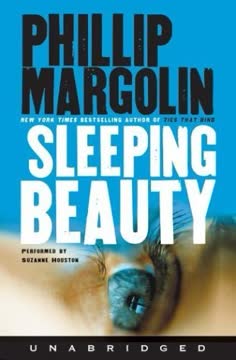

Plot Summary
Prologue
On a book tour in Seattle, attorney turned author Miles Van Meter4 reads to a packed bookstore from his true-crime bestseller, Sleeping Beauty. The book recounts how a serial killer named Joshua Maxfield2 slaughtered teenager Ashley Spencer's1 father11 and best friend,12 attacked Ashley1 herself, and beat Miles's4 twin sister Casey3 into a coma.
The crowd believes they are hearing closure: the monster caught, the survivor avenged, the comatose dean mourned. None of them, and not even the author, know that the case still hides pieces of itself. The opening pages linger on one strange detail, a killer pausing mid-slaughter to eat cake and milk, a clue that will eventually unstitch every comforting truth the audience thinks they hold.
Midnight Intruder, A Father's Gift
Seventeen-year-old Ashley Spencer1 wakes to a masked man dropping her best friend Tanya Jones12 with a stun gun. Bound and groped, Ashley1 lies helpless while Tanya12 is raped and stabbed in the next room. The intruder studies Ashley,1 whispers that he will return, then goes downstairs to raid the refrigerator.
Her father Norman,11 stabbed and dying, drags himself upstairs and saws through her bonds with his pocketknife before his last breath. Ashley1 leaps from a second-story window and runs to a neighbor. Homicide detective Larry Birch7 gently draws out one peculiar fact: the killer ate chocolate cake and milk, then carried the dishes away. Police bury that detail, never imagining how far it will eventually travel.
A Haven Called Oregon Academy
Drowning in guilt and refusing school, Ashley1 is rescued when her reporter mother Terri6 secures a full scholarship from Casey Van Meter,3 the elegant dean who admired Ashley's1 soccer. The pastoral campus becomes sanctuary: Ashley1 coaches children, rooms with teammate Sally, and laughs again.
Terri,6 a devoted fan of novelist Joshua Maxfield,2 joins the writer-in-residence's adult seminar. At the pool, Casey's3 estranged Las Vegas husband Randy Coleman9 seizes her wrist demanding money, and Maxfield2 drops him with effortless martial skill, then jokes about rigging cars.
The flash of violence hurls Ashley1 back into her bedroom, and something in Coleman's9 voice gnaws at her. Recovery and unease twine together as the family settles into a world that feels, deceptively, safe.
The Story That Knew Too Much
At the seminar, Maxfield2 reads from a manuscript narrated by a self-styled god who tortures a family, then pauses mid-slaughter to eat pie and milk from the victims' kitchen. Terri6 nearly vomits, because the detail mirrors the secret only investigators know.
She quietly questions the other students, eliminating each as the author, then confirms with Detective Birch7 that the snack was never made public and that the FBI suspects a serial killer crossing many states.
Torn between pulling Ashley1 from school and destroying a possibly innocent man, Terri6 presses Casey,3 who discloses that Maxfield2 was forced out of Eton College for résumé fraud and propositioning a student. Casey3 agrees to comb his personnel file, and Terri's6 reporter instinct hardens into a private hunt.
Screams From the Boathouse
Casey3 phones Terri,6 breathless, claiming she found something damning in Maxfield's2 file, and arranges a secret meeting at the riverside boathouse. That same evening Ashley,1 out running, glimpses Maxfield2 walking toward the building, then hears two screams.
Peering through a dusty window, she sees him looming over Casey's3 slumped body, a bloodied hunting knife in his fist, with a second figure crumpled nearby. Maxfield2 lunges, and Ashley1 sprints to the dorm and a guard.
Police arrive to carnage: Terri6 stabbed past counting, Casey3 beaten into a coma against a roof beam, and Maxfield2 vanished. In his cabin they discover his serial-killer manuscript, the snack scene typed beneath his name on every page, which the prosecutor will treat as a written confession.
The Courtroom Vanishing Act
Captured in Omaha and extradited, Maxfield2 hires eager attorney Barry Weller15 by dangling a lucrative split of a future book deal. Prosecutor Delilah Wallace8 builds her case on the novel and Ashley's1 eyewitness account, while Detective Tony Marx13 unearths Maxfield's2 brutal foster childhood under his birth name, Joshua Peltz.
At the preliminary hearing, Ashley,1 supported by young lawyer Jerry Philips,5 identifies Maxfield2 from the stand. During a recess in the jury room, Maxfield,2 who resembles Weller15 and trained in the Army Rangers, chokes the lawyer15 unconscious, swaps clothing, and walks out past the guards.
The nation's most notorious killer is loose again, and Ashley1 grasps with cold certainty that he intends to return and finish what he started in her bedroom.
Hunted, Then Gone
That very night Maxfield2 returns to the emptied Academy dormitory, cuts the throats of both police guards, and stalks Ashley1 through the dark halls. She slips outside, hides at the forest's edge, and watches a masked, knife-wielding figure disappear into the gym before she flags down a patrol car.
He eludes the manhunt entirely. Convinced the authorities can never keep her alive, Ashley1 makes a choice that appalls Delilah8 and Birch:7 she has Jerry Philips5 quietly arrange cash and a hidden account, then vanishes to Europe under assumed names.
For five years she drifts through small Italian towns, working odd jobs and playing club soccer, alive but exiled. Meanwhile Miles Van Meter4 writes a bestseller to keep his sister's3 plight, and her killer's name, in the public eye.
The Mother She Never Knew
In a Tuscan hill town, Jerry5 tracks Ashley1 down with staggering news. Henry Van Meter10 has died, and before passing he revealed a buried truth: Casey Van Meter3 is Ashley's1 biological mother.
Long ago, Norman Spencer11 had a summer affair with college-age Casey,3 who concealed the pregnancy and surrendered the baby, after which Norman11 secretly adopted Ashley1 with Jerry's5 father Ken Philips16 negotiating against Henry's10 lawyers. Now Miles4 is seeking guardianship to remove the comatose Casey's3 life support, and only Ashley,1 as daughter, can block him.
Enraged by the lifelong lie yet pierced by her father's11 sacrifice, Ashley1 returns to Portland. At the guardianship hearing, she, Miles,4 and Coleman9 all petition for control, and a judge orders DNA testing and the missing adoption file.
Knife in the Rain
After a tense dinner where Miles4 paints Casey3 as a heartless, dangerous woman and presses Ashley1 to let her die, a car tails Ashley1 through the night. Days later she visits the comatose Casey3 at the Sunny Rest nursing home and reads that the estate is worth forty million dollars.
In the rain-drenched parking lot a hooded figure rushes her with a knife; she kicks him and runs, and Randy Coleman9 tackles the attacker, who is exposed as Joshua Maxfield.2 Both men are arrested while Birch's7 surveillance team admits its view was obscured. Ashley1 fixates on a wrongness: the clumsy assault felt nothing like the lethal, choreographed Maxfield2 she once watched, and Jerry5 reveals that Coleman9 inherits everything if she dies.
Sleeping Beauty Wakes
As Ashley1 and Jerry5 become lovers and she sheds years of dread, an experimental drug achieves the impossible: Casey3 surfaces from her five-year coma. Lucid and sharp, she recognizes Miles,4 recoils from Coleman,9 and is told gently that Ashley1 is the daughter she gave away.
Questioned by Delilah8 and Birch,7 Casey3 reveals that she and Maxfield2 had been secret lovers, that she summoned Terri6 to the boathouse after finding incriminating evidence in his file, and that Joshua Maxfield2 stabbed Terri6 before her eyes. Her account seems to nail the verdict shut. When Ashley1 visits the family mansion, Casey3 offers a cool, conditional friendship, candidly confessing she never wanted or loved her child, though she is willing to try.
The Trial That Buried Maxfield
At trial Ashley1 relives the boathouse, an FBI analyst links Maxfield's2 novel to murders across nine states through matched duct tape and the secret snacks, and Casey3 calmly identifies him.
Defense lawyer Eric Swoboda14 gambles by accusing Coleman,9 then loses control when Maxfield2 insists, against advice, on testifying. Delilah8 dismantles him: she plays the Nebraska interrogation tape, on which Maxfield2 sounds genuinely stunned that his fiction matched the real crime, then springs her trap.
Ashley1 heard a woman cry out seconds before she saw him, so if both victims were already down when he entered, who screamed? Maxfield's2 face confesses the lie. The jury convicts him of aggravated murder and sends him to death row. Ashley1 feels only hollowness.
Three Words Only the Killer Knew
A year on, engaged to Jerry5 and thriving in premed, Ashley1 at last opens Miles's4 Sleeping Beauty. One sentence stops her heart: the intruder whispered that he would see her later before raiding the kitchen. She had buried that memory so deep she never told a soul, never testified to it, never placed it in any report.
Only she and the man in the mask heard those words, yet there they sit in Miles's4 prose. Reviewing the case files with Delilah8 confirms the omission. She also reasons that Maxfield,2 audibly shocked on the interrogation tape, could never have written the snack scene at all. Someone else authored that manuscript, let Maxfield2 take the fall, and rendered her private terror in chilling detail.
Confession on Death Row
Ashley1 confronts Maxfield2 behind death-row glass, and his vanity finally cracks. He admits he never wrote the serial-killer novel but plagiarized it from a manuscript mailed to him anonymously with cash, desperate to reclaim lost fame after a decade of writer's block.
Pride, not guilt, sealed his silence, since admitting he could no longer create felt worse than dying. He swears he did not kill Terri,6 that he found her dead, that Casey3 rose with the knife screaming murderer, and that he struck her in self-defense, cracking her skull on the beam.
He invented the man fleeing the boathouse. The pieces lock together for Ashley:1 the novel's true author is the real killer, and storage records show Miles Van Meter4 once pulled her sealed adoption file.
The Trap in Seattle
Ashley1 walks into Miles's4 Seattle bookstore reading and, before his adoring fans, quotes his own line about the whispered threat, then demands how he could know words she never shared. She lays out the case: Miles4 discovered his dying father10 meant to make Ashley1 an heir, stole the adoption file, and murdered everyone who knew her parentage while framing Maxfield,2 to whom he had sent his boastful novel for editing.
His fingerprints stain the original draft, Maxfield's2 discouraging critique sits in Miles's4 own study, and the FBI has searched his house. His escort, Claire Rolvag, is an undercover agent who snaps on the cuffs. As Miles4 is hauled away threatening her, Ashley1 drives a knee into his groin and clubs him with the hardcover.
The Twin Who Wielded the Knife
One contradiction remains: Miles4 was provably in New York when Terri6 died in the boathouse. At midnight, Delilah,8 Birch,7 and Ashley1 confront Casey3 at the family mansion. They reveal that Miles4 is the framed serial killer and that he has already named his own twin3 as Terri's6 murderer.
Casey,3 who once claimed she watched Coleman9 flee, is trapped when they note that Maxfield2 invented that fleeing man. She killed Terri6 to silence the reporter before police could trace the plagiarized novel back to her brother,4 then screamed to disorient Maxfield.2
Delilah8 exposes a lifetime's incestuous, blood-soaked partnership forged under their father Henry's10 cruelty. Casey3 is arrested, undone by the brother she shielded,4 the same brother who had tried to unplug her himself.
Epilogue
One year later, the framing reverses with savage irony. Joshua Maxfield,2 freed and vindicated, is now the touring author, an insufferable egomaniac signing his death-row novel Caged and his case memoir Framed at the very Seattle store where Miles4 was arrested. Casey,3 having testified against her brother,4 draws life without parole; Miles4 is sentenced to death and faces further charges in multiple states.
Basking in applause he believes confirms his genius, Maxfield2 prepares to begin his next book, except that, as ever, he has no idea whatsoever what to write. The plagiarist2 who escaped execution remains creatively hollow, his fame built on stolen horror, while true-crime culture eagerly crowns its newest celebrity monster, oblivious.
Analysis
Sleeping Beauty is a thriller obsessed with the politics of narrative authority, who gets to tell the story, and how the well-told version overwrites the true one. Margolin structures the novel as nested books and reversed book tours, repeatedly reminding us that the account we trust is authored by someone with motive. The withheld snack detail and the whispered threat function as twin epistemological keys: both turn on the gap between knowing a fact, inventing it, and having lived it. That gap is the moral center. The plagiarist Maxfield2 would rather face execution than admit creative bankruptcy, dying for words he could only steal, while the real predators hide in plain sight precisely because they command the official narrative, the grieving brother4 and the comatose victim,3 society's most unimpeachable figures. The book repeatedly weaponizes sympathy, training the reader to pity exactly the people who least deserve it, a sustained interrogation of how surface respectability and tragic credentials disarm suspicion. Margolin also dissects true-crime culture itself: the appetite for monsters, the profit motive that turns murder into bestsellers, the way fame rewards the loudest storyteller rather than the truthful one, culminating in an epilogue of corrosive irony where a freed fraud is canonized. Beneath the plot machinery runs a meditation on motherhood and family, contrasting Terri's6 unconditional, chosen love against Casey's3 biological coldness, and exposing how a tyrannical patriarch10 can fuse children into something monstrous. Ashley's1 arc, from paralyzed witness to self-authoring investigator, argues that survival requires reclaiming the power to narrate one's own life. The novel's final lesson is that justice is not the triumph of evidence but the stubborn refusal to accept a story merely because it is satisfying, complete, and universally believed.
Review Summary
Sleeping Beauty by Phillip Margolin received mixed reviews, with an average rating of 3.93/5. Readers praised the intriguing plot, unexpected twists, and engaging storytelling. Many found it a fast-paced, entertaining thriller with well-developed characters. However, some criticized the writing style as simplistic and the plot as predictable or convoluted at times. The book's structure, alternating between past and present, was appreciated by some but confusing for others. Overall, it was considered a decent mystery novel, albeit with some flaws in execution.
People Also Read
Characters
Ashley Spencer
Hunted survivor athleteA gifted high-school soccer star whose disciplined body and competitive will become survival tools. Ashley's defining wound is survivor guilt: she lived while her father11 and best friend12 died, and she carries the conviction that safety is an illusion. Trauma makes her hypervigilant, prone to dissociative flashbacks, yet beneath the fear runs a leader's steel that coaches and teammates instinctively follow. Her arc moves from paralysis and self-erasure toward reclaimed agency, as she transforms from passive witness into relentless investigator. Driven by love for the parents who raised her and a fierce moral clarity, she refuses comforting lies. Capable of tenderness with Jerry5 and cold fury toward predators, she embodies the wounded protector who must become her own avenger.
Joshua Maxfield
Disgraced literary wunderkindA one-time celebrated novelist whose debut made him a sensation before a failed follow-up and a decade of writer's block hollowed him out. Charismatic, vain, and physically formidable from years of judo and Ranger training, Maxfield projects effortless charm while privately gnawing on lost glory. Born into horrific abuse under another name, he reinvented himself relentlessly, making identity itself performative. His deepest terror is not death but exposure as a creative fraud, a pride so consuming it distorts his every choice. Teaching writing to teenagers and adults, he seduces with reputation and wit. Margolin renders him an ambiguous figure whose surface menace and self-mythologizing make him perpetually unreadable, a man who would rather be feared than pitied.
Casey Van Meter
Enigmatic academy deanThe elegant, self-possessed dean of the Oregon Academy, daughter of a timber dynasty, who carries herself with chilly sophistication and a swimmer's discipline. Bright and capable, she revived the school under her father's10 exacting eye, yet a turbulent private history shadows her: a reckless Vegas marriage, rumored promiscuity, addiction, and a cruelty that surfaces in intimate relationships. Casey relates to people as instruments or amusements, admiring strength while withholding warmth. Her bond with her twin brother4 is unusually intense, the central relationship of her life. Beautiful and commanding, she inspires fascination rather than affection. Beneath the poised exterior lies someone shaped by a domineering father10 into something brittle, calculating, and emotionally remote, perpetually performing a control she may not feel.
Miles Van Meter
Charming lawyer-author twinCasey's3 twin brother, a polished corporate attorney and, later, a bestselling true-crime author. Impeccably dressed and superficially gracious, Miles presents as the devoted sibling and family steward, fiercely protective of his sister3 and outwardly generous to Ashley1. Raised alongside Casey3 under a tyrannical, often absent father10, he developed a fused, possessive loyalty to his twin3 and a need for control masked as benevolence. He is articulate, persuasive, and acutely image-conscious, prizing reputation and narrative authority. Behind the affable lawyer lurks a capacity for cold calculation and a wounded ego that resents anyone threatening his family's order. Margolin makes him the consummate likable insider whose charm is precisely the instrument of his manipulation, a man who would author other people's realities.
Jerry Philips
Devoted young lawyerThe earnest young attorney who inherited the Spencer family's legal matters from his late father, Ken16. Having lost both parents himself, Jerry approaches Ashley1 with rare empathy, drawn to her by shared grief rather than ambition. Self-conscious, decent, and steadfast, he becomes her anchor, confidant, and eventually her love. He embodies loyalty over self-interest, repeatedly risking his career to protect her, and his scruples about professional ethics underscore his fundamental integrity. Quietly courageous, he grows from cautious advisor into devoted partner.
Terri Spencer
Investigative reporter motherAshley's1 adoptive mother, a wiry, determined newspaper reporter and former distance runner. Widowed by violence, she pours herself into rebuilding her daughter's life while suppressing her own grief, an act of fierce maternal sacrifice. Her professional instincts make her a natural investigator, dogged and skeptical, willing to risk everything once she senses a hidden truth. Warm, literate, and quietly brave, she models the unconditional love that defines true motherhood, the standard against which the novel measures everyone.
Larry Birch
Conscientious homicide detectiveThe lead homicide detective on the Spencer case, an unassuming, deeply humane investigator who looks more like a teacher than a cop. A father himself, Birch takes the case personally and is haunted by his failure to protect Ashley1. Patient, principled, and dogged, he treats victims with tenderness while pursuing killers with quiet relentlessness. His emotional investment and refusal to accept easy answers make him both Ashley's1 protector and a steady moral presence throughout the long investigation.
Delilah Wallace
Formidable death-penalty prosecutorA large, exuberant African-American deputy district attorney who rose from poverty through church choir, sheer work, and an undefeated record in capital cases. Warm and maternal toward Ashley1 yet ferocious in the courtroom, Delilah blends gospel-honed charisma with razor intellect. Her own brother's murder fuels her crusading zeal. She mentors witnesses with humor and tenderness, then dismantles defendants with precision. Beneath the showmanship lies genuine conscience: she ultimately cares more about truth than victory, willing to revisit a closed case when doubt arises.
Randy Coleman
Greedy estranged husbandCasey's3 flashy, disreputable Las Vegas husband, a small-time gambler with mob whispers and a violent record. Married to Casey3 on a drunken whim, he trails her to Oregon chasing her fortune after she files for divorce. Crude, self-serving, and bitter, he poses constantly as victim or hero depending on advantage. His transparent greed and capacity for violence make him a perpetual suspect, a man whose every claim invites distrust.
Henry Van Meter
Dying dynastic patriarchThe aging timber magnate who founded the Oregon Academy, once ruthless and tyrannical, later softened by a near-fatal stroke into religion and conscience. Domineering father to the twins, he ruled his family through sheer will and cruelty. In his final years he develops belated tenderness, mentoring Ashley1 with stoic wisdom about surviving tragedy. His late attempts to right old wrongs set crucial events in motion, the patriarch whose buried decisions echo through every life he touched.
Norman Spencer
Self-sacrificing devoted fatherAshley's1 father, a former gas-station worker who put himself through college to become a beloved junior-high teacher. Earnest, working-class, and profoundly loyal, he built a loving family through quiet sacrifice. His devotion to his daughter1 defines him utterly.
Tanya Jones
Best friend, teammateAshley's1 closest friend and soccer teammate, a bright, joyful honor student sleeping over to celebrate a victory. Her presence anchors Ashley's1 lost world of ordinary happiness, and her fate becomes the wound that haunts every page that follows.
Tony Marx
Veteran detective partnerBirch's7 older, seasoned partner, a chubby, experienced investigator who handles the case's research and evidence. Energetic and shrewd, he digs up the accused's2 hidden history and relishes a strong lead, providing procedural muscle to the investigation.
Eric Swoboda
Court-appointed defense lawyerThe physically imposing attorney appointed to defend Maxfield2 at trial. Pragmatic and clear-eyed about his client's slim odds, he mounts an aggressive, doubt-seeding defense while privately recognizing the case against him as overwhelming.
Barry Weller
Ambitious first attorneyA solo practitioner thrilled to land the notorious case, dazzled by visions of a lucrative book-deal fee. His eagerness and resemblance to his client2 prove costly, marking him as a man undone by his own ambition.
Ken Philips
Crusading idealist lawyerJerry's5 late father, a brilliant, rumpled lawyer famed for civil-rights and antiwar work. Decades earlier he negotiated a delicate secret adoption, an act of quiet decency whose paperwork later becomes pivotal to unraveling the truth.
Plot Devices
The Midnight Snack
Secret signature clueThe killer's habit of pausing mid-murder to eat dessert, chocolate cake and milk at the Spencer home, pie elsewhere, is the single forensic detail police withhold from the public. It serves as the story's epistemological linchpin: only investigators and the murderer know it. When the same act appears in a manuscript, it seemingly brands the writer as the killer. Margolin deploys it first as the FBI's cross-state signature, then as the engine of suspicion, then as the proof a prosecutor weaponizes at trial. Its true significance, that knowing the detail and inventing it are different things, drives the entire plot. The snack is a fingerprint made of behavior, both the trap that frames an innocent and the thread that frees him.
The Serial-Killer Manuscript
False written confessionAn unfinished novel narrating a serial killer's atrocities, found in Maxfield's2 cabin with his name typed on every page and his handwritten notes throughout. Because it contains withheld crime details, prosecutors treat it as a confession. The manuscript dramatizes the dangerous slippage between fiction and reality, the maxim write what you know turned into apparent evidence. Two drafts exist, one polished and one cruder, and the discrepancy between them eventually reveals authorship itself as the real mystery. Margolin uses the book to explore plagiarism, vanity, and how narrative authority can convict the wrong man, while the question of who truly wrote those pages becomes the case's hidden heart and ultimate undoing.
The Secret Adoption
Hidden bloodline bombshellThe buried fact that Ashley1 is the biological child of the comatose dean3, conceived in a long-ago summer affair and adopted in secret through Henry Van Meter's10 lawyers. The revelation reframes the murders as something other than random, tying victim and survivor to a forty-million-dollar estate. It supplies motive, inheritance, and the guardianship battle that pulls Ashley1 out of exile. Margolin uses the adoption file, physically stored and suspiciously missing, as both emotional revelation and concrete evidence, a paper trail whose disappearance points toward the truth. The device transforms a stranger-danger thriller into a family tragedy about lineage, money, and the lethal lengths people go to protect a dynasty's secrets.
The Whispered Threat
Impossible-knowledge unravelerThe phrase the intruder murmured to Ashley1, that he would see her later, a memory she repressed so completely she never told police, never testified to it, never recorded it anywhere. Years later she finds it printed in Miles's4 published account. Because only she and the masked man heard it, its presence on the page is impossible unless the author was in that bedroom. This single sentence is the master key that retroactively reopens a closed, won case. Margolin transforms trauma's faulty memory into the sharpest forensic instrument and makes the act of reading itself the climactic detection. It converts a celebrated bestseller into a self-incriminating document and a survivor into an avenger.
The Book-Tour Frame
Ironic narrative scaffoldingThe recurring Murder for Fun bookstore readings that bracket and interrupt the chronological story, presenting an author promoting a true-crime bestseller. Margolin uses this device to control revelation, letting a confident narrator summarize events while withholding the rot beneath them. The frame lulls the reader into trusting the official version, mirroring the public's appetite for tidy true crime. Its payoff is a structural ambush: the same podium becomes the site of an unmasking, and the epilogue reverses the frame entirely, seating a different author in the spotlight. The recurring setting interrogates how storytelling launders guilt, monetizes tragedy, and crowns celebrity monsters, making the form itself part of the book's argument.
Download PDF
Download EPUB
.epub digital book format is ideal for reading ebooks on phones, tablets, and e-readers.








































