
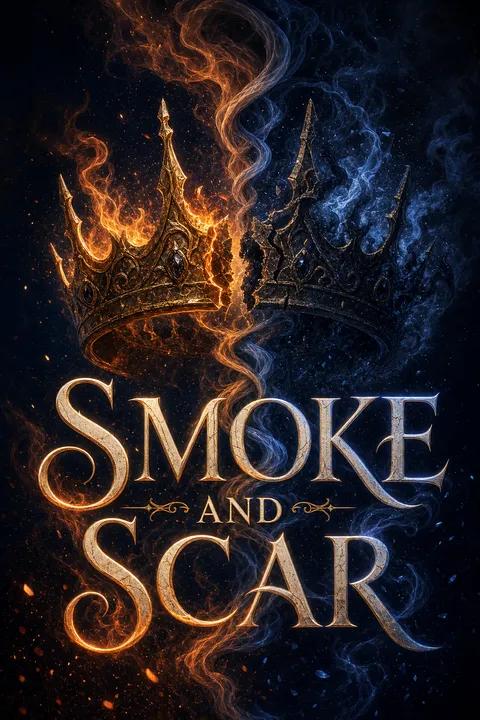


Plot Summary
Prologue
On a storm-lashed tower, Queen Daephinia Nero faces the dark sorcerer Malakar, who has already murdered her human husband, King Juno, and their half-fae infant daughter, then seized the Crown of Concord. Bleeding and nearly spent, Daephinia mocked for feeling human regret, digs out her last magic and forges a bow of golden light.
As Malakar sets the crown upon his brow, her arrow strikes its center. The crown shatters, a tidal wave of radiance swallows sorcerer, queen, and city alike, and Malakar dissolves into splintered shadow. The light is then sucked violently back into Daephinia, tearing her open. This cataclysm, the Shattering, cleaves the continent into three and ends her life on a note that tastes, strangely, bright.
The prologue establishes the mythic wound underlying everything: a union meant to heal two peoples instead detonates into permanent division. Powell Fox frames catastrophe through moral ambiguity, refusing a clean villain. Daephinia is both savior and destroyer, her grief weaponized into geography. Malakar's rhetoric about hoarded magic seeds the book's central grievance, the imbalance between innate Arcanian power and mana-dependent humans. The shattered crown becomes literal and thematic: wholeness sacrificed, power scattered, a debt left unpaid. That the queen's death 'tastes bright' introduces the recurring motif of sacrifice as paradoxical relief, foreshadowing the price the Crucible will later demand of those who dare to reunite what was broken.
The Revenant Cornered
In a Coralith tavern, the drunken fae warrior Elyria Lightbreaker,1 infamous as the Revenant, is hunted by Raefe and other thugs of the crime lord Tartanis. When she resists capture, Raefe pins her to a table and uses his flametouch to sear a precise, humiliating pattern into her thighs, leaving permanent scars.
Artie,15 the gruff dwarven tavern owner, slips her a potted plant; she channels her wildshaper magic through it, erupting vines that string her attackers upside down. City guards intervene, and a guard named Taryn spits a slur at her. Elyria,1 exhausted and provoked, punches Taryn and is knocked unconscious and jailed. Her power, her fame, and her self-loathing all tangle in a single violent night.
The opening refuses the fantasy convention of the effortless legend. Elyria's reputation vastly outsizes her present self: a woman anesthetizing trauma with drink and casual sex. Raefe's branding is sexualized torture disguised as capture, and her refusal to scream marks a survivor's grim discipline. The scars she accidentally seals become a somatic archive of violation she will carry throughout. Crucially, we glimpse a suppressed 'darkness' stirring beneath her wildshaping, a second self she fears more than any enemy. Powell Fox codes prejudice into the world early through slurs and mistrust, situating Elyria as both weaponized icon and vulnerable person, admired and reviled by the same tongues.
A Mother's Desperate Plea
Freed from jail through an unexpected request, Elyria1 is confronted by Duchess Laeliana Ravenswing,14 mother of her dead love, Evander,4 and of Kit.3 Twenty-five years earlier, Evander4 walked through the Crucible's Gate and never returned, and Elyria1 buried her grief in drink and abandoned Kit.3 Now the aurora has bloomed again, signaling a new Crucible, and Kit3 has resolved to enter it.
Laeliana14 pleads with Elyria1 to talk her out of it, unwilling to lose another child. Elyria1 refuses at first, insisting Kit's3 choice is her own, then flies off. But guilt gnaws: she owes Kit,3 and she owes Evander.4 Reluctantly she resolves to chase Kit3 to the Lost City of Luminaria before the Gate opens.
This section reframes Elyria's aimless self-destruction as unprocessed mourning. The Crucible is revealed not as opportunity but as a maw that swallowed her beloved, making the aurora an omen rather than a summons. Laeliana embodies the impossible arithmetic of parental grief, gambling one relationship to preserve another. The estrangement between Elyria and Kit encodes a familiar trauma response: withdrawal from the people who most remind us of loss. Kit's plan, winning the crown to grant her tormented brother peace, introduces the seductive lie that power can undo death, a delusion the narrative will interrogate. Elyria's reluctant pursuit is her first step from paralysis toward agency, driven by debt rather than hope.
The Knight Built for Vengeance
Across the Chasm in Havensreach, Sir Cedric Thorne2 spars and trains under his stern benefactor, Lord Leviathan Church,10 who has groomed him to win the Crucible and secure the crown for humanity. Church10 tutors him in mana tokens, warns him about Arcanian magic, and stokes his hatred of the fae, especially the Revenant,1 whom Cedric2 blames for the childhood night his parents were murdered.
Traveling to Luminaria with guards Hargrave and Thibault, Cedric2 watches Church10 coldly execute captured bandits, lecturing that mercy is weakness. Crossing the vast Chasm bridge, Cedric2 conceals his terror of heights. He arrives believing his cause is righteous, carrying a scar through his lip and a grief he has never truly examined.
Cedric is the mirror of Elyria: a weaponized orphan whose defining wound has been curated into ideology by a father figure. Church functions as an architect of manufactured hatred, converting private trauma into political fuel, a chilling study in radicalization. Cedric's fear of the Chasm literalizes his fear of the void beneath his certainties. His reliance on finite mana tokens versus Arcanian innate magic dramatizes the resource anxiety underpinning human resentment. The scar on his lip is a text he cannot yet read. Powell Fox builds dramatic irony: the reader senses his hatred rests on a misremembered night, priming the eventual collapse of the moral binary he has been taught to defend.
Enemies at the Gate
At the restored grand hall of Castle Lumin, champions gather. Cedric2 collides with a periwinkle-haired fae1 searching the crowd, then watches her argue viciously with Kit,3 whom Elyria1 is still trying to stop from entering. Inserting himself, Cedric2 learns this hellion is the Revenant1 and erupts, accusing her of slaughtering his parents.
Elyria1 mocks him, denying any memory of such a crime. The masked Arbiter9 emerges from the Gate and stuns everyone by declaring that the Crucible demands not just strength but unity, harmony between bitter rivals. Champions scoff. When one human twin tries to stab the flamecaller Gael8 in the back, the Gate itself blasts him across the room, proving the truce magic is lethally enforced.
The confrontation crystallizes the enemies-to-lovers engine: recognition as collision. Cedric's accusation, built on a child's half-memory, meets Elyria's genuine bafflement, planting doubt in the reader about the foundational grievance driving him. The Arbiter's demand for unity weaponizes the book's thesis, forcing sworn enemies into interdependence, a structural refusal of the zero-sum thinking both realms cherish. The champions' scorn reflects entrenched tribalism resisting reconciliation. The Gate's violent enforcement of nonviolence is darkly ironic: peace imposed by threat of death. Powell Fox stages the central tension: can bonds forged under coercion become authentic? The scene converts abstract prophecy into visceral stakes and sets every alliance to come on edge.
Into the Sanctum She Follows
One by one, champions consent to be marked and step through the Gate, including Kit,3 who seals herself off behind a wall of ice so Elyria1 cannot stop her. Moments later, the human mindwielder Brandon Cormac bursts back through, savagely wounded, gasping that beasts fill the trial before dying and bursting into blue flame for leaving the Sanctum.
The Arbiter,9 convulsing, recites a longer prophecy to Elyria1 alone, hinting at sacrifice and betrayed friendship. With Kit3 somewhere inside facing monsters, and nothing left in the world outside, Elyria1 makes the irreversible choice: she steps through the Gate herself, binding her life to the Crucible to protect the woman she failed decades ago.3
This is the point of no return, dramatized as maternal-sisterly devotion overriding self-preservation. Kit's ice wall is a poignant inversion: the person Elyria came to save locks her out, asserting autonomy against a protector who once abandoned her. Cormac's gruesome return establishes the Sanctum's absolute rule and the true lethality ahead, transforming vague dread into evidence. The prophecy's private recitation marks Elyria as chosen and cursed, seeding the theme that fate and choice are entangled. Her decision, framed as having nothing left to lose, reveals how grief can masquerade as courage. Powell Fox closes the first movement by fusing Elyria's redemption arc to literal mortal risk.
Beasts, Dragonfyre, and a Rescue
Inside the arena, champions find their magic sealed and must survive shadow beasts to reach a distant archway. The nocterrian Dissidua Pyr saves Cedric2 from a beast only to attack him for the kill, and is then torn apart by a second creature. Cedric2 chooses compassion, rescuing the small sylvan healer Zephyr5 from spider-like gnarlings, and the two form an unlikely alliance.
Near the exit, a dragon corners Cedric;2 the dwarf Thraigg6 distracts it, but Cedric2 is nearly incinerated. Then Elyria,1 newly arrived, hurls herself between him and the flames, dancing around the dragon with her staff. Together with Kit,3 Thraigg,6 and Zephyr,5 they escape through the archway, twelve champions surviving the first trial.
Stripping magic exposes character beneath power, revealing who chooses cruelty and who chooses mercy under identical desperation. Dissidua's fatal treachery versus Cedric's compassion offers an immediate moral referendum on the Arbiter's unity doctrine, showing collaboration as survival advantage. The dragon rescue delivers the first physical reversal of Cedric and Elyria's hatred: she saves the man who vowed to kill her, before either knows what to do with the debt. Zephyr's introduction as gentle healer builds the ensemble's warmth and dependency. Powell Fox uses the trial to reframe strength itself, not as domination but as the willingness to protect others, quietly dismantling Cedric's inherited creed of ruthless power.
The Boy Who Named a Ghost
The Trial of Spirit pulls each champion into a mirror of golden liquid. To enter, Cedric2 must literally shed his armor, surrendering his defenses. Inside, he relives his childhood: his housemaid Alouette leads him to his family cottage, where masked intruders murder his father and search for something.
His mother, secretly armed, dies protecting a locket and a secret, torn apart by dark shadow magic. Cedric2 watches his six-year-old self, mute with terror, whisper the words that haunted him for decades. He realizes he did not hear the name the Revenant1 that night. He said it, mistaking a shadowy figure for the boogeyman of cautionary tales. His entire vengeance rests on a child's misremembering.
This is the psychological keystone of the novel: the excavation of a false memory that has organized an entire life. By requiring Cedric to remove his armor, the trial makes vulnerability the literal price of truth, a neat externalization of therapeutic confrontation. The revelation that he authored the accusation he blamed on Elyria implicates memory itself as an unreliable narrator, and implicates Church, who never corrected it. The unexplained locket and hunted secret plant future plot threads. Powell Fox reframes trauma not as fixed fact but as story, editable and weaponizable. Cedric's certainties crumble, dismantling the ideological scaffolding that made him a champion of hatred and opening space for transformation.
Elyria Claims Her Darkness
Elyria's1 trial hurls her back to the Battle of Luminaria: she fights Malakar's blood-mage cultists, is killed, and then, at the instant the shattered crown's light washed the battlefield, is dragged back to life. That same power poured a hunger of shadow into her, making her a nightwielder who once slaughtered indiscriminately.
For two centuries she caged this darkness in fear. Now, in the void, she stops running and accepts it: the shadow is not her enemy but herself, hers to command. Emerging whole and balanced, she hears Cedric2 and finds him curled in his burning cottage. She plunges her hand into flame, singing, wrapping him in cooling shadow, and pulls him out. A fragile truce is born.
Elyria's arc completes its inversion of Cedric's: where he discovers his hatred was built on a lie, she discovers her self-hatred was built on refusal. Integration, not exorcism, is her healing; the darkness ceases to be a monster the moment she claims ownership. This is a sophisticated model of trauma recovery, reconciling the parts of self we exile. Her resurrection ties her personally to the crown's celestial power, foreshadowing later miracles. Rescuing Cedric from his own memory inverts the dragon rescue, now emotional rather than physical, and cements reciprocity. The truce, born through mutual witnessing of each other's worst nights, transforms enmity into the intimacy of shared woundedness.
Blood, Unity, and the Wall
Between trials, tensions simmer: the human bigots Belien13 and Leona12 hurl slurs at Zephyr5 and Elyria,1 and Elyria's1 shadow briefly throttles Belien13 before Cedric2 calms her. A moonlit corridor encounter nearly ends in a kiss before Elyria1 flees. Then the Trial of Magic transforms a sunlit meadow into an impenetrable labyrinth of roots that no champion can breach alone; a fire ward even grounds those with wings.
Realizing the Arbiter's9 endless refrain, unity is the key, Elyria1 has the champions each bleed a drop into her palm, merging their magic. Glowing with combined power, she unwinds the thorny wall into an archway. Only Belien13 and Leona12 refuse to contribute, sneering from the sidelines.
The blood merge literalizes the book's thesis, cooperation as the only viable magic, and rewards the champions who have chosen fellowship over faction. Elyria glowing as a living aurora visually rhymes her with the celestial power, foreshadowing her worthiness. The near-kiss and its interruption sustain the romantic slow burn while showing Elyria still fleeing intimacy, guilt over Evander tethering her to the past. Belien and Leona's refusal is not merely villainy but a case study in how bigotry sabotages self-interest, choosing purity over survival. Powell Fox constructs the labyrinth as an argument: division is a wall, and only shared vulnerability, symbolized by mingled blood, can open the way through.
Cheaters, Chasms, and a Severed Wing
Belien13 and Leona12 bolt into the labyrinth alone. When Elyria1 lashes a shadow blade at Leona,12 Belien13 deflects it, and the errant strike shears off Gael's8 wing, maiming the once-fiery flamecaller. Chasing them through shifting, iridescent tunnels, the champions learn Leona12 is a hidden sage whose telepathy nearly melts their minds; a rift then opens and swallows Leona12 to her death.
Grief-mad, Belien13 slices his own arm and unleashes blood magic, hurling a bolt that strikes Cedric2 in the heart and flings him against the wall. Certain he is dying, Elyria1 seizes an invisible thread binding her to him and refuses to let go, then drops the raving Belien13 into the chasm.
The labyrinth punishes disunity with escalating carnage, dramatizing how one act of treachery cascades into collective loss, Gael's maiming being collateral of Elyria's own shadow, complicating any clean heroism. Leona's concealed telepathy pays off earlier hints of her uncanny knowingness, rewarding attentive readers. Belien's turn to blood magic literalizes grief metastasizing into self-destruction, echoing Malakar's origin and warning that vengeance corrupts its host. Most significant is the golden thread: Elyria's refusal to release Cedric introduces a mystical bond that will govern the climax, and marks the moment their connection becomes a life-sustaining force. The chasm becomes the maze's judgment, consuming those who chose division over concord.
The Man Made of Fire
Facing a lake of fire, Elyria1 hauls sheets of obsidian into a bridge, drawing on Cedric's2 mana to breach the stone's magical resistance. Crossing, they battle a fyre wyrm; they behead it, only for it to resurrect with three heads. The stormbender Cyren11 is devoured, and Elyria's1 shadow, amplified by the obsidian, explodes and knocks Cedric2 into the flames.
As Gael,8 hollowed by grief, immolates herself to burn the wyrm from within, both dying together, Cedric2 crawls out of the fire unburned. Later, overwhelmed by survivor's guilt and self-doubt, he combusts, white-gold flame erupting from his own body. Elyria1 wraps him in cooling shadow until the inferno subsides, revealing he has always carried hidden fire.
Cedric's combustion reframes his entire identity: the mana-token knight who scorned innate magic is himself something other, a fire-born being, likely mixedborn given his mother's phoenix endearment and secret. This dissolves the human-Arcanian binary in his very blood, the book's most personal argument against tribal purity. Gael's suicidal immolation is a devastating study of grief that survives the will to live, her fire finally finding a worthy target. Elyria dousing his flame with shadow completes their elemental symbiosis, fire and darkness, sun and shadow, each incomplete without the other. The scene stages self-hatred as literal self-immolation and love as the force that contains, rather than extinguishes, the frightening self.
The Impossible Reunion
As the exhausted survivors recover, a figure steps from the shadows: Evander Ravenswing,4 Elyria's1 love and Kit's3 brother, lost to the last Crucible twenty-five years ago. He claims he survived, trapped and alone, waiting for rescue. But his charm rings false, and his answers are too smooth.
When Kit3 weeps that they will free everyone, Evander4 suddenly drives a darksteel blade through her back. His skin blackens, veins spider across his face, and his golden wings crumble to ash, revealing a creature corrupted by dark magic. In the ensuing battle he shatters Thraigg's6 arm, wounds Nox,7 and hurls Zephyr5 into a wall, laughing as he tears the group apart.
The reunion detonates the novel's cruelest reversal: hope itself becomes the weapon. Evander embodies the prophecy's betrayed friendship, and his corruption literalizes how a beloved can be hollowed into an instrument of the enemy. For Elyria, his return reopens the central wound of the book, briefly resurrecting a fantasy she must then watch defiled. The stabbing of Kit, the very person Elyria entered the Crucible to save, raises the stakes to their emotional maximum. Powell Fox weaponizes wish-fulfillment, exposing the danger of clinging to the dead. The scene interrogates grief's vulnerability to manipulation: those desperate to believe their loved ones can return are the easiest to deceive.
The Warden Unmasked
Cornered, corrupted Evander4 confesses: the sanguinagi cult leader Varyth Malchior,16 descendant of Malakar, escaped the previous Crucible by using Evander's4 life-debt, planting dark magic in him and leaving him as a hidden watchdog. Evander4 admits he blocked the Arbiter9 and manipulated the labyrinth.
When he tries to drown Cedric2 in a sphere of water, Elyria1 forges a blade of pure shadow and drives it through Evander's4 heart; with his last breath, the true Evander4 returns, apologizes to Kit,3 and thanks her. The Arbiter9 then reveals herself as Aurelia,9 the banished celestial Guardian of Balance, bound to the Sanctum, and recounts the origin of the crown she forged for the lost mixedborn princess, Selenae.
Mercy killing as final act of love: Elyria must destroy what she most wanted back, a brutal completion of her grief arc that transforms passivity into agonized agency. Evander's confession retrofits the trials with sinister intentionality, exposing the Crucible as compromised terrain and Varyth Malchior as the shadow architect. Aurelia's unmasking recontextualizes the entire ordeal: the impartial overseer is herself a prisoner and a repentant meddler whose past interference birthed Malakar. The origin story of Selenae, the crown forged for a child meant to embody harmony, reframes the Shattering as a chain of well-intentioned choices curdling into catastrophe. Powell Fox insists that no atrocity has a single author, only accumulated grief and ambition.
A Life for a Life
Aurelia9 sends Elyria1 and Cedric2 down a long corridor to the Trial of Concord, an empty amphitheater holding not a crown but a single jeweled dagger. The final test, she reveals, is sacrifice: two proved worthy, but only one may claim the prize, and the other must willingly die.
Realizing this is where all before them failed, Elyria1 and Cedric2 each fight to be the one who dies, wrestling over the blade. Cedric2 argues that Elyria1 must live to unite the crown, seal the Chasms, and destroy its power. Then he kisses her, deep and desperate, and while she is lost in it, he plunges the dagger into his own heart and dies in her arms.
The trial exposes the crown's true cost, love measured by the willingness to be unmade for another. That the reward is a dagger, not a diadem, is the book's sharpest thematic pivot: power is inseparable from loss. The lovers' inverted struggle, each fighting to sacrifice themselves, is the ultimate proof of the bond the Crucible required, turning the enemies-to-lovers arc into mutual martyrdom. Cedric's kiss as concealment of his suicide is both tender and manipulative, a final assertion of the self-worthlessness he has battled all along, choosing to die for meaning he never believed he deserved. Powell Fox stages devotion as the only currency the celestial forge will accept.
The Crown's Price and the Thief
Refusing to accept his death, Elyria1 grasps the half-crown; celestial power floods her, and she uses a final flicker of Cedric's2 light, still tethered to her, to drag him back to life, a miracle only the crown's altered magic makes possible. Aurelia9 reveals the prize is only half the Crown of Concord; the other half went with Princess Selenae, who survived and vanished decades ago.
Returning through the Gate to a crowd celebrating their victory, the champions are ambushed when Zephyr5 slashes Elyria's1 hand, seizes the half-crown, transforms into an eagle, and flees. The gentle healer was a shapeshifter all along, serving Varyth Malchior,16 and had deliberately kept the others weak.
Elyria's resurrection of Cedric completes the reciprocity that has structured their bond, she who was resurrected by the crown now wields it to resurrect, closing a generational loop of celestial mercy. But the half-crown deflates triumph into unfinished quest, and Zephyr's betrayal delivers the prophecy's final promise, friendship betrayed, retroactively poisoning every kindness the group cherished. That the most nurturing member was the deepest deceiver is Powell Fox's darkest lesson about trust in wartime: care can be camouflage. The reveal that Selenae lives reframes the entire mythology, the prophesied bringer of balance is not dead but hidden, transforming a closed tragedy into an open hunt and setting the trilogy's engine running.
Parted Roads, a New Hunt
With Kit3 dying and the crown stolen, Elyria1 and Cedric2 part: she carries the wounded Kit3 home to Aerithia, while he returns to Havensreach to report the truth and pursue Varyth Malchior.16 Aurelia,9 still bound to the Sanctum until the One True Crown is reunited, warns that darkness is only beginning. Eight weeks pass.
A fragile, mistrustful peace forms between the two kingdoms, both secretly hoping to claim the crown's power. Restless and grieving the severed bond she can no longer feel, Elyria1 roams the streets until Thraigg6 and Nox7 arrive, summoned by a recovered Kit,3 ready to help. With renewed purpose, Elyria1 sets out to hunt Zephyr,5 Malchior,16 and the missing crown.
The denouement resists romantic resolution, geographically severing the lovers to honor the political reality their union cannot yet overcome. Elyria's inability to feel the golden thread dramatizes love as phantom limb, present in absence. The uneasy interkingdom truce is deliberately hollow, each realm's cooperation masking predatory ambition, a sober rejection of easy reconciliation. Aurelia's continued imprisonment keeps the cosmic stakes unresolved. The reassembly of the surviving fellowship, Elyria, Kit, Thraigg, Nox, reframes found family as the true prize salvaged from the Crucible. Powell Fox closes on forward motion rather than closure, converting a story of grief and survival into the opening gambit of a larger war for the realm's soul.
Epilogue
In a firelit study, Lord Leviathan Church10 summons Cedric,2 probes what the knight is hiding, and dispatches him on further searches for the missing crown-half. Once alone, Church slices his own arm and smears blood across a mirror, revealing a hidden compartment stocked with darksteel, mana tokens, and gold.
Nestled among them sits one half of the Crown of Concord, the very piece Zephyr5 stole. He traces its jagged edges, savoring how close he now stands to his goal. As satisfaction cracks his composure, he lets his true self surface. The benefactor who raised Cedric2 to hate the Revenant1 is Varyth Malchior,16 and he whispers that soon all Arcanis will kneel.
The epilogue delivers the ultimate architectural reveal: the mentor is the monster, and Cedric's entire life, his hatred, his training, his supposed destiny, has been engineered by the enemy he was told to fight. This recasts every earlier lesson in ruthlessness as grooming, and the manufactured accusation against Elyria as deliberate misdirection. Church-as-Malchior weaponizes blood magic in secret while performing noble stewardship, embodying the banality of villainy dressed as guardianship. Possession of the stolen half-crown confirms Zephyr's true master and collapses the book's mysteries into a single malevolent design. Powell Fox ends on dramatic irony at maximum voltage: the hero's greatest threat has always been the hand that fed him.
Analysis
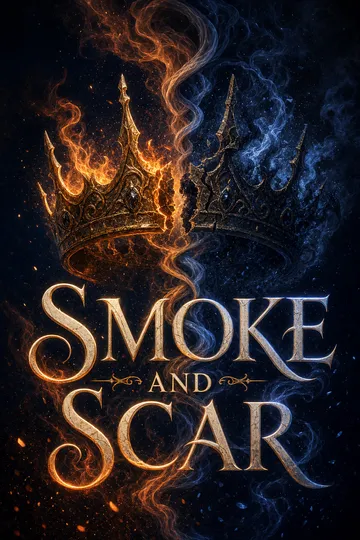
Smoke and Scar wears the costume of a tournament romantasy but is fundamentally a study of manufactured hatred and the labor of unlearning it. Powell Fox builds two mirrored orphans of violence, Elyria1 the reviled Revenant and Cedric2 the vengeance-groomed knight, and slowly demonstrates that each has organized an entire identity around a distorted story. Cedric's2 revelation that he, not the Revenant,1 whispered the name that haunted him is the book's thesis in miniature: grief is editable, and those who edit it, like Lord Church,10 wield it as a weapon. The novel repeatedly stages prejudice not as abstract evil but as a self-sabotaging habit, dramatized by bigots who refuse cooperation and die for their purity. Against this, the Arbiter's9 insistence on unity functions as both plot mechanic and ethical argument: survival, and eventually love, require the vulnerability of mingled blood and shared witness. The trials externalize psychological work with unusual literalness. Cedric2 must remove his armor to face truth; Elyria1 must stop exiling her darkness and claim it as self rather than monster, a sophisticated model of trauma integration over suppression. The recurring imagery, fire contained by shadow, sun answered by night, insists that opposing forces complete rather than cancel one another. Yet the book resists sentimentality. Its climax makes power inseparable from sacrifice, its most nurturing character the deepest traitor, and its mentor the ultimate enemy, refusing easy trust in wartime. The final movement withholds romantic and political resolution alike, severing the lovers and leaving the crown broken, the celestial imprisoned,9 and peace hollow. Powell Fox's lasting argument is that reconciliation is not an event but ongoing labor, and that the stories we inherit about our enemies deserve interrogation before they become the reasons we kill.
Review Summary
Smoke and Scar has received overwhelmingly positive reviews, with readers praising its unique world-building, complex characters, and thrilling plot. Many appreciated the role reversal between the female and male protagonists, with Elyria as the powerful "shadow mommy" and Cedric as the human knight. The slow-burn romance and found family trope were widely enjoyed. Readers were captivated by the deadly trials, unexpected twists, and diverse representation. While some found pacing issues or wanted more romance, most eagerly anticipate the sequel.
People Also Read
Characters
Elyria Lightbreaker
The legendary RevenantA fae warrior of two hundred and sixty years, famed as the Revenant for wartime slaughter she never chose to celebrate. Elyria masks bottomless grief with sarcasm, cider, and casual escapism, having abandoned her found family after losing her love, Evander4. A wildshaper who commands nature, she also harbors a buried nightwielding darkness she has spent centuries fearing and caging. Fiercely protective, quick to violence, and allergic to vulnerability, she keeps her wings cloaked and her wounds hidden. Her arc turns on learning to integrate rather than exile her power, and to accept care rather than flee it. Beneath the swagger lives a woman convinced she is a monster, terrified that everyone she loves will pay for it.
Cedric Thorne
Human champion knightA twenty-eight-year-old knight of Havensreach, orphaned at six when masked intruders murdered his parents, an event that forged his hatred of Arcanians and the Revenant1 especially. Raised and trained by Lord Church10, Cedric is disciplined, dutifully stoic, and privately tormented by self-doubt and a bleeding heart he struggles to suppress. He wields magic through a mana token and secretly fears heights and his own inadequacy. Honor-bound yet increasingly unable to reconcile his inherited creed with what he witnesses, Cedric is a man whose certainties dissolve as he confronts the gap between memory and truth. His journey is one of unlearning manufactured hatred and discovering he may be something other than he was told.
Kit (Katerina Ravenswing)
Elyria's estranged sister-friendA mercurial, free-spirited fae tideweaver, sister to Evander4 and daughter of Duchess Laeliana14. Kit enters the Crucible convinced that winning the crown will free her brother's4 tormented spirit, driven by nightmares of his suffering. Once inseparable from Elyria1, she was left to grieve alone when Elyria1 vanished into drink, and their reunion is barbed with old hurt. Warm, stubborn, and braver than her mother14 believes, Kit refuses to be protected into passivity. Her presence is the emotional anchor pulling Elyria1 back toward love and responsibility, and her willfulness both endangers and redeems the women's fractured bond.
Evander Ravenswing
Elyria's lost loveKit's3 older brother and Elyria's1 beloved, a golden-eyed fae who entered the last Crucible twenty-five years ago and never returned. In memory he is warm, patient, and devoted, the one person who accepted Elyria's1 darkness without flinching and vowed to help her find peace. His disappearance is the grief that shattered Elyria's1 life and estranged her from Kit3. He looms over the narrative as both cherished ghost and unfinished wound, the reason two women risk everything inside the Sanctum.
Zephyr
Gentle sylvan healerA small, soft-spoken sylvan champion skilled in herbalism and curative magic, armed with a belt of foul-smelling salves and vials. Quick to help and quicker to endure slurs without retaliation, she becomes Cedric's2 first ally and the group's tender caretaker. Her unassuming presence and healing hands make her seem the least threatening champion, a fragile figure who repeatedly puts others before herself and asks little in return.
Thraigg Ironfist
Gruff dwarven warriorA stout, hammer-wielding dwarven champion blessed with stone sense, able to feel and hear rock. Crass, hearty, and unexpectedly loyal, he helps Cedric2 against the dragon out of a felt call to unity rather than charity. His blunt humor and no-nonsense grit make him the fellowship's steady backbone, and his fondness for drink is matched only by his reliability in a fight.
Tenebris Nox
Enigmatic shadow-wielderA tall, horned nocterrian champion with indigo skin and the ability to shadowstep and hide within darkness. Genderless, watchful, and perpetually amused, Nox is fascinated by Elyria's1 nightwielding, having sensed her power since a shared jail cell in Coralith. Part spy, part scholar of shadow, they observe more than they reveal, offering cryptic guidance and quiet loyalty while keeping their own motives shrouded.
Gael Winters
Sharp-tongued flamecallerA wine-haired fae flamecaller with a quick wit and a fierce loyalty to her friend Cyren11 and companion Paelin. Impervious to fire and unafraid to mock human bigots, she brings biting humor to the fellowship. Her name amuses Elyria1, a flamecaller called Winters, and beneath the jokes lies a warrior whose grief can burn as hot as her magic.
Aurelia (The Arbiter)
The Crucible's masked overseerThe white-robed, many-voiced Arbiter who presides over the Arcane Crucible, marking champions and enforcing its brutal rules. Behind the hood lies a diminished celestial with skin like the night sky, bound to the Sanctum and forever preaching that unity is the key. Sorrowful, powerful, and burdened by ancient regret, she is both judge and prisoner of the trials she oversees.
Lord Leviathan Church
Cedric's stern benefactorThe cane-carrying nobleman who took Cedric2 in as a ward and trained him for the Crucible, tutoring him in mana magic and stoking his hatred of Arcanians. Cold, calculating, and fond of proclaiming that mercy is weakness, Church wields power with unsettling ease and expects absolute discipline. A guessing-game of a man, he is never quite as transparent as his measured, fatherly authority suggests.
Cyren Tenrider
Flirtatious stormbenderA cobalt-haired fae stormbender, endlessly flirtatious and quick with a wink, especially toward Elyria1. Loyal to Gael8, he brings levity and wind magic to the fellowship, sheltering allies with gusts and jokes in equal measure.
Leona Blackwood
Haughty human sorcererA powerful, sneering human sorcerer who leads the bigoted human contingent, contemptuous of Arcanians and dismissive of the Arbiter's9 calls for unity. Ruthless and secretive, she harbors abilities she reveals only when cornered.
Belien Larkin
Vengeful human twinA red-haired human sorcerer whose twin sister Belis fails the first trial, leaving him bitter and cruel. Prone to slurs and impulsive violence, his grief curdles into recklessness that endangers everyone around him.
Laeliana Ravenswing
Grieving fae duchessThe statuesque Duchess of Aerithia, mother to Evander4 and Kit3, who begs Elyria1 to stop Kit3 from entering the Crucible rather than lose another child. Graceful, storm-wielding, and desperate, she sets Elyria's1 journey in motion.
Artie (Artemicion Bonejaw)
Crotchety tavern ownerThe gruff dwarven proprietor of The Sweltering Pig in Coralith, forever scolding Elyria1 for the wreckage she brings, yet secretly fond of her. He slips her the plant that turns the tavern brawl in her favor.
Varyth Malchior
Shadowy cult sorcererThe sanguinagi leader of the Cult of Malakar, rumored to descend from the dark sorcerer himself. A blood mage whose reach extends across both Chasms, he is the unseen hand whispered to threaten the realm, coveting the crown's celestial power for his own ends.
Tristan Hale
Cedric's loyal friendA scarred, good-humored knight and Cedric's2 closest friend in Havensreach, whose easy jokes about brooding balance Cedric's2 gravity. His unexpected loyalty offers Cedric2 warmth apart from Church's10 cold tutelage.
Plot Devices
The Arcane Crucible
Deadly trial gauntletA century-old contest held whenever the aurora blooms, drawing champions from human and Arcanian realms to the Celestial Sanctum beyond the Gate. Champions are marked and bound; leaving before completion means death. The Crucible unfolds as escalating trials, Strength, Spirit, Magic, and Concord, that strip magic, conjure beasts, resurrect memories, and demand cooperation. Its magic warps time, night, and space, and its central, relentless commandment is that unity, not domination, is required to win. Powell Fox uses the Crucible as both plot engine and moral crucible, forcing sworn enemies into interdependence and testing whether coerced alliance can become genuine bond. It is a machine designed to expose character under maximum pressure.
The Crown of Concord
Coveted celestial artifactA crown forged by the banished celestial Aurelia9, fusing her own power with magic drawn from both peoples, intended for the mixedborn princess prophesied to unite Arcanis. Shattered during the queen's final battle with Malakar, its unleashed power split the continent into three. Both kingdoms crave it, believing whoever claims it can reclaim the Midlands or reshape the realm. Throughout the story it functions as the ultimate MacGuffin, the prize that lures champions to their deaths, but Powell Fox complicates it: its power demands terrible sacrifice, and possessing it may doom more than it heals. It embodies the seductive lie that concentrated power can mend what division has broken.
The Prophecy
Cryptic fate-mapAn ancient verse granted to oracles and seers, foretelling champions forged in the Crucible who face strength, spirit, magic, and concord to reclaim the crown and either heal the realm or cast it into night. Different versions circulate, human and Arcanian, and Aurelia9 recites a fuller, darker rendering that warns of sacrifice, darkness, and friendship betrayed. The discrepancies between versions signal manipulation and lost truth. Powell Fox uses the prophecy as a scaffolding readers can track against events, each ominous line, two bloods shall find their way, heartbreaking ends, betrayal, paying off in specific plot turns. It frames the tension between predestination and choice that drives the protagonists' agony.
The Golden Thread
Mystic soul-bondAn invisible tether Elyria1 feels behind her ribs, drawing her repeatedly toward Cedric2 across the trials, warm and insistent, tugging taut in danger and slack in loss. Neither fully understands its origin, whether forged in the Trial of Spirit or placed by fate, but it lets Elyria1 sense his life and even pull him back from the brink. Powell Fox uses the thread to externalize the enemies-to-lovers bond, making the abstract pull of attraction and destiny into a tangible, plot-consequential force. Its fraying and snapping mark the emotional climax, and its persistence beyond death raises the story's deepest questions about connection, worthiness, and whether love can outlast the body.
Mana Tokens vs Innate Magic
Worldbuilding power divideHumans channel finite magic through charged tokens, amulets that must be replenished, while Arcanians wield magic innately, as easily as breath. This asymmetry underlies the entire conflict: humans resent Arcanian abundance, covet the mana-rich Midlands, and justify encroachment as survival. Powell Fox threads the divide through every encounter, from Cedric2 conserving his depleting token to fae flaunting effortless power, dramatizing resource scarcity as the engine of prejudice. Within the trials, the sudden sealing of all magic exposes character beneath power. The system also seeds mystery: hints that Cedric's2 magic behaves oddly, and that blood itself can be wielded, complicate the tidy human-Arcanian binary the world's bigotry depends upon.
Shattered Crown Series
Download PDF
Download EPUB
.epub digital book format is ideal for reading ebooks on phones, tablets, and e-readers.








































