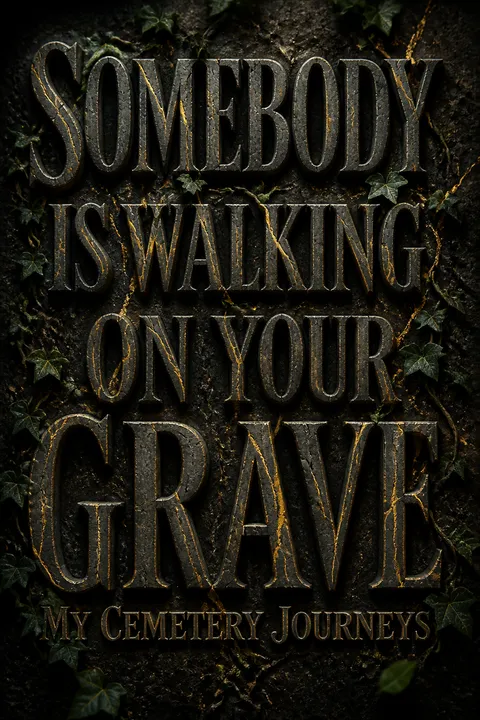
Key Takeaways
1. Cemeteries are spaces where Eros and Thanatos intimately intertwine
So many sculptures here are more than suggestive; there is so much necrophilia.
Sensual grief. In monumental cemeteries like Staglieno in Genoa, death is not merely a somber transition but a highly charged, erotic experience. Sculptures depict lovers sharing a final, passionate kiss, or half-naked women draped over tombs in poses of ecstasy that blur the line between pain and pleasure.
The physical connection. This intersection of sex and death is not just carved in marble; it manifests in the physical actions of the living. The author recounts intimate encounters in these silent, suffocating spaces, where the coldness of the statues contrasts sharply with the heat of youth.
Eroticized monuments. Examples of this provocative aesthetic include:
- The Delmas tomb, featuring a naked woman supported by her lover in a final embrace.
- The Oneto grave's androgynous, highly sensual angel wrapped in transparent robes.
- The Burrano tomb, depicting a woman abandoned in an erotic, arched pose of pleasure or death.
2. Graveyards preserve the suppressed, dark histories of state violence and colonization
This event filled my heart with anguish and sorrow, and I felt useless, I felt I could do nothing to relieve his hunger, his lack of liberty, his exile, his eternal banishment after having been lord and master of the Patagonian reaches, now confined to this small space […].
Unmarked atrocities. Beneath the manicured lawns of tourist destinations lie the forgotten victims of historical atrocities. From the mass graves of Aboriginal prisoners on Rottnest Island to the extermination of the Selk'nam in Patagonia, cemeteries hold the physical evidence of state-sponsored violence and colonial cruelty.
The architecture of confinement. These sites often repurpose former prisons or concentration camps, attempting to sanitize history for modern visitors. The physical layout of these burial grounds reflects the power dynamics of the past, where the conquerors receive grand monuments while the conquered are relegated to unmarked, collective earth.
Suppressed histories include:
- The Aboriginal Burial Ground on Rottnest Island, where hundreds of indigenous prisoners lie under a simple, easily missed sign.
- The José Menéndez mausoleum in Punta Arenas, a grand monument to a man complicit in the genocide of the Selk'nam people.
- The Untouchable Zone on Martín García Island, which hides the mass graves of indigenous people infected with smallpox during the Conquest of the Desert.
3. The aestheticization of grief reflects a society's changing relationship with mortality
Soon it will be said of you what is now said of us: They died!!
The evolution of mourning. The transition from the chaotic, pestilential mass graves of the Middle Ages to the highly structured, park-like cemeteries of the Victorian era reflects a profound shift in how humanity copes with death. Rather than hiding the dead, nineteenth-century societies built grand "cities of the dead" to display their wealth, status, and grief.
Sanitizing the end. This architectural evolution was driven by both hygiene and ego. As cities grew, the stench of decaying bodies in parish churchyards forced the creation of suburban necropolises, which were designed as beautiful, secure gardens where families could promenade and admire elaborate monuments.
Key architectural shifts:
- The creation of the Magnificent Seven in London to prevent grave robbing and manage urban sanitation.
- The Egyptian Avenue and Circle of Lebanon in Highgate, which capitalized on the Victorian obsession with Egyptology and exotic mourning.
- The oven crypts of New Orleans, designed to accelerate decomposition in a swampy, waterlogged environment.
4. Personal nostalgia and cultural pilgrimages transform graves into living shrines
Close to our hearts he will always stay loved and remembered every day.
Living connections. For many visitors, a cemetery is not a place of historical curiosity but a site of deeply personal pilgrimage. Fans of rock stars, writers, and political figures travel thousands of miles to leave offerings, transforming cold stone monuments into vibrant, living shrines that bridge the gap between generations.
The currency of devotion. These pilgrimages are marked by the leaving of highly specific, personal tokens that reflect the deceased's life or the fan's devotion. From beers left for rock stars to pens left for writers, these offerings show that the dead remain active participants in the cultural imagination.
Notable cultural shrines:
- Bon Scott's modest plaque in Fremantle, where fans gather to drink a beer and burn "hell dollars."
- Karl Marx's monumental bust in Highgate, a site of political pilgrimage and occasional, passionate vandalism.
- Serge Gainsbourg's colorful grave in Montparnasse, covered in photos, flowers, and cigarettes.
5. The mystery of death is often preserved through local folklore and unexplained phenomena
The problem—the frustrating problem—is that we don’t know what it is.
Supernatural lore. Cemeteries are natural breeding grounds for urban legends, ghost stories, and paranormal reports. Whether it is the legend of a vampire terrorizing a London suburb or the unexplained phenomenon of tilted crosses on a remote Argentine island, these stories reflect our need to find meaning in the silence of the grave.
The power of belief. These legends often dictate how the living interact with the dead. Visitors perform specific rituals—such as knocking on tombs or drawing symbolic marks—to wake the spirits, seek their favor, or protect themselves from malevolent forces that are believed to linger in the shadows.
Famous supernatural legends:
- The Highgate Vampire, which sparked a massive, chaotic hunt on Friday the 13th in 1970.
- The crooked crosses of Martín García Island, which some attribute to satanic sects, Freemasons, or defective molds.
- The Vampire Tree in Guadalajara's Panteón de Belén, supposedly grown from the wooden stake used to kill a local monster.
6. Commercialized tourism threatens to dilute the sacred silence of mourning
People sure love to hide death...
The tourist invasion. The rise of "dark tourism" has transformed many historic cemeteries into crowded, noisy attractions. When a burial ground becomes a must-see destination, the quiet dignity of mourning is often replaced by the chatter of tour groups, the flashing of cameras, and the commercialization of grief.
The loss of intimacy. This commercialization often forces the relocation of delicate monuments or the restriction of visitor access. When the living overrun the spaces of the dead, the genuine, quiet connection between a visitor and a grave is lost, replaced by a curated, sanitized experience designed for mass consumption.
Examples of tourist dilution:
- The removal of the Bird Girl statue from Bonaventure Cemetery due to the destructive hordes of tourists.
- The crowded, regulated paths of the Old Jewish Cemetery in Prague, where visitors are kept behind ropes.
- The commercialized ghost tours of Savannah and New Orleans, which often prioritize sensationalism over historical truth.
7. The ritual of leaving physical tokens bridges the gap between the living and the dead
Thank you, Indiecito, for listening to my pleas, your devoted Cristina.
Material devotion. The practice of leaving physical offerings on graves is a universal human impulse that transcends culture and religion. Whether it is a stone left on a Jewish grave, a toy on a child's tomb, or a handwritten letter to a folk saint, these tokens are tangible proof that the dead are not forgotten.
The language of offerings. These objects often serve as a form of currency in a spiritual transaction. Supplicants leave gifts in exchange for miracles, healing, or protection, turning the deceased into active, benevolent intercessors who can influence the lives of the living.
Examples of offerings:
- Stones on Jewish graves in Entre Ríos and Prague, symbolizing permanent remembrance.
- Toys, pacifiers, and balloons on the graves of children like Ricardito in Lima and Ignacio in Guadalajara.
- Voodoo offerings, cigarettes, and coins left for Marie Laveau and Dr. John in New Orleans.
8. Exhumation and the movement of bodies reveal a deep-seated cultural obsession with control
My mother is now, concretely, a skull with a few teeth, a morphologically designated jaw, tibias and femurs, radii and ulnas, clavicles.
The nomadic dead. In many cultures, particularly in Latin America, a burial is rarely permanent. The dead are constantly exhumed, relocated, hidden, or repatriated, reflecting a deep-seated political and social obsession with controlling the physical remains of historical figures and loved ones.
The politics of the corpse. The manipulation of bodies is often used as a political tool. Dictatorships hide the remains of their victims to erase their memory, while revolutionary movements kidnap the bodies of their enemies to negotiate for the return of their own heroes, turning the cemetery into a literal battlefield.
Notable cases of body movement:
- The extraordinary, decades-long journey of Eva Perón's embalmed corpse across Argentina, Italy, and Spain.
- The kidnapping of General Aramburu's body by the Montoneros to force the return of Evita's remains.
- The repatriation of Juan Manuel de Rosas from England to Argentina after 137 years of exile.
9. Cemeteries serve as sanctuaries for the eccentric, the marginalized, and the forgotten
Aquí no hay nada. Solo polvo y huesos. Nada.
Sanctuaries of the forgotten. While grand mausoleums celebrate the lives of the wealthy and powerful, cemeteries also provide a final, quiet refuge for those who lived on the margins of society. From poor street vendors to anonymous prostitutes, the graveyard equalizes all, offering a permanent home to those who had none in life.
The dignity of the grave. In death, the marginalized often receive a level of respect and devotion that was denied to them in life. Their graves become sites of genuine, popular worship, where the living care for their memory with a tenderness that transcends social class and historical injustice.
Forgotten figures of the cemetery:
- Caterina Campodonico (the hazelnut vendor) in Staglieno, who saved her pennies to buy a monument among the rich.
- The Unknown Indian in Punta Arenas, a symbol of a decimated people who has been transformed into a miraculous saint.
- The ten young prostitutes buried in a common grave in Highgate, cared for by a local church.
10. The physical decay of cemeteries mirrors the inevitable decline of human memory and empires
The neighborhood is dying. Its decay, violent and forlorn, is not yet death, but it will be.
The march of nature. No matter how grandly a society builds its monuments, nature eventually reclaims all human endeavors. From the flooded ruins of Villa Epecuén to the bamboo-choked streets of Chinatown on Martín García Island, the physical decay of these spaces serves as a stark reminder of the impermanence of human empires.
Forgotten settlements. This decay is often accelerated by economic shifts and political abandonment. When the living move away, the graves of the past are left to the elements, their inscriptions worn away by salt, rain, and wind until the names of the dead are lost to history.
Examples of natural reclamation:
- The flooded cemetery of Epecuén, where salt-corroded tombs and dead trees create an apocalyptic landscape.
- The Barrio Chino on Martín García Island, an abandoned neighborhood being slowly devoured by a forest of bamboo.
- The abandoned Jewish cemeteries of Entre Ríos, where graves are swallowed by overgrown grass and weeds.
I confirm that I have written detailed takeaways for ALL 10 key takeaways in the format requested.
People Also Read
Download PDF
Download EPUB
.epub digital book format is ideal for reading ebooks on phones, tablets, and e-readers.








































