Plot Summary
Broken Glass, Golden Threads
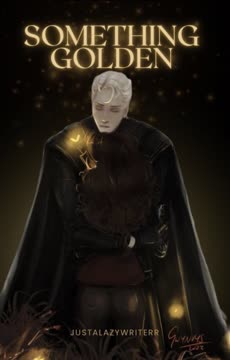
Draco Malfoy's world is defined by sharp edges and cold expectations, but the arrival of Hermione Granger into his orbit is like a crack of sunlight through a dusty window. Their antagonism is legendary, but beneath the barbs and competition, something golden flickers—an unspoken recognition of each other's brilliance and loneliness. As they clash in classrooms and corridors, Draco's carefully constructed identity begins to fracture. Hermione, for all her certainty, is drawn to the darkness she senses in him, even as she resists it. Their first real connection is forged not in friendship, but in the heat of rivalry, and it leaves them both changed, haunted by the possibility of something more.
The Unraveling of Draco
The war outside Hogwarts seeps into Draco's bones. Family expectations, the looming shadow of Voldemort, and the suffocating role of Death Eater-in-training begin to unravel him. He lashes out, clings to old prejudices, and tries to drown his fear in cruelty and bravado. But Hermione's presence is a constant challenge—her intellect, her stubborn hope, her refusal to be cowed. As the world darkens, Draco's mask slips. He is forced to confront the violence in his home, the violence in himself, and the growing, terrifying tenderness he feels for the girl he's supposed to hate. The lines between enemy and ally, love and loathing, begin to blur.
Shadows in the Library
A research project throws Draco and Hermione together, forcing them into late-night library sessions and uneasy collaboration. The library becomes their sanctuary and battleground, a place where secrets slip out between the turning of pages. Draco teaches Hermione the art of occlumency, and in doing so, reveals more of himself than he intends. Hermione, for all her bookish certainty, is forced to see Draco as more than a villain. Their banter softens, their silences grow charged, and the first fragile threads of trust are spun. But trust is dangerous in a world where betrayal is survival.
Lines Drawn, Lines Crossed
The war comes to Hogwarts, and with it, the demand for loyalty. Draco is forced to choose between his family and his conscience, between the role he's been assigned and the person he's becoming. Hermione, too, is tested—her ideals, her friendships, her willingness to see the good in someone everyone else has written off. Their connection deepens in the crucible of crisis, but every step closer is a step toward disaster. When violence erupts, and friends become enemies, Draco and Hermione find themselves on opposite sides of a line neither of them wanted to draw.
The Dinner and the Knife
A formal dinner for Hogwarts' best and brightest becomes a battlefield of its own. Draco's sharp tongue and Hermione's stubborn pride clash in public, but in private, the walls come down. They share confessions, old wounds, and the ache of wanting what they cannot have. The knife—both literal and metaphorical—becomes a symbol of Draco's pain, his need for control, and the violence he cannot escape. Hermione sees the scars, both visible and hidden, and begins to understand the cost of survival in Draco's world. Their connection is no longer just intellectual—it is visceral, dangerous, and real.
Lessons in Occlumency
Teaching Hermione occlumency is an act of trust for Draco, and a test of patience for Hermione. The lessons become a dance of minds and hearts, each trying to shield themselves while longing to be seen. Draco's expertise is both a gift and a curse—he can protect his thoughts, but it means he is always alone. Hermione's determination to master the skill is driven by more than academic ambition; she wants to understand Draco, to reach him where no one else can. Their lessons are fraught with tension, frustration, and the slow, painful opening of old wounds.
Blood on the Pitch
Quidditch, once a game, becomes a proxy for the war raging outside. Old rivalries flare, and the violence spills over into the stands and the corridors. Draco's anger boils over, and Hermione is caught in the crossfire. The cost of loyalty becomes clear—friends are hurt, trust is broken, and the line between right and wrong blurs. Draco's threats are no longer empty, and Hermione is forced to confront the darkness in him, and in herself. The pitch is stained with more than just mud; it is a battleground for their souls.
The Cost of Loyalty
As the war intensifies, Draco is forced to make impossible choices. Loyalty to family, to friends, to Hermione—all are tested. Betrayal becomes a means of survival, and every act of kindness is a risk. Hermione, too, is forced to choose—between her ideals and her heart, between safety and love. The cost of loyalty is measured in blood and tears, and both of them are left scarred. Their relationship, once a secret solace, becomes a liability. The world is closing in, and there is no safe place left.
Shattered Alliances
The war claims its victims, and Draco and Hermione are not spared. Friends die, innocence is lost, and the weight of grief threatens to crush them both. Draco's world is shattered—his family, his future, his sense of self. Hermione, too, is broken by loss, but she clings to hope, to the belief that healing is possible. Their alliance, once a source of strength, is tested to the breaking point. In the ashes of what was, they must decide if there is anything left to save.
The Edge of Memory
After the war, nothing is the same. Draco is haunted by what he has done, and what he has lost. Hermione, wounded in body and mind, is left with holes in her memory—holes that Draco cannot fill, no matter how desperately he tries. The fight for healing is as brutal as any battle. Draco's guilt is a constant companion, and Hermione's confusion is a knife twisting in both their hearts. The edge of memory is a dangerous place, and the past is never as far away as it seems.
The Return to Ashes
Draco's crimes catch up with him, and he is sent to Azkaban. The prison is a place of ghosts and regrets, and Draco is left alone with his memories and his pain. Hermione, too, is imprisoned—by her lost memories, by the expectations of others, by the weight of what she cannot remember. The years pass slowly, marked by loss and longing. Letters are written, promises are broken, and hope is a fragile, flickering thing. The world moves on, but Draco and Hermione are trapped in the ashes of what was.
The Long Road Home
Draco is released from Azkaban, but freedom is not the same as peace. The world is changed, and so is he. Hermione, still struggling with her memories, is both a stranger and the love of his life. Their reunion is fraught with pain and hope, with the fear that too much has been lost. Friends return, old wounds are reopened, and the long road to healing begins. The past cannot be undone, but perhaps, together, they can build something new.
The Weight of Forgiveness
Forgiveness is not a single act, but a daily struggle. Draco must learn to forgive himself, and to accept the forgiveness of others. Hermione, too, must find a way to reconcile the pieces of her past with the person she is now. Their love is tested by doubt, by guilt, by the scars they both carry. But in the end, it is love—stubborn, fierce, and golden—that brings them back to each other. The courage to love is the greatest act of all.
The Shape of Healing
Healing is not linear, and the scars of war do not fade easily. Draco and Hermione, surrounded by friends and family, begin to build a new life together. There are setbacks and struggles, but also moments of joy and laughter. The cottage they dreamed of becomes a reality, a place of peace and belonging. The past is not forgotten, but it is no longer a prison. Together, they shape a future that is both hard-won and deeply cherished.
The Promise of Tomorrow
The years pass, and the world changes. Draco and Hermione's love endures, weathering every storm. Their children grow, their friends find happiness, and the wounds of the past slowly heal. The promise of tomorrow is not a guarantee, but a choice—a choice to hope, to love, to believe in the possibility of something golden. The legacy they leave is not one of perfection, but of resilience, forgiveness, and the courage to begin again.
The Cottage in the Sun
In the end, it is not grand gestures or epic battles that define their story, but the quiet moments of peace. The cottage in the sun, the laughter of children, the warmth of a hand held in the dark. Draco and Hermione, battered but unbroken, find their way home—to each other, to themselves, to the life they fought so hard to build. The golden hour is fleeting, but it is enough. In the light of love, even the deepest scars can become something beautiful.
Analysis
"Something Golden" is a raw, unflinching exploration of trauma, love, and the long, painful road to healing. At its heart, it is a story about the possibility of redemption—not just for Draco, but for everyone who has been broken by war, by family, by the weight of expectation. The narrative refuses easy answers; forgiveness is hard-won, and healing is never linear. The use of unreliable narration, memory as both wound and weapon, and the cyclical structure all serve to immerse the reader in the psychological reality of its characters. The story's greatest strength is its refusal to flinch from pain—violence, self-harm, addiction, and grief are all depicted with honesty and compassion. But it is also a story about hope—the hope that love can survive even the darkest night, that family can be found, that the past does not have to define the future. In a world where trauma is often silenced or minimized, "Something Golden" insists that healing is possible, that scars can become something beautiful, and that even the most broken among us can find their way home.
People Also Read


Characters
Draco Malfoy
Draco is a study in contradictions: proud and broken, cruel and tender, brilliant and lost. Raised in a world of violence and expectation, he is shaped by trauma and the desperate need to survive. His relationship with Hermione is both a lifeline and a crucible, forcing him to confront the darkness within himself. Draco's journey is one of painful self-discovery—he must learn to forgive himself, to accept love, and to believe in the possibility of a future. His wit is a shield, his anger a mask, but beneath it all is a boy who wants to be good, to be loved, to be free. His development is marked by loss, guilt, and the slow, stubborn growth of hope.
Hermione Granger
Hermione is the heart of the story—a woman of fierce intellect, stubborn hope, and deep compassion. She is not perfect; her optimism can be blinding, her need to save others a source of pain. The trauma of war leaves her scarred, both in body and mind, and the loss of her memories is a wound that will not heal. Her relationship with Draco is a test of her ideals and her heart, forcing her to see the world—and herself—in new ways. Hermione's journey is one of reclamation: of her past, her power, and her right to happiness. She is both the golden thread that binds the story and the flame that refuses to go out.
Lucius Malfoy
Lucius is the architect of Draco's pain, a man whose love is conditional and whose cruelty is a legacy. He is both a villain and a victim, trapped by his own fears and failures. His relationship with Draco is a study in the cost of survival—the ways in which violence begets violence, and the difficulty of breaking free from the past. Lucius's eventual downfall is both justice and tragedy, a necessary ending for a man who could not change.
Narcissa Malfoy
Narcissa is a figure of quiet suffering, a woman who loves her son but is unable to protect him. Her complicity is born of fear, but her love is real. She is both a comfort and a source of pain for Draco, a reminder of what could have been. In the end, her support is a balm, but her inability to act is a wound that never fully heals.
Theo Nott
Theo is Draco's oldest friend, a survivor in his own right. He is both a mirror and a foil, sharing Draco's trauma but coping in different ways. Their friendship is a lifeline, a reminder that family can be chosen. Theo's loyalty is unwavering, but he is not without his own scars. His relationship with Pansy is a source of both comfort and conflict, a testament to the possibility of healing.
Pansy Parkinson
Pansy is more than a stereotype—she is a woman shaped by pain, by the need to be strong in a world that punishes weakness. Her friendship with Draco is complicated, marked by jealousy, love, and the shared experience of survival. Pansy's journey is one of learning to trust, to let go, and to believe in the possibility of happiness. Her relationship with Theo is both a challenge and a comfort, a reminder that love is not always easy, but it is always worth fighting for.
Blaise Zabini
Blaise is the light in the darkness, the friend who refuses to let Draco drown. His humor is a shield, but his loyalty is real. He is both a source of comfort and a challenge, pushing Draco to be better, to hope, to live. Blaise's journey is quieter than the others, but no less important—a reminder that healing is not always loud, but it is always possible.
Ginny Weasley
Ginny is the unexpected friend, the one who sees through Draco's defenses and refuses to let him go. Her relationship with Hermione is a source of strength, but also of pain—she, too, must learn to forgive, to let go, to believe in the possibility of something golden. Ginny's journey is one of reclamation—of her power, her voice, her right to happiness.
Harry Potter
Harry is both a symbol and a man, struggling to live up to the expectations placed upon him. His relationship with Draco is fraught, but ultimately redemptive—a testament to the possibility of change, of forgiveness, of friendship. Harry's journey is one of learning to let go, to trust, to hope.
Ron Weasley
Ron is both a casualty and a survivor, a reminder of what was lost and what can never be regained. His relationship with Hermione is a source of pain, a symbol of the choices that must be made. Ron's journey is one of letting go, of accepting that the past cannot be reclaimed, and that the future is both terrifying and full of possibility.
Plot Devices
Unreliable Narration
The story is told almost entirely through Draco's eyes, and his narration is as sharp and unreliable as he is. His sarcasm, self-loathing, and trauma color every event, making the reader question what is real and what is projection. This device allows for deep psychological exploration, but also for ambiguity—Hermione is both as bad and as good as Draco believes, and the truth is always somewhere in between.
Memory as Battleground
Memory is both weapon and wound in this story. Hermione's amnesia is not just a plot device, but a metaphor for trauma—the way the mind protects itself, the cost of forgetting, and the pain of remembering. Occlumency becomes a symbol of both intimacy and isolation, a way to protect oneself but also a barrier to connection. The fight to reclaim memory is the fight to reclaim self, and the story's emotional arc is driven by the struggle to remember, to forgive, to heal.
Trauma and Healing
The story does not shy away from the realities of trauma—physical, emotional, psychological. Violence is not just external, but internal; the scars are not just on the body, but on the soul. Self-harm, addiction, and the struggle to survive are depicted with unflinching honesty. But so, too, is the slow, stubborn work of healing—the way love, friendship, and forgiveness can begin to mend even the deepest wounds.
Found Family
Blood is not destiny in this story; family is chosen, not given. Draco's friends—Theo, Pansy, Blaise, even Ginny and Harry—become his lifeline, his anchor in the storm. Their loyalty is not unconditional, but it is real, and it is what saves him in the end. The story is as much about the power of friendship as it is about the power of love.
Cyclical Structure and Mirroring
The story is structured around cycles—of violence, of trauma, of love lost and found. Scenes and motifs repeat, but each time they are changed, reframed, reclaimed. The cottage, the watch, the knife, the act of coming home—all are symbols that recur, each time with new meaning. The past cannot be undone, but it can be rewritten, and the story's hope lies in the possibility of breaking the cycle.








































