
Plot Summary
Girlhood's End in Tehran
Forugh Farrokhzad's childhood in Tehran is marked by the strict rules of her father, the Colonel, and the suffocating expectations of Iranian society. Her earliest memories are of a walled garden, a symbol of both beauty and confinement. The Colonel's house is a fortress of discipline, where daughters are taught obedience and silence. Forugh's rebellious spirit emerges early, clashing with her mother's fears and her father's authority. A pivotal moment arrives when, after a forbidden flirtation, Forugh is subjected to a humiliating virginity test—a traumatic rite that marks the end of her girlhood and the beginning of her lifelong struggle for autonomy. The experience leaves her both wounded and awakened, setting her on a path of questioning, resistance, and longing for freedom.
The Colonel's House Rules
Life in the Colonel's house is governed by military precision and patriarchal law. Forugh's father, a towering figure loyal to the shah, enforces discipline with drills, punishments, and emotional distance. The family's existence is split between the men's and women's quarters, reinforcing gendered boundaries. Forugh's mother, once spirited, is now a figure of resignation, her joy found only in her garden—until modernization destroys even that refuge. The children, especially the girls, are raised to fear shame and value obedience above all. Forugh's willfulness is seen as a curse, a jinn to be exorcised. Yet, within these walls, Forugh discovers poetry, listening to recitations in secret and finding in words a means of escape. The house's rules, meant to contain her, instead forge her defiance and creativity.
Secrets, Shame, and Rebellion
Forugh's relationship with her sister Puran is one of deep intimacy and shared suffering. Together, they navigate the dangers of girlhood—locked balconies, forbidden rooftops, and the constant threat of punishment. Their bond is tested when Puran, under pressure, betrays Forugh's secret correspondence with her cousin Parviz. The resulting shame and violence drive a wedge between them, yet also reveal the impossible choices faced by women in their world. Forugh's sense of injustice grows, fueling her resolve to never beg or submit. The sisters' whispered conversations about love, marriage, and the mysteries of the wedding night are tinged with both hope and dread. These early rebellions, though small, are acts of survival and self-assertion in a society that polices every aspect of female life.
Forbidden Love Letters
In the heat of a Tehran summer, Forugh's infatuation with her cousin Parviz becomes both a source of joy and a catalyst for her artistic awakening. Their clandestine meetings and exchanged letters introduce her to new forms of poetry—modern, unrhymed, and honest. Parviz encourages her to write about her own experiences, not just imitate the classics. The thrill of secret rendezvous is shadowed by the ever-present risk of discovery. Forugh's longing for love is inseparable from her longing for self-expression. The letters become both a lifeline and a liability, ultimately leading to exposure and punishment. Yet, through this forbidden romance, Forugh finds her voice as a poet, learning that truth and desire are worth the cost of defiance.
The Virginity Test
After her secret is revealed, Forugh is dragged by her mother and sister to the Bottom of the City for a virginity test—a brutal, invasive ordeal meant to certify her purity. The experience is both physically and emotionally scarring, a violation disguised as protection. Forugh's resistance during the examination results in pain and bleeding, but the woman performing the test assures her mother that her daughter is "still a virgin." The certificate becomes a commodity, proof of honor in a society obsessed with female chastity. Forugh's sense of betrayal is compounded by her sister's complicity and her mother's relief. This moment crystallizes the intersection of personal and collective shame, and marks the true beginning of Forugh's struggle against the forces that seek to define and control her body and destiny.
Marriage and Exile
To quell scandal, Forugh is hastily married to Parviz and sent far from Tehran to live with his family in Ahwaz. The marriage, born of coercion and threat, quickly reveals itself as another form of captivity. Parviz, once a source of inspiration, becomes distant and suspicious, his affections mediated by his domineering mother. Forugh is isolated, her every move scrutinized, her attempts at independence thwarted. The promise of love and freedom dissolves into loneliness and routine. Yet, in exile, Forugh's creativity flourishes—she writes poetry in secret, channeling her frustration and longing into verse. The birth of her son, Kami, brings both joy and new forms of loss, as her role as mother is undermined by her mother-in-law and the expectations of her husband.
The Captive Bride
Motherhood does not bring Forugh the fulfillment she hoped for. Her inability to nurse Kami, the constant interference of her mother-in-law, and the stifling routines of domestic life deepen her sense of alienation. Forugh's poetry becomes her refuge and her weapon, a means of articulating desires and grievances that cannot be spoken aloud. The publication of her daring poem "Sin" ignites scandal, branding her as both a literary sensation and a social pariah. The backlash is swift and severe—rumors, threats, and public shaming. Forugh's marriage unravels, and she is forced to choose between her art and her child. The cost of her rebellion is exile from both family and society, but she refuses to be silenced, determined to live and write on her own terms.
Motherhood and Loss
Forugh's separation from Kami is the deepest wound of her life. The legal and cultural realities of Iran grant custody to fathers, and Parviz, pressured by his family, denies her access to her son. Forugh's grief is compounded by guilt and self-doubt—has her pursuit of freedom made her a bad mother? The pain of loss becomes a central theme in her poetry, infusing her work with raw emotion and existential questioning. Attempts to see Kami are thwarted, and the image of her son slipping away haunts her. Yet, even in despair, Forugh finds purpose in her art, believing that her words may one day reach him and others like him. The personal becomes political, as her individual suffering mirrors the broader struggles of Iranian women.
Poetry as Defiance
Forugh's poetry evolves from personal confession to social critique. Her work challenges not only gender norms but also the political and religious orthodoxies of her time. The scandal of "Sin" is both a curse and a catalyst, propelling her into the public eye and making her a symbol of the "New Iranian Woman." Forugh faces censorship, slander, and even physical danger, but she persists, publishing under her own name and refusing to hide behind pseudonyms. Her poems become acts of resistance, giving voice to the silenced and the shamed. The literary establishment is divided—some praise her honesty, others condemn her immorality. Forugh's commitment to truth, both in life and art, sets her apart and ensures her legacy, even as it isolates her further.
The Scandal of "Sin"
The publication of "Sin" brings Forugh both fame and infamy. The poem's frank depiction of female desire is unprecedented, and the reaction is explosive. Editors sensationalize her work, pairing it with lurid images and framing her as a cautionary tale. Forugh's personal life becomes fodder for gossip columns and political attacks. Her affair with the editor Nasser Khodayar, initially a source of validation, ends in betrayal when he publishes a thinly veiled story exposing their relationship. The scandal escalates, leading to threats, violence against her family, and her eventual confinement in a psychiatric clinic. Forugh's identity as a poet is inseparable from her identity as a "fallen woman," and she must navigate the treacherous terrain of public opinion, artistic ambition, and personal survival.
Madness and Confinement
Forugh's forced stay in the Rezayan Clinic is a harrowing ordeal. Labeled "mad" for her refusal to conform, she is subjected to isolation, humiliation, and electroshock therapy. The clinic is a microcosm of the society that seeks to control and erase rebellious women. Forugh's memories blur under the weight of drugs and trauma, but her will to survive endures. She forms fragile bonds with other patients, witnesses the horrors of psychiatric "treatment," and confronts the possibility of losing herself entirely. Salvation comes in the form of Leila, a wealthy and independent patron who orchestrates her release. The experience leaves Forugh changed—more vulnerable, but also more determined to claim her life and voice.
Leila's Sanctuary
Leila's home becomes a sanctuary where Forugh can heal and rediscover herself. The two women form a deep, complex bond—part friendship, part mentorship, part unspoken love. Leila's own history of loss and rebellion mirrors Forugh's, and together they create a space of safety and creativity. Forugh begins to write again, her poetry infused with new depth and clarity. The outside world, however, remains hostile—rumors swirl about their relationship, and the dangers of political repression loom ever closer. Leila's eventual murder, likely a message to her exiled brother and a warning to others, devastates Forugh and marks the end of her last true refuge. The loss propels Forugh into a period of profound grief and artistic transformation.
Reborn in Art
Emerging from trauma, Forugh reinvents herself as both poet and filmmaker. Her work becomes more experimental, more engaged with the realities of Iranian society. Collaborating with the director Darius Golshiri, she finds both creative partnership and passionate love. Their affair is fraught with secrecy and compromise—Darius is married, and Forugh is once again cast as the "other woman." Yet, in art, she finds a measure of freedom denied to her in life. Her documentary "The House Is Black," set in a leper colony, is acclaimed for its unflinching honesty and poetic vision. Forugh's commitment to bearing witness—to suffering, to beauty, to injustice—becomes her guiding principle. She is reborn, not in the safety of conformity, but in the risk and vulnerability of creation.
Love and Betrayal
Forugh's relationship with Darius is both a source of joy and a crucible of pain. Their love is intense, intellectual, and deeply physical, but always shadowed by the impossibility of full union. Darius's refusal to divorce his wife, the demands of public respectability, and the ever-present threat of scandal force Forugh into a life of half-measures and hidden longing. The couple's creative collaboration flourishes, but the personal cost is high—Forugh is isolated, judged, and denied the legitimacy of marriage or motherhood. The tension between love and freedom, between desire and dignity, becomes the central conflict of her later years. Forugh's poetry reflects this struggle, capturing both the ecstasy and the ache of loving in a world that refuses to make space for women like her.
The Fire in Abadan
A catastrophic oil-well fire in Abadan becomes the backdrop for Forugh's most ambitious artistic project. Traveling with Darius and his crew, she documents the devastation wrought by both nature and human greed. The experience exposes her to the suffering of Iran's marginalized—workers, women, children—and deepens her commitment to social justice. Forugh's photographs and film footage capture the resilience and despair of those displaced by the fire. The project cements her reputation as an artist unafraid to confront the darkest aspects of her country's reality. Yet, the work also brings her into conflict with authorities and further endangers her already precarious position. The fire in Abadan is both literal and metaphorical—a symbol of Iran's burning contradictions and Forugh's own consuming drive.
The Price of Freedom
As Iran hurtles toward revolution, Forugh's life becomes increasingly perilous. Her activism, her art, and her associations with dissidents draw the attention of the secret police. Friends and lovers are arrested, exiled, or killed. Forugh herself is imprisoned, beaten, and released only through her father's intervention. The cost of freedom is steep—estrangement from family, loss of her son, the death of Leila, and the constant threat of violence. Forugh's poetry becomes darker, more political, reflecting the despair and rage of a nation on the brink. She is offered the chance to flee Iran with Darius, but ultimately chooses to stay, believing that her voice and her art belong to her people. The price of freedom is loneliness, but also integrity.
Revolution's Shadow
The final years of Forugh's life are marked by both artistic triumph and personal sorrow. Her work is celebrated abroad, censored at home. The revolution gathers force, sweeping away old certainties and unleashing new dangers. Forugh's relationship with Darius remains unresolved—passionate but unfulfilled, intimate but always at a distance. The loss of her son, the betrayals of friends, and the violence of the state weigh heavily on her. Yet, she continues to write, to film, to bear witness. Her poetry becomes a chronicle of a nation's suffering and hope, a testament to the enduring power of art in the face of oppression. The shadow of death lengthens, but Forugh refuses to be silenced.
The Final Winter
In the winter of 1967, Forugh's life comes to a sudden, tragic end in a car accident. The circumstances are ambiguous—was it an accident, a suicide, or something more sinister? Her death is mourned by some, celebrated by others, and mythologized by all. Forugh's funeral is both a public spectacle and a private reckoning. Her poetry, once banned and burned, survives in secret, passed from hand to hand, inspiring generations of Iranian women and men. In death, as in life, Forugh remains a captive bird—mortal, but remembered for her flight. Her story is one of courage, creativity, and the relentless pursuit of freedom, a song that continues to echo long after her voice is stilled.
Analysis
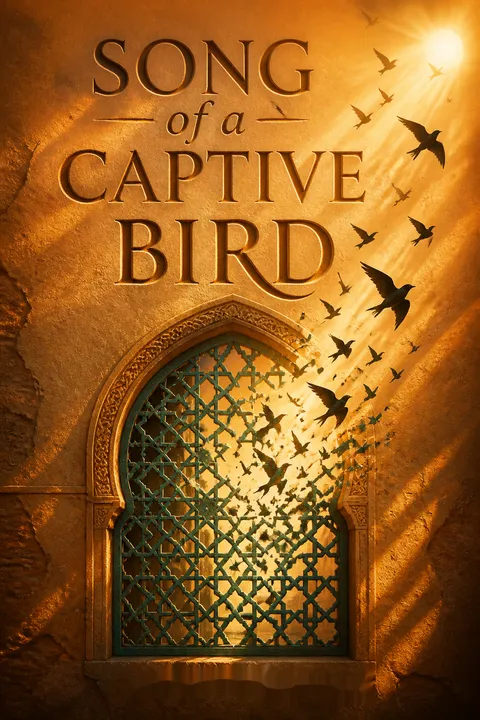
A modern feminist epic of voice, loss, and resistanceSong of a Captive Bird is a transformative reimagining of the life of Forugh Farrokhzad, Iran's most iconic female poet. Through a vivid, emotionally charged narrative, the novel explores the costs and consequences of seeking freedom in a society built on shame, surveillance, and patriarchal control. Forugh's journey—from rebellious girl to scandalous poet, from captive bride to exiled mother, from institutionalized "madwoman" to celebrated artist—mirrors the struggles of countless women past and present. The novel interrogates the intersections of gender, art, and power, revealing how personal rebellion can become a form of collective resistance. Its use of poetry as both subject and structure blurs the line between fiction and memoir, inviting readers to inhabit the mind of a woman who refused to be silenced. In a world where the price of honesty is often exile or death, Forugh's story is both a cautionary tale and a call to courage. The lessons are clear: art endures, truth matters, and the flight of the captive bird—though mortal—remains unforgettable.
Review Summary
Song of a Captive Bird receives strong praise from readers, averaging 4.21 stars. Many are captivated by the story of Iranian poet Forugh Farrokhzad, applauding Darznik's vivid portrayal of 1950s-60s Iran and the oppressive constraints faced by women. Reviewers highlight the lyrical prose, emotional depth, and inclusion of translated poems. Some note the first-person perspective feels almost autobiographical. Criticisms include slow pacing, heavy-handed foreshadowing, and discomfort with fictional liberties taken about a real person. The audiobook narration receives particular acclaim.
People Also Read

Characters
Forugh Farrokhzad
Forugh is the novel's protagonist—a fiercely intelligent, passionate, and rebellious woman born into a patriarchal Iranian society. From a young age, she resists the constraints imposed by her family and culture, seeking solace and expression in poetry. Her journey is marked by trauma—virginity tests, forced marriage, exile, loss of her child, public scandal, and institutionalization. Yet, Forugh's resilience is extraordinary; she transforms personal suffering into art, becoming a voice for the silenced and oppressed. Her relationships—with her family, lovers, and friends—are complex, often fraught with betrayal and longing. Forugh's psychological depth is revealed in her constant questioning, her refusal to accept easy answers, and her willingness to pay the price for authenticity. She is both a product of her time and a force that shapes it, her legacy enduring long after her death.
The Colonel (Forugh's Father)
The Colonel is a towering figure in Forugh's life, embodying the values of discipline, loyalty to the shah, and rigid gender roles. His love is conditional, expressed through control and punishment rather than affection. The Colonel's rules govern every aspect of family life, instilling fear and obedience in his children. Yet, he is also a man shaped by his own history—a self-made soldier who rose through the ranks, loyal to a modernizing but authoritarian regime. His inability to understand or accept Forugh's independence leads to conflict, estrangement, and ultimately, a grudging respect. The Colonel's psychological complexity lies in his simultaneous pride and insecurity, his desire for order masking a deep vulnerability.
Turan (Forugh's Mother)
Turan is both a victim and enforcer of patriarchal norms. Once spirited and fashionable, she becomes increasingly anxious and controlling as her garden—and her sense of agency—are destroyed. Turan's love for her children is expressed through rituals of cleanliness, prayer, and discipline. She is haunted by shame and the fear of scandal, her actions often motivated by a desperate need to protect the family's reputation. Turan's relationship with Forugh is fraught with misunderstanding and pain, yet also marked by moments of tenderness and regret. Her psychological struggle is between duty and desire, faith and doubt, love and fear.
Puran (Forugh's Sister)
Puran is Forugh's closest sibling, sharing secrets, dreams, and punishments. Her temperament is gentle, her obedience a survival strategy. Puran's complicity in revealing Forugh's letters is both a betrayal and an act of self-preservation. As she matures, Puran chooses the path of least resistance—marriage, motherhood, and respectability—serving as a foil to Forugh's rebellion. Yet, she is not without depth; her love for Forugh endures, and her own forays into writing suggest a latent desire for more. Puran's psychological arc is one of negotiation—between loyalty and fear, individuality and belonging.
Parviz Shapour
Parviz is Forugh's cousin, lover, and eventual husband. Initially a source of inspiration and encouragement, he becomes a symbol of disappointment and compromise. Parviz is gentle, intellectual, but ultimately passive—unable to defy his mother or society's expectations. His relationship with Forugh is marked by tenderness, jealousy, and misunderstanding. Parviz's inability to support Forugh's ambitions or protect her from harm leads to estrangement and the loss of their child. Psychologically, he represents the limits of male allyship in a patriarchal world—well-meaning but ultimately complicit.
Khanoom Shapour (Parviz's Mother)
Khanoom Shapour is a formidable presence in Forugh's married life, embodying the power of tradition and the surveillance of women by women. She is both nurturing and punitive, claiming Forugh's son as her own and policing every aspect of her daughter-in-law's behavior. Her religiosity and adherence to custom are both sincere and strategic, serving to maintain her authority within the household. Khanoom Shapour's psychological complexity lies in her simultaneous vulnerability (as a widow, as a mother) and her ruthless enforcement of the very system that oppresses her.
Leila Farmayan
Leila is a wealthy, independent woman who rescues Forugh from the psychiatric clinic and offers her sanctuary. Their relationship is a rare space of mutual support, intellectual exchange, and emotional intimacy—hinting at the possibility of love beyond the boundaries of heteronormativity. Leila's own history of loss, rebellion, and exile mirrors Forugh's, and her eventual murder is a devastating blow. Psychologically, Leila represents both the potential and the peril of female autonomy in a patriarchal society. Her death is a reminder of the costs of resistance and the fragility of safe spaces for women.
Nasser Khodayar
Nasser is both a lover and a literary gatekeeper, initially encouraging Forugh's work and facilitating her rise to fame. Their affair is passionate but ultimately exploitative—Nasser uses Forugh's vulnerability for his own gain, publishing a sensationalized account of their relationship. His betrayal is both personal and professional, exposing the dangers faced by women who seek validation from powerful men. Psychologically, Nasser is charming, ambitious, and ultimately self-serving—a mirror of the literary establishment's ambivalence toward female genius.
Darius Golshiri
Darius is a celebrated filmmaker and Forugh's most significant adult love. Their relationship is marked by intellectual kinship, artistic collaboration, and intense physical attraction. Yet, Darius's refusal to divorce his wife and the demands of public respectability force Forugh into a life of secrecy and compromise. He is both a source of inspiration and a reminder of the limits imposed by gender and tradition. Psychologically, Darius is confident, ambitious, and emotionally guarded—capable of great passion but unwilling to risk his own security for love.
Kami (Forugh's Son)
Kami is the child Forugh is forced to leave behind—a living embodiment of the sacrifices demanded by her pursuit of freedom. His presence haunts Forugh's poetry and her dreams, representing both the possibility of love and the inevitability of loss. As he grows, Kami is alienated from his mother by the narratives of others, becoming a stranger to her. Psychologically, he is both a real child and a symbol—the price of rebellion, the wound that never heals.
Plot Devices
Narrative Structure: First-Person Retrospective
The novel employs a first-person retrospective narrative, allowing readers to experience events through Forugh's consciousness. This structure creates intimacy and immediacy, immersing the reader in her emotional landscape. The use of poetry—both original and adapted—serves as both a plot device and a window into Forugh's psyche, blurring the boundaries between life and art. The narrative is nonlinear at times, with memories, dreams, and reflections interrupting the chronological flow, mirroring the fragmentation of trauma and the process of artistic creation.
Foreshadowing and Symbolism
The motifs of birds, gardens, and captivity recur throughout the novel, symbolizing both the constraints imposed on women and the possibility of transcendence. The destruction of the family garden foreshadows the loss of innocence and the violence of modernization. The captive bird is both Forugh herself and a metaphor for all women struggling for freedom. Foreshadowing is used to build tension—early references to shame, exile, and death anticipate the novel's tragic arc.
Letters, Poems, and Public Scandal
Letters and poems function as both plot devices and sources of conflict. The discovery of Forugh's letters leads to her downfall; the publication of her poems ignites scandal and shapes her destiny. The interplay between private writing and public exposure is central to the novel's exploration of gender, power, and voice. Scandal is not just a backdrop but a mechanism through which Forugh's identity is constructed and contested.
Confinement and Escape
The recurring theme of confinement—whether in the Colonel's house, a marriage, a psychiatric clinic, or a prison cell—serves as both a literal and metaphorical device. Each escape is temporary, each new space of freedom fraught with new dangers. The tension between captivity and flight is embodied in the novel's structure, imagery, and character arcs, culminating in Forugh's final, fatal journey.
Historical Backdrop and Political Upheaval
The novel is set against the backdrop of Iran's tumultuous mid-20th-century history—modernization, the fall of the Qajars, the rise and fall of the shah, the oil crisis, and the approach of revolution. Political events are not mere setting but active forces shaping the characters' lives. The intersection of personal and political is explored through Forugh's relationships, her art, and her ultimate fate. The use of real historical figures and events grounds the narrative in reality while highlighting the universality of its themes.
Download PDF
Download EPUB
.epub digital book format is ideal for reading ebooks on phones, tablets, and e-readers.








































