
Key Takeaways
1. Stories Are Weapons: Psychological Warfare's Core
Linebarger believed that words, properly deployed, were more powerful than bombs.
Words as weapons. The book argues that stories, ideas, and narratives can be weaponized to influence, manipulate, and control populations. This concept is rooted in the understanding that psychological warfare aims to impact the minds and emotions of a target audience to achieve specific objectives, often without physical violence.
Propaganda's power. Propaganda, disinformation, and carefully crafted narratives can be as effective as military force in shaping public opinion, inciting fear, and driving social division. The book explores how these techniques have been used throughout history, from ancient warfare to modern social media campaigns.
Emotional manipulation. The key to successful psychological warfare lies in its ability to tap into people's emotions, biases, and vulnerabilities. By understanding the psychological makeup of a target audience, propagandists can craft messages that resonate deeply and alter behavior.
2. Psyops Evolved from Advertising and Mass Media
Bernays described PR work as the “engineering of consent,” and called it a new form of free speech.
Bernays' influence. Edward Bernays, Sigmund Freud's nephew, pioneered the use of psychological principles in advertising and public relations. He demonstrated how to manipulate public opinion by appealing to unconscious desires and associating products with emotional or political ideals.
From sales to control. Bernays' techniques were later adapted for political purposes, demonstrating the potential for mass media to be used for social control and manipulation. His work with the United Fruit Company to overthrow the Guatemalan government exemplifies this.
Linebarger's codification. Paul Linebarger, a military intelligence expert, codified modern psychological operations in his handbook, "Psychological Warfare." He emphasized the importance of understanding the target audience and crafting messages that resonate with their values and beliefs.
3. The US's Unique Psywar History: The Indian Wars
In this country, psyops have always been connected to the evolving media industry.
Frontier myths. The United States has a long history of using psychological warfare tactics against its own population, particularly during the Indian Wars. The myth of the "vanishing Indian" was used to justify the seizure of Indigenous lands and the forced assimilation of Native Americans.
Cultural erasure. This involved the systematic suppression of Indigenous cultures, languages, and traditions, as well as the dissemination of racist stereotypes and misinformation. The goal was to break the spirit of resistance and pave the way for westward expansion.
Indigenous resistance. Indigenous nations resisted these efforts through their own forms of cultural and spiritual resistance, such as the Ghost Dance movement. These movements aimed to reclaim Indigenous identity and sovereignty in the face of overwhelming oppression.
4. Brainwashing: A Cold War Psyop
Calling somebody “brainwashed” in the 1950s and ’60s was like invoking the “woke mind virus” in the 2020s—it implied that leftists had planted dangerous ideas in Americans’ vulnerable minds, causing previously good citizens to question their nation’s greatness.
The "brainwashing" scare. The term "brainwashing" gained popularity during the Cold War, fueled by fears of communist mind control. This led to widespread paranoia and the suppression of dissenting voices, as anyone who questioned the status quo was suspected of being brainwashed.
MK-Ultra's dark side. The CIA's MK-Ultra program involved unethical experiments aimed at developing mind control techniques. These experiments often involved the use of drugs, sensory deprivation, and psychological torture, highlighting the dangers of unchecked government power.
Pop culture paranoia. The fear of brainwashing permeated pop culture, inspiring science fiction movies and novels that explored the themes of mind control and the loss of individual autonomy. This reflected a deep-seated anxiety about the power of propaganda and the vulnerability of the human mind.
5. Social Media: Today's Psywar Battleground
Today in the United States, psywar is virtually indistinguishable from culture war.
Cambridge Analytica's role. The Cambridge Analytica scandal revealed how personal data could be harvested and used to target voters with personalized propaganda. This demonstrated the potential for social media to be weaponized for political manipulation.
Russian interference. Russian operatives used social media to spread disinformation, sow discord, and interfere in the 2016 presidential election. Their goal was to undermine trust in democratic institutions and polarize American society.
Algorithmic amplification. Social media algorithms can amplify the spread of misinformation and extremist content, creating echo chambers and reinforcing existing biases. This makes it difficult for people to access accurate information and engage in constructive dialogue.
6. Culture Wars: Weaponized Stories Against Each Other
Increasingly, Americans are not engaging in democratic debate with one another; they are launching weaponized stories directly into each other’s brains.
Domestic conflict. Culture wars involve the use of psychological warfare tactics within a country, targeting fellow citizens. This often involves framing specific groups as enemies, spreading misinformation, and inciting hatred and violence.
Three major weapons:
- Scapegoating: Blaming specific groups for society's problems
- Deception: Spreading lies and misinformation to confuse and manipulate
- Violent threats: Intimidating and silencing opponents through threats of violence
Erosion of democracy. Culture wars undermine democratic debate by creating a climate of fear and distrust. They make it difficult for people to engage in constructive dialogue and find common ground.
7. The Power of Historical Amnesia
The stories we tell one another using words, images, and theatrics are dual use.
Collective forgetting. Historical amnesia refers to the tendency of societies to forget or distort traumatic events in their past. This can lead to a lack of accountability and a perpetuation of harmful patterns.
Rewriting history. Culture warriors often attempt to rewrite history to suit their own agendas. This can involve downplaying or denying past injustices, glorifying harmful ideologies, and erasing the contributions of marginalized groups.
The "Lost Cause" myth. The "Lost Cause" myth, which romanticizes the Confederacy and downplays the role of slavery in the Civil War, is an example of historical amnesia. This myth has been used to justify racial inequality and white supremacy.
8. The "Groomer" Trope: Weaponizing Fear
There are three major psychological weapons that combatants often transfer into culture war: scapegoating, deception, and violent threats.
LGBTQ+ demonization. The "groomer" trope is a harmful stereotype that equates LGBTQ+ people with child molesters. This trope has been used to justify discrimination, violence, and the suppression of LGBTQ+ rights.
Lavender Scare echoes. The "groomer" trope echoes the Lavender Scare of the Cold War, which framed LGBTQ+ people as security risks and enemies of the state. This demonstrates the cyclical nature of prejudice and the persistence of harmful stereotypes.
Impact on youth. The "groomer" trope creates a climate of fear and hostility for LGBTQ+ youth, making it difficult for them to feel safe and accepted. It also undermines the ability of teachers and counselors to provide support and guidance to LGBTQ+ students.
9. Reclaiming History: A Counter-Psyop
That’s why historical receipts, true accounts of our nation’s past, are part of psychological disarmament.
Indigenous data sovereignty. Indigenous data sovereignty refers to the right of Indigenous peoples to control the collection, use, and dissemination of data about themselves and their communities. This is essential for reclaiming Indigenous history and challenging dominant narratives.
The Coquille story. The Coquille tribe's recovery of their "lost map" is an example of how reclaiming history can empower marginalized communities. By accessing and controlling their own historical records, the Coquille were able to assert their sovereignty and challenge the myth of the "vanishing Indian."
Truth and reconciliation. Truth and reconciliation commissions are a tool for addressing historical injustices and promoting healing. These commissions provide a platform for victims to share their stories and for perpetrators to acknowledge their wrongdoing.
10. Psychological Disarmament: A Path to Peace
He believed that the purpose of psyops was to end war, not to ignite an infinite series of culture wars that would grind the nation to a halt.
Linebarger's vision. Paul Linebarger, the architect of modern psychological warfare, believed that the ultimate goal of psyops was to end war, not to perpetuate conflict. He advocated for investing in public education, opening national borders, and supporting a robust free press.
Rebuilding the public sphere. Psychological disarmament requires rebuilding a shattered public sphere, where people can engage in constructive dialogue and build consensus through democratic elections. This involves addressing the root causes of division and promoting empathy and understanding.
Collective therapy. Psychological and culture wars cause trauma, and recovery requires collective therapy. This involves remembering what has happened, acknowledging the pain and suffering, and working together to create a more just and equitable society.
11. The Public Library: A Model for a Healthy Public Sphere
Linebarger believed that the public sphere—the shared cultural realm where Americans swap ideas, tell stories, and build consensus through democratic elections—had been rotted by years of disinformation and violent manipulation.
Social infrastructure. Public libraries serve as vital social infrastructure, providing free access to information, resources, and community spaces. They are places where people can connect with others, learn new skills, and engage in civic life.
Safe spaces. Libraries offer a safe and welcoming environment for people of all backgrounds, regardless of their income, education, or social status. They are places where people can feel respected and valued.
Combating misinformation. Libraries can play a crucial role in combating misinformation by providing access to accurate information and promoting media literacy. They can also serve as trusted sources of information for communities that are targeted by propaganda.
Review Summary
Stories Are Weapons receives mostly positive reviews, with readers praising its engaging exploration of propaganda and psychological warfare in American history. Many find it informative and timely, particularly in relation to current political events. Some reviewers note the book's broad scope, which covers topics from colonial times to modern social media manipulation. While a few critics feel certain sections lack depth or cohesion, most appreciate Newitz's accessible writing style and the book's thought-provoking content on the power of narratives in shaping public opinion.
People Also Read

FAQ
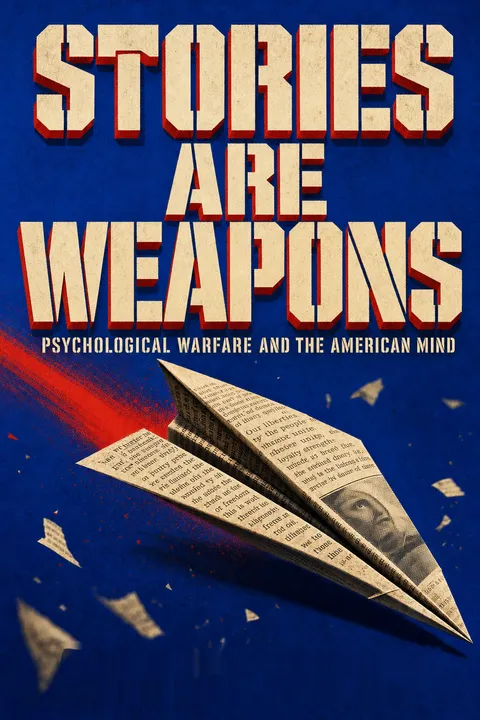
1. What is Stories Are Weapons: Psychological Warfare and the American Mind by Annalee Newitz about?
- Exploration of psychological warfare: The book investigates how psychological operations (psyops) and propaganda have shaped American society, politics, and identity from the Indian Wars to modern digital disinformation.
- Weaponization of storytelling: Newitz reveals how stories and narratives have been used as weapons in both military and cultural conflicts, influencing public opinion and marginalizing groups.
- Historical and contemporary analysis: The book traces the evolution of psyops through key historical moments, including the Cold War, culture wars, and the rise of social media.
- Focus on resistance and healing: It also explores efforts to resist psychological warfare and proposes pathways toward psychological disarmament and rebuilding democratic public spheres.
2. Why should I read Stories Are Weapons by Annalee Newitz?
- Understanding modern disinformation: The book provides crucial context for the current flood of propaganda and misinformation, helping readers recognize how psyops tactics influence elections, social media, and public opinion.
- Historical perspective on American psyops: Newitz offers a deep dive into the overlooked history of psychological warfare in the U.S., connecting past and present tactics.
- Insight into culture wars: Readers gain a nuanced understanding of how culture wars weaponize stories to divide Americans and erode democratic debate.
- Tools for resistance and hope: The book suggests practical ways to counteract psychological warfare, including media literacy, historical truth-telling, and collective healing.
3. What are the key takeaways from Stories Are Weapons by Annalee Newitz?
- Psyops shape American life: Psychological warfare is not just a military tool but a pervasive force in culture, politics, and identity.
- Weaponized stories divide society: Narratives are used to scapegoat, deceive, and threaten, targeting marginalized groups and undermining trust in institutions.
- Resistance is possible: Through education, truthful storytelling, and collective action, it is possible to counteract the effects of psyops and rebuild a healthy public sphere.
- Healing requires systemic change: Psychological disarmament and political transformation are necessary to recover from the trauma inflicted by weaponized narratives.
4. What are the key concepts of psychological warfare (psyops) explained in Stories Are Weapons?
- Definition and evolution: Psyops involve using stories, propaganda, and misinformation to influence emotions and behaviors, evolving from military leaflets to digital campaigns.
- Storytelling and mythmaking: Psyops rely on emotional, persuasive narratives that frame groups as threats, often appealing to unconscious fears and prejudices.
- Goals and tactics: The main aims are persuasion, confusion, and harm, often escalating to threats of violence or social exclusion.
- Overlap with media and advertising: Techniques from psyops are used in advertising and political messaging, blurring lines between commercial, political, and military propaganda.
5. How does Annalee Newitz in Stories Are Weapons connect psychological warfare to American culture wars?
- Culture wars as domestic psywar: Newitz argues that today’s culture wars are a form of psychological warfare, where Americans weaponize stories against each other.
- Transfer of military tactics: Scapegoating, deception, and violent threats from military psyops are now used in culture wars to divide society and undermine democratic discourse.
- Targeting marginalized groups: Groups such as Black people, trans teens, and feminists are often singled out and delegitimized through propaganda.
- Erosion of public trust: This militarization of culture war leads to a “legitimation crisis,” collapsing trust in institutions and shared truths.
6. What historical examples of American psychological warfare does Annalee Newitz highlight in Stories Are Weapons?
- Revolutionary War propaganda: Benjamin Franklin’s fake newspaper stories undermined British morale and sowed distrust among allies.
- Indian Wars and erasure: The U.S. military used propaganda and forced assimilation to erase Indigenous nations, including the “last Indian” myth and boarding schools.
- Cold War psyops: The establishment of military psywar units, radio propaganda like Voice of America, and the work of Paul Linebarger in codifying doctrine.
- Modern digital psyops: Russian interference in the 2016 U.S. election and Cambridge Analytica’s targeted Facebook campaigns show how psyops have adapted to social media.
7. Who was Paul Linebarger and what is his significance in Stories Are Weapons by Annalee Newitz?
- Military psywar expert: Linebarger wrote the foundational U.S. Army manual on psychological warfare in the late 1940s.
- Science fiction author: Under the name Cordwainer Smith, he explored themes of mind control and psychological influence in his fiction.
- Innovator of propaganda as storytelling: He believed effective propaganda must contain a slice of truth and use nuanced, compelling stories rather than blunt slogans.
- Advocate for psychological disarmament: Despite his military background, Linebarger envisioned psyops as a tool for peace, emphasizing education and a free press.
8. How does Stories Are Weapons by Annalee Newitz address the use of psychological warfare in the 2016 U.S. presidential election?
- Cambridge Analytica’s profiling: The firm used Facebook data to create personality profiles and target voters with messages designed to activate biases.
- Voter suppression tactics: Microtargeted campaigns aimed at Black voters discouraged turnout, contributing to a decline in participation.
- Russian Internet Research Agency: The IRA amplified divisive content and conspiracy theories through fake social media accounts.
- Weaponization of social media: These efforts exploited emotional triggers and misinformation, fracturing American society and demonstrating the evolution of psyops.
9. How does Annalee Newitz in Stories Are Weapons explain the impact of racist pseudoscience and debates over intelligence in American culture wars?
- Weaponization of intelligence debates: Racist ideas about Black intellectual inferiority have been used from slavery through the “bell curve wars” of the 1990s.
- The Bell Curve as psyop: Charles Murray and Richard Herrnstein’s book used flawed data to argue for inherited intelligence linked to race, fueling anti-affirmative action policies.
- Eugenics revival: Discredited eugenics ideas have resurfaced in political rhetoric, often cloaked in scientific language.
- Resistance and resilience: Black intellectuals and communities have historically resisted these psyops, maintaining cultural identity and exposing propaganda.
10. What anti-LGBT psyops and culture war tactics are discussed in Stories Are Weapons by Annalee Newitz?
- Historical roots in the Lavender Scare: Anti-LGBT psyops began with Cold War-era purges, framing LGBT people as security risks.
- Modern case studies: The 2021 MacArthur High School “rainbow sticker purge” exemplifies how anti-LGBT campaigns target supportive teachers and students.
- Groomer myth evolution: The myth of LGBT people as “groomers” has evolved from FBI-era propaganda to current right-wing rhetoric and legislation.
- Ongoing weaponization: These tactics fuel online harassment, restrictive laws, and broader national campaigns against LGBT rights.
11. How does Stories Are Weapons by Annalee Newitz address resistance and healing from psychological warfare?
- Indigenous archival projects: Efforts like the Coquille tribe’s Southwest Oregon Research Project reclaim lost history and counter erasure, strengthening identity and legal claims.
- Science fiction counter-narratives: Authors like N. K. Jemisin use speculative fiction to expose and resist the psychological trauma of caste systems and oppression.
- Libraries as public spheres: Libraries are highlighted as models for democratic, structured communication that foster trust and psychological sovereignty.
- Applied science fiction: Storytelling that imagines just and reparative futures is presented as a tool to counter dystopian narratives and inspire constructive policy.
12. What are the best quotes from Stories Are Weapons by Annalee Newitz and what do they mean?
- “Stories are weapons. They are also, as the Coquille potlatch attests, gifts of peace.” This highlights the dual nature of narratives as tools for harm or healing, depending on their use.
- “The secret of psychological warfare is that it is not purely about vibes. It’s about politics. And the only solution to political trauma is political transformation.” This underscores that healing from psyops requires systemic, not just individual, change.
- “Psyops are pernicious because they are designed to create a mental catch-22. If you notice the psyop, your own psychological health is called into question.” This explains why recognizing manipulation is difficult and why collective support is essential.
- Quotes reinforce key themes: These statements encapsulate the book’s central arguments about the power, danger, and potential for healing inherent in storytelling.
About the Author
Other books by Annalee Newitz

Download PDF
Download EPUB
.epub digital book format is ideal for reading ebooks on phones, tablets, and e-readers.








































