Plot Summary
Baptism by Shrapnel
Ernst Jünger, a nineteen-year-old volunteer, arrives at the Western Front with his fellow recruits, all brimming with romantic notions of glory and adventure. Their first encounter with battle is abrupt and brutal: a shell explodes, killing and maiming men before they even see the enemy. The shock strips away their naive expectations, replacing excitement with a visceral awareness of mortality. The landscape is alien, the routines exhausting, and the threat of death constant. Jünger's initial fear and confusion are mirrored by his comrades, as the reality of war—impersonal, chaotic, and deadly—settles in. The chapter sets the tone for the journey from innocence to hardened experience, as the men begin to understand that war is not a stage for heroism, but a relentless storm of steel.
Disillusion in the Trenches
Life in the trenches quickly becomes a test of endurance rather than valor. The soldiers face mud, sleeplessness, lice, and the constant threat of shellfire. The camaraderie that forms is born of shared suffering, but the initial enthusiasm fades into a dull routine of sentry duty, digging, and survival. The landscape is scarred and lifeless, the villages emptied and ruined. Jünger's diary entries capture the daily grind, the small comforts of food and tobacco, and the ever-present specter of death. The men's spirits are battered by boredom and fatigue as much as by enemy fire, and the war's meaning grows increasingly obscure. The chapter conveys the psychological toll of static warfare, where heroism is measured by the ability to endure.
First Blood at Les Eparges
Jünger's regiment is thrown into the maelstrom at Les Eparges, experiencing for the first time the full fury of modern artillery and the chaos of an assault. The battlefield is a nightmare of mud, corpses, and relentless shelling. Jünger is wounded by shrapnel, his illusions further shattered by the sight of mangled bodies and the cries of the dying. The experience is both terrifying and strangely exhilarating, awakening a sense of fatalism and detachment. The randomness of survival becomes clear, and the line between life and death is razor-thin. The chapter marks a turning point: Jünger is no longer a novice, but a soldier marked by trauma, his perspective forever altered by the violence he has witnessed and endured.
Brotherhood and Routine
After recovering from his wound, Jünger returns to the front, now as an officer. The rhythm of trench life resumes, but with a deeper sense of belonging and responsibility. Bonds between men are strengthened by shared hardship and mutual dependence. The routines—sentry duty, repairs, raids—become second nature, and the men develop a grim humor to cope with the horrors around them. The landscape is both home and prison, its dangers familiar. Jünger's leadership is tested as he navigates the demands of command and the needs of his men. The chapter explores the paradox of war: the creation of deep, almost familial ties amid destruction, and the way routine can both numb and sustain the spirit.
The Machinery of Death
The war escalates into a contest of artillery, machine guns, and poison gas. The front becomes a landscape of craters, barbed wire, and shattered bodies. Jünger describes the impersonal nature of death, where men are killed by machines they never see, and survival often depends on luck. The psychological effects are profound: men become jumpy, haunted by the sounds of shells and the fear of sudden annihilation. The enemy is faceless, the violence relentless. Yet, amid the carnage, moments of humanity persist—brief truces, exchanges with the enemy, and acts of mercy. The chapter delves into the dehumanizing effects of mechanized warfare, and the ways soldiers adapt to survive both physically and mentally.
The Somme Awakening
The Battle of the Somme marks a new phase in the war, introducing unprecedented levels of destruction and suffering. Jünger's unit is battered by continuous bombardment, gas attacks, and infantry assaults. The scale of the violence is overwhelming, and the sense of individual agency diminishes. Jünger's leadership is tested as he leads patrols, endures sleepless nights, and witnesses the loss of friends. The experience is both numbing and clarifying: the war is revealed as a force beyond human control, indifferent to individual valor or suffering. The chapter captures the sense of being swept up in a historical cataclysm, and the emergence of a hardened, almost fatalistic resilience.
Into the Inferno: Guillemont
The fighting at Guillemont is depicted as a descent into hell. The landscape is obliterated, the air thick with death and decay. Jünger's platoon is decimated, and he is wounded again. The chaos is total: men are buried alive, bodies pile up, and the distinction between the living and the dead blurs. The experience is surreal, marked by moments of terror, exhaustion, and grim determination. Jünger's narrative becomes more detached, as if only by distancing himself can he endure the horror. The chapter is a meditation on the limits of human endurance, the randomness of survival, and the transformation of men into mere cogs in the machinery of war.
Wounds and Recovery
After being wounded, Jünger spends time in hospitals and on leave, reflecting on the war from a distance. The contrast between the tranquility of the home front and the chaos of the trenches is stark. Recovery is both a relief and a source of guilt, as he thinks of comrades still fighting. The respite is brief; soon, he is drawn back to the front, compelled by duty and a sense of belonging. The chapter explores the process of healing, the persistence of trauma, and the complex emotions of returning to battle. Jünger's identity as a soldier is now inseparable from his experience of war.
The Nature of Courage
As the war drags on, Jünger reflects on the nature of courage—both his own and that of his men. He observes acts of heroism and cowardice, noting that bravery is often a matter of circumstance, training, and the expectations of others. Leadership requires both empathy and ruthlessness, and the burden of command weighs heavily. The chapter examines the psychological dynamics of combat: the interplay of fear, pride, and the desire for recognition. Jünger's own motivations are complex, shaped by a mix of duty, ambition, and a fascination with danger. The war becomes a crucible in which character is tested and revealed.
The War Evolves
The conflict shifts from static trench warfare to more fluid, mechanized battles. Tanks, airplanes, and new forms of artillery change the nature of combat. Jünger and his men must adapt to these innovations, learning new tactics and coping with increased uncertainty. The enemy becomes more elusive, the front more unstable. The chapter highlights the relentless pace of change, the erosion of old certainties, and the growing sense that the war is becoming a contest of endurance and ingenuity. Jünger's narrative captures both the excitement and the anxiety of fighting in a rapidly evolving environment.
Clash with the Empire
Jünger's unit faces Indian soldiers in a night battle, a stark reminder that the war is a global conflict drawing in men from across the world. The fighting is fierce and personal, marked by confusion, fear, and moments of mutual respect. The presence of colonial troops adds a new dimension to the war, challenging assumptions about the enemy and the nature of the conflict. The chapter explores themes of otherness, the universality of suffering, and the ways in which war both divides and unites men across cultures. Jünger's reflections are tinged with both admiration and a sense of the tragic absurdity of the war.
Flanders: Mud and Madness
The campaign in Flanders is characterized by mud, rain, and unending shellfire. The landscape becomes a quagmire, swallowing men and machines alike. Jünger's descriptions are vivid and hallucinatory, capturing the sense of being trapped in a world gone mad. The psychological strain is immense; men break down, discipline frays, and survival becomes a matter of luck and willpower. Yet, amid the chaos, moments of camaraderie and even humor persist. The chapter is a testament to the resilience of the human spirit, even as it acknowledges the profound damage inflicted by such conditions.
Cambrai: Steel and Fury
The Battle of Cambrai introduces tanks as a new terror on the battlefield. Jünger's unit is caught in the maelstrom, facing overwhelming firepower and the collapse of traditional defenses. The fighting is intense and chaotic, with positions changing hands repeatedly. Jünger is wounded yet again, and the losses are staggering. The chapter explores the psychological impact of technological innovation, the sense of helplessness in the face of overwhelming force, and the ways in which war continually reinvents itself. The experience leaves Jünger both hardened and haunted, his sense of self increasingly bound to the war.
The Great Offensive
In 1918, the German army launches its last great offensive, seeking to break the stalemate and force a decision. Jünger leads his men through a landscape of devastation, driven by a mixture of hope, desperation, and fatalism. The initial successes are exhilarating, but the cost is immense, and the momentum soon falters. The chapter captures the sense of a world on the brink, the exhaustion of the troops, and the dawning realization that victory is slipping away. Jünger's reflections are tinged with melancholy and a growing sense of the futility of further sacrifice.
Collapse and Reflection
As the German army is pushed back, Jünger witnesses the disintegration of discipline, the erosion of morale, and the mounting toll of casualties. The front collapses, and the survivors are left to make sense of the chaos. Jünger's narrative becomes more introspective, grappling with questions of purpose, guilt, and the legacy of the war. The bonds of brotherhood are tested by defeat, and the future is uncertain. The chapter is a meditation on loss—of friends, ideals, and certainties—and the struggle to find meaning amid destruction.
The Final Assault
In the war's closing days, Jünger leads his men in a final assault, fully aware of the hopelessness of their cause. The attack is marked by courage, confusion, and heavy losses. Jünger is gravely wounded, his survival once again a matter of chance. The experience is both harrowing and strangely peaceful, as if the proximity of death brings a kind of clarity. The chapter is a culmination of the themes of the book: the transformation of the individual by war, the interplay of fate and will, and the enduring mystery of courage and survival.
Survival and Reckoning
Jünger recovers from his wounds, reflecting on the war's end and the scars—physical and psychological—that remain. The camaraderie of the front is replaced by the isolation of peace, and the meaning of the war is elusive. Jünger counts his wounds, remembers the fallen, and tries to reconcile his experiences with the world he returns to. The chapter is both an elegy and a reckoning, acknowledging the profound changes wrought by the war and the impossibility of returning to innocence. The story ends not with triumph or resolution, but with a sense of endurance and the quiet dignity of survival.
Analysis
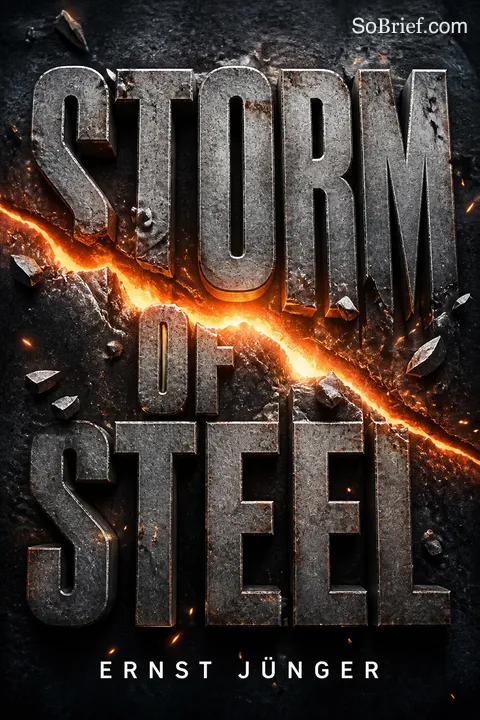
Storm of Steel stands as one of the most unflinching and influential accounts of World War I, remarkable for its refusal to moralize or sentimentalize the experience of combat. Jünger's narrative is both a personal memoir and a meditation on the nature of war, exploring themes of courage, fate, and the transformation of the individual. Unlike many contemporaneous works, the book does not advocate pacifism or dwell on the futility of conflict; instead, it seeks to convey the reality of battle in all its terror and exhilaration. Jünger's focus on sensory detail, psychological adaptation, and the bonds of brotherhood offers a nuanced portrait of soldiers as both victims and agents. The episodic structure and vivid imagery immerse the reader in the immediacy of the front, while the recurring motifs of endurance, loss, and survival invite reflection on the costs and meanings of war. In the modern context, Storm of Steel challenges readers to confront the complexities of violence, the allure and danger of heroism, and the enduring impact of trauma. Its lessons are not prescriptive but experiential, inviting empathy, critical thought, and a recognition of the profound ways in which war shapes—and scars—those who endure it.
Review Summary
Storm of Steel is praised as a vivid, unflinching memoir of World War I from a German soldier's perspective. Readers appreciate Jünger's detailed descriptions of trench warfare and his unique attitude towards combat, finding it both exhilarating and horrifying. The book is noted for its lack of political commentary and focus on the immediate experience of battle. Some reviewers find Jünger's detached tone and apparent enjoyment of war unsettling, while others admire his honesty and literary skill. Overall, it's considered an important and compelling account of the Great War.
People Also Read


Characters
Ernst Jünger
Jünger is both the protagonist and narrator, a young man transformed by the crucible of war. Initially driven by romantic ideals, he is quickly disabused by the realities of combat. His journey is one of psychological adaptation: from naive volunteer to hardened officer, from observer to participant, from individual to part of a collective. Jünger's leadership is marked by empathy, courage, and a fascination with danger, but also by moments of detachment and introspection. He is both shaped by and resistant to the dehumanizing forces of war, seeking meaning in chaos and finding a kind of grim beauty in endurance. His relationships with his men are complex, blending camaraderie, authority, and mutual dependence. By the end, Jünger is marked—physically and emotionally—by his experiences, his identity forever entwined with the war.
Fritz Jünger
Fritz, Ernst's younger brother, serves alongside him for part of the war. Their relationship provides a rare source of warmth and continuity amid the chaos. Fritz's experiences mirror Ernst's in many ways: he is wounded, endures the same hardships, and shares the same sense of fatalism. The brothers' reunions are poignant, highlighting the personal costs of the war and the enduring power of familial ties. Fritz's presence deepens Ernst's reflections on duty, loss, and survival, and his fate serves as a reminder of the randomness of death and the fragility of hope.
Colonel von Oppen
Colonel von Oppen is the commanding officer of Jünger's regiment, a figure of authority, discipline, and paternal care. He represents the old order, with its emphasis on honor, duty, and the bonds of the regiment as a family. Von Oppen's leadership is both inspiring and demanding, setting high standards and providing stability amid chaos. His relationship with Jünger is one of mutual respect, and his eventual departure marks the end of an era. Von Oppen's presence underscores the importance of leadership in sustaining morale and cohesion, even as the war erodes the structures he embodies.
Lieutenant Boje
Boje is one of Jünger's closest fellow officers, sharing the burdens of command and the trials of the front. He is characterized by his calm under pressure, practical wisdom, and unwavering support for his men. Boje's friendship with Jünger is built on mutual trust and shared experience, providing a source of strength in moments of crisis. His fate—like that of many—serves as a reminder of the arbitrary nature of survival and the deep bonds forged in war.
Lieutenant Kius
Kius is another key comrade, known for his boldness and quick thinking in dangerous situations. He often accompanies Jünger on patrols and in critical moments, displaying both courage and a sense of humor. Kius's presence brings energy and adaptability to the group, and his survival through multiple ordeals highlights the role of luck and skill in war. His relationship with Jünger is marked by mutual respect and a shared commitment to their men.
Little Schultz
Schultz is a young officer whose optimism and energy stand out amid the grimness of the front. He is eager, sometimes reckless, and deeply committed to his comrades. Schultz's journey is emblematic of the many young men drawn into the war, full of hope and potential, only to be consumed by its violence. His death is a moment of profound loss for Jünger, symbolizing the destruction of a generation and the personal cost of leadership.
Captain von Brixen
Von Brixen is a seasoned officer who provides guidance and stability to Jünger and his peers. He is pragmatic, level-headed, and deeply invested in the welfare of his men. Von Brixen's approach to command balances discipline with understanding, and his presence is a source of reassurance in moments of uncertainty. His eventual wounding and departure reflect the attrition of leadership and the cumulative toll of the war.
Tebbe
Tebbe is a painter and officer whose sensitivity and creativity offer a counterpoint to the brutality of war. His friendship with Jünger is marked by shared conversations, mutual support, and a recognition of the absurdities of their situation. Tebbe's fate—wounded and ultimately killed—underscores the vulnerability of even the most resilient spirits, and his memory lingers as a symbol of what is lost in war.
Haller
Haller is a non-commissioned officer known for his ingenuity and willingness to take risks. He often assists Jünger in critical moments, displaying both competence and a sense of mischief. Haller's adaptability and practical skills are invaluable in the shifting conditions of the front, and his survival is a testament to the importance of initiative and quick thinking.
The Men of the 73rd
The rank-and-file soldiers of Jünger's regiment are both individuals and a collective presence. Their stories—of courage, fear, endurance, and loss—form the backbone of the narrative. They are farmers, students, workers, and dreamers, transformed by war into a brotherhood of survivors. Their resilience, humor, and humanity persist amid the horrors they face, and their sacrifices are honored in Jünger's account. The men's experiences highlight the universality of suffering and the ways in which war both destroys and forges community.
Plot Devices
Episodic Structure and Diary Form
Storm of Steel is structured as a series of episodes, many drawn directly from Jünger's wartime diaries. This approach creates a sense of immediacy and authenticity, immersing the reader in the day-to-day realities of the front. The episodic form mirrors the unpredictability and fragmentation of war, where moments of terror, boredom, and camaraderie follow one another without warning. The lack of a traditional plot arc emphasizes the randomness of survival and the cumulative impact of experience.
Vivid Imagery and Sensory Detail
Jünger's narrative is marked by precise, often poetic descriptions of the battlefield: the colors of explosions, the sounds of shells, the feel of mud and blood. This sensory richness draws the reader into the environment, making the horrors and beauty of war palpable. The imagery serves both to convey the intensity of experience and to create moments of reflection amid chaos.
Psychological Realism
The narrative delves deeply into the psychological effects of combat: the oscillation between terror and numbness, the development of fatalism, and the ways in which men cope with trauma. Jünger's introspective voice provides insight into the inner lives of soldiers, highlighting the complexity of their responses to danger and loss. The psychological realism grounds the narrative, making it both personal and universal.
Foreshadowing and Irony
Throughout the book, moments of foreshadowing—casual remarks, dreams, or minor incidents—often precede major events, underscoring the role of chance in war. Irony pervades the narrative: the contrast between expectations and reality, the absurdity of routines amid carnage, and the frequent reversal of fortunes. These devices reinforce the themes of uncertainty and the limits of human control.
Symbolism of Landscape and Weather
The changing landscape—mud, rain, ruined villages, blooming fields—serves as both backdrop and symbol. Weather and terrain shape the experience of battle, reflecting the emotional states of the soldiers and the larger forces at work. The interplay between nature and war highlights the tension between destruction and renewal, chaos and order.
Catalogues and Naming
Jünger frequently lists the names of comrades, battles, and places, echoing the tradition of epic poetry. These catalogues serve to honor the fallen, create a sense of continuity, and situate individual experience within a larger historical context. The act of naming becomes an act of remembrance, resisting the anonymity of mass death.
FAQ
What is Storm of Steel by Ernst Jünger about?
- Firsthand account of WWI: Storm of Steel is an autobiographical memoir by Ernst Jünger, chronicling his experiences as a German infantry officer during World War I from 1914 to 1918.
- Focus on combat and trench life: The book vividly describes the realities of trench warfare, including daily routines, major battles, and the psychological and physical toll on soldiers.
- Epic and unfiltered narrative: Jünger presents war as an elemental, overwhelming experience, offering neither a pacifist message nor political commentary, but rather an honest, immersive depiction of combat.
Who was Ernst Jünger, author of Storm of Steel?
- Soldier and decorated officer: Ernst Jünger was a German soldier who volunteered at the outbreak of World War I, rising to lieutenant and earning Germany’s highest military honor, the Pour le Mérite.
- Prolific writer and thinker: Beyond his war memoirs, Jünger wrote novels, essays, and scientific works, maintaining a long literary career and significant influence in German literature.
- Complex political figure: Though admired by the Nazis, he never joined the party and maintained a critical distance, later reflecting on Germany’s crises in his works.
Why should I read Storm of Steel by Ernst Jünger?
- Unmatched war realism: The memoir is praised for its raw, unfiltered depiction of World War I, offering a rare German perspective on trench warfare.
- Literary and historical significance: It predates many famous war memoirs, providing a unique contemporaneous viewpoint and evolving through multiple editions.
- Philosophical depth: Jünger’s reflections on courage, death, and the soldier’s transformation elevate the book beyond a simple war diary.
What are the key themes and takeaways from Storm of Steel by Ernst Jünger?
- War as elemental force: Jünger portrays war as a profound, almost natural phenomenon that shapes individuals and history, rather than a political or moral issue.
- Duality of experience: The narrative explores contrasts—boredom and terror, camaraderie and isolation, destruction and fleeting beauty.
- Transformation and weariness: Over time, the book shifts from youthful enthusiasm to a more somber, reflective tone, highlighting the psychological transformation of soldiers.
How does Ernst Jünger depict daily life in the trenches in Storm of Steel?
- Monotony and hardship: Jünger details the exhausting routines of trench life, including sentry duty, maintenance, and coping with mud, cold, and vermin.
- Moments of camaraderie: Despite harsh conditions, soldiers share meals, stories, and small pleasures, reinforcing bonds amid constant danger.
- Ever-present threat: The narrative immerses readers in the sensory reality of trench warfare, with the constant risk of death from artillery, snipers, and gas.
What are the major battles and locations described in Storm of Steel by Ernst Jünger?
- Les Eparges and the Somme: Jünger’s early battles include Les Eparges and the Somme, marked by intense bombardments and high casualties.
- Cambrai and Flanders: The memoir covers the Battle of Cambrai, notable for the first large-scale use of tanks, and the brutal fighting in Flanders, including Langemarck and Copse 125.
- Fresnoy and St-Pierre-Vaast: Later chapters focus on defensive actions, gas attacks, and the devastation of the landscape in places like Fresnoy and the woods of St-Pierre-Vaast.
How does Ernst Jünger describe the psychological impact of war in Storm of Steel?
- Mental strain and transformation: Jünger explores the psychological toll of waiting under bombardment, the tension of patrols, and the exhilaration of combat.
- Complex emotions: The memoir reveals a mix of fear, boredom, and a paradoxical “objective relish for danger” that shapes soldiers’ identities.
- Stoic acceptance: Over time, Jünger and his comrades develop a stoic attitude toward death and survival, finding meaning in duty and camaraderie.
What is the significance of storm troops and new tactics in Storm of Steel by Ernst Jünger?
- Formation of elite units: Jünger describes assembling and training storm troops, specialized for rapid, aggressive assaults to break trench stalemates.
- Innovative combat methods: The book details tactics like flanking maneuvers, hand-grenade use, and the “flanking file” advance to minimize exposure.
- Impact on warfare: Storm troops played crucial roles in battles like Cambrai, reflecting the evolution of infantry tactics and the shift toward more dynamic warfare.
How does Ernst Jünger portray enemy soldiers in Storm of Steel?
- Respect for adversaries: Jünger acknowledges the bravery and humanity of enemy soldiers, including British Highlanders and Indian troops.
- Humanizing encounters: The memoir recounts skirmishes, captures, and moments of unexpected camaraderie with prisoners, adding depth to the narrative.
- Global perspective: Jünger notes the diverse origins of enemy troops, reflecting on the worldwide scope and consequences of the conflict.
How does nature feature in Storm of Steel by Ernst Jünger?
- Nature’s resilience: Despite devastation, Jünger observes blooming flowers, singing birds, and changing seasons, offering solace amid destruction.
- Symbolic contrast: The peaceful countryside juxtaposed with the horrors of battle creates a poignant, almost surreal atmosphere.
- Connection to soldiers: Nature provides comfort and a sense of continuity, helping soldiers cope with fear and chaos.
How did Storm of Steel by Ernst Jünger evolve through its various editions?
- Multiple revisions: Jünger revised the book at least eight times, shifting from a raw, nationalistic tone to a more reflective, literary style.
- International reception: Early editions were more aggressive, while later versions were quieter and more impartial, influenced by a broader readership.
- Literary refinement: The memoir evolved from a diary format to a polished work balancing combat accounts with philosophical reflection.
What are the best quotes from Storm of Steel by Ernst Jünger and what do they mean?
- “What doesn’t kill me makes me stronger; and what kills me makes me incredibly strong.” This Nietzschean aphorism encapsulates the transformation and resilience forged by war.
- “A great heart feels no dread of approaching death, whenever it may come, so long as it be honourable.” Quoting Ariosto, Jünger expresses the ideal of courage and honor in the face of mortality.
- “War isn’t like a cake that the two sides divide up between them to the last crumb; there is always a piece left. That’s the piece for the gods…” This passage reflects Jünger’s view of war as containing an element of the sublime or sacred, beyond mere brutality.
Download PDF
Download EPUB
.epub digital book format is ideal for reading ebooks on phones, tablets, and e-readers.








































