
Plot Summary
Midnight Soul Transactions
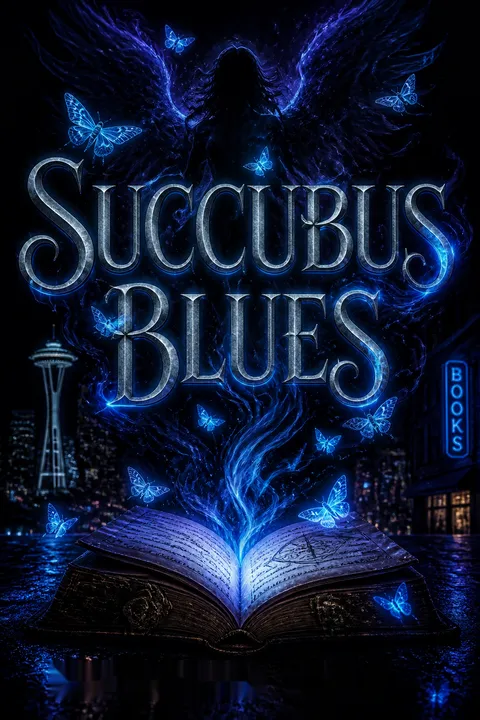
Georgina Kincaid, a succubus in modern-day Seattle, is called upon by her imp friend Hugh to seduce a desperate, thirty-four-year-old virgin in exchange for his soul. Despite her centuries of experience, Georgina feels jaded and even guilty about her role in corrupting mortals, especially when the "charity case" is so pitiful. After the act, she's confronted by Duane, a predatory vampire, who tries to intimidate her, highlighting the dangerous politics among immortals. Georgina's distaste for her job and her longing for something more meaningful are palpable. She seeks solace in books, particularly those by her favorite author, Seth Mortensen, whose words awaken a yearning for creativity and connection she feels she's lost as an immortal.
Immortal Politics and Predators
Georgina's world is populated by a complex hierarchy of immortals—demons, imps, vampires, and angels—each with their own agendas and rivalries. Her boss, Jerome, the archdemon of Seattle, manages the local "evil" workforce with a mix of apathy and authority, while Carter, a sardonic angel, seems to be both adversary and confidant. When Duane is found murdered, staked through the heart, suspicion falls on Georgina due to a recent altercation. The immortals' inability to kill each other directly, and the existence of rare vampire hunters, add layers of intrigue and danger. Georgina is forced to defend herself, all while feeling increasingly isolated and misunderstood by both mortals and immortals.
The Writer and the Succubus
Georgina's mundane day job at a bookstore collides with her supernatural life when Seth Mortensen, her literary idol, arrives for a signing. Their first encounter is awkward and charged, with Georgina unaware of his identity as she flirts and debates the merits of fan questions. When she realizes who he is, she's mortified, but Seth is quietly intrigued by her. The two share a series of miscommunications and near-misses, each drawn to the other's vulnerabilities. Seth's introversion and Georgina's charisma create a push-pull dynamic, complicated by her fear of intimacy and the risk her touch poses to mortals.
Dangerous Attractions
As Georgina juggles her feelings for Seth and the persistent advances of Roman, a charming stranger, she's drawn into a web of desire and danger. Roman's persistence breaks through her defenses, offering the possibility of a relationship without the usual succubus consequences. Meanwhile, the threat of a vampire hunter—or something worse—looms, with immortals being targeted and killed. Georgina's friendships with other immortals, like the vampires Peter and Cody, and her impish confidant Hugh, provide both comic relief and emotional support as the stakes rise. The lines between friend and foe blur, and Georgina's longing for normalcy becomes increasingly fraught.
Death in the Shadows
The immortal community is rocked by a series of attacks: Duane's murder, Hugh's brutal beating, and the eventual death of Lucinda, a guardian angel. The killer's methods suggest knowledge of both immortal and mortal weaknesses, and Georgina's circle grows paranoid and suspicious. Clues point to a supernatural perpetrator—possibly a nephilim, the half-angelic offspring of ancient unions between angels and humans. As Georgina investigates, she uncovers secrets about her friends, her enemies, and herself, all while the killer's attention seems to focus increasingly on her.
The Angel's Warning
Jerome and Carter's evasiveness about the true nature of the threat frustrates Georgina, who senses they're hiding something critical. Her research into biblical lore, aided by the mortal occultist Erik, leads her to the legend of the nephilim—powerful, outcast children of angels and mortals, cursed to wander and hunted by both sides. The nephilim's motives are revealed to be deeply personal, rooted in centuries of persecution and abandonment. Georgina's own history of loss and longing resonates with their plight, even as she fears becoming their next victim.
Mortal Longings
Georgina's relationships with mortals—her coworkers, her boss Warren, and especially Seth—highlight her deep yearning for love and belonging. Her succubus nature forces her to keep mortals at arm's length, lest she drain their life force, but her heart aches for genuine intimacy. Roman's immunity to her powers offers a tantalizing glimpse of what might be possible, but his own secrets and agenda complicate matters. Seth's growing affection for Georgina, expressed in awkward gestures and heartfelt emails, challenges her resolve to remain detached. The tension between desire and danger becomes unbearable as the nephilim's game escalates.
The Nephilim's Game
The nephilim, revealed to be Roman and his sister Helena (disguised as the New Age shopkeeper), orchestrate a psychological game, threatening the lives of Georgina's mortal friends to test her loyalties and affections. Forced to choose whom to protect, Georgina races against time, her every move watched and manipulated. The nephilim's vendetta is not just against the immortal hierarchy but also a personal reckoning with their own origins—Jerome, it turns out, is their father, and his abandonment has fueled their rage. The final confrontation is set: the nephilim versus the combined forces of angel and demon, with Georgina caught in the middle.
Love, Lies, and Betrayal
In a desperate bid to buy time and save lives, Georgina seduces Roman, exploiting his feelings for her to delay his plans. The intimacy is bittersweet, offering both the fulfillment she's craved and the guilt of betrayal. When the final battle erupts in her apartment, Georgina is forced to make an impossible choice: to save herself and Seth, she must drain Seth's life force, risking his death. The nephilim are defeated—Helena is killed, and Roman escapes, wounded and vengeful. The cost of victory is high, leaving Georgina emotionally shattered and Seth near death.
The Truth About Monsters
As the dust settles, Georgina confronts the reality of her existence: she is both monster and victim, capable of great harm and great love. Jerome insists that Seth's memories of the supernatural must be erased to protect their world, but Georgina bargains for his mind and heart, offering to become the perfect succubus in exchange. The deal is struck, and Seth is allowed to remember, but the emotional distance between them grows. Georgina's longing for love is matched only by her fear of what she is, and the hope that she might one day be more than her nature allows.
The Price of Memory
Georgina's sacrifice—condemning herself to a century of corrupting souls—secures Seth's memories, but at the cost of her own happiness. She visits him, confesses her true nature, and is met with confusion and pain. The love between them, once so promising, is now fraught with the knowledge of what she is and what she's done. Yet, in the midst of despair, there is a glimmer of hope: Seth's love endures, imperfect but real, and Georgina finds solace in the possibility that she is not beyond redemption. The story closes with the promise that love, though battered and bruised, can survive even the darkest of nights.
Hope in the Darkness
In the aftermath, Georgina returns to her daily life, changed but not defeated. The immortal community is shaken, but life goes on—new threats, new alliances, and the ever-present struggle between good and evil. Georgina's friends rally around her, offering support and understanding. A final gesture from Seth—a signed copy of his book, referencing the myth of Thetis and Peleus—reminds her that love is about holding on through every transformation, every trial. The future is uncertain, but Georgina dares to hope, embracing the possibility of happiness, however fleeting.
Epilogue: Holding On
Georgina's journey is far from over. The scars of her choices remain, but so does the strength she's found in herself and those she loves. The myth of Thetis and Peleus becomes a metaphor for her own life: a shape-shifter, loved by one who refuses to let go. As she faces new challenges and old regrets, Georgina learns that hope is not a gift from the divine, but a choice—a decision to keep holding on, no matter how many times she changes, no matter how many times she falls.
Analysis
Succubus Blues is a modern urban fantasy that uses the supernatural as a lens to explore timeless human questions: What does it mean to be loved, to be forgiven, to belong? Richelle Mead crafts a protagonist who is both powerful and powerless, a monster who longs for redemption, and a woman who cannot escape the consequences of her choices. The novel interrogates the binaries of good and evil, showing that both angels and demons are capable of cruelty and compassion, and that the true battle is not between heaven and hell, but within the self. The story's emotional resonance lies in its refusal to offer easy answers: love is both salvation and suffering, memory is both blessing and curse, and hope is a choice made in the face of despair. By blending humor, romance, and suspense, Succubus Blues invites readers to empathize with the monstrous and to believe that even the damned are worthy of grace. The ultimate lesson is that transformation—whether of body, heart, or soul—is possible, but only if we have the courage to hold on through every change, every trial, and every heartbreak.
Review Summary
Succubus Blues receives mixed reviews, with many praising its entertainment value, witty dialogue, and engaging characters. Readers appreciate the unique protagonist Georgina, a succubus with a conscience, and the intriguing love interests. Some criticize predictable plot twists and slow pacing. The book is often compared favorably to Mead's Vampire Academy series. While some find it mediocre, others are hooked and eager to continue the series. Overall, it's seen as a fun urban fantasy with romance, humor, and supernatural elements.
People Also Read


Characters
Georgina Kincaid
Georgina is a centuries-old succubus, tasked with seducing mortals and corrupting souls for hell. Despite her supernatural allure and shape-shifting abilities, she is deeply conflicted about her role, haunted by guilt and longing for genuine connection. Her immortality has left her jaded, yet she clings to small pleasures—books, dance, friendships—to stave off despair. Georgina's relationships with mortals are fraught with danger, as her touch drains their life, but she yearns for love and creativity, things she feels are forever out of reach. Her psychological complexity is rooted in her past: a mortal woman who made a desperate bargain to erase her own pain, only to find herself trapped in an endless cycle of seduction and regret. Throughout the story, Georgina's journey is one of self-discovery, sacrifice, and the hope that she might one day be more than the monster she fears she's become.
Seth Mortensen
Seth is a bestselling author whose quiet demeanor masks a passionate, fiercely loyal heart. Awkward in social situations, he finds solace in words and stories, creating worlds where love and adventure are possible. Seth is drawn to Georgina's charisma and vulnerability, sensing in her a kindred spirit despite her supernatural nature. His love for her is deep and unwavering, expressed in small gestures and heartfelt letters. Seth's psychological arc is one of awakening: through his relationship with Georgina, he learns to risk his heart, to fight for what he wants, and to accept the pain that comes with love. His willingness to accept Georgina's true self, even at great personal cost, marks him as both brave and compassionate—a mortal capable of loving a monster without illusion.
Roman
Roman is a nephilim, the half-angelic, half-human offspring of Jerome, the archdemon. Handsome, witty, and seemingly immune to Georgina's succubus powers, he offers her the possibility of a relationship without consequences. Beneath his charm lies a deep well of pain and anger, the result of centuries of persecution and abandonment. Roman's vendetta against the immortal hierarchy is both personal and philosophical: he seeks to punish those who have hunted his kind, to upend the system that has defined good and evil for millennia. His love for Georgina is genuine but ultimately destructive, as he cannot escape the cycle of violence and revenge that has shaped his existence. Roman's arc is tragic—a rebel who cannot break free from the past, even when offered the chance at happiness.
Jerome
Jerome is the archdemon of Seattle, responsible for managing the city's "evil" workforce. He projects an air of lazy authority, often appearing indifferent to the chaos around him, but beneath the surface lies a complex web of guilt, regret, and paternal longing. Jerome's past as the father of the nephilim is a secret he guards fiercely, his abandonment of Roman and Helena both a survival tactic and a source of shame. His relationship with Georgina is paternal yet transactional, marked by both indulgence and manipulation. Jerome's psychological struggle is one of denial: he refuses to confront the consequences of his actions, even as they come back to haunt him.
Carter
Carter is an angel who defies expectations, choosing to spend his time among demons and lesser immortals rather than his own kind. His dry wit and irreverence mask a deep empathy for those around him, and his friendship with Jerome is both a cosmic joke and a lifeline. Carter's role as Georgina's reluctant protector forces him to confront the limits of his own power and the ambiguity of good and evil. He is both observer and participant, guiding Georgina toward hope even as he acknowledges the darkness in her life. Carter's psychological arc is one of acceptance: he recognizes that love and redemption are possible even for the damned, and he chooses to believe in Georgina when she cannot believe in herself.
Hugh
Hugh is an imp, a minor demon whose job is to broker soul contracts and facilitate damnation. Despite his infernal duties, he is one of Georgina's closest friends, offering comic relief and practical support. Hugh's psychological complexity lies in his ability to compartmentalize: he enjoys the perks of his job but is not without conscience, often bending the rules to help Georgina. His loyalty is unwavering, and his friendship provides a rare source of stability in Georgina's tumultuous life.
Peter
Peter is an older vampire, obsessed with etiquette and personal appearance. His friendship with Georgina is marked by playful banter and mutual respect, and he serves as both confidant and comic foil. Peter's psychological arc is one of adaptation: he struggles to find meaning in immortality, seeking comfort in routine and camaraderie. His mentorship of Cody reveals a softer side, and his willingness to stand by Georgina in times of crisis underscores his loyalty.
Cody
Cody is a relatively new vampire, eager to please and desperate for acceptance. His optimism and innocence contrast with the cynicism of the older immortals, and his friendship with Georgina is marked by genuine affection. Cody's psychological journey is one of maturation: he learns to navigate the dangers of the immortal world, to question authority, and to stand up for his friends. His vulnerability makes him both a target and a source of hope.
Helena
Helena, Roman's twin sister, hides in plain sight as a New Age shopkeeper, using her position to influence mortals and mask her true nature. Her bitterness toward the immortal hierarchy is matched only by her resentment of Georgina, whom she sees as both rival and symbol of everything she despises. Helena's psychological arc is one of alienation: she longs for acceptance but is driven by anger and a sense of betrayal. Her fate is a cautionary tale about the dangers of letting pain become identity.
Warren
Warren is Georgina's boss at the bookstore and her occasional lover, a man whose moral compass is as flexible as his marital vows. His relationship with Georgina is transactional, providing her with the energy she needs while allowing him to indulge his desires. Warren's psychological complexity lies in his self-justification: he rationalizes his actions, refusing to see the harm he causes. His presence in Georgina's life is a reminder of the blurred lines between victim and perpetrator.
Plot Devices
Dual Worlds: Mortal and Immortal
The narrative structure of Succubus Blues hinges on Georgina's existence in both the mortal and immortal worlds. Her day job at the bookstore and her supernatural duties as a succubus create constant tension, forcing her to compartmentalize her identity and desires. This duality is mirrored in her relationships—with mortals, she must hide her true self; with immortals, she is never quite at home. The interplay between these worlds drives the plot, as threats in one bleed into the other, and Georgina's longing for wholeness becomes the emotional core of the story.
Mystery and Suspense
The central mystery—the identity and motives of the killer targeting immortals—unfolds through a series of clues, misdirections, and revelations. Foreshadowing is used to build tension, with early hints about the nephilim's existence and the true nature of Roman and Helena. The shifting alliances among immortals, the secrecy of Jerome and Carter, and the psychological games played by the nephilim keep both Georgina and the reader guessing. The use of notes, warnings, and staged challenges heightens the suspense, culminating in a climactic confrontation that forces Georgina to choose between love and duty.
Biblical and Mythological Allusions
The plot is enriched by references to biblical and mythological texts, particularly the legend of the nephilim and the myth of Thetis and Peleus. These allusions serve as both literal plot points and metaphors for Georgina's journey: the struggle between divine and human, the pain of transformation, and the hope of being loved despite one's monstrous nature. The use of annotated Bibles, scholarly research, and symbolic gifts (like the signed book referencing Thetis) grounds the supernatural in the familiar, inviting readers to see the timelessness of Georgina's struggles.
The Price of Memory and Identity
A recurring device is the erasure and preservation of memory—Georgina's original bargain to be forgotten, the threat of Seth's memories being wiped, and the ultimate deal she strikes to preserve their love at great personal cost. This theme interrogates the value of pain and joy, the necessity of being remembered, and the courage required to hold on to love even when it hurts. The tension between forgetting and remembering becomes a metaphor for redemption and the possibility of change.
First-Person Intimacy and Emotional Arc
The story is told in Georgina's wry, self-deprecating first-person voice, allowing readers direct access to her thoughts, fears, and desires. This intimacy creates a strong emotional arc, as we witness her journey from jaded detachment to vulnerable hope. The use of humor, banter, and pop culture references balances the darker themes, making the supernatural both accessible and poignant. The narrative structure, with its blend of action, romance, and introspection, ensures that the reader is always emotionally invested in Georgina's fate.
Georgina Kincaid Series

About the Author
Other books by Richelle Mead



Download PDF
Download EPUB
.epub digital book format is ideal for reading ebooks on phones, tablets, and e-readers.








































