Plot Summary
Before Dawn, Endlessly Raining
The novel opens before sunrise in a Scottish holiday park drenched in persistent rain. The natural setting is rendered both oppressively close and profoundly remote: water coats everything, erasing the boundaries between loch, sky, and earth. The holiday cabins, filled with families from elsewhere, are islands of isolation more than community. Each character feels the ceaseless rain not only as weather but as an inescapable mood, burdening the day from the beginning. Sound is reduced to the constant, lulling beat of rain, like blood and air in the body, simultaneously soothing and marking the passage of time. This watery opening creates a claustrophobic, reflective stage on which every minor action reverberates, foreshadowing the intertwining routine and crisis to come.
Regrets and Running
Justine, an overworked mother, uses early morning runs to escape her life and household. Her stream of consciousness is filled with regret—missed opportunities, choices that have led her here, financial uncertainties, and yearning for a different life. She lovingly surveils her sleeping family, teetering between protectiveness and exasperation. As she runs through woods and rain-soaked paths, her thoughts turn to physical limitations and mortality, especially after a fainting spell her doctor warned could become dangerous. Running is her assertion of agency against both domestic grind and bodily decline. The landscape—sodden, ancient, and unyielding—reminds her how fleeting her agency really is, hinting that safety or satisfaction might always be out of reach.
Old Couples Remember
David and Mary, a retired couple, reflect on a lifetime together as they move through careful domestic rituals. Their days are shaped by old habits: making tea just so, quietly avoiding rather than confronting each other. The rain amplifies their isolation and nostalgia—memories of children, parties past, the gradual shrinking of their world. A trip on the ferry and a drizzle-drenched walk highlight the limits of their bodies, the sense that their world is closing in. Still, kindness and accommodation persist, shaped by time's erosion. Their perspective overlays the young families' lives on the park, evaluating but also remembering their younger selves. For them, the past seems more vivid—and less recoverable—with each day.
Simultaneous Orgasms Project
Milly and Josh, engaged and full of new plans, attempt a holiday version of intimacy by pursuing simultaneous orgasms—"Project Simultaneous Orgasm." Their sexual efforts, however, continually collapse beneath intrusive thoughts about the future, domestic arrangements, and societal anxieties. Fantasy—about other lovers, places, control—competes with presence, but love mostly persists as negotiation and compromise. Their story satirizes, gently, the modern pressure to maximize pleasure and self-knowledge. Their vision for a future together on a remote Scottish island is full of hope but also ripe for future disenchantments, reflecting how even joy is shadowed by worry about climate, politics, and the ordinary grind of partnership.
Children and Wolves
Interludes shift to the animal world: a deer, perpetually alert to wolves that may or may not exist, watches over her fawn. The woods and water become primal again—threat and hiding place, echoing the children's own sense of unseen danger. For human children like Lola, Jack, and Violetta, the holiday's freedoms and tensions play out as dares, bullying, and secret alliances by the dark beach and swings. Parental anxieties are mirrored in kids' games, and sometimes in small cruelties and fears that echo the adults' isolation and misunderstanding. Over all, a sense of exposure and threat thickens—never quite safe, never truly free.
Stones Across Water
Lola and Jack, siblings often left to their own devices, test childhood limits: swinging out over water, skimming stones, and taunting Violetta, the Ukrainian girl from the much-gossiped-about, noisy family. Small acts—refusing to help Violetta off the swing, mocking her as an outsider—reveal the birth of social exclusion and casual, learned prejudice. The loch itself is both playground and latent danger, its depth and coldness conjuring daydreams of drowning, flight, and transformation. Children mimic adult resentments, their petty cruelties presaging the catastrophe to come while the rain soaks every imagined escape.
Drowning in Family
As the relentless rain continues, families begin to fray. Parents nag children to go outside for sunlight—"you don't want rickets"—but their attempts at togetherness often lead to boredom, irritation, or tears. Jack manages his anxious mother's moods and Lola tries to avoid responsibility for her brother. The holiday's premise—reconnection and fun—buckles under the pressure of enforced intimacy, lack of privacy, and competing needs. The minor arguments, silent suffering, and self-conscious efforts to amuse or just escape each other reveal holiday as endurance rather than reprieve, every moment heavy with suppressed frustration or longing.
Kayak Escapes
Teenager Alex, desperate to escape his family and the claustrophobia of the cabin, takes a kayak out onto the stormy loch. His journey across rough water becomes a metaphor for adolescent yearning: for challenge, for autonomy, for the possibility of never returning. Physical risk—chilled to the bone, hands nearly useless, the possibility of drowning—mirrors psychic risk. Imagining flights abroad, alternate lives, Alex enacts rebellion in solitude. The loch, wild and ancient, becomes both threatening and enabling: a place to test boundaries, to find self, or to vanish entirely. He returns, battered but momentarily vindicated by adventure, already dreading the return to family and routine.
Mothers and Cleaning
Claire, another mother, attempts to anchor herself amid the chaos of toddler and child by cleaning each sticky surface in the rented cabin. She oscillates between exhaustion, resentment, and love, longing for private time that never comes. The rain, the close quarters, and the lack of internet access erode the peace she hoped for. Her husband offers to take the kids for an hour so she can rest, but "rest" becomes just another round of preparation, self-surveillance, or guilt over unfulfilled potential. The theme is clear: motherhood is unceasing labor, often unseen, rarely appreciated, and almost never neatly resolved, paralleling the ceaseless rain and mounting tension across the cabins.
Teenagers Counting Days
Becky, Alex's sister, is overwhelmed by teenage lethargy, simmering rage, and the pressure to perform in a family that feels outdated and confining. Her parents seem oblivious to her needs, fixated on chores and rules. Her thoughts are dark, bordering on suicidal, and escape fantasies often drift into violent or nihilistic territory. The outside world—represented by the enigmatic ex-soldier Gavin in his tent, or by distant, more fortunate friends—is always tantalizingly out of reach. Becky's anger is both deeply personal and generational, a reaction to the limitations imposed by class, geography, and the relentless, unchanging rain.
Firelight in Wet Night
As night falls, the party in the "noisy" cabin draws more outsiders, and tension crescendos among the other holidaymakers—a collision of resentment, xenophobia, and communal passivity. The rain intensifies, but so does the music, and adults debate intervening. Children can't sleep, adults stew in anger and fatigue, everyone waiting for someone else to act. When finally a delegation goes to confront the revelers, the mood shifts abruptly. Amid attempts at connection and hospitality, neglect, and inattention, a fire starts—spreading with shocking quickness through the wooden cabin despite the wet. The disastrous climax is sudden, chaotic: music drowned by flames, neighbors scrambling to help or escape, children missing, heroic but desperate rescues. The rain, once claustrophobic, becomes useless as nature fails to quell human disaster.
Party in the Rain
With the catastrophe, boundaries collapse and resentments are revealed as fragile defenses. Panic strips away the prejudices, pettiness, and imagined grievances—the desperate need for help, for rescue or solace, blurs the lines between insider and outsider. Each family rushes into the night, their divisions exposed and their true needs suddenly common: safety, survival, and community. Even the animal world is shaken: deer, bats, and birds are disturbed by the flames and the human tumult. In the cold light of fire, difference is replaced by vulnerability and sameness, as the survivors huddle together and watch the destruction.
Drumbeats, Dancing, Disaster
In the aftermath, there is screaming, the sound of fire engines late arriving, and the recognition that not everyone escaped. Amid confusion, fear, and the shock of mortality, old resentments dissipate. The characters who spent their days isolated now are stew together, dependents on each other's courage and generosity. For some—like Jack, who blames himself for distraction; for Becky, who had meant only to escape tedium; for Lola, who had just bullied Violetta—there is guilt and the knowledge that childhood's petty cruelties can have irreversible consequences. The wet Scottish night, now illuminated by disaster, is filled with the echo of drums—unmanageable sound, unmanageable fate.
Aftermath and Ash
The fire burns itself out, leaving the survivors stunned, the park reduced to charred ruins and old divisions rendered both meaningless and permanent. Parents comfort children, neighbors—some generous, some just present—huddle together, unable to sleep. The communal silence after the noise is heavier than the rain. Amid the shock, no one confides what cannot be repaired: lost children, lost hope, lost innocence. The loch, the woods, and the animals settle back into their cycle, but the human world has been permanently altered. The survivors face a future where small actions—kindnesses withheld or extended, prejudices voiced or silenced—will echo beyond the park.
The Edge of Loneliness
In the aftermath, the characters, especially the older couples and solitary mothers, feel more isolated than ever. Grief and regret hover: for lost youth, for missed gestures of kindness, for the impossibility of undoing small neglects. Old age looms larger, childhood feels more vulnerable, and hopes for the future are subdued by loss. People examine their actions, wondering if they've been too withdrawn, too judgmental, too slow to reach out. The cabins are no longer sanctuaries but reminders of what cannot be contained: risk, chance, and grief that arrives uninvited.
Shared Watchfulness, Shared Blame
Each survivor confronts questions of blame and responsibility. The park is a microcosm: everyone watched, no one intervened early or decisively enough. The tendency to isolate, to dismiss, to judge, is exposed as dangerous. The children's exclusion of Violetta, the adults' complaints, the watchfulness without action—all come under review as everyone confronts how easily misfortune passes the boundary from "other people's problem" to one's own. The lesson—that passive observation is not enough, that communities require involvement, and that prejudice and passivity combine in tragic ways—is inescapable.
Returning to Silence
As dawn breaks, silence returns to the sodden park. The rain continues, indifferent to loss. The loch, woods, and animals resume their cycles. For human survivors, the event will never fully pass or clarify; wounds will remain, as will awkward connections and unbridgeable chasms. But the world moves on. The novel's final tone is both elegiac and quietly hopeful—some survivors will carry forward new awareness, some will retreat further. The landscape, ever indifferent, continues its slow, damp recomposing, a reminder that tragedy, community, and healing are always partial.
Analysis
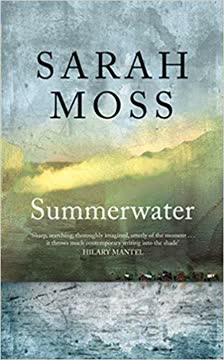
Sarah Moss's Summerwater is a masterful, quietly devastating exploration of modern British alienation, set against the ceaseless wet of a Scottish summer. Through intricate interior monologues, Moss maps the ways individuals in close proximity—families, couples, outsiders—remain fundamentally disconnected, their attempts at connection or understanding undermined by habit, prejudice, exhaustion, or fear. The novel's structure, flitting between consciousnesses, enacts precisely the condition it describes: everyone is both observer and observed, never quite able to see or help the other. At the story's climax, a sudden fire physically burns down the walls that defined and separated, forcing shared crisis and a reckoning of collective responsibility—too late for prevention, but opening (perhaps) the possibility of change. Throughout, Moss uses water and nature as both literal and symbolic forces: indifferent, ancient, cyclic, and ultimately uncontrollable. Her writing balances the mundane with the profound—everyday frustrations are set beside existential dread and fleeting joy. The lesson is not utopian: the world is perilous, community is built only through action and sometimes fails, and kindness delayed is often kindness denied. Summerwater asks what it means to live together, to watch and not intervene, and to bear the aftermath—making it an urgent novel for our era of isolation and unrest.
Review Summary
Summerwater receives mixed reviews, averaging 3.49/5. Many praise Sarah Moss's atmospheric, lyrical prose and vivid character portraits, comparing her stream-of-consciousness style to Virginia Woolf. Readers appreciate the dark humor, particularly scenes involving Milly fantasizing during sex and Claire squandering her free hour. The Scottish holiday park setting and relentless rain create palpable tension. Critics find the multiple voices too similar and the pacing slow. The abrupt, dramatic ending divides readers — some find it powerful, others feel it is rushed. The book's Brexit-era xenophobia themes and the silenced Ukrainian family draw significant commentary.
People Also Read





Characters
Justine
Justine is a middle-aged woman constantly wrestling with her choices and limitations. Stuck between her own youthful aspirations and her current roles as mother and wife, she runs—literally—every morning, asserting autonomy in a life dominated by care for others. Justine's marriage to Steve is loving but wearied; her regrets and anxieties about money, security, and aging bleed into her interior monologue. Psychoanalytically, she averts her fear of irrelevance or mortality through discipline and motion, but is also haunted by the knowledge that independence is precarious, her agency easily circumscribed by health or family ties. By the novel's end, Justine is shaken but her fundamental conflict—between longing for more and acceptance of what is—remains unresolved but larger in scope.
Steve
Steve, Justine's husband, is a man adrift as his influence diminishes: his masculinity, parenting, and comfort are constantly threatened by a world he neither controls nor fully understands. His annoyance at the "foreign" party is both a projection of his insecurity and a cultural reflex, rooted in class anxieties more than direct prejudice. He tries to exert control through passive aggression, minor complaints, and occasional grandstanding, but ultimately feels powerless in the family and community. The disaster breaks down some of his defenses, but his fundamental unease remains, reflecting a broader crisis in contemporary masculinity.
David
David is the older, retired doctor who looks back on a career and marriage that feel distant and ephemeral despite their stability. Quietly attentive to his wife Mary, he struggles with the slippage of memory, the shrinking of worlds, and the threat of irrelevance. He is protective but sometimes patronizing, seeing himself as a bulwark against encroaching chaos, but this confidence falters in the face of physical decline and the world's indifference. David's watching of younger people is tinged with nostalgia and some jealousy, his lessons of the past always just out-of-step with the present crisis.
Mary
Mary, David's wife, is gently losing her grip on memory and routine. She resists this decline with small routines—painting, organizing, remembering poetry and hymns. Like many older women, she leans quietly on her spouse but resents the condescension age brings. Mary's internal world is full of past joys, regrets, and memories of family; her desire for continuity and meaning shows through in rituals, sketches, and attempts at hospitality. The disaster stirs her to both loss and quiet realization: the tight control of one's life is always temporary, and memory both protects and isolates.
Milly
Milly is a well-educated, feminist teacher whose relationship with Josh is full of love but also complication. Her mind is incessant, filled with concerns about gender, power, justice, and self-realization. Sex becomes a site for negotiation and performance, as she worries about authenticity, pleasure, and the need to "get it right." She is both emotionally attuned and often distant, her thoughts often spiraling out beyond the present. The pressure to construct a perfect partnership and life is both motivator and stressor, and Milly's development is a struggle to maintain individuality even while longing for genuine connection and security.
Josh
Josh is Milly's fiancé—well-intentioned, a bit passive, attached to tradition but trying to adapt. Focused on concrete plans (the future life on the island, building shelves), he sometimes fails to perceive the nuances of Milly's emotional world. His love is steadfast but occasionally tone-deaf, relying on practical gestures and a somewhat inflexible optimism. Josh's struggle is the male challenge of this new world—how to be a partner in an era of shifting expectations, both grateful and frustrated by his own inability to change or fully connect.
Lola
Lola, perhaps the most psychologically complex child, is both bold and vulnerable—a girl testing the limits of kindness, cruelty, belonging, and difference. Her exclusion of Violetta exposes the roots of xenophobia and group dynamics in children. Her play with danger (the swing, the water) is an assertion of autonomy in a constraining environment. Lola is both a victim and perpetrator of casual exclusion, her actions driven by a need to become someone important—just as the adults are—but also to resist being boxed in. After the disaster, Lola's role in small betrayals haunts her and clarifies, for her, the painful ambiguities of growing up.
Becky
Becky, a teenager almost paralyzed by her environment, is consumed with anger, boredom, and a sense of pointlessness. Her depression, self-harm fantasies, and aggression toward her parents crystalize the adolescent experience of modern Britain: limited prospects, internet withdrawal, a sense of being trapped by economic and familial forces. Becky flirts with the soldier Gavin for escape and rebellion, but finds even this potentially dangerous, and ultimately empty. Her arc is less about transformation than about stark realization—the world may not offer an exit, only more complicated forms of endurance.
Alex
Alex, Becky's brother, is at the liminal stage between boyhood and adulthood. His adventure by kayak into the wild loch is the novel's emblem of existential risk: testing body and will, seeking meaning, imagining escape. As with Becky, Alex's dissatisfaction is generational: his world is shrinking, prospects narrowing, but the need for assertion (and risk) remains. His willingness to charge into the burning building, despite himself, reveals the adolescent's capacity for courage borne not of altruism but the hunger for action.
Violetta
Violetta, the Ukrainian girl, is at the heart of the novel's commentary on otherness, prejudice, and childhood vulnerability. She is mocked, excluded, and scapegoated by the British children—never quite able to defend herself or fully belong. For adults, her family is a source of complaint; for children, she is a convenient target. Her presence exposes the quiet violence of casual xenophobia and the profound risks faced by those with "wrong" accents or names. Her possible fate in the fire lingers as both personal tragedy and societal indictment.
Plot Devices
Polyphonic Structure and Rotating Interiorities
Moss weaves multiple interior monologues, jumping from one character's consciousness to another, across age, class, and perspective. This rotating perspective enables a deep psychological realism—every character is both isolated and observed, their judgments, anxieties, and daydreams often echoing in the background of someone else's. The park becomes a microcosm of contemporary Britain, with each voice contributing to the mounting tension that forecloes external threat or help. The result is both polyphonic (many voices) and claustrophobic—a story about togetherness and apartness, punctuated by the inability to see or help each other in time.
Slow Accumulation and Foreshadowing
The relentless rain is not merely weather but metaphor and mood: it wears away patience and boundary, signaling the monotony and pressure that will build to collapse. Small events—missed opportunities for kindness, minor hostilities, complaints about the "foreign" neighbors, and parental admonitions—recur and layer, hinting at trouble to come. Subtle allusions to accident and disaster abound—references to drowning, burning, animals hiding from danger—which simultaneously lull and alert the reader to an inevitable but unpredictable tragedy.
Symbolism of Water and Fire
Water—rain, loch, condensation, and dripping—permeates every scene, embodying the characters' emotional states: flow, stagnation, drowning, and cleansing. When fire arrives—the burning cabin—it is both culmination and reversal: a sudden, uncontrollable force that reunites and undoes all previous boundaries. The water cannot save; the fire cannot be contained. The interplay of these elements is Moss's critique: that the world is indifferent and our separations are more fragile than we think.
Social Microcosm and Satire
By placing a cross-section of British society, as well as outsiders, in a forced communal setting, Moss exposes the latent prejudices, class anxieties, and failures of modern social life. Humor and satire—aimed at everything from herbal teas to marital sex, recycling to xenophobia—bring the smallness and pettiness of grievances into sharp, sometimes excruciating, focus. This is counterbalanced by moments of real heroism, tenderness, or recognition—always brief, always complicated. The microcosmic setting enables commentary on the large forces (economic uncertainty, political division, crumbling welfare) that shape intimate lives.








































