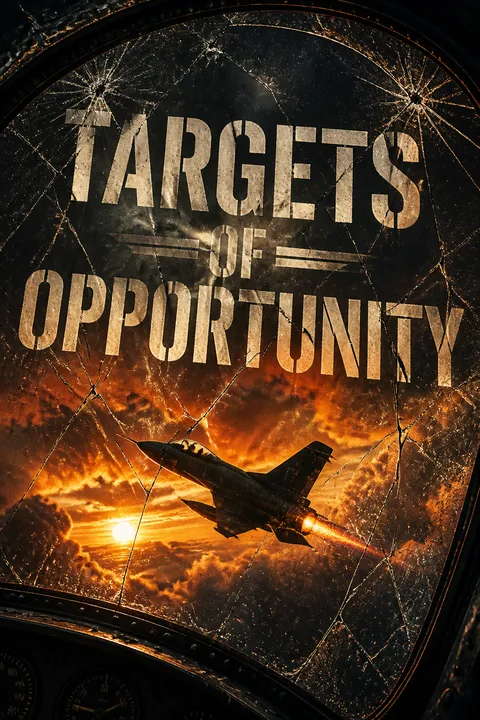

Plot Summary
Da Nang Rescue Run
The novel opens with Marine aviator Brad Austin and his crew scrambling from Da Nang Air Base to rescue a trapped recon team. Through monsoon rain and enemy fire, Brad and his wingman risk everything, flying low and dropping bombs and napalm dangerously close to their own men. The tension is palpable as the rescue teeters on disaster, with Brad's aircraft taking hits and losing radio contact. The mission's success is hard-won, but not without cost—one Phantom crashes, and the survivors return shaken, their nerves frayed by the close brush with death. This harrowing episode sets the tone for the relentless danger and moral ambiguity that will define Brad's journey.
Secret Orders Delivered
After the rescue, Brad is abruptly reassigned, his orders shrouded in secrecy. Confused and frustrated, he's told to report to Bangkok, Thailand, with no explanation. His commanding officer suspects it's related to a past breach of rules over Phuc Yen, where Brad shot down enemy MiGs in forbidden airspace. The uncertainty gnaws at Brad, who fears being sidelined or punished. Yet, the orders are clear: he is to leave his squadron and report to a civilian contact. This sudden upheaval marks the beginning of Brad's entanglement in a covert operation that will test his skills, loyalty, and identity.
Hot Pad Tensions
Back at Da Nang, the relentless pace of war grinds down the pilots. The Hot Pad, a place of constant readiness, becomes a crucible of anxiety and camaraderie. Brad and his radar officer, Randy Wyatt, mourn the loss of their wingman, Stew Robinett, who crashed in bad weather. The squadron's morale is battered by accidents, near-misses, and the ever-present threat of death. Amidst the chaos, Brad clings to memories of Leigh Ann, the woman he loves, finding solace in her letters. The emotional toll of combat and the bonds between pilots are laid bare, foreshadowing the personal sacrifices to come.
Bangkok Recruitment
In Bangkok, Brad meets Hollis Spencer, a CIA project officer with a patch over his eye. Spencer offers Brad a chance to become a test pilot for a top-secret project, hinting at danger but promising adventure. The assignment is voluntary, with the caveat that Brad will be erased from official records—if he's killed, he'll be listed as missing in action. Intrigued and eager for a break from daily combat, Brad accepts, unaware of the full scope of what awaits. This pivotal encounter draws Brad into the shadowy world of intelligence, where trust is scarce and the stakes are life and death.
Test Pilots Chosen
Brad joins a select group of pilots—Nick Palmer, Lex Blackwell, and Grady Stanfield—each with combat experience and MiG kills. Under Spencer's guidance, they are briefed on Operation Achilles, a clandestine effort to test-fly a captured MiG-17. The pilots are stripped of their military identities, paid in cash, and warned that the government will deny any knowledge of them. The group's dynamic is shaped by mutual respect, rivalry, and the thrill of flying the enemy's aircraft. Their training is intense, and the secrecy surrounding the mission breeds both excitement and unease.
CIA's MiG Gambit
The pilots relocate to a secret base in California, where they encounter the MiG-17—a crude but formidable Soviet fighter. Under the watchful eyes of Spencer and engineer Hank Murray, they learn the quirks and dangers of the aircraft. The MiG's limitations become clear during test flights, with Stanfield narrowly surviving a high-speed loss of control. The pilots' technical expertise and adaptability are tested as they push the MiG to its limits, gathering vital intelligence for American forces. The operation's success hinges on their ability to master the enemy's machine and keep its existence hidden.
Flying the Enemy's Jet
As training intensifies, the pilots rotate through test flights, each facing mechanical failures and near-disasters. Brad's quick thinking saves him during a runaway engine incident, while Nick and Lex grapple with the MiG's unpredictable handling. The team's bond deepens through shared danger, but the ever-present risk of exposure looms. The CIA's plan is ambitious: use the MiG to teach American pilots how to defeat it in combat. The pilots' insights will shape future tactics, but the line between training and real-world application begins to blur, setting the stage for more perilous missions.
Dangerous Friendships
Off-duty, the pilots' lives become entangled with civilians, notably the alluring Allison van Ingen. Her presence complicates Brad's relationship with Leigh Ann and introduces new vulnerabilities. Parties, romantic tensions, and accidental revelations threaten the operation's secrecy. Lex, in a drunken moment, divulges classified information to Allison, only to later discover she is a CIA security specialist assigned to monitor them. The blurred boundaries between personal and professional lives heighten the sense of danger, as trust is tested and the consequences of a breach become all too real.
Operation Achilles Unveiled
Spencer gathers the team to explain the true purpose of Operation Achilles: to use the MiG in actual combat over North Vietnam, targeting the enemy's best pilots. The pilots will fly disguised as Soviet advisers, with no official support if captured. The operation is sanctioned at the highest levels but must remain utterly deniable. The pilots' training now has a deadly purpose—they are to infiltrate enemy airspace, sow confusion, and tilt the air war in America's favor. The moral and psychological conflict of the mission settles on the team, as they prepare for the ultimate test.
Training and Temptations
As the team trains for combat, personal dramas intensify. Brad's relationship with Leigh Ann is strained by distance and secrecy, while Allison's feelings for him grow more complicated. The pilots struggle to balance duty and desire, knowing any distraction could prove fatal. The arrival of CIA brass and the looming threat of exposure add pressure. The pilots' camaraderie is both a source of strength and vulnerability, as they rely on each other in the face of mounting risks. The stage is set for the operation's most dangerous phase.
Security Breaches
The operation's security is compromised when Lex's drunken confession to Allison is revealed. Spencer's anger is tempered by the realization that Allison was a plant all along, tasked with testing the pilots' discretion. The incident exposes the fragility of trust within the team and the ever-present threat of internal sabotage. As the pilots grapple with guilt and suspicion, the operation's stakes are raised—any further breach could doom them all. The tension between personal loyalty and professional duty reaches a breaking point, foreshadowing the chaos to come.
The First MiG Mission
The MiG is smuggled to a secret base in Laos, where Brad and Nick prepare for their first real mission. Disguised as Soviet pilots, they infiltrate North Vietnamese airspace, targeting enemy aces. The mission is a harrowing blend of skill, deception, and luck. Brad's radio call in English nearly exposes the operation, while Nick's dogfight ends with a jammed cannon and a narrow escape. The pilots' actions sow confusion among both enemy and friendly forces, but the risks of discovery and death are ever-present. The operation's success is measured in both kills and close calls.
Deception in the Skies
With the operation's cover fraying, the pilots are authorized to use the MiG as a weapon of deception for audacious strafing attacks on enemy airfields. Brad's daring raids destroy multiple MiGs on the ground, but also draw intense anti-aircraft fire and pursuit by both enemy and American fighters. The psychological impact on the North Vietnamese is profound, but the cost is high—Brad is wounded, and the MiG is severely damaged. The operation's deniability is threatened as rumors spread and the enemy adapts. The pilots' resilience and ingenuity are tested to the limit.
Love, Lies, and Loyalties
As the operation grinds on, the pilots' personal lives unravel. Brad's affair with Allison comes to a painful end when he chooses Leigh Ann, shattering Allison's heart. The emotional fallout is compounded by the constant threat of death and the moral ambiguity of their mission. The team's unity is strained by guilt, jealousy, and the burden of secrecy. The arrival of CIA leadership signals that the operation's end may be near, but not before one final, desperate mission.
The Laos Outpost
The remote base becomes a battleground as Pathet Lao and North Vietnamese forces launch repeated attacks. The pilots and CIA personnel are forced into a desperate defense, digging foxholes and fighting for survival. The compound is battered by mortars and small-arms fire, casualties mount, and the sense of impending doom grows. The operation's strategic value is weighed against the human cost, as the team faces the reality that they may be abandoned or sacrificed for the sake of secrecy.
Ambush and Survival
During a final mission, Brad's MiG is shot down deep in enemy territory. Sabotaged by a disarmed ejection seat, he is forced to crash-land and evade capture, wounded and alone. The rescue helicopter, itself under fire and running out of fuel, manages a daring extraction under withering enemy fire. The escape is fraught with peril—one pilot is killed, and the survivors barely make it back to the besieged base. The ordeal cements the bonds between the survivors but leaves deep scars, both physical and emotional.
The Final Sortie
As the enemy overruns Alpha-29, the team mounts a desperate evacuation. Under heavy fire, Brad is wounded again while rescuing Allison, who is mortally wounded in the attempt. The survivors escape in a battered cargo plane, leaving behind the wreckage of their mission and the bodies of fallen comrades. The operation is over, its legacy a mix of heroism, sacrifice, and unresolved questions. The survivors are left to grapple with the cost of their actions and the uncertain future that awaits them.
Extraction Under Fire
In the aftermath, Brad recovers in a hospital, reunited with Leigh Ann, who reveals she is pregnant. The survivors mourn their losses and reflect on the price of secrecy and war. The CIA buries the operation, erasing its traces and leaving the participants to carry the burden of memory. The novel closes on a note of bittersweet resolution—love endures, but the scars of war and betrayal remain. The story's emotional arc is one of courage, loss, and the search for meaning amid chaos.
Analysis
Targets of Opportunity is a masterful exploration of the psychological and moral complexities of covert warfare. Joe Weber, drawing on his own experience as a Marine aviator, crafts a narrative that is both thrilling and deeply human. The novel interrogates the costs of secrecy, the fragility of trust, and the corrosive effects of living a double life. Through Brad Austin's journey, readers experience the exhilaration and terror of flying on the edge, the agony of betrayal, and the longing for connection in a world defined by isolation and danger. The operation's ultimate failure—marked by loss, guilt, and the erasure of its participants—serves as a cautionary tale about the limits of power and the price of victory. In a modern context, the novel resonates as a meditation on the ethics of intelligence work, the sacrifices demanded by national security, and the enduring need for personal integrity amid institutional cynicism. The lessons are clear: courage and loyalty are essential, but without transparency and accountability, even the noblest missions can become tragedies.
Review Summary
Characters
Brad Austin
Brad Austin is the novel's protagonist, a skilled and daring Marine pilot whose sense of duty is matched only by his capacity for self-doubt and guilt. His journey is one of transformation—from a by-the-book officer to a covert operative willing to risk everything for his comrades and mission. Brad's relationships, especially with Leigh Ann and Allison, reveal his vulnerability and longing for connection amid the isolating demands of war. Psychologically, Brad is driven by a need to prove himself, haunted by the deaths of friends and the moral compromises he must make. His arc is defined by resilience, sacrifice, and the enduring hope for redemption.
Hollis "Cap" Spencer
Spencer is the architect of Operation Achilles, a former naval aviator whose experience and ambition drive the mission forward. He is both mentor and manipulator, guiding the pilots while shielding them from the full truth of their expendability. Spencer's psychological complexity lies in his struggle to balance loyalty to his men with obedience to the shadowy demands of the Agency. As the operation unravels, his guilt and self-doubt intensify, culminating in a crisis of conscience. His relationship with Allison is paternal, and his leadership is marked by both empathy and ruthlessness.
Allison van Ingen
Allison is a master of deception, tasked with monitoring the pilots and testing their loyalty. Her beauty and intelligence make her both a confidante and a threat. Allison's attraction to Brad evolves into genuine love, but her role as a spy complicates her ability to form authentic connections. Psychologically, she is torn between duty and desire, ultimately sacrificing herself in the operation's final moments. Her death is a poignant reminder of the personal costs of secrecy and war.
Nick Palmer
Nick is Brad's closest ally, a fellow pilot whose humor and bravado mask deep-seated fears and insecurities. His easy charm belies a fierce loyalty to his friends and a willingness to risk everything for their safety. Nick's psychological journey is one of maturation, as he confronts the realities of war, loss, and betrayal. His role as Brad's confidant and protector is central to the novel's emotional core.
Lex Blackwell
Lex brings a cowboy's swagger and a disarming candor to the team. His impulsiveness leads to critical security breaches, but his courage and loyalty are unquestionable. Lex's psychological makeup is shaped by a need for acceptance and a tendency to seek validation through risk-taking. His arc is one of redemption, as he learns the value of discretion and the weight of responsibility.
Grady Stanfield
Grady is the team's senior aviator, a consummate professional whose calm under pressure inspires trust. His near-fatal crash and subsequent injuries underscore the dangers of the mission and the fragility of even the most experienced pilots. Grady's psychological resilience is tested by trauma, but his commitment to the team never wavers.
Hank Murray
Murray is responsible for the MiG's upkeep, but his decision to sabotage the ejection seat out of fear of exposure nearly costs Brad his life. His actions reveal the corrosive effects of secrecy and the moral compromises demanded by covert operations. Murray's psychological arc is one of guilt and self-preservation, ultimately leading to his downfall.
Leigh Ann Ladasau
Leigh Ann represents Brad's hope for a life beyond war. Her unwavering support and eventual pregnancy offer a vision of redemption and continuity. Psychologically, Leigh Ann is both vulnerable and strong, navigating the uncertainties of loving a man consumed by duty and danger. Her presence anchors Brad, providing a counterpoint to the chaos of his professional life.
Chase Mitchell & Rudy Jimenez
These Air America helicopter pilots embody the spirit of improvisation and courage. Their willingness to risk their lives for others is a testament to the bonds forged in combat. Psychologically, they are driven by a sense of duty and camaraderie, but the losses they endure leave lasting scars.
Dennis Tipton
Tipton is the bureaucratic face of the Agency, torn between career advancement and the ethical quagmire of covert war. His psychological journey is marked by anxiety, self-preservation, and a growing sense of the operation's futility. Tipton's ultimate decision to evade responsibility reflects the moral ambiguity at the heart of the novel.
Plot Devices
Dual Identity and Disguise
The central plot device is the erasure of the pilots' military identities and their transformation into Soviet advisers. This device heightens the stakes, as any mistake could lead to capture, torture, or death without hope of rescue. The psychological toll of living a lie and the constant threat of exposure drive much of the novel's tension.
Enemy Technology as Trojan Horse
The use of a captured enemy aircraft as both a training tool and a weapon of deception is a powerful narrative engine. It allows the protagonists to infiltrate enemy airspace, sow confusion, and turn the enemy's strengths against them. This device also serves as a metaphor for the blurred lines between friend and foe, right and wrong.
Foreshadowing and Irony
The novel employs foreshadowing through repeated warnings about secrecy, the dangers of personal entanglements, and the consequences of betrayal. The irony of American pilots being hunted by their own side, and the ultimate sabotage of the ejection seat, underscores the tragic absurdity of covert war.
Psychological and Moral Conflict
The characters are constantly forced to choose between loyalty to their friends, obedience to authority, and their own moral compass. The tension between personal desire and professional duty is a recurring motif, driving both plot and character development.
Escalating Stakes and Denial
The operation's success depends on absolute secrecy, with the threat of abandonment or death if compromised. The plot escalates as the enemy adapts, the CIA leadership grows anxious, and the pilots are pushed to their limits. The device of plausible deniability becomes a source of both suspense and tragedy.








































