
Plot Summary
Funeral Reflections and Old Wounds
The novel opens with John Schuyler Moore, a New York Times reporter, reflecting on the funeral of Theodore Roosevelt and the emotional wounds left by the past. Moore's dinner with Dr. Laszlo Kreizler, the "alienist" (early psychologist), sets the stage for a return to the spring of 1896, when a series of brutal child murders shocked New York City. The city's underbelly is exposed, and Moore's own sense of loss and guilt is mirrored in the city's darkness. The narrative's tone is set: the investigation will not only be about catching a killer, but also about confronting the hidden traumas and hypocrisies of society and self.
A Grisly Discovery
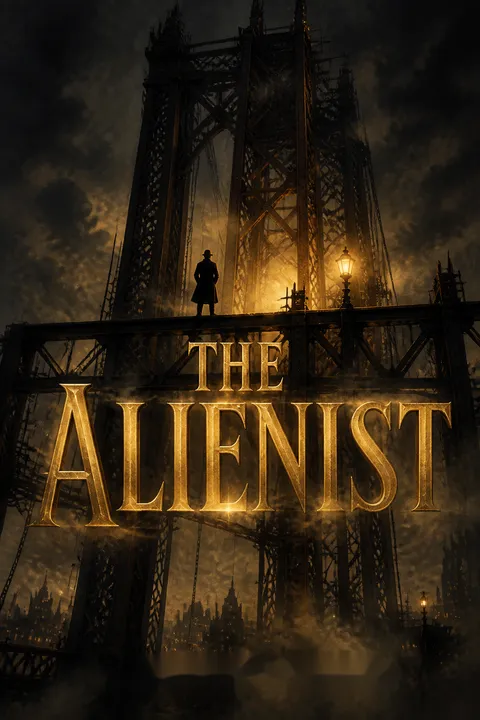
Moore is summoned in the dead of night by Stevie, Kreizler's loyal young assistant, to the scene of a horrific murder atop the unfinished Williamsburg Bridge. The victim is a young boy prostitute, Giorgio Santorelli, whose body has been grotesquely mutilated. Police Commissioner Theodore Roosevelt is present, disturbed by the brutality and the indifference of his officers. The scene is both physically and morally nauseating, highlighting the city's neglect of its most vulnerable. Roosevelt, Kreizler, and Moore recognize the need for a new kind of investigation—one that looks into the mind of the killer, not just the evidence left behind.
Roosevelt's Secret Mission
Roosevelt, frustrated by the police's apathy and corruption, secretly commissions Kreizler to investigate the murders outside official channels. Moore is reluctantly drawn in as Kreizler's confidant and chronicler. The team is assembled in secrecy, including Sara Howard, Roosevelt's pioneering female secretary, and the Isaacson brothers, Jewish detectives skilled in emerging forensic sciences. The group faces resistance from the police, the press, and the city's criminal underworld, but their determination is fueled by the knowledge that the killer will strike again unless they act.
The Alienist Assembles
Kreizler's team is a collection of social outsiders: a woman in a man's world, Jewish detectives, reformed criminals, and a psychologist whose methods are viewed with suspicion. Each brings unique skills—Sara's intelligence and resolve, the Isaacsons' scientific rigor, Stevie's street smarts, and Moore's access to the press and high society. Their investigation is methodical and modern, employing fingerprinting, psychological profiling, and forensic analysis. The team's camaraderie grows as they confront not only the killer but also the city's entrenched prejudices and their own personal demons.
The Isaacson Brothers' Science
The Isaacson brothers introduce cutting-edge techniques: fingerprint analysis, ballistics, and anthropometry. Their examination of the victims reveals a pattern: the killer is strong, skilled with a knife, and leaves ritualistic mutilations—especially the removal of eyes. The brothers' scientific approach clashes with the police's reliance on intuition and confessions, but their findings are crucial. They deduce that the killer is likely a tall, physically powerful man with anatomical knowledge, possibly a hunter or butcher, and that the murders are not random but follow a psychological logic.
Sara Howard's Determination
Sara Howard, determined to prove herself in a male-dominated world, becomes the team's indispensable liaison to the police and the city's bureaucracy. Her empathy allows her to connect with the victims' families, uncovering histories of abuse and neglect. Sara's own struggles with trauma and societal expectations mirror the investigation's themes. She discovers that the victims share a pattern of troubled childhoods and sexual exploitation, suggesting the killer is targeting boys who remind him of his own past. Sara's courage and insight push the investigation forward, even as she faces personal danger.
The Pattern of Violence
Kreizler identifies a pattern linking the current murders to unsolved cases from years before, including the deaths of immigrant children whose eyes were also removed. The team theorizes that the killer is acting out a ritual rooted in childhood trauma, possibly imitating or responding to violence he experienced or witnessed. The investigation delves into the psychology of violence, the effects of abuse, and the ways society turns a blind eye to suffering. The killer's actions are seen as both a cry for help and an act of vengeance against a world that failed him.
Into the Underworld
The team's pursuit leads them into New York's criminal underworld: brothels, tenements, and dives where children are exploited and the police are complicit. Encounters with gangsters like Paul Kelly and Biff Ellison reveal the city's web of vice and graft. The team faces threats from both criminals and corrupt officers, including the vengeful Detective Connor. Their investigation is repeatedly sabotaged, and they are forced to operate in secrecy, relying on their wits and each other. The city's darkness is both literal and metaphorical, testing the team's resolve and morality.
The Psychology of the Killer
Kreizler leads the team in constructing a psychological profile of the murderer, drawing on emerging theories of childhood development, trauma, and mental illness. They conclude that the killer is not insane in the legal sense but is driven by deep-seated wounds—likely inflicted by a violent, abusive parent and a cold, rejecting mother. The killer's ritual mutilations are attempts to cleanse himself of perceived filth and shame, projecting his self-hatred onto his victims. The team's understanding of the killer's mind becomes their most powerful tool, but also a source of personal anguish as they confront their own pasts.
The Letter and the Mob
The killer sends a gruesome letter to the mother of one victim, describing his crimes in detail and mocking the police. The letter's arrival sparks public outrage and a near-riot among the city's immigrant poor, who feel abandoned by the authorities. The team faces mounting pressure from the press, the police, and powerful figures like J.P. Morgan and the city's religious leaders, who fear social unrest more than justice. The investigation becomes a battleground for competing visions of order, morality, and progress, with the team caught in the crossfire.
Childhood Shadows Revealed
The team's research leads them to the killer's childhood: a boy named Japheth Dury, raised in poverty by a fanatically religious, abusive father and a cold, rejecting mother. Traumatized by violence, sexual abuse, and social ostracism (including a facial tic that made him a target for ridicule), Japheth's psyche was shaped by cruelty and neglect. After murdering his parents, he assumed the identity of John Beecham and drifted through institutions, the army, and the city's underclass. The team's understanding of his history allows them to predict his next move and set a trap.
The Hunt Narrows
The team traces Beecham's movements through census records, tenement addresses, and the testimony of street children. They discover his obsession with water and cleansing rituals, and deduce that he will strike next on the Feast of St. John the Baptist—a day associated with purification. As the team prepares to intercept him at the Croton Reservoir, they face betrayal from within: Connor, acting on orders from corrupt superiors, attacks the team, resulting in the death of Kreizler's beloved housekeeper, Mary. The loss nearly destroys Kreizler, but the team presses on.
The Trap at the Reservoir
On the night of the Feast, Kreizler and Moore confront Beecham atop the reservoir, where he has bound his next victim. A violent struggle ensues, interrupted by Connor and his thugs, who intend to kill Beecham and silence the investigation. With the help of Sara, the Isaacsons, and an unlikely ally from the underworld, the team subdues Beecham and Connor. Beecham, mortally wounded, confesses his crimes but cannot articulate the source of his compulsion. The team is left with the knowledge that understanding does not always bring closure or peace.
Aftermath and Reckoning
The case is officially closed, with the police and city leaders eager to bury the scandal. The team is left to grapple with the personal costs: Mary's death, the trauma suffered by Stevie and Cyrus, and the knowledge that the city's darkness persists. Kreizler, devastated by loss and doubt, withdraws from public life, while Moore, Sara, and the Isaacsons return to their respective paths, forever changed. The investigation has exposed not only a killer but also the city's—and their own—capacity for cruelty, resilience, and hope.
The Meaning of the Monster
In the novel's coda, Moore reflects on the lessons of the case and the nature of evil. The killer, he realizes, was not a monster born but a child made monstrous by the world's indifference and brutality. The team's pursuit of justice was also a quest for understanding, for the possibility of healing the wounds that society inflicts on its most vulnerable. The story ends with a recognition that the darkness is never fully banished, but that the effort to confront it—with science, empathy, and courage—is itself a form of hope.
Analysis
A pioneering psychological thriller and social critiqueThe Alienist is more than a historical murder mystery; it is a meditation on the origins of violence, the limits of understanding, and the possibility of redemption. Caleb Carr uses the conventions of the detective novel to explore the birth of modern psychology and forensic science, while also exposing the social ills—poverty, prejudice, corruption—that breed monsters. The novel's central insight is that evil is not innate but made, and that the line between victim and villain is often blurred by trauma and neglect. The team's quest for justice is also a quest for empathy, for the ability to see the world through another's eyes and to act with compassion. The story's enduring relevance lies in its refusal to offer easy answers: the darkness is never fully banished, but that the effort to confront it—with science, courage, and humanity—is itself a form of hope.
Review Summary
Reviews of The Alienist are largely positive, averaging 4.06/5. Fans praise its atmospheric recreation of 1896 New York, compelling characters, and fascinating portrayal of early criminal profiling and forensic science. Many enjoy the Sherlock Holmes-Watson dynamic between Dr. Kreizler and narrator John Moore, alongside historical figures like Theodore Roosevelt. Critics find the pacing slow, characters stereotypical, and the ending anticlimactic. The TV adaptation generated renewed interest. Most agree it suits readers who enjoy cerebral, detail-rich historical mysteries over fast-paced thrillers.
People Also Read



Characters
Dr. Laszlo Kreizler
Kreizler is the "alienist," a pioneering psychologist whose empathy for society's outcasts is matched only by his own sense of alienation. Brilliant, passionate, and often abrasive, he is driven by a need to understand the roots of violence and suffering—both in others and in himself. His childhood trauma at the hands of an abusive father shapes his worldview and his methods. Kreizler's relationships with his team are complex: he is both mentor and outsider, inspiring loyalty but also provoking conflict. The loss of Mary Palmer, his housekeeper and confidante, devastates him, forcing him to confront the limits of reason and the cost of obsession.
John Schuyler Moore
Moore, the narrator, is a Times reporter whose privileged background contrasts with his affinity for the city's marginalized. Intelligent, witty, and self-deprecating, he is both observer and participant, drawn into the investigation by loyalty to Kreizler and Roosevelt. Moore's own emotional wounds—failed romance, family estrangement—mirror the novel's themes of loss and longing. His journey is one of self-discovery, as he moves from skepticism to commitment, and from detachment to empathy. Moore's voice provides the novel's moral center, balancing cynicism with hope.
Sara Howard
Sara is the first female employee at Police Headquarters, fighting for respect in a world that dismisses her intelligence and ambition. Resourceful, courageous, and emotionally complex, she becomes the team's indispensable liaison and conscience. Sara's empathy allows her to connect with victims and witnesses, while her own struggles with trauma and societal expectations deepen her understanding of the case. Her relationship with Kreizler is marked by mutual respect and unspoken longing, but also by conflict over the role of women and the limits of reason. Sara's arc is one of empowerment and self-realization.
Marcus Isaacson
Marcus, the elder Isaacson brother, is a pioneer in forensic science, introducing fingerprinting, ballistics, and anthropometry to the investigation. Analytical, enthusiastic, and sometimes impulsive, he is driven by a belief in progress and the power of reason. Marcus's Jewish heritage makes him an outsider in the police force, but also gives him a unique perspective on prejudice and justice. His partnership with his brother Lucius is both supportive and competitive, reflecting the tensions between tradition and innovation.
Lucius Isaacson
Lucius, the younger Isaacson, is quieter and more methodical than Marcus, with a deep commitment to scientific rigor. His attention to detail and cautious skepticism balance his brother's exuberance. Lucius's experiences with anti-Semitism and professional marginalization fuel his determination to prove the value of modern methods. His emotional reserve masks a deep sensitivity, especially in the face of violence and loss. Lucius's arc is one of growing confidence and moral clarity.
Theodore Roosevelt
Roosevelt, the future president, is portrayed as a dynamic, principled reformer determined to root out corruption and bring order to the city. His energy, charisma, and sense of justice inspire those around him, but his idealism is tempered by political realities and personal grief. Roosevelt's willingness to embrace new ideas and outsiders sets him apart from his peers, but also makes him a target. His relationship with Kreizler is one of mutual respect and occasional conflict, as both men struggle with the limits of power and the demands of conscience.
Stevie Taggert
Stevie, a reformed street urchin, is Kreizler's driver and errand boy. Quick-witted, resourceful, and fiercely loyal, he provides the team with access to the city's underworld and a perspective shaped by hardship. Stevie's devotion to Kreizler is rooted in gratitude and admiration, but also in a shared sense of being an outsider. His resilience and humor offer moments of levity and hope amid the darkness.
Cyrus Montrose
Cyrus, Kreizler's African-American valet and bodyguard, is a former patient whose life was shaped by trauma and violence. Strong, calm, and quietly wise, he serves as the team's protector and moral anchor. Cyrus's experiences with racism and loss give him a deep empathy for the marginalized, and his loyalty to Kreizler is unwavering. His presence challenges the prejudices of the era and underscores the novel's themes of redemption and resilience.
Mary Palmer
Mary, Kreizler's housekeeper, is a beautiful young woman rendered nearly mute by childhood abuse and trauma. Her devotion to Kreizler is both professional and deeply personal, and her presence in his household is a source of comfort and stability. Mary's tragic death at the hands of Connor is a turning point in the novel, shattering Kreizler's confidence and exposing the vulnerability of even the strongest bonds. Her story embodies the novel's exploration of the long-term effects of violence and the possibility of healing.
John Beecham / Japheth Dury
Beecham, born Japheth Dury, is the product of a childhood marked by abuse, neglect, and social ostracism. His transformation into a serial killer is depicted not as the result of innate evil but as the culmination of trauma, betrayal, and unmet needs. Beecham's crimes are both a reenactment of his own suffering and an attempt to cleanse himself of shame and filth. His inability to articulate the source of his compulsion, even at the end, underscores the limits of understanding and the tragedy of a life shaped by violence.
Plot Devices
Psychological Profiling and Forensic Science
The novel's central plot device is the use of emerging psychological and forensic techniques to solve crimes that baffle traditional investigators. Kreizler's application of childhood trauma theory, the Isaacsons' forensic innovations, and Sara's empathetic interviewing represent a new, scientific approach to detection. The narrative structure alternates between action and analysis, with each discovery deepening the team's understanding of the killer and themselves. Foreshadowing is used to build suspense, as early clues (such as the removal of eyes) gain significance in light of later revelations. The interplay between personal and societal trauma is mirrored in the investigation's progress, culminating in a confrontation that is as much psychological as physical.
Social Critique and Historical Realism
The novel employs detailed historical realism to critique the social, political, and moral landscape of Gilded Age New York. The city's corruption, inequality, and hypocrisy are not just background but active forces shaping the investigation and the lives of the characters. The plot is driven by the tension between progress and tradition, science and superstition, inclusion and exclusion. The use of real historical figures (Roosevelt, J.P. Morgan, Paul Kelly) and events grounds the story in a recognizable world, while the fictional elements allow for exploration of universal themes.
Duality and Mirror Imagery
The narrative repeatedly draws parallels between the killer and the investigators, especially Kreizler. Both are shaped by childhood trauma, both are outsiders seeking understanding, and both are driven by a need to confront the darkness within and without. The motif of mirrors and doubling recurs throughout the novel, emphasizing the thin line between victim and perpetrator, sanity and madness, justice and vengeance. The final confrontation is as much about self-recognition as it is about stopping a killer.
Download PDF
Download EPUB
.epub digital book format is ideal for reading ebooks on phones, tablets, and e-readers.








































