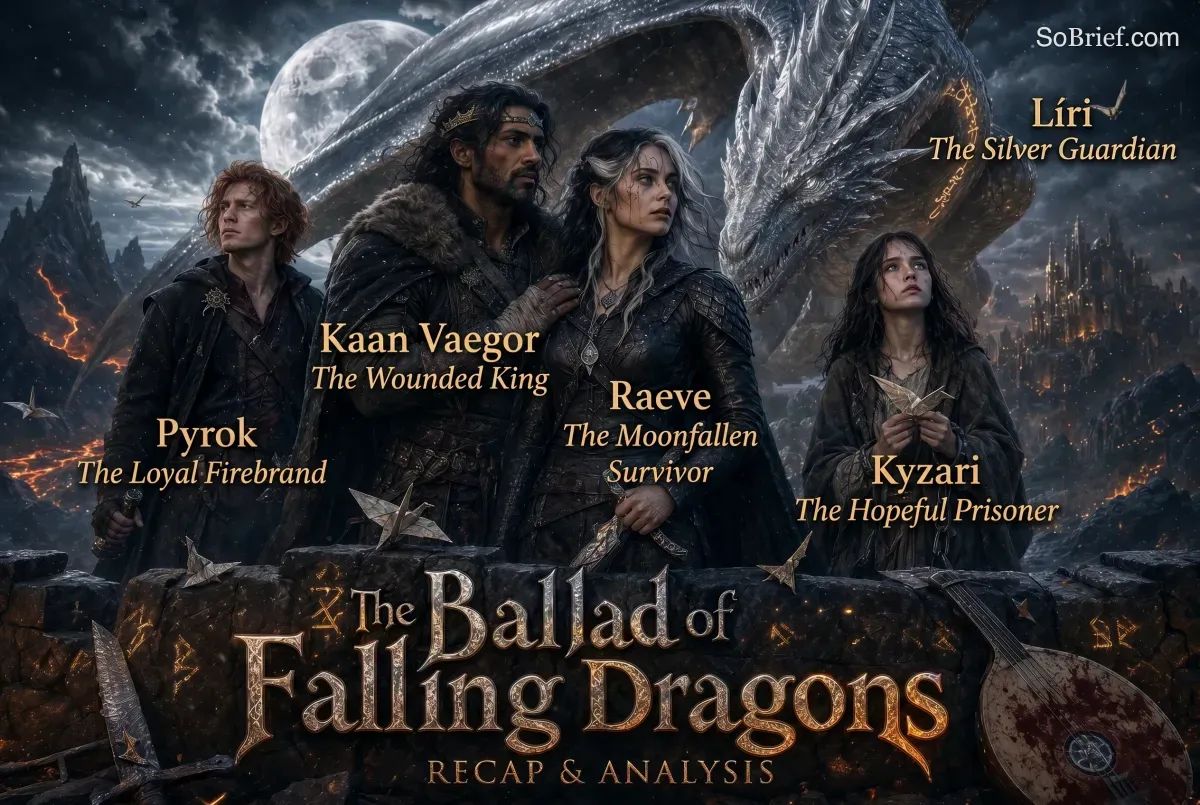
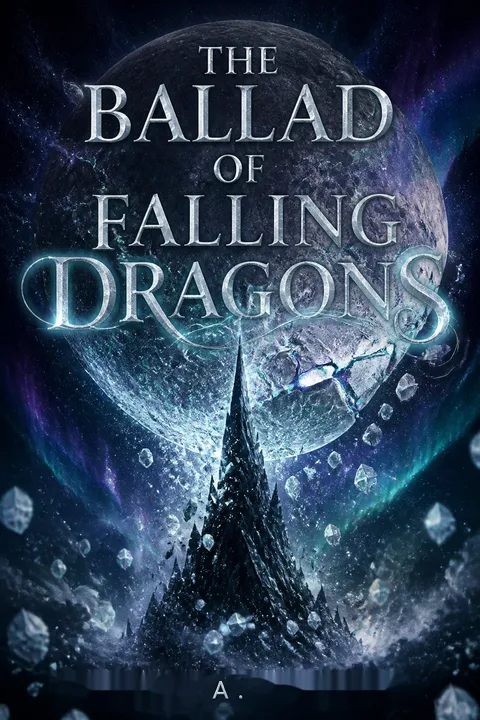


Plot Summary
Prologue
The Creators watched in silence the day Slátra10 pitched from the sky — a luminous Moonplume moon plummeting with such velocity the world shuddered. A female hatched from the wreckage, bleeding from a bone-deep gash, and tore toward Arithia before she was captured, subdued, and tossed in a cell beneath a mountain. She was tortured. Hardened.
Sharpened. The Creators knew the male she once loved roamed the plains with words powerful enough to crumble the world, and that fate was herding them all into a corner too small to breathe. They didn't fight it. Because the day they tore Caelis to shreds and packed him into a screaming cage, they hadn't counted on one thing: love.
Too Many Moons Foretold
Kaan2 tends to Slátra's10 shattered remains beneath his fortress, vowing to find every moonshard. His pet waif Borg18 confirms that his alchemist Roan7 sits in Bothaim's dungeon, awaiting trial for allegedly stealing the Book of Voyd.
But the graver blow comes from a young miskunn trembling in Kaan's2 arms: she has foreseen not one moonfall but many, all at once. Kaan2 opens his fortress to shelter folk in its mountain burrows and dispatches warnings across his kingdom.
Meanwhile, in a cell beneath a distant mountain, Princess Kyzari3 — captive of the Scavenger King4 — clings to a battered parchment lark she sent to her dead mother, bearing three letters that returned with a stranger's reply. She begins grinding a bone shard into a lockpick, determination reignited.
The Diary Behind Enemy Lines
Kaan's2 sister Veya5 infiltrates Arithia disguised in a glamour bangle, having discovered Elluin's diary hidden in the palace — a journal whose final entries reveal that Kyzari3 is not Tyroth's17 daughter but Kaan's.2
Armed with this world-shattering secret bound against her ribs, Veya5 races through the obsidian halls, evading soldiers called Thorns. She warns a pregnant servant to flee Tyroth's17 cruelty, then escapes through a hidden door in the city wall. But her carter is captured and killed before Veya's5 eyes, a blade punched through her throat.
Their Moltenmaw escort is impaled on spikes of stone. Veya5 staggers into a treacherous mountain passage with an iron bolt in her ankle, Bulder's song guiding her through a cleft in the rock, the diary still pressed against her skin.
Vengeance That Won't Quiet
Raeve1 arrives in Bothaim to execute Rekk Zharos — the bounty hunter who tortured her young Moonplume Líri12 — only to find her savage inner presence, the Other,10 has already done the work. The suite is a slaughterhouse of flayed skin and missing organs.
Raeve1 throws daggers into the unrecognizable corpse for practice, then enlists her carter to feed Rekk's remains to an anthe beneath the city. She receives Kaan's2 lark warning of the catastrophic moonfalls and his plea for her to shelter at his mother's mountain retreat.
For the first time, she doesn't run from him. She pinches the return fold — a silent signal that she needs him — and agrees to come, on one condition: he must be there too. The bloodlust, however, still itches at her fingertips.
The Citadel Cracks
Kaan2 and Pyrok6 attend Roan's7 trial disguised as Runis. The Tri-Council condemns him to death for treason. They infiltrate the underground lake to rescue him, but the anthe is already hunting.
Raeve1 arrives and speaks Rayne's language for the first time — a gut-wrenching melody that splits the water in two, caging the creature behind a churning wall. She holds the anthe's gaze and screams until it retreats. Upstairs, she walks past runes lethal to anyone else and steals the Book of Voyd.
Roan7 detonates a blood-rune to breach the Citadel wall, but the blast drains Kaan2 unconscious. Rygun11 crashes through the clouds to defend them, killing a mercenary and burning marketplace buildings. The escape brands them outlaws — war with the Tri-Council now inevitable.
The Poisoner Remembers
Tyroth17 catches Veya5 in Arithia's volcanic underbelly. He impales her shoulder with obsidian, then plows into her mind with a brutal technique, unlocking memories their father Ostern had a Mindweft seal away. Veya5 watches herself — hollowed by mind control — smearing poison on the toothbrushes of Elluin's parents and brother.
Three Neváns died. The Mindweft who wiped her memory was beheaded for her compassion. The truth detonates inside Veya:5 she is the poisoner she spent a lifetime blaming her father for being.
Tyroth17 reveals he knows about Kaan2 and Elluin's affair, then whistles for his imprisoned dragon Bharon. But the Sabersythe — recognizing Veya's5 scent through chains he was never meant to break — grabs her and flies north. He dies from the cold mid-flight, setting himself to rest as a new moon in the sky.
A Memory Breaks Through
In Beluhn's13 green wing — built by Kaan's2 late mother — their rekindling intimacy triggers a buried memory. As Kaan2 unlaces her boot, Raeve1 is suddenly elsewhere: lying on a cold pallet while someone who is not Kaan2 unlaces hers.
The memory of Elluin enduring another man's touch sends Raeve1 into a dissociative break. She attacks Kaan2 with a blade, not recognizing him. When she comes back trembling in the washroom, she delivers words that crack him open: Elluin still loved him.
She claims the moment was fleeting, but her body language betrays a deeper truth she cannot face. Kaan2 holds her close as snow batters the windows, realizing Elluin's farewell lark — the note that shattered him over a hundred phases ago — was a lie designed to protect him from something worse.
Saddle Off, Free Fall
Líri12 arrives at Beluhn in a rage, blasting Raeve1 with Moonplume flame and building a towering ice pillar in the village center. Raeve1 borrows soft-soled boots from Kaan's2 late mother's wardrobe and scales the structure unarmed.
Atop the pillar, she does not mount Líri12 — she grabs the girth straps of Rekk's saddle, the last shackle binding the dragon to her abuser. Pin by pin, she tears it free. The saddle falls away, taking Raeve1 with it. Líri12 opens her maw as if to breathe flame, then releases a keening lament and dives after her.
She catches Raeve1 mid-plummet and carries her to a remote peak, where the two curl together under the aurora. Líri's12 heartbeat chases Raeve's1 until they synchronize, and a bond colder than starlight cracks open beneath her ribs.
Mine, She Snarls
For days Raeve1 and Líri12 hunt the mountains together, Raeve1 growing increasingly feral — eating raw meat, sleeping above the clouds, barely speaking. Kaan2 camps in a meadow and lures her with the song he first played for Elluin, his baritone pulling her through the trees with a strip of fresh kill swinging from her fist.
She charges at him with predatory hunger, but Kaan2 pins her against a cliff and demands she speak. He refuses to touch her until she uses language — not snarls, not grunts, but words that prove she is still present.
The standoff breaks when she grips his neck, meets his eyes, and snarls a single possessive declaration: that he belongs to her. The bond with Líri12 hardens into permanence. They claim each other beneath the waterfall.
The Other Walks Among Them
At the Bhoggith nesting grounds, Raeve's1 Other seizes control. Her eyes go black, pricked with thousands of luminous specks. Speaking in a voice ancient and cold, Slátra10 tells Kaan2 she will retrieve the moonshard and return his precious one. She strides barefoot into the steaming bog, commands Bulder to raise stepping stones, and enters a pink dam's nest.
She gifts the dam's sterile egg a silver thread of life force — a piece of her own cosmic essence — and takes the moonshard in exchange. On the shore, Kaan2 falls to his knees. Slátra10 cups his face and tells him that Raeve's1 truths sit like stones in her den, waiting to be found — and that he is the brightest of them all. Then she lets Raeve's1 body fall, knowing he will catch her.
The Target Is Nine
In Beluhn, an Ath squire delivers blood-bind orders: kill a silver-haired fae behind yellow doors in a Fade outpost, or the Ath's refugee haven will be destroyed. Líri12 snatches the squire off a bridge and rips him apart. Raeve1 infiltrates the outpost expecting a political target.
Behind the yellow doors she finds Ahvi8 — a nine-year-old with silver hair and silver eyes, clutching a Moltenmaw egg. A Mindweft who hears thoughts involuntarily, he already knows she will not hurt him.
He hatches his dragon Gruffin8 by setting the nest ablaze inside his shimmering shield, then tells Raeve1 to run. She carries him out on her back, fighting through Fade soldiers using Bulder's and Clode's languages together for the first time — collapsing tunnels, suffocating lungs, shaping stone.
The Bind Breaks
In the collapsed mineshaft south of Gore — the same tunnel where Raeve1 nearly died after escaping Arkyn's4 pits phases ago — Ahvi8 performs an impossible ritual. Using his blood, Raeve's1 blood, and runes derived from the Book of Voyd, he creates a temporal cage that reverts her body to its pre-bind state.
Her flesh melts toward bone. Burns reappear. A stab wound gapes, leaking her life across the stone. Kaan2 holds her skeletal frame, screaming her name as her pulse flatlines.
With the last drip of consciousness, Raeve1 slaps her bloody hand on the Book of Voyd — willingly binding herself to it. Her heart stops. Restarts. The bind with Sereme9 dissolves. Before relief can land, masked soldiers emerge from invisibility, surrounding them with thirty-odd leveled spears.
Kaan Drinks the Poison
Sereme9 presents the choice: drink a nullifying potion and surrender, or Kyzari3 dies in her cell. She reveals that torturing Raeve1 via the blood bind for seven cycles was a calculated play to lure Kaan2 to this exact spot. He was always the target — Raeve1 the unwitting bait. Kaan2 examines Veya's5 crumpled lark, spotting a hidden signature that reads as a desperate cry for help, confirming his sister is also held captive.
He drinks the potion. His connection to Rygun's11 flame goes dead — every sense blunted, every gifted ember beyond reach. They shackle him, bag his head, and drag him into the dark while Raeve1 and Ahvi8 lie unconscious on the stone. Kaan2 is delivered to the Scavenger King,4 and the Book of Voyd disappears into Sereme's9 satchel.
A Feast of Stolen Truths
Raeve1 wakes shackled at Arkyn's4 feasting table across from Kaan2 — gagged, chained, beaten. The Scavenger King4 holds Kaan's2 copper weald, flicking it open and shut. He calls Raeve1 his Fire Lark — the name she carried in his fighting pits — and reveals himself as Kaan's2 illegitimate half-brother, bastard son of Ostern Vaegor and a null servant.
Then he opens Elluin's diary. Page by page, he narrates the affair, the pregnancy, the coerced departure to protect Kaan.2 Kaan2 learns Kyzari3 is his daughter.
Raeve1 learns she died on a birthing pallet in the palace where her family was murdered. Arkyn4 burns the uhloo Raeve1 braided into Kaan's2 hair, then fire-lashes Kaan's2 chest and arms while Raeve1 is forced to watch. He orders her into the fighting pits to earn Kyzari's3 survival.
Two Gods, One Command
Raeve1 enters the pit as the Fire Lark, and the crowd chants her name. She and Slátra10 destroy the razah together. Then comes the staged duel with Kaan2 — they clash swords like a dance, neither aiming to wound.
When Arkyn4 nods from his balcony to signal execution, Raeve1 drops the blades and kisses Kaan2 in the burning pit. She lifts both fists wrapped in luminous silver tendrils, salutes Arkyn,4 then commands Ignos and Bulder simultaneously. Twin magma manifestations rise from the volcanic ravine and pound his balcony to molten rubble.
Rygun11 crashes through the runed ceiling, dousing himself in lava for warmth. Arkyn4 escapes on his Elding Bird. The moonfalls begin. Kaan2 tells Raeve1 to chase Arkyn4 if she wants. She looks toward the cells and says she only wants their daughter.3
Fists in the Snow
Kaan2 chases Arkyn4 south on Rygun,11 deep into the freezing Moving Mists where moons strike the ground like artillery. The Elding Bird gouges out Rygun's11 right eye before Rygun11 retaliates, biting down on the creature and driving it into the earth.
Kaan2 lands atop Arkyn4 in the snowy aftermath. He announces each crime — hurting Raeve,1 beating Kyzari,3 imprisoning Veya,5 maiming Rygun11 — and punches until the skull collapses. He saws off the head with a confiscated dagger. Then he turns to find Rygun11 curled in a crater, scales frosted white, flame extinguished.
The Sabersythe wraps a wing around Kaan,2 their hearts beating together as Kaan2 hums his mother's favorite song into the dark. The Great Silver Sabersythe Ahra — newly bonded with Grihm14 — arrives from the south like a miracle of argent scales.
A God Steps Free
Freed from the cells by Uno19 — a small miskunn who killed a guard with eerily efficient hands — Veya5 carries Kyzari's3 dying body through collapsing tunnels while the Fate Herder guides them to open air. On a flattened mountaintop, Kyzari's3 eyes snap open.
She begins singing in an unknown language to Caelis, the God of Aether imprisoned within her diadem. Silver light seeps from the stone, sketching the shape of a broad-shouldered being with wings like torn parchment and skin scattered with stars.
He pulls Kyzari3 into his arms and heals every wound, pouring light into her broken places. But the atmospheric pulse radiating from their reunion shakes moons from the sky. Veya5 is flung across the plateau as the world cracks around them — the love between mortal and god catastrophic in its magnitude.
The Mother Arrives
Raeve1 rides Líri12 through the atmospheric disruption toward Kyzari.3 Clode shields her with hardened air, but even the goddess cannot compete with this cosmic force. Raeve1 powers forward on will alone.
She approaches Caelis, and he searches her soul — examining every fiber, finding her intention worthy — then grants silent permission. Raeve1 steps through his presence and wraps her arms around her daughter.3 The song stops. The moons stop falling. Kyzari3 looks at her with startling blue eyes and whispers that she came.
Raeve1 brushes her thumb over Kyzari's3 brow — a motion both new and ancient — and tells her she wishes she arrived sooner. Kyzari3 faints in her mother's arms. For the first time since she brought her into this world, Raeve1 catches her.
Slátra's Silver Thread
In the epilogue's most devastating memory, Raeve1 absorbs the final truth from Slátra's10 den. She sees Elluin give birth to Kyzari,3 singing the calming song to coax life into her silent daughter's lungs. Tyroth17 arrives with a Bloodlace who confirms the baby's blood draws north — to Kaan.2
He kills Elluin with a spear of stone through her chest, pries the diadem from her skull, and presses it onto newborn Kyzari's3 brow. Slátra10 retrieves Elluin's body from the bloody pallet, fights free of pursuing Moltenmaws, and flies toward the moons.
Curled around Elluin in the freezing black, she transfers the luminous silver thread ribboned through her soul — the cosmic essence of existence itself — into Elluin's dead chest. Not a burial, but a planting. The seed that would one day sprout as Raeve.1
Epilogue
Raeve1 wakes between Kaan2 and Kyzari3 on a pallet deep beneath the mountain, Ahvi8 sleeping next door with the Fate Herder coiled around him. Kaan's2 eyes open — volcanic, wounded, alive — and his gaze shifts past Raeve1 to their daughter. His face crumbles without sound.
Raeve1 stitches the torn halves of little Nee back together with white thread and tucks the mended lark into Kyzari's3 palm beside Kaan's2 málmr. In the south, Sereme9 retrieves Arkyn's4 frozen body from the snow, drips his blood into a new binding vial, and sets the corpse ablaze — preparing to transform his razah-reborn form into something obedient.
Through the smoke, a white-haired male stumbles toward her. Sereme9 smiles and greets him by name: Haedeon Neván. Elluin's1 brother, long believed dead.
Analysis
This novel interrogates the architecture of suppression — not merely as a defense mechanism, but as a second self with its own agenda. Raeve's1 icy lake functions as both refuge and prison: the memories stored beneath it are not simply forgotten but curated, arranged into a trade economy by Slátra's10 consciousness. Each stone Raeve1 absorbs costs something — comfort, numbness, the bliss of not knowing. Parker literalizes the therapeutic insight that healing is not free; it demands you pay with the very armor that kept you alive.
The Vaegor family operates as a case study in intergenerational trauma's mutation rates. Ostern's cruelty metastasizes differently in each child: Kaan2 absorbs it into soft-heartedness weaponized by guilt; Tyroth17 reproduces it with surgical precision; Veya5 carries it as stolen agency she cannot remember losing; Arkyn4 ferments it into the very bloodlust his father planted. That Arkyn4 built a supposed liberation movement as a front for personal vengeance reveals how revolutionary causes can be hijacked by the wounded powerful — how a genuine desire to save the discarded can coexist with the compulsion to hoard them.
The dragon-bonding system functions as the novel's central metaphor for vulnerability in attachment. Raeve1 cannot bond with Líri12 by dominating her — she must remove the saddle, fall, and trust the dragon to catch her. Kaan2 cannot protect Rygun11 by walling him off — the wall only delays an inevitable reckoning. These bonds demand what trauma survivors resist most: the radical act of being fully seen by another consciousness that can also hurt you.
The moonfall itself is Parker's grandest structural metaphor: a world literally unable to bear the weight of what has been placed in its sky. The moons are calcified dragons — accumulated grief turned to stone — and when they fall, they destroy everything built beneath them. The only protection comes from runes nobody bothered to share. Knowledge hoarded is devastation deferred, never prevented.
Review Summary
The Ballad of Falling Dragons receives overwhelming praise, averaging 4.61 stars across thousands of reviews. Readers consistently celebrate Kaan Vaegor as a beloved romantic lead, admiring his unwavering devotion and emotional depth. The compelling villain, lyrical prose, and dramatic final act earn particular acclaim. Common criticisms center on the female protagonist Raeve, whom many found frustratingly stubborn and difficult to connect with, and a romance some felt was asymmetrical. Most agree the sequel surpasses book one, with its stronger plotting, expanded cast, and emotionally devastating twists.
People Also Read
Characters
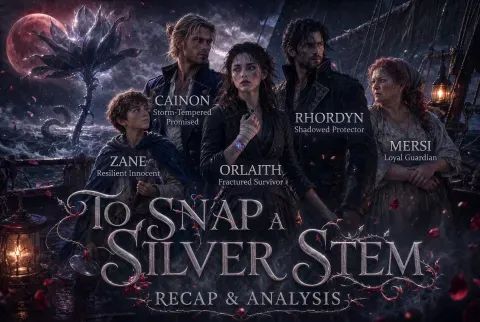
Raeve
Reborn assassin seeking identityAn assassin with no memories beyond the past twenty-three phases, Raeve carries burn scars, a blood bind that lets her handler torture her remotely, and a mysterious presence she calls her Other—an ancient consciousness lurking beneath an internal icy lake. She escaped captivity under the Scavenger King4, lost someone beloved in frozen wilderness, and built herself into a weapon too sharp for her own comfort. Her bloodlust manifests as an itch at her fingertips she cannot stop scratching. She speaks to the Air Goddess with unusual fluency and walks past protective runes that should kill her. Behind her feral precision lies a desperate fear of attachment—every person she has loved has been taken, and she would rather push people away than risk that loss again.
Kaan Vaegor
Warrior-king with a poet's heartKing of The Burn, Kaan is a warrior-poet who shapes stone with artisan precision and plays lute for those he loves. As a child, his father buried him in underground pits to cure his stutter, fire-lashed him for crying, and rejected him for hearing only two elemental songs. He found belonging with a warrior clan on the Boltanic Plains, where he bonded with his Sabersythe Rygun11 during a two-day battle to save the dragon's life. He took the throne by violence but rules with mercy, spending phases collecting moonshards from a fallen dragon with devotional patience. His heart belongs wholly to a love he lost over a hundred phases ago. He carries that ache like a weight even when drowning—especially when drowning.
Kyzari Vaegor
Captive princess bearing a godPrincess of The Shade, Kyzari wears the Aether Stone diadem fused to her brow—a relic she never chose and cannot remove. Raised under Tyroth's17 suffocating control, she was taught to be small and silent, traded to the Tri-Council's Grand Chancellor as political currency, then offered herself to the Creators to escape. Imprisoned by the Scavenger King4, she refuses to eat, scratches words into cell walls, and pours her loneliness into a battered parchment lark named Nee—a message sent to a mother she believes is dead. She communes in whispered song with Caelis, the entity trapped within her stone, nurturing a love forbidden by every law of the known world. Her silence is not weakness but a coiled spring awaiting release.
Arkyn Vaegor
Scarred king of scavenged thingsThe Scavenger King governs from beneath a mountain, funding his ambitions through fighting pits where folk battle molten-born creatures. Half his face was melted by dragonfire when his father's Sabersythe chased him across the plains for the crime of being a disappointing bastard. He hoards discarded things—armor, relics, broken folk—with the possessive hunger of someone who was himself discarded. He calls Raeve1 his Fire Lark, a title encoding their shared history of flame and cages. His bloodlust manifests in gnawed fingertips and meticulously orchestrated violence. He craves legitimacy above all else: the bronze throne, the family name, recognition that he is more than his father's mistake. Behind the cruelty, a wound that never scabbed—only deepened into something terminal.
Veya Vaegor
Kaan's fierce, guilt-laden sisterKaan's2 youngest sister, born at the cost of their mother's life, Veya carries guilt like marrow in her bones. Fierce, irreverent, and politically sharp, she infiltrates enemy territory armed with determination and a bangle she was told to discard. She shares Kaan's2 brown elemental bead and his stubbornness, but her past holds fractures she cannot see—blanks in her memory that someone else filled with silence.
Pyrok
Sarcastic guardian with a flaskKaan's2 red-haired companion and Roan's7 older brother, Pyrok fills silences with sarcasm and his veins with whatever bottle is closest. A former inhabitant of Gore with painful ties to The Fade, he masks deeper wounds behind irreverence and a gift for cooking surprisingly excellent stew. His Moltenmaw Maell is sweet-natured—his emotional opposite and perhaps his truest mirror.
Roan
Brilliant alchemist, socially doomedPyrok's6 younger brother and Kaan's2 court alchemist, Roan is brilliant with runes and catastrophically awkward with people. His attempts to study the Book of Voyd landed him on death row. He speaks before thinking, etches before measuring, and explodes things with alarming regularity. His mind operates three leaps ahead of his social awareness, making him simultaneously invaluable and insufferable.
Ahvi
Silver-eyed child protégéA nine-year-old with silver hair and silver eyes, Ahvi was traded to the Tri-Council by Tyroth17 in exchange for political favor. A Mindweft who hears thoughts involuntarily, he spent unprecedented time studying the Book of Voyd without going mad. He speaks of an internal song that guides his decisions, shrugs at danger with unnerving calm, and names his Moltenmaw hatchling Gruffin with the earnest pride of a new parent.
Sereme
Purple-clad serpent with a vialA high-ranking member of the Fíur du Ath, Sereme controls Raeve1 through a blood bind worn as a vial around her neck. She dresses in immaculate purple, moves with serpentine precision, and tortures with the detachment of someone adjusting a collar on a dog. Her devotion to the Ath's leadership borders on worship, and her hatred of Raeve1 runs deeper than professional obligation suggests.
Slátra
Ancient dragon within Raeve's soulAn ancient silver Moonplume who once bonded with a fierce young girl and raised a daughter with a crooked wing, Slátra exists as a consciousness within Raeve1—lurking beneath an internal icy lake, watching through dark waters. She curates memories like precious eggs, offering them in careful trades. Her love for Raeve1 predates Raeve's1 awareness of her own existence, patient as stone and vast as the sky she once ruled.
Rygun
Kaan's fiercely devoted SabersytheKaan's2 massive Sabersythe, bonded during a desperate two-day battle on the plains, Rygun shares a connection so deep that his flame literally runs through Kaan's2 veins. He avoids the Moving Mists after nearly dying in sinking sand, loathes the cold, and responds to threats against Kaan2 with nuclear force. His protectiveness is absolute—a dragon who would fly into freezing death rather than leave his rider undefended.
Líri
Scarred Moonplume yearning to be lovedA young Moonplume scarred by her previous rider's cruelty—spurred until her wings tore, flown too close to the sun—Líri arrived at Dhomm half dead and found comfort in Raeve's1 presence. Abandoned when Raeve1 left to pursue vengeance, she carries that wound alongside her physical scars. Her rage is the mirror of her need: to be chosen, loved without conditions, never left again.
Siharna Farjór
Formidable pregnant chieftessChieftess of Beluhn and Kaan's2 aunt, Siharna rules her hidden dragon-rearing village with fierce maternal authority. Heavily pregnant and recently widowed, she refuses to sit while others suffer, making her both terrifying and deeply admirable.
Grihm
Kaan's stoic second-in-commandKaan's2 second-in-command, Grihm journeyed to the Sabersythe nesting grounds to bond with a new dragon after losing his previous Moonplume. A man of few words who communicates more through silence than speech.
Essi
Raeve's brilliant hidden friendRaeve's1 young friend in Gore, presumed dead but secretly alive in Raeve's1 hidden dwelling. A self-taught Runi and Bloodlace with red hair and otherworldly beauty, she bakes extraordinary bread and harbors secrets about her own nature.
Fallon
Raeve's beloved lost companionRaeve's1 deceased companion from captivity beneath the mountain. She taught Raeve1 language, hope, and imagination. Her death alone in their shared cell—while Raeve1 fought in the pits—is Raeve's1 deepest, most carefully buried wound.
Tyroth Vaegor
Cruel king of The ShadeKing of The Shade and Kaan's2 younger brother, Tyroth rules with calculated cruelty. He forced Elluin into marriage and punishes disloyalty with stone spears summoned from the ground beneath his enemies' feet.
Borg
Kaan's melodramatic pet waifA foggy, temperamental information broker who feeds on Kaan's2 painful memories in exchange for intelligence. Perpetually annoyed about his ugly jar, he delivers crucial news with maximum dramatic flair.
Uno
Tiny miskunn, lethal rescuerA small, fierce miskunn with pale-pink eyes, foresight abilities, and deceptive lethality. She orchestrates a jailbreak with the calm efficiency of a seasoned general despite being shorter than a fae's knee.
Plot Devices
The Book of Voyd
Repository of infinite runesWritten by Caelis, the God of Aether, this small silver book contains infinite, ever-shifting runes on each page—knowledge so dense it drives most who study it mad or kills them. The Tri-Council has guarded it for eons, sharing only fragments. It holds the key to runes that can protect structures from moonfalls—knowledge the Council hoarded for their own Citadel. Raeve1 walks past its lethal protective wards unharmed and steals it. The book grapples with anyone who touches it bare-handed, yet seems to accept Raeve1 willingly. Ahvi8, the child protégé, can study it without going mad, deriving runes nobody else can see. It becomes both weapon and lifeline as the moonfalls approach.
Elluin's Diary
Repository of forbidden truthsA leather-bound journal painted with an image identical to Kaan's2 málmr—two dragons bundled together like a moon. Found by Veya5 hidden in Arithia's palace, it contains Elluin Neván's private account of her life: bonding with Slátra10, falling in love with Kaan2, the coerced pregnancy deception, and her forced return to Arithia carrying his child. Its final entries reveal Kyzari's3 true parentage and the conditions of Elluin's imprisonment. The diary travels from Veya's5 hands to Kyzari's3 cell—where it briefly gives aunt and niece hope—before Arkyn4 confiscates it and weaponizes its contents at his feasting table, reading it aloud while Kaan2 and Raeve1 sit chained.
The Aether Stone Diadem
Prison of a shattered godA small black stone set within a silver diadem that fuses with its host's skull, the Aether Stone contains Caelis—the God of Aether, torn apart by the other Creators and caged in screaming mulch. It passes between hosts of the Neván bloodline, requiring a living bearer to sustain itself. When a host weakens, it transfers to the nearest viable relative. Kyzari3 inherited it as a newborn, and it has been part of her body ever since—impossible to remove without killing her. She communicates with Caelis through whispered songs in his ancient language, nurturing a bond that transcends the divide between mortal and divine, with consequences none can predict.
The Blood Bind
Remote torture leashCreated when Raeve1 dripped her blood into Sereme's9 vial at the brink of death—a desperate bargain for survival—the blood bind gives its holder the ability to inflict precise, crippling pain on the bound individual by manipulating the vial. Sereme9 uses it to control Raeve1, slicing phantom agony down her spine, through her limbs, and into her chest at will. The bind was diluted into multiple vials, making it seemingly impossible to sever through conventional means. It represents the central paradox of Raeve's1 existence: the shackle that saved her life is the same one that keeps her enslaved, and removing it requires reverting to the dying state that made the bind necessary.
Parchment Lark Nee
Thread between mother and daughterA battered parchment lark bearing three letters—nee—sent by Kyzari3 to her dead mother Elluin. Runed parchment larks flutter to their intended recipients, but ghost larks whose receivers have passed drift aimlessly forever. This one defied expectation: it reached Raeve1 and was returned with a dismissive reply. In Kyzari's3 cell, Nee became her only companion—persistent, tenacious, repeatedly nuzzling her neck despite being crumpled and yelled at. The lark represents the invisible thread connecting a mother who does not know she has a daughter to a daughter who does not know her mother lives. Nee is the quietest character in the story and arguably its most stubborn.
Moonfall Series Series
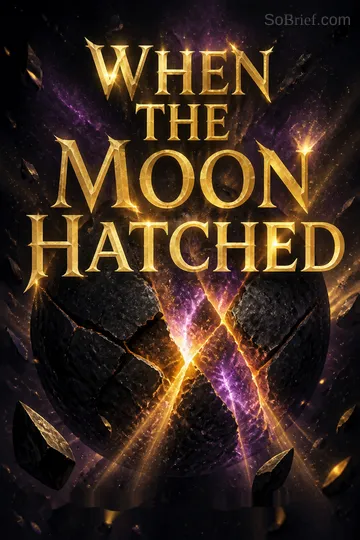
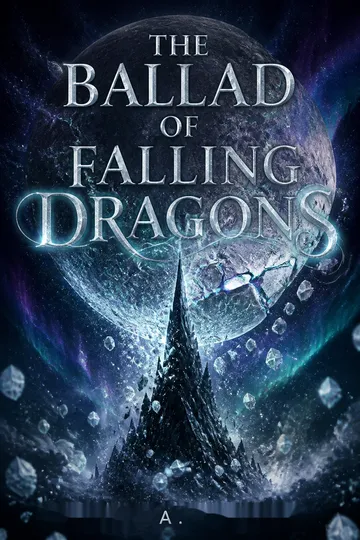
About the Author
Other books by Sarah A. Parker
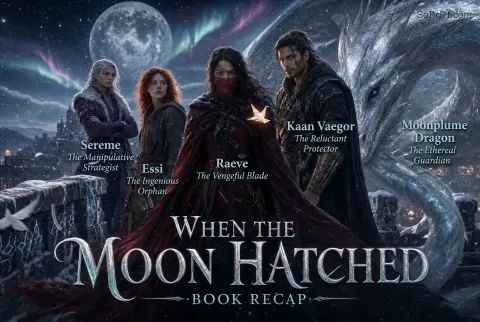
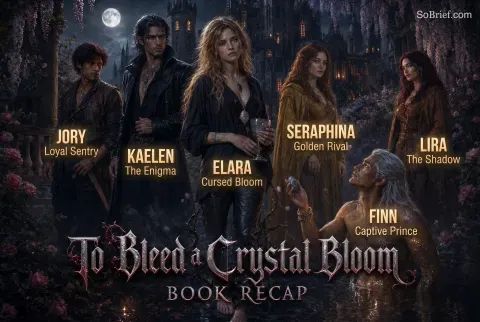

Download PDF
Download EPUB
.epub digital book format is ideal for reading ebooks on phones, tablets, and e-readers.








































