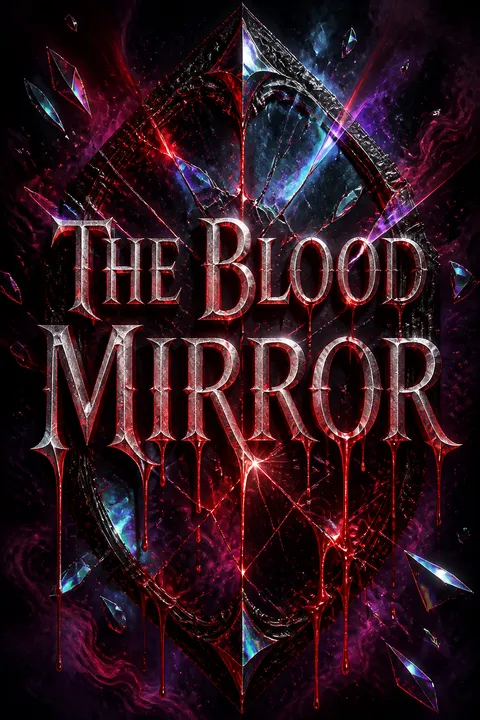

Plot Summary
Prison of Mirrors
Imprisoned in a cell of his own making, Gavin is tormented by visions and the voice of a "dead man"—a reflection of his own guilt and fractured psyche. Stripped of his powers, blinded in one eye, and haunted by the consequences of his past, he faces the reality that his father, Andross Guile, has orchestrated his captivity. The cell is a prison of mirrors, both literal and metaphorical, forcing Gavin to confront the lies he's lived and the brother he killed. The isolation gnaws at his sanity, and the only escape seems to be through the painful truths he's long denied. The chapter sets the tone for a story of reckoning, regret, and the desperate hope for redemption.
Shadows and Sacrifice
Teia, now a full Blackguard and a spy within the Order of the Broken Eye, is forced to commit atrocities to maintain her cover. She is ordered to kill her mentor Marissia and later to practice murder on innocent slaves, each act eroding her sense of self. The Order's leader, the Old Man of the Desert, manipulates her loyalty, demanding she sever all ties—even to her father. Teia's journey is one of moral compromise, as she balances her mission to destroy the Order with the cost to her soul. Her choices are never clean, and every victory comes with a wound. The shadows she walks in are both literal and internal, and her sacrifice is the slow death of innocence.
The Iron White Rises
With Gavin missing and the Chromeria in turmoil, Karris is thrust into the role of the White, the spiritual and political leader of the Seven Satrapies. She faces assassination attempts, political intrigue, and the burden of uniting a fractured realm. Her leadership is tested by Andross Guile's machinations and the threat of the White King's armies. Karris must navigate betrayals, including the loss of trusted allies and the revelation of Marissia's true identity. Her resolve hardens as she becomes the Iron White, a symbol of hope and uncompromising justice. Yet, beneath her iron exterior, she mourns the personal costs of leadership and the love she may never reclaim.
Kip's Burden
Kip, now married to Tisis Malargos, leads the Mighty and a growing army of outcasts against the White King's forces. He grapples with self-doubt, the weight of prophecy, and the expectations of being the Lightbringer. His marriage is fraught with intimacy issues, reflecting his deeper insecurities and the scars of his past. As he forges alliances with the Ghosts and the Cwn y Wawr, Kip must balance compassion with the ruthlessness required by war. The burden of command isolates him, and every decision is shadowed by the fear of failure and the longing for acceptance. Kip's journey is one of painful growth, as he learns that true strength lies in vulnerability and trust.
The Broken and the Mighty
The core squad—Cruxer, Ben-hadad, Big Leo, Ferkudi, Winsen, and others—are tested by battle, betrayal, and the relentless demands of survival. Each member confronts personal demons: Ben-hadad's injury, Ferkudi's innocence, Winsen's coldness, and Cruxer's doubts. The camaraderie that once defined them is strained by the horrors of war and the choices they must make. The loss of friends and the constant threat of death force them to redefine what it means to be "mighty." Their bond endures, not because they are unbreakable, but because they choose to stand together in the face of despair.
The Order's Web
The Order of the Broken Eye, led by the enigmatic Old Man, weaves a web of assassination, blackmail, and subversion throughout the Chromeria and beyond. Murder Sharp, their most feared assassin, embodies the Order's philosophy: only pain makes one sharp. Teia is drawn deeper into their schemes, forced to betray friends and commit murder to prove her loyalty. The Order's reach is vast, ensnaring even Ironfist, the once-untouchable commander of the Blackguard. Their ultimate goal is the destruction of the Chromeria and the old order, no matter the cost in blood and souls.
Chains of Blood and Light
As the White King's armies advance, Kip unites disparate factions—will-casters, Ghosts, and the Cwn y Wawr—into the Nightbringers. The cost of unity is high: ancient enmities must be set aside, and the price of mercy is often paid in blood. The Nightbringers' victories are hard-won, and every triumph is shadowed by the knowledge that the enemy is learning, adapting, and growing stronger. The chains that bind are not only those of slavery and duty, but also of love, guilt, and the unbreakable ties of family and friendship.
The Black Prism's Truth
In the darkness of his cell, Gavin is forced to relive the events of Sundered Rock and the murder of his brother. The dead men in the mirrors are not just hallucinations—they are fragments of his own will, cast into the prisons he built. The truth emerges: Gavin is Dazen, the Black Prism, a man who has killed, lied, and sacrificed everything for power and survival. The revelation shatters him, but also offers a chance for acceptance and, perhaps, redemption. The cost of truth is the death of illusion, and Gavin must decide if he can live with what he has done.
Marriage and Masks
Their marriage, born of political necessity and personal longing, is tested by physical and emotional barriers. Tisis's condition (vaginismus) becomes a symbol of the wounds both carry, and their attempts to consummate their union mirror their struggle to trust and be vulnerable. Through patience, communication, and mutual support, they begin to heal, discovering that love is not the absence of flaws but the willingness to embrace them. Their journey is a testament to the power of partnership in the face of adversity.
The Siege of Dúnbheo
The battle for Dúnbheo is a crucible for Kip's leadership and the unity of his army. Facing overwhelming odds, treachery, and the horrors of war, Kip must outthink and outfight the White King's forces. The victory is costly, marked by the loss of allies and the moral compromises required to survive. The aftermath forces Kip to confront the realities of power: justice, mercy, and the burden of command. The siege is both an ending and a beginning, as the Nightbringers become a true army and Kip a true leader.
The Price of Mercy
Kip's decision to free slaves, enforce the Year of Jubilee, and punish corrupt nobles challenges the old order and tests the loyalty of his followers. The price of mercy is high—alienating potential allies, risking rebellion, and forcing hard choices about who deserves forgiveness. Karris, too, must weigh mercy against justice as she confronts the darkness within her own family and the Chromeria. The price of mercy is the willingness to bear the consequences of compassion in a world that often rewards only strength.
The Bear's Last Stand
The battle's turning point comes with the death of Lorcan, the soul-cast bear, and the resignation of Conn Arthur. The loss is deeply felt, marking the end of childhood for the Mighty and the Nightbringers. The cost of victory is the loss of innocence, and the survivors must carry the weight of what they have done and what they have lost. The bear's last stand is a symbol of the sacrifices required by war and the pain of letting go.
The Assassin's Choice
Ordered to kill Ironfist's sister, the Nuqaba, Teia must choose between loyalty to the Order and her own conscience. The act of assassination is both a liberation and a damnation, freeing her from the Order's grip but binding her to the consequences of her actions. The choice is not between good and evil, but between two evils, and Teia's decision is a testament to the complexity of morality in a world of shadows. Her journey is one of survival, resilience, and the hope that even in darkness, light can be found.
The Nightbringers
The Nightbringers, forged from outcasts, slaves, and enemies, become a force capable of challenging the White King. Their unity is fragile, built on shared pain and the promise of a better future. Kip's leadership is tested as he balances the demands of war with the need for justice and compassion. The Nightbringers are not heroes—they are survivors, and their strength lies in their refusal to be defined by their wounds. Together, they become the hope of the Seven Satrapies.
The Dead Man's Game
In the black cell, Gavin is confronted by Grinwoody, revealed as the Old Man of the Desert. Offered a chance at freedom in exchange for assassinating Orholam—the god at the heart of magic—Gavin must decide whether to accept a mission that could end the world. The dead man's game is one of manipulation, power, and the ultimate gamble. Gavin's choice is not just about survival, but about the meaning of redemption and the possibility of change.
The Blinding Knife's Path
Armed with the Blinding Knife and bound by a black luxin eye patch, Gavin is forced onto a ship captained by Gunner, tasked with reaching White Mist Reef and destroying the nexus of magic. The journey is fraught with peril, betrayal, and the knowledge that success may mean the end of everything he has ever known. The path of the Blinding Knife is one of destiny, sacrifice, and the hope that even the most broken can change the world.
The End of Innocence
As the armies of the White King prepare to sail, Liv embraces her power as a goddess, choosing ambition over loyalty. Karris, shattered by loss and betrayal, steels herself to lead a realm on the brink of destruction. Kip and Tisis, having finally found each other, face the dawn of a new world with hope and resolve. The end of innocence is not the end of hope, but the beginning of a new struggle—for love, for justice, and for the light that endures in darkness.
Analysis
A meditation on power, sacrifice, and the cost of survival in a world at warThe Blood Mirror is a masterful exploration of the ways individuals and societies are shaped—and broken—by the demands of power and the trauma of conflict. Brent Weeks uses a complex, multi-perspective narrative to examine the psychological toll of leadership, the ambiguity of morality, and the resilience of hope. The novel's structure—mirroring, parallel arcs, and escalating tests—serves to reinforce its central themes: that every victory is bought with loss, that mercy and justice are forever in tension, and that the light we seek is often found only by passing through darkness. The characters are deeply human, marked by wounds both visible and hidden, and their journeys are as much about internal transformation as external triumph. The lessons of the book are hard-won: that redemption is possible but never easy, that love is forged in vulnerability, and that the true measure of greatness is not in power, but in the willingness to bear the burdens of others. In a world where every choice is compromised, The Blood Mirror offers a vision of hope—not as a naive belief in happy endings, but as the stubborn refusal to surrender to despair.
Review Summary
People Also Read
Characters
Gavin Guile / Dazen Guile
Gavin is the central figure whose identity is a labyrinth of lies, guilt, and power. Once the most celebrated Prism, he is revealed to be Dazen, the younger brother who killed and replaced the real Gavin. His journey in this volume is one of brutal self-confrontation: imprisoned, blinded, and stripped of magic, he is forced to relive his crimes and the cost of his ambition. Gavin's relationships—with Karris, his father Andross, and his son Kip—are fraught with betrayal and longing for forgiveness. Psychologically, he is a man at war with himself, oscillating between self-loathing and the desperate hope for atonement. His arc is a descent into darkness that paradoxically offers a glimmer of light: the possibility of change, even for the damned.
Kip Guile
Kip is the emotional and moral center of the Nightbringers, a young man thrust into leadership by prophecy and necessity. His struggles with self-worth, intimacy, and the expectations of being the Lightbringer are deeply human. Kip's marriage to Tisis is both a source of strength and vulnerability, mirroring his journey from self-doubt to acceptance. His leadership is marked by compassion, strategic brilliance, and the willingness to make hard choices. Kip's psychological growth is hard-won, as he learns to trust, to love, and to bear the weight of command without losing his soul. His connection to the cards and the memories of the past adds layers of destiny and tragedy to his character.
Karris White (Guile)
Karris's ascension to the role of the White is a crucible that forges her into a symbol of hope and justice. Her leadership is marked by empathy, decisiveness, and the willingness to make personal sacrifices for the greater good. Karris's relationships—with Gavin, Zymun, and the Blackguard—are complex, blending love, disappointment, and duty. Psychologically, she is torn between the demands of her office and the wounds of her heart. Her journey is one of transformation: from a woman defined by loss to a leader who embodies the iron resolve needed to save a world on the brink.
Teia (Adrasteia)
Teia's arc is a harrowing exploration of loyalty, identity, and the cost of survival. Forced to infiltrate the Order of the Broken Eye, she is compelled to commit murder and betray those she loves. Her psychological landscape is a war zone, as she navigates the shifting allegiances between the Chromeria, the Order, and her own conscience. Teia's relationships—with Kip, Karris, and her own family—are strained by the secrets she must keep and the lines she must cross. Her development is marked by resilience, ingenuity, and the hope that even in darkness, she can find her way back to the light.
Andross Guile
Andross is the spider at the center of the Chromeria's web, orchestrating events with ruthless intelligence and cold pragmatism. His relationship with Gavin/Dazen is a study in toxic love and disappointment, as he alternates between cruelty and a twisted form of paternal care. Andross's psychological profile is that of a man who values power above all, yet is haunted by loneliness and the knowledge that his legacy is built on blood. His machinations drive much of the plot, and his willingness to sacrifice anything—including his own children—makes him both a formidable antagonist and a tragic figure.
Tisis Malargos
Tisis is more than Kip's wife; she is his equal and his mirror. Her struggle with intimacy is both literal and symbolic, representing the barriers that trauma and expectation place on love. Tisis's intelligence, courage, and vulnerability make her a compelling character in her own right. Her relationship with Kip is a journey from frustration and shame to mutual understanding and joy. Psychologically, she is a survivor who refuses to be defined by her wounds, and her growth is a testament to the power of partnership.
The Old Man of the Desert (Grinwoody / Amalu Anazâr)
The Old Man is the hidden hand behind the Order of the Broken Eye, manipulating events with a blend of charisma, cruelty, and ideological zeal. His relationship with Teia is that of a predator grooming his prey, testing her loyalty through escalating demands. Psychologically, he is a true believer in the necessity of monstrous acts for a greater good, yet his methods reveal a deep-seated need for control and validation. His ultimate goal is the destruction of the old order, no matter the human cost.
Murder Sharp
Murder Sharp is the Order's most feared killer, a man who has embraced pain as the path to power. His relationship with Teia is both mentor and tormentor, pushing her to commit acts that will sever her from her past. Psychologically, he is a study in self-destruction and fanaticism, having mutilated himself to prove his loyalty. Murder Sharp's presence is a constant reminder of the darkness that can grow in the absence of mercy.
Conn Ruadhán Arthur
Conn Arthur is the leader of the Ghosts, a man defined by his strength, his bond with the soul-cast bear Tallach, and his grief for his brother. His arc is one of sacrifice and resignation, as he chooses to let go of the magic that has defined him rather than risk further loss. Psychologically, he is a man who has seen too much death and must find a way to live with what remains. His relationship with Kip is one of mutual respect and the recognition of shared burdens.
Zymun Guile
Zymun is the Prism-elect, a young man whose charm and apparent vulnerability mask a capacity for cruelty and manipulation. His relationship with Karris is fraught with guilt and longing for acceptance, while his actions reveal a dangerous ambition. Psychologically, Zymun is a product of abandonment and abuse, but also a warning of what happens when power is given to the unworthy. His development is a slow unveiling of the darkness within.
Plot Devices
Mirrors and Reflections
Throughout the novel, mirrors—literal and metaphorical—are used to force characters to confront their true selves. Gavin's prison is a cell of mirrors, each reflecting a different aspect of his guilt and fractured identity. The dead men in the mirrors are will-cast fragments of his own psyche, serving as both tormentors and guides. This device is used to explore themes of self-deception, the cost of lies, and the possibility of redemption through self-knowledge.
The Order's Tests
The Order of the Broken Eye employs a series of tests—each more brutal than the last—to bind its members through shared guilt and complicity. Teia's journey is structured around these tests, which serve both as plot catalysts and as a means of exploring the psychological toll of espionage and betrayal. The tests are designed to isolate, corrupt, and ultimately remake the individual in the Order's image.
The Blinding Knife and Magical Artifacts
The Blinding Knife is both a weapon and a symbol—the means by which Gavin may kill Orholam and end magic itself. Magical artifacts throughout the story serve as plot devices that drive quests, reveal secrets, and force characters to make impossible choices. The knife's power and the quest to use it are central to the narrative structure, linking personal arcs to the fate of the world.
Dualities and Dichotomies
The novel is structured around oppositions: the Chromeria and the Order, the White King and the Iron White, the broken and the mighty. Characters are constantly forced to choose between competing values, and the narrative uses these dichotomies to explore the complexity of morality, leadership, and survival. The structure of alternating perspectives and parallel arcs reinforces the theme that every choice is a balance between light and shadow.
Foreshadowing and Prophecy
The story is laced with prophecies, visions, and the manipulation of destiny. The cards, the Third Eye's predictions, and the recurring motif of the Lightbringer all serve to foreshadow events and create dramatic irony. Characters struggle to interpret and resist their fates, and the tension between prophecy and free will is a driving force in the plot.
The Cost of Power
The narrative repeatedly returns to the idea that power—magical, political, or personal—comes at a cost. Characters must sacrifice love, innocence, or even their own souls to achieve their goals. The erosion of innocence is not just a theme but a structural device, as each arc is marked by a loss that cannot be undone. The price of power is paid in blood, and the story asks whether the ends can ever justify the means.
Lightbringer Series
About the Author
Other books by Brent Weeks
Download PDF
Download EPUB
.epub digital book format is ideal for reading ebooks on phones, tablets, and e-readers.








































