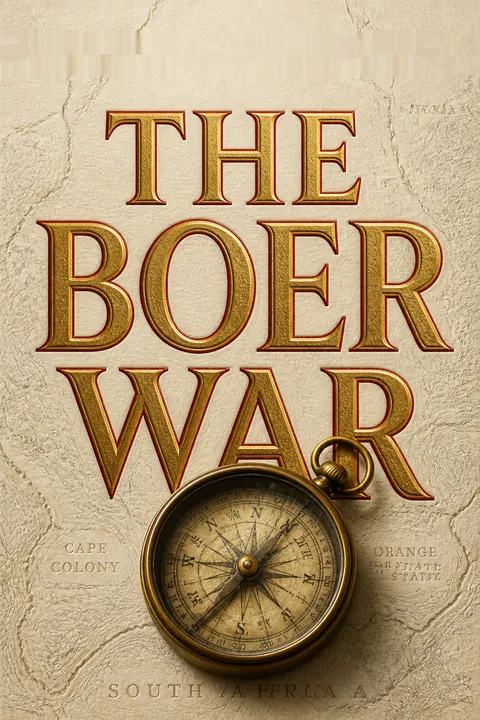

Key Takeaways
1. Churchill's Early War Journey and Capture
"An armoured train! The very name sounds strange; a locomotive disguised as a knight-errant; the agent of civilisation in the habiliments of chivalry."
Eager correspondent. Winston Churchill, a war correspondent for the Morning Post, embarked on a journey to South Africa in October 1899, eager to cover the unfolding Boer War. His initial observations from the ship highlighted the widespread speculation and uncertainty surrounding the conflict, contrasting the slow pace of travel with the rapid developments on the ground. He noted the initial British setbacks, including the siege of Ladysmith, and the growing anxiety among colonists.
Frontier observations. Traveling through the Cape Colony, Churchill witnessed the early signs of war, from military proclamations to guarded bridges and troop movements. He observed the stark racial divisions and the deep-seated animosity between the British and Dutch populations, noting the Boers' confidence in their military power. The evacuation of Stormberg, a key railway junction, underscored the early British retreats and the enemy's aggressive advance.
Armored train ambush. While reconnoitering near Estcourt in an inadequately armored train, Churchill experienced firsthand the ferocity of Boer tactics. The train was ambushed, derailed by a stone, and subjected to intense artillery and rifle fire. Despite his non-combatant status, Churchill actively participated in clearing the line, but the overwhelming Boer force led to the surrender of most British troops, and he was captured.
2. Life as a Prisoner and the Drive to Escape
"The position of a prisoner of war is painful and humiliating."
Humiliation and resolve. Churchill found captivity deeply humiliating, a stark contrast to his previous experiences. Confined in Pretoria's State Model Schools, he observed the monotonous routine and the psychological toll of imprisonment, which fueled his determination to escape. He noted the Boers' unexpected civility, yet also their firm belief in their cause and their underestimation of British resolve.
Boer character and politics. His interactions with Boer officials and guards revealed their political fervor and their deep-seated grievances, particularly regarding British interference and racial policies. He engaged in debates about the war's origins, noting the Boers' conviction that the conflict was driven by "damned capitalists" and their desire for a unified, independent Afrikaner republic. Churchill also observed the stark contrast between the "veldt Boers" and the more educated, politically astute officials.
Escape planning. Despite the strict surveillance and the apparent incorruptibility of the guards, Churchill meticulously planned his escape. He studied the prison layout, observed sentry movements, and even wrote a defiant letter to the Secretary of War, declaring his intention to break out. The constant flow of exaggerated Boer news, painting a grim picture of British defeats, intensified his urgency to contribute to the British cause.
3. The Daring Escape to Freedom
"But when hope had departed, fear had gone as well."
Irrevocable decision. On December 12, 1899, after a failed attempt the previous night, Churchill seized a fleeting opportunity to escape. He scaled the prison wall, narrowly evading sentries, and found himself alone in Pretoria, without a map, compass, or knowledge of the local languages. His initial panic quickly gave way to a desperate resolve, driven by the conviction that failure was almost certain, making all risks seem less daunting.
Perilous journey. His escape involved a series of high-stakes gambles:
- Train hopping: He boarded a moving goods train, hiding among sacks of coal, enduring a stifling and uncomfortable journey.
- Daytime concealment: He spent days hiding in ravines and groves, enduring thirst and the constant threat of discovery by patrolling Boers.
- Nighttime treks: He walked for hours under the moonlight, navigating treacherous terrain and avoiding guarded bridges and villages.
Providential protection. Despite the extraordinary efforts by the Boers to recapture him, including widespread telegrams and searches, Churchill managed to evade detection. He attributed his survival to divine intervention and a series of fortunate coincidences. His arrival in neutral Portuguese territory (Lourenço Marques) marked the end of his harrowing ordeal, transforming his "nearly hopeless position into one of superior advantage."
4. Return to the Front and Natal's Ordeal
"The long interval between the acts has come to an end. The warning bell has rung. Take your seats, ladies and gentlemen. The curtain is about to rise."
Hero's welcome. Churchill's arrival in Durban was met with an enthusiastic reception, a stark contrast to his recent humiliation. He quickly returned to the Natal front, rejoining the British forces at Frere, where he observed the significant changes since his capture. The landscape, once dominated by the enemy, was now filled with British troops, yet Ladysmith remained besieged.
Buller's strategic dilemma. Churchill analyzed General Buller's strategy for relieving Ladysmith, noting the formidable natural defenses of the Tugela River and the Boers' well-entrenched positions. He highlighted the strategic blunders that led to the British being drawn into a difficult terrain, forcing them to attack on the enemy's terms. Despite the heavy losses at Colenso and Spion Kop, Churchill maintained faith in Buller's leadership, believing he was the best man for the impossible task.
The human cost. The prolonged campaign in Natal took a heavy toll on the British troops, who endured continuous fighting, exposure, and repeated disappointments. Churchill vividly described the grim realities of war, from the constant shelling and the sight of wounded men to the psychological strain on the soldiers. He emphasized the unwavering spirit of the infantry, who, despite immense suffering, remained determined to break the Boer lines.
5. Buller's Relentless Pursuit of Ladysmith's Relief
"To get there in the end,' was his guiding principle."
Persistent efforts. After repeated setbacks at Colenso and Spion Kop, General Buller, undeterred, launched a fourth major attempt to relieve Ladysmith. He meticulously planned a new offensive aimed at turning the Boer left flank, focusing on the Monte Cristo ridge, a key strategic point. Churchill noted Buller's deliberate approach, which, while slow, often baffled the enemy.
Monte Cristo victory. The capture of Monte Cristo ridge was a pivotal moment, achieved with relatively low casualties. This success revolutionized the situation in Natal, as it outflanked and rendered untenable the Boer positions at Colenso and Hlangwani. Churchill observed the Boers' hasty retreat, realizing they had underestimated the significance of this ridge.
Pieters and the final push. The subsequent Battle of Pieters involved fierce and bloody engagements as the British advanced across the Tugela. Churchill described the brutal close-quarters fighting, the devastating effect of Mauser rifles, and the immense courage of the Irish brigades. Despite heavy losses and desperate Boer counter-attacks, the British infantry, supported by overwhelming artillery, eventually broke through the enemy's lines, leading to the final relief of Ladysmith.
6. The War Shifts: Roberts's Strategy and Boer Resilience
"See how the stomach governs the world."
Strategic pause. Following the relief of Ladysmith, the Natal army entered a period of rest and reorganization. Churchill, seeking new action, decided to join Lord Roberts's main advance in the Orange Free State. He observed Roberts's meticulous approach, which prioritized securing supply lines and consolidating gains, leading to frustrating delays for the eager troops.
Boer resurgence. During this British pause, the demoralized Boers, under dynamic leaders like Christiaan De Wet, recovered their fighting spirit and launched a series of bold counter-offensives. They exploited British overconfidence and extended lines, recapturing territory and disrupting supply routes. This period highlighted the Boers' exceptional mobility and their ability to adapt to changing circumstances.
Dewetsdorp episode. The "Dewetsdorp episode" exemplified the Boers' cunning. A large British force was deployed to trap a smaller Boer commando, but the enemy, using superior intelligence and swift movements, evaded the encirclement. Churchill noted the frustration of the British troops, who, despite overwhelming numerical superiority, often found themselves outmaneuvered by the elusive Boers. This demonstrated the challenges of conventional warfare against a highly mobile, irregular force.
7. Ian Hamilton's Independent Flank March
"The initiative which an unsympathetic discipline has already killed, or nearly killed, in younger officers, will wither and die in their superiors."
New command. Churchill joined Lieutenant-General Ian Hamilton's column, a formidable force tasked with a crucial flank march from Bloemfontein to Pretoria. Hamilton, a highly regarded officer, was given significant autonomy, allowing him to adapt quickly to the fluid battlefield conditions. Churchill noted Hamilton's keen judgment and independent spirit, which contrasted with the more rigid approaches of some other generals.
Relentless advance. Hamilton's column embarked on a series of rapid, sustained marches, often fighting daily engagements. They faced determined Boer resistance, particularly at Israel's Poorte and Houtnek, where the enemy exploited natural strongholds. Hamilton's strategy involved masking frontal positions while executing wide turning movements with his mounted infantry and cavalry, forcing the Boers to retreat.
Leadership in action. Churchill admired Hamilton's hands-on leadership, his willingness to take calculated risks, and his ability to inspire his troops. He highlighted instances of individual gallantry, such as Captain Towse's Victoria Cross action at Houtnek, which, though costly, secured vital positions. The column's relentless pace and successful engagements demonstrated its effectiveness as a mobile striking force.
8. The Nature of Boer Warfare and British Adaptation
"The combination, made for the first time in the history of war, of heavy artillery and swarms of mounted infantry is formidable and effective."
Unconventional foe. Churchill's experiences revealed the unique and challenging nature of Boer warfare. The Boers, primarily farmers, were expert riflemen, highly mobile, and adept at using the vast, broken terrain for defense and ambush. Their decentralized command structure and individual initiative made them a difficult enemy to pin down or defeat conventionally.
Artillery and mobility. The Boers effectively employed modern artillery, often with surprising accuracy and range, to harass British columns and defend entrenched positions. Their ability to quickly move guns and infantry, combined with smokeless powder, made them elusive targets. Churchill noted the British struggle to counter these tactics, often suffering casualties from unseen enemies.
Learning and adaptation. The British army, initially hampered by traditional European military doctrines, gradually adapted to the Boer style of fighting. This involved:
- Dispersed formations: To minimize casualties from long-range fire.
- Increased reliance on mounted infantry: To match Boer mobility.
- Improved reconnaissance: To avoid ambushes and locate hidden positions.
- Emphasis on individual initiative: Especially among junior officers and colonial troops.
These adaptations, though often learned through costly experience, were crucial for eventual success.
9. The Advance on Johannesburg and Pretoria
"We had marched nearly 500 miles through a country which, though full of promise, seemed to European eyes desolate and wild, and now we turned a corner suddenly, and there before us sprang the evidences of wealth, manufacture, and bustling civilisation."
Push to the Rand. Hamilton's column, now the army of the left flank, pressed towards Johannesburg, facing the formidable Klipriviersberg and Witwatersrand ridges. The advance was grueling, marked by long marches, short rations, and exhausted animals. Churchill noted the striking contrast between the desolate veldt and the sudden appearance of industrial civilization on the Rand, with its mines and factory chimneys.
Battle for Johannesburg. The British faced determined Boer resistance before Johannesburg, particularly from Delarey and Viljoen. The battle was a hard-fought infantry engagement, with the Gordon Highlanders distinguishing themselves in a costly but decisive charge against entrenched positions. Churchill observed the grim reality of modern warfare, where courage alone was often insufficient against concealed, well-armed defenders.
Pretoria's fall. The capture of Johannesburg and the subsequent advance on Pretoria were swift, largely due to the Boers' decision not to defend their capital. Lord Roberts's rapid movements, combined with Hamilton's flanking pressure, forced the enemy to retreat. Churchill, returning to Pretoria as a victor, witnessed the formal surrender and the emotional release of the British prisoners, a moment of profound triumph.
10. The War's Climax and Reflections on Leadership
"But what a lucky nation we are to have found, at a time of sore need and trouble, a General great enough to take all risks and overcome all dangers."
Victory's cost. The capture of Pretoria marked a significant turning point, but Churchill acknowledged the immense cost in lives and resources. He reflected on the strategic decisions, the sacrifices made, and the enduring courage of the British soldiers, particularly the regimental officers and private soldiers who bore the brunt of the fighting. The war, though nearing its end, continued to present challenges in subjugating a vast and resilient country.
Leadership and character. Churchill offered nuanced portraits of the British generals, particularly Buller and Roberts, acknowledging their strengths and weaknesses. He praised Buller's unwavering determination and Roberts's strategic genius and ability to inspire loyalty. He also highlighted the importance of leaders like Ian Hamilton, who combined military skill with personal charm and independent thought.
Enduring lessons. The Boer War, for Churchill, was a crucible of experience, shaping his understanding of warfare, leadership, and the complexities of imperial policy. He concluded with a hopeful, yet cautious, outlook for South Africa, emphasizing the need for a "century of right" after a "century of wrong." The conflict, with its unique blend of traditional and modern elements, offered profound lessons on the human cost of war and the qualities required for success in a changing world.
Review Summary
Readers generally praise The Boer War for its engaging storytelling and historical insight, despite acknowledging Churchill's biases. Many appreciate the firsthand account and vivid writing style, finding it informative and exciting. Some note the book's verbose nature and outdated perspectives but still consider it valuable for understanding the conflict and its era. Criticisms include Churchill's glossing over British atrocities and occasional tedious details. Overall, reviewers recommend it for Churchill enthusiasts and those interested in colonial history.
FAQ
What is "The Boer War" by Winston S. Churchill about?
- Personal and military narrative: The book is Churchill’s firsthand account of his experiences as a war correspondent and soldier during the early months of the Boer War.
- Chronological war coverage: It details major battles, sieges, and campaigns, including the relief of Ladysmith and Ian Hamilton’s March, providing both personal observations and military analysis.
- Political and social context: Churchill explores the broader implications of the conflict, including colonial dynamics, leadership decisions, and the impact on both soldiers and civilians.
Why should I read "The Boer War" by Winston S. Churchill?
- Firsthand historical insight: Churchill offers a unique perspective as both participant and observer, blending vivid storytelling with detailed military reporting.
- Balanced and nuanced view: The book acknowledges the valor and hardships of both British and Boer forces, as well as the complexities and mistakes of leadership.
- Literary and inspirational value: Churchill’s reflections on courage, endurance, and the human spirit make the book compelling beyond its historical content.
What are the key takeaways from "The Boer War" by Winston S. Churchill?
- Complexity of colonial warfare: The book highlights the challenges of fighting in unfamiliar terrain against a determined and skilled enemy.
- Importance of leadership and morale: Churchill emphasizes the critical role of effective command and the resilience of soldiers under extreme conditions.
- Evolution of military tactics: The narrative illustrates the shift toward guerrilla warfare, the use of entrenchments, and the increasing significance of individual initiative in modern combat.
What were the circumstances of Winston S. Churchill’s involvement in the Boer War?
- Transition from soldier to correspondent: Churchill resigned his commission to become a war correspondent for the Morning Post, arriving in South Africa as the war began.
- Capture and escape: He was captured by the Boers early in the conflict and made a daring escape, an event that brought him fame and is vividly recounted in the book.
- Return to combat: Churchill later received a military commission in the South African Light Horse, participating in key operations while continuing his reporting.
What are the major battles and campaigns described in "The Boer War" by Winston S. Churchill?
- Siege and relief of Ladysmith: The book covers the prolonged siege and the British army’s efforts to relieve the town, including battles at Spion Kop and Vaal Krantz.
- Ian Hamilton’s March: Churchill details the campaign from Thabanchu to Pretoria, including the actions at Houtnek, Johannesburg, and Diamond Hill.
- Other significant engagements: The narrative includes the passage of the Tugela, the capture of Pretoria, and the transition to guerrilla warfare by the Boers.
How does Winston S. Churchill describe the Boer forces and their tactics in "The Boer War"?
- Expert marksmen and mobility: The Boers are portrayed as highly skilled riflemen, adept at using the South African terrain for defense and rapid movement.
- Entrenchments and guerrilla tactics: They constructed strong defensive positions and employed ambushes, mounted infantry, and mobile warfare to offset their smaller numbers.
- Resilience and adaptability: Despite setbacks, the Boers demonstrated tenacity, often retreating strategically and regrouping for counterattacks.
What challenges did the British army face during the Boer War according to Churchill?
- Underestimation and unpreparedness: The British initially underestimated the Boers, leading to early defeats and logistical difficulties.
- Difficult terrain and supply issues: Rugged landscapes, long supply lines, and the need to protect communications complicated military operations.
- Morale and political pressures: The army faced public scrutiny, political delays, and the urgent need to relieve besieged towns, all of which affected decision-making.
How does "The Boer War" by Winston S. Churchill portray the experiences of soldiers and prisoners of war?
- Endurance under fire: Soldiers endured relentless shelling, thirst, exhaustion, and heavy casualties, yet maintained remarkable determination and camaraderie.
- Captivity and escape: Churchill describes the degrading and monotonous conditions of captivity, as well as his own dramatic escape from Boer imprisonment.
- Human dimension: The book includes personal anecdotes, frontline observations, and the psychological toll of war on both soldiers and prisoners.
What leadership qualities and challenges are highlighted in "The Boer War" by Winston S. Churchill?
- Command under pressure: Generals faced complex decisions, balancing limited resources, difficult terrain, and the need to maintain morale.
- Controversial appointments and dismissals: The book discusses the scrutiny of command choices, such as the appointment of Thorneycroft and the dismissal of General Gatacre.
- Adaptability and initiative: Churchill emphasizes the importance of individual initiative, adaptability, and the willingness to take risks in achieving military success.
Who was Lieutenant-General Ian Hamilton and what was his role in the Boer War according to Churchill?
- Experienced military leader: Hamilton had a distinguished background, including service in the Nile expedition and the Tirah campaign, and was known for his courage and rapid judgment.
- Key campaign commander: He led critical operations during Ian Hamilton’s March, including battles at Houtnek, Johannesburg, and the capture of Pretoria.
- Leadership and legacy: Churchill praises Hamilton’s energy, personal gallantry, and ability to inspire troops, suggesting his significant impact on the war’s outcome and future British military leadership.
How does "The Boer War" by Winston S. Churchill address the political and social context of the conflict?
- Colonial loyalties and tensions: The book explores divided loyalties among Afrikaners and British colonists, as well as the fears and motivations driving the conflict.
- Impact on civilians: Churchill describes the hardships faced by civilians during sieges, including famine, disease, and displacement.
- Imperial politics: The narrative situates the war within the broader framework of British imperial interests and the ambitions of key political figures.
What are the best quotes from "The Boer War" by Winston S. Churchill and what do they mean?
- On perseverance and courage: “Never Give In!” encapsulates the determination Churchill admired in soldiers and colonists facing adversity.
- On the nature of war: “Thus do misery and Joy walk hand in hand on the field of war.” This reflects the intertwined experiences of suffering and heroism.
- On leadership and initiative: “The subaltern must never take ‘no’ for an answer. He should get to the front at all costs...” highlights the value Churchill placed on persistence and individual action in military service.
About the Author
Other books by Winston S. Churchill
Download PDF
Download EPUB
.epub digital book format is ideal for reading ebooks on phones, tablets, and e-readers.








































