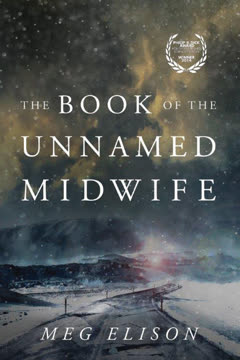
Plot Summary
Fever in the Wards
The story begins in the chaos of a hospital as a mysterious, fatal fever sweeps the globe. Staff, mostly women and children, succumb at a terrifying rate while the protagonist, an unnamed midwife, fights exhaustion and dread. As stillbirths and deaths increase, news pours in—quarantine, cities in collapse, transportation gone. The midwife, surrounded by the dying, feverish herself, clings to routine and her medical log as the world tips into an apocalypse. Women, especially pregnant ones, die en masse; newborns don't survive. The midwife's acute observations of medicine's impotence and society's unraveling set a tone of tension and loss. Personal fears for family and loved ones intermingle with the epic tragedy consuming society, as the first hints of gendered extinction eerily emerge.
City of the Dead
After waking alone in a ransacked hospital, the midwife stumbles into a transformed San Francisco—silent, derelict, marked by rot and death. All around, civilization's routines have collapsed: no power, transport, or neighbors. Her attempt to return to normality is shattered by a violent assault in her own bedroom, which she survives at bloody cost, showcasing her fierce will to live. The trauma is immediate and raw, framing the dangers not only from disease but also from surviving men. Alone and untethered, she wanders the emptied streets, a prey among predators, desperate for meaning but bereft of guidance and allies. The world's emptiness is both a physical and existential desolation, setting up her journey as both a literal search for safety and a personal reckoning.
Becoming the Midwife
Hunted and alienated by her rarity, the protagonist adapts for survival. She shaves her head, binds her chest, and adopts a male persona—Andrew, Rob, Carl, Dusty—names changed as needed to evade notice. Cramming a pack with medical supplies, birth control, weapons, and her journal, she becomes a traveling healer and clandestine protector of the few women and girls she encounters. Passing as male, she faces the shifting dangers of a world where women are traded, raped, and enslaved. Medical training becomes both shield and burden. She bargains for female safety, delivering birth control in secret and deciding to hide her identity at all costs. Her resilience is shadowed by deep trauma, but she clings to the midwife's calling as a last anchor of purpose.
Scavenging and Survival
In a ravaged and lawless city, the midwife encounters Joe and Chicken, two survivors seeking food and water. Their tenuous alliance quickly falls apart when her gender threatens their safety, illustrating how trust has been perverted by terror and scarcity. Alone, she refines her survival tactics, raids forsaken stores, and carefully avoids groups. Resource acquisition—water, food, shelter, weapons—becomes an unending struggle, with every errand risking a deadly run-in. Alliances are fleeting, dictated by practical need and the oppressive threat of predatory men. Emotions cycle between hope and heartbreak at each brief friendship or betrayal, forging her into a pragmatic, watchful, tireless survivor.
Disguises and Dangers
As rumors swirl about less-bad southern regions, the midwife leaves the Bay Area. She nicks a boat to cross the Bay, dons a persona as a male nurse, and slowly moves east. Interactions with other survivors—Curtis, José, Mike, Jenna—underscore both the longing for connection and the profound danger of standing out. She barters medical care for the chance to discreetly distribute birth control to captive women. Each encounter is shaped by the stripping away of old social norms: violence, negotiation, bluffing, and calculated acts of kindness. Her emotional detachment grows, but so does her tactical cleverness, developing skills necessary to navigate a world where being known—by name or as a woman—is perilous.
Trading for Lives
Dehumanizing trade for resources and sex is now the law of the land, with women reduced to goods. The midwife participates strategically, feigning interest in slavery transactions so as to clandestinely help those trafficked—like Jenna and later Roxanne and Melissa. Her offers of shots and pills are quiet acts of rebellion and mercy amid the utter indifference or cruelty of their "owners". Often forced to bargain against her own conscience, she internalizes guilt over every woman she can't save. At each dangerous negotiation, she must act with ruthless cynicism while her private journal records the true ache of her (and her civilization's) failures.
The Flight North
Alone, disguised as a man, the midwife moves north, seeking isolation from spreading bands of men and lawlessness. Lakes, cabins, and vacant towns offer temporary refuge. She fortifies, scavenges, waits out winter, and fights off marauding men. The seasons' grind drives home the realities of the new world: nature is indifferent, but society is actively predatory. Isolated in wilderness, she maintains survival routines but is haunted by memories, guilt, and the semblance of her past life. The possibility of community seems remote; survival is measured by stockpiled goods, loaded guns, and the avoidance or violent deterring of all strangers.
Winter of Solitude
The long winter in the lake house brings a silence deeper than death. Months pass in bitter cold, the midwife growing physically stronger but mentally fraying. She analyzes her predicament: the extinction of women and children, the absence of law, and the futility of hope. Survival demands endless vigilance and self-reliance, but the pain of aloneness is acute. She revisits trauma and loss, regretting unable rescues and pondering the ruined cycles of birth and rebirth. Yet her resolve crystallizes; her identity as a midwife persists, if only in the obsessive maintenance of her medical kit. The season becomes a crucible from which she will emerge, battered but undestroyed.
The Mormon Colony
Venturing into Utah, the midwife finds an unsettling Mormon survivor colony: clean, ordered, and policed by patriarchal elders. Here, women are few and deeply protected (or controlled); children are hidden, and elaborate social rituals attempt to restore lost order. She passes as a man—Dusty Jones—gaining hospitality, hot food, and wary inclusion. Exploring the community's surface respectability, she uncovers the cracks: stifling gender hierarchy, forced marriages, and the secret despair of both men and women. Missionaries are dispatched into the wider world, almost never returning. The question of reproduction and power forms the settlement's uneasy heart.
Gender and Power Games
As the midwife moves among settlements or travels with companions like Roxanne, the meaning of gender shifts. Encounters with "hives"—matriarchal groups where one woman controls many men—are contrasted against male bands or patriarchal enclaves. She witnesses the different permutations of gendered survival, each with their own tragedies and abuses. Whether in hives, bartering towns, religious colonies, or on the roads, the rare presence of a woman always distorts power and desire. Her own gender becomes both weapon and vulnerability, and she grapples with the impossibility of reclaiming old roles in a world that prescribes only predator or prey.
Seeking Connection
Yearning for companionship, the midwife forms bonds—sometimes fleeting, sometimes profound. With Roxanne there is the comfort of shared secrets and intimacy; with others, honest connection is shadowed by risk. Each friendship or partnership risks exposure or betrayal. The brief peace she finds with Roxanne, then Honus, and even Jodi is repeatedly cut short by the encroachment of violence, jealousy, or survival needs. Attempts at love, sex, or even simple kindness are fraught but persist. The narrative highlights the irrepressible need for human relationships—even as the world punishes that need.
Hives and Harm
Discovering "hives" led by dominant women, the midwife observes how some survivors attempt to flip the old structures. Here, men serve under women's strict rules, often exchanging sex and labor for protection and purpose. But these alternative societies are themselves unstable, sometimes relying on drugs, sexual exploitation, or psychological manipulation. The hives stand as a mirror to the brutality outside, showing both the possibilities of female authority and its capacity for perversion. The midwife's vigilance never lessens; exploitation can come from any gender, and security is never guaranteed by numbers or sex.
A Family in Ruins
Later, the midwife reluctantly becomes part of a found family with Honus and Jodi, and eventually Patty. There are seasons of sharing and even celebration—a false Christmas, shared meals, laughter. Babies are awaited with desperate hope but never survive. Grief builds in private and public: Jodi succumbs to depression after labor, Honus flails between guilt and need, the midwife is torn between desire, bitterness, and the pressure to endure. The family fractures under secrets, betrayals (especially sexual), and the unsparing logic of extinction. Loss overshadows comfort; the bonds they build can't withstand the world's relentless attrition.
Birth and Burden
Every pregnancy is a gamble against hope. The midwife delivers many children, all lost. The repeated failure dashes hope and entrenches despair among survivors. The rare event—a baby born alive—briefly reinvigorates communities, suggesting the tide may turn. The first surviving child since the plague becomes a source of awe, gratitude, and superstition as much as science. The burden of birth—bringing life into ruination—remains the midwife's spiritual ballast and curse. It connects her to the past, but her expertise now only measures the extent of loss. Yet through persistence and the unexpected, the thread of human renewal, fragile and shrouded in myth, continues.
Tragedies, Betrayals, Goodbyes
Erosion of trust, failed relationships, and lost children finally force separation: the midwife rejects Honus's plea to form a polygamous family; she gives Jodi the gift of potential agency—birth control—and departs for solitude. The reunion of Honus, Jodi, and Patty in the Mormon colony becomes a sad echo of community, quickly corrupted by power struggles and new abuses. Death, suicide, and further miscarriages whittle down the group until only the scarred remain. The midwife's hardest lessons are about the necessity of departure—the obligation to survive even at the cost of fellowship and love.
Fort Nowhere
The midwife—now Jane—finds haven at Fort Nowhere, a survivor compound where rule of law, consent, and rudimentary democracy are re-established. She becomes an indispensible healer, teacher, and historian. Survivors gather, presenting complex arrangements: hives, polyamory, same-sex partnerships, and new forms of kinship. Jane secretly trains others in midwifery, recognizing the need for knowledge transfer and legacy. The settlement becomes a repository: of hope, memory, and the first inklings of future myth. But memory is as haunted by loss as by possibility—scribes record both triumphs and tragedies.
The World Endures
Brief glimpses from around the world paint a mosaic of battered, enduring humanity. In Korea, Papua New Guinea, Wales—sometimes by luck, quarantine, or violence—pockets of people persist. Each society crafts its own attempts at rebuilding: from rigorous communal sex schedules to new female-led militias. Technology is now vestigial, stories take the place of science. Children, often sickly, sometimes survive. Bit by bit, the long winter of humanity begins to break, though no one dares trust it with certainty.
The Last Children
Finally, years later, the elusive living child appears—Rhea. Her survival heralds the possibility that humanity may not be finished. Children's cries are now talismans, their well-being the center of folk rituals and hope. The midwife's diaries become scripture. Young scribes recopy her records, and the myth of the unnamed midwife—the first bearer of hope in this new dark age—grows. The world's future is uncertain, but community, storytelling, and the pursuit of fragile birth flourish in the unexpected cracks left in apocalypse's ruin.
Analysis
Meg Elison's The Book of the Unnamed Midwife is a harrowing yet deeply human exploration of gender, power, and survival set after a global plague nearly eradicates women and children. Its tight, subjective focus on the unnamed protagonist's shifting identity and inexhaustible drive both personalizes and paradoxically universalizes the trauma and challenges faced by the remnants of humanity. The book interrogates patriarchy not by simple inversion but by exposing its naked violence, then examining possibilities for alternative structures—none of which are unqualified successes. Medical and reproductive themes ground the apocalypse in biological realities while using those facts to stage broader questions: Who gets to decide who survives? What is a woman without the prospect (or burden) of mothering? When does care become a weapon or burden, and when does violence become necessary? The structure—fragmented journals, vignettes of future myth, testimonies from unlikely survivors—challenges notions of objective truth or lasting order. Ultimately, the narrative insists on the incomplete, improvisational nature of all survival: tradition, innovation, myth, and sheer luck intermingle. Hope emerges neither as an entitlement nor a happy ending, but as the precious by-product of community, care, and the painful, persistent work of remembering. Even when science falters and the world forgets itself, the story suggests, the unrecorded acts of resistance and mercy endure—waiting for the next fragile child to draw breath.
Review Summary
The Book of the Unnamed Midwife receives overwhelmingly positive reviews, averaging 4.14/5 stars. Most readers praise its unflinching portrayal of a post-apocalyptic world where a plague decimates women, leaving survivors vulnerable to exploitation. Reviewers highlight the compelling unnamed protagonist, realistic writing style, and meaningful exploration of gender, sexuality, and survival. The diary format is frequently praised for its authenticity. Critical reviews cite disjointed narrative structure, unrealistic male characterization, and inconsistent formatting. Many compare it favorably to The Handmaid's Tale and The Road.
People Also Read

Characters
The Unnamed Midwife (a.k.a. Rob, Andrew, Dusty, Jane)
The protagonist's fluid identity—multiple names, gender presentation—underlines both her will to survive and her discomfort with fixed identity. Trained as a midwife and nurse, her medical skills provide the last thread of the lost world's compassion but also a profound, almost spiritual burden; each failed birth is another nail in civilization's coffin. Her psychoanalytic core is one of hypervigilance and dissociation: trauma and isolation harden her, yet repeated attempts at connection keep surfacing. Her development tracks from overwhelmed healer to calculating survivor to reluctant leader and teacher. Her legacy becomes more than her survival: her recordings, teachings, and acts of hidden mercy make her a mythic figure in the emerging post-collapse canon.
Honus Obermeyer
A Mormon missionary, Honus is the embodiment of belief struggling to outlast the collapse. Sensitive and sometimes overwhelmed, he clings to religious certainty and the structures of old authority. His love for Jodi and pursuit of hope make him vulnerable, while his unexamined privileges (as a man, as a believer) surface in moral blindspots and betrayals. Psychologically, Honus is both gentle and passive, often looking to women—first Jodi, later the midwife—for direction. His journey is marked by confusion, shame, and ultimately helplessness as the world's violence and entropy devour his old values.
Jodi Obermeyer
Jodi, a young devout Mormon, represents the unprepared, childlike survivors—swept along by circumstance, deeply conditioned by old patriarchal expectations. Her identity is rooted in marriage and motherhood, and the loss of her child (and inability to bear more) shatters her. Profound grief leads to withdrawal and near-suicide; her dependence on Honus and later Patty is always threaded with vulnerability. Her psychological shallowness—refusal to process trauma or contemplate her true agency—is both a protective mechanism and a limitation, ensuring she remains a tragic figure unable to steer her fate.
Roxanne
Former Vegas cocktail waitress and stripper, Roxanne leverages her sexuality and wit to navigate the new order. Chains, hives, and servitude have battered but not broken her; her cynicism is armor, her humor a razor. Psychologically, she's immensely adaptable, able to manipulate, joke, or submit as needed to outlast her captors. Relationships—especially with the midwife and later with men—are transactional but also reveal flashes of longing for genuine kindness and dignity. Her journey ends in ambiguity, neither transcending nor fully succumbing to the world's brutality.
Chicken
As Joe's boyfriend and a minor early companion, Chicken represents the rare Black male survivor, onion-skinned by casual and institutional prejudice. He has a hustler's intelligence and brings a sardonic wisdom to many situations. His psychoanalysis is shaped by suspicion and learned self-preservation. While briefly an ally, his priorities are always immediate safety and comfort, and he abandons alliances when risk tips the scales.
Joe
Joe is the first indicator of how survival and sexuality are remapped in apocalypse. His queerness is almost a subconscious bond of safety for the midwife; his nurturing energy (cooking, care for Chicken) briefly provides respite. But his instinct for preservation outweighs loyalty, and his decisions (letting the protagonist go) illustrate how little remains of societal solidarity outside close bonds.
Jenna
A teenaged girl passed among men as property, Jenna embodies the fate of most surviving women—traded for goods, dehumanized, and forcibly bred. She is shell-shocked, adapts to transactional sex, but evokes both the protagonist's guilt and compassion. Her development is stunted by abuse and captivity, and her fate remains largely unresolved, underlining the tragedy of lost girls everywhere.
Curtis
Curtis, a harmless and naive coder, pleads for the protagonist's companionship. His vulnerability, inexperience, and hope for a new social compact (that someone will "take care of him") underline the gender inversion of the apocalypse: men as orphans, searching for guidance and sanctuary. He is left to fend for himself, symbolizing all those doomed by innocence or isolation.
Mother Ina
Appearing in frame stories, Mother Ina is representative of aged, surviving women who curate memory and order. She preserves the midwife's story, trains new scribes, and embodies both the reverence for history and the limitations imposed by trauma. Her psychoanalytic role is as a stabilizer—the one who makes meaning when reason and science break down—her own motherhood marked by loss and endurance.
Ava
Leader in Fort Nowhere, Ava is a survivor of multiple trades and the brutal loss of her daughter. She exudes pragmatism and cautious warmth, trusting slowly, but standing as a model for how trauma does not have to consume agency or hope. Her presence reassures the midwife—and readers—that functional community is possible, however provisional.
Plot Devices
The Journal/Diaries
The midwife's, and later others', journals are both literal plot drivers and symbolic vessels: containing history, preserving memory, and articulating rules for survival (medical, ethical, emotional). The use of first-person diary entries, often jarringly immediate and incomplete, highlights the subjective, traumatized nature of all recollection in the post-apocalypse. The act of copying and re-copying journals (by young scribes) frames the central tension between fact, myth, and the construction of new canons.
Gender Disguise and Fluid Identity
Repeatedly, the protagonist's disguises allow for movement, agency, and sometimes protection, but also provoke existential crises: she is never "named", always shadowed, often misgendered, belonging nowhere. This device amplifies themes of gender as both social construct and material reality—when sex means life or death, performance and erasure become vital tools. The protagonist's self-reflection on these disguises resonates with the story's feminist critique of patriarchy and identity.
Matriarchal Hives and Transactional Power
The appearance of hives—female-led collectives practicing polygamy or "reverse" sexual economies—provides foil for both patriarchal colonies and the chaos of lawless men. Through these experiments, the narrative interrogates the fungibility of power: sexual capital, violence, negotiation, and betrayal. Whether hives are liberating or exploitative is left ambiguous, underlining the uncertainty of all attempts at rebuilding.
Foreshadowing through Framed Narratives
The prologue and interludes involving young male scribes forecast the world that will come after the Midwife. The act of recording, preserving, and mythologizing her story (and those of others) is both homage and warning. These frame stories both contextualize the main plot and project its consequences into the distant, ever-adapting future.
The Scattered Survivors and Global Glimpses
Short interludes about communities in Korea, Papua New Guinea, Wales, and elsewhere disrupt the "American" focus and suggest humanity's fate is far from uniform. These windows into other survivors both enrich the narrative's world-building and deepen the sense of universality in trauma, hope, and renewal. The randomness of survival foreshadows the arbitrary nature of the world's partial recovery.








































