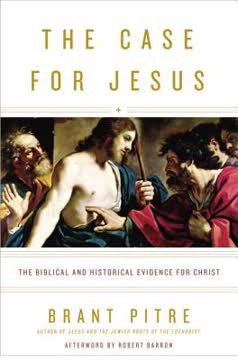
Key Takeaways
1. The Gospels are Reliable Historical Biographies
The Gospels are ancient biographies that intend to record the substance of what Jesus of Nazareth really did and said.
Historical sources. The Gospels are not anonymous folklore but historical biographies, akin to other Greco-Roman "lives" (bioi). For centuries, early Christians and even pagan critics treated them as accounts of a single individual's life and death. This genre implies an intent to convey factual information, even if not exhaustive.
Literary parallels. Ancient biographies share key features with the Gospels, distinguishing them from other literary forms. These include:
- Focus on the subject's birth, public career, and death.
- An average length of 10,000 to 20,000 words.
- Often beginning with ancestry, as seen in Matthew and Luke.
- Flexibility in chronological order, allowing for thematic arrangement.
- A selective, rather than exhaustive, approach to details.
Authorial intent. Authors like Luke explicitly state their aim to provide an "accurate, factual account, based directly on eyewitness testimony" (Luke 1:1-4). John also insists on eyewitness "testimony" about what Jesus "did" (John 19:35; 21:24). This direct claim to historical veracity refutes the idea that Gospel writers were unconcerned with what "actually happened."
2. No Anonymous Gospels Exist
The first and perhaps biggest problem for the theory of the anonymous Gospels is this: no anonymous copies of Matthew, Mark, Luke, or John have ever been found.
Manuscript evidence. The widespread theory that the Gospels were originally anonymous is completely baseless. Every ancient manuscript, across all languages, consistently attributes the four Gospels to Matthew, Mark, Luke, and John. There is no textual evidence—not a single anonymous copy—to support the claim of original anonymity.
Uniform attribution. While minor variations in titles exist (e.g., "Gospel according to Matthew" vs. "According to Matthew"), the attributed authors are absolutely uniform. This consistency across geographically diverse regions and centuries makes the idea of later, false attribution highly implausible. If titles were added later, one would expect diverse or contradictory attributions, similar to genuinely anonymous texts like the Letter to the Hebrews.
Implausibility of scenario. The notion that four anonymous books circulated for decades, then were independently and uniformly attributed to the same four specific individuals (including non-eyewitnesses like Mark and Luke) by scribes across the Roman Empire, defies logic and historical plausibility. The practical need to distinguish multiple accounts would have necessitated titles much earlier, making the "anonymous scenario" incredible.
3. Gospels Written Within Eyewitness Lifetime
Instead, they are ancient biographies written by the students of Jesus and their followers, written well within the lifetimes of the apostles and eyewitnesses to Jesus.
Challenging late dating. The common scholarly dating of the Synoptic Gospels to the late first century (Mark ~AD 70, Matthew/Luke ~AD 80-85, John ~AD 90-95) is based on shaky foundations. This "time gap" theory suggests decades of anonymous storytelling distorted the original message, but this ignores the nature of ancient memory and transmission.
Memory and transmission. Jesus's disciples were trained students who were expected to remember his teachings and began rehearsing them during his lifetime. This "rehearsed memory" is far more reliable than incidental memory or the "Telephone game" analogy. Even if written in the late first century, apostles like John (who lived to ~AD 98) or their direct companions (Mark, Luke) would still be alive or recently deceased, providing direct links to eyewitness testimony.
Evidence for earlier dating. The primary argument for late dating—Jesus's prophecies of the Temple's destruction in AD 70—is weak, as similar prophecies existed in the Old Testament and Jesus's warnings are phrased as before the event. Crucially, the abrupt ending of Acts (with Paul under house arrest in Rome, ~AD 62) suggests Luke's work (and thus Mark/Matthew, which Luke used) was written before Paul's martyrdom and the Temple's destruction, significantly shortening the "time gap."
4. Jesus Fulfilled Messianic Prophecies
In other words, it is the book of Daniel’s kingdom of God that Jesus proclaims. And it the book of Daniel’s Son of Man whom Jesus implicitly claims to be.
Kingdom of God. Jesus's frequent proclamation of the "kingdom of God" (or "kingdom of heaven") directly alludes to Daniel's prophecy of four pagan empires followed by a fifth, everlasting kingdom established by God "in the days of those kings" (Daniel 2:44). First-century Jews understood this to mean God's kingdom would come during the Roman Empire, creating fervent messianic expectation.
Son of Man. Jesus's self-designation as "the Son of Man" refers to Daniel 7, where "one like a son of man" comes on the "clouds of heaven" to receive everlasting dominion. This figure, contrasted with earthly "beasts" (kings), was interpreted by ancient Jews as the Messiah. By using this title, Jesus implicitly claimed to be the heavenly, messianic king.
Messiah's death. Daniel 9 uniquely prophesies the death of the "messiah" ("cut off") linked to the destruction of Jerusalem and the Temple. This prophecy provided a timeline, placing the Messiah's arrival and death within the first century AD. Jesus's predictions of his own suffering and death as the "Son of Man" align with this, showing he understood his mission as fulfilling these specific, often overlooked, prophecies.
5. Jesus Claimed Divinity in the Synoptics
Contrary to what some claim, the accounts of the stilling of the storm reveal Jesus’s identity as the LORD, the Creator of the universe.
Beyond a prophet. The argument that Jesus is not depicted as divine in the Synoptic Gospels (Matthew, Mark, Luke) is incorrect. These Gospels repeatedly show Jesus acting and speaking as if he were the one God of Israel, not merely a prophet or wonder-worker. This is often missed when his actions are not interpreted within their first-century Jewish context.
Divine actions. Jesus performs miracles that, in Jewish Scripture, are reserved for God alone:
- Stilling the storm: He commands the wind and sea, a power repeatedly attributed to YHWH (e.g., Psalm 107). The disciples ask, "Who then is this, that even wind and sea obey him?" (Mark 4:41).
- Walking on water: He walks on the sea and declares, "I am" (Greek ego eimi), echoing God's divine name revealed to Moses (Exodus 3:14). Mark notes Jesus "meant to pass by them," a phrase used for divine epiphanies (Mark 6:48).
- Transfiguration: Moses and Elijah appear with Jesus on a mountain, finally seeing the unveiled face of God in Jesus, who "shines from within" (Mark 9:2-9).
Disciples' response. The disciples' reactions—awe, worship, and Peter's confession of Jesus as "the Son of God" (Matthew 14:33)—demonstrate their recognition of Jesus's divine nature. These actions are not just impressive miracles; they are manifestations of God's unique power and presence.
6. The Messianic Secret: Implicit Divine Claims
Jesus uses the question about the Messiah in Psalm 110 just as he used the riddle about the Son of Man in Daniel 7: to reveal and conceal his messianic and divine identity—until the time was right.
Strategic revelation. Jesus often instructed demons, those he healed, and even his disciples not to reveal his identity, a phenomenon known as the "Messianic Secret." This was a strategic choice to avoid premature opposition and allow people to come to faith freely, rather than forcing his claims upon them. This secrecy also applied to his divine identity.
Riddles and questions. Jesus implicitly revealed his divinity through riddles and questions, inviting his audience to discern his true nature:
- Forgiving sins: When Jesus forgives the paralytic's sins, the scribes accuse him of "blasphemy," recognizing that "Who can forgive sins but God alone?" (Mark 2:7). Jesus then heals the man to prove the "Son of Man has authority on earth to forgive sins."
- Son of David riddle: Jesus asks how the Messiah can be David's "son" if David calls him "Lord" in Psalm 110:1. This psalm depicts the Messiah as a heavenly, pre-existent figure "begotten" by God, implying Jesus's divine pre-existence.
- Rich young man: Jesus's statement, "No one is good but God alone" (Mark 10:18), is not a denial of his own goodness but an invitation for the young man to consider Jesus's divine nature, especially when followed by the command to "come, follow me."
Ancient understanding. Early Church Fathers consistently interpreted these passages as riddle-like revelations of Jesus's divinity. They understood Jesus's method as a gradual unveiling of a profound mystery, not a denial of his divine status. This approach allowed for a deeper, faith-based understanding of his identity.
7. Crucified for Blasphemy, Not Just Politics
According to the Gospels, Jesus of Nazareth was accused of and, ultimately, condemned for blasphemy because of who he claimed to be.
Historical fact. Jesus's crucifixion is a widely accepted historical fact, attested by both New Testament and ancient non-Christian sources. Explaining why he was crucified is crucial for any historical understanding of Jesus, as great moral teachers were not typically executed unless their teachings were subversive.
The trial's true charge. While Jesus's actions and prophecies concerning the Temple played a role in his arrest, the Synoptic Gospels clearly state he was condemned for blasphemy during his trial before the Sanhedrin. When High Priest Caiaphas asked, "Are you the Christ, the Son of the Blessed?" Jesus replied, "I am; and you will see the Son of Man seated at the right hand of Power, and coming with the clouds of heaven" (Mark 14:61-62).
Divine claims as blasphemy. Jesus's answer, alluding to Daniel 7 (Son of Man coming on clouds) and Psalm 110 (seated at God's right hand), implied a divine status. This was not merely claiming to be the Messiah, which was not blasphemous, but claiming equality with God. Caiaphas's tearing of garments and the Sanhedrin's condemnation to death for "blasphemy" (Matthew 26:65; Mark 14:64) confirm that his divine claims were the ultimate cause of his execution. John's Gospel also records Jews accusing Jesus of deserving death "because he has made himself the Son of God" (John 19:7), referencing the law against blasphemy.
8. The Resurrection: A Bodily, Scriptural Fulfillment
Instead, they meant that Jesus had been restored to bodily life-a new, glorified bodily life. And in this glorified body, Jesus would never die again. Ever.
What resurrection is not. The disciples' belief in Jesus's resurrection was not:
- Resuscitation: He didn't just return to ordinary earthly life, only to die again later (like Lazarus).
- Soul immortality: It wasn't merely his spirit living on; they proclaimed the resurrection of his body.
- Exaltation to heaven: His ascension was a separate event, occurring after his bodily resurrection.
What resurrection is. The resurrected Jesus had a real, transformed body:
- Physicality: He had "flesh and bones," ate food, and was not a ghost (Luke 24:36-43).
- Identity: It was the same body, bearing the wounds of the cross, allowing Thomas to touch his nail marks and side (John 20:24-29).
- Glorified: His body possessed new qualities, like passing through walls or veiling his appearance (John 20:19; Luke 24:13-16).
Reasons for belief. The belief in Jesus's resurrection spread rapidly among skeptical Jews and Gentiles due to three main reasons:
- Empty tomb: All four Gospels agree the tomb was empty on the third day, a fact even opponents tried to explain away (Matthew 28:12-13).
- Appearances: Jesus appeared bodily to numerous eyewitnesses—Mary Magdalene, other women, Peter, the eleven disciples, over 500 "brothers" at once, James, and Paul.
- Scriptural fulfillment: Jesus's resurrection on the third day fulfilled prophecies, most notably the "sign of Jonah," which depicted Jonah's death and resurrection from the "belly of Sheol" and the subsequent conversion of the Gentiles (Matthew 12:38-41; Jonah 1:17-3:3). This mass conversion of pagan nations to the God of Israel was seen as the ultimate, ongoing miracle.
Review Summary
Reviews for The Case for Jesus are largely positive, averaging 4.54/5. Supporters praise Pitre's accessible yet scholarly approach, highlighting his emphasis on the Jewish context of Jesus's teachings and compelling arguments for Gospel authorship and reliability. Many appreciate his rebuttals of skeptical scholarship, particularly regarding the anonymity of the Gospels and Jesus's divine claims. Critics, however, argue the book relies too heavily on circular reasoning, using biblical sources to prove biblical claims, and accuse Pitre of misrepresenting mainstream scholarship and employing selective evidence.