
Plot Summary
Shadows in the Gallery
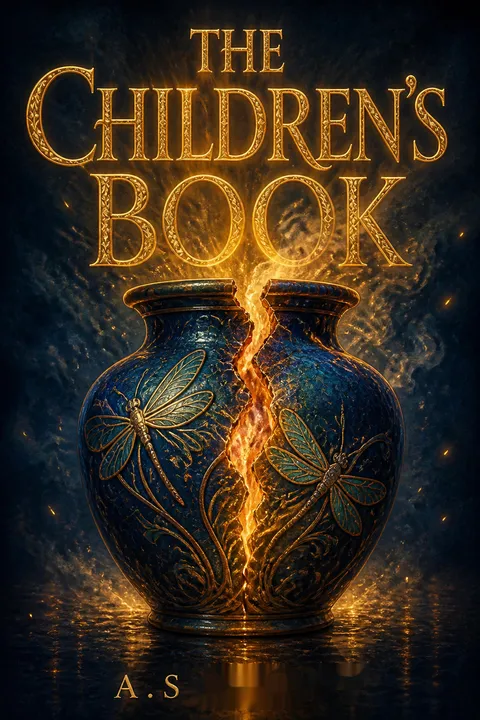
In the summer of 1895, three boys meet in the South Kensington Museum: Julian, cautious and privileged; Tom, curious and dreamy; and Philip, ragged and hungry, secretly living in the museum's dusty underworld. A chance encounter by a gilded, dragon-twined candlestick reveals Philip's talent for sketching and his longing to make things, not just survive. Rescued from destitution, Philip is enfolded into the contrasting warmth of the Wellwood family, where his outsider status both unsettles and inspires. This threshold—between glittering museum cases and dirty corridors, between class and creativity—sets in motion the core themes: how stories, art, and secrecy shape identities during times of historical change.
A Home for Stories
Tom brings Philip to Todefright, the Wellwood family's Arts-and-Crafts haven in the Kentish countryside. The house overflows with affection, children, eccentric relatives, and the creative fever of Olive, the family's matriarch, a successful author of magical tales. Here, stories are more than entertainment—they define relationships, roles, and ambitions. Each child receives a continuing, custom-made narrative, blending myth and memory, while class, loss, and hidden trauma simmer beneath Todefright's ordered routine. Philip, uncomfortable but awed, learns there are various kinds of families and homes, some chosen rather than inherited. At Todefright, art and life are inseparable, but belonging is always complicated.
Midsummer Revels
The Wellwoods' annual Midsummer Party gathers writers, Fabians, artists, anarchists, and neighboring families, blurring generations and ideologies. Through masquerades, puppet plays, midnight dances, and communal storytelling, the boundaries between adults and children, fantasy and reality, are delightfully porous. Yet underneath, rivalries and exclusions thrum: family love is never equal, secrets nestle in marriages, and the social experiments of the adults often leave the children to fend for themselves, both free and abandoned. The puppet-master's Cinderella, macabre and wondrous, hints at the dangers of interpretation and the cost of enchantment, sowing seeds of confusion and desire that will shape coming years.
Golden Age Beginnings
The narrative widens, chronicling the intertwined histories of the Wellwoods and their friends. Olive and Humphry's romance is rooted in radical politics, artistic ambitions, and northern working-class endurance, yet privilege and inherited trauma shadow their idealism. Children's stories are vessels for hope and anxiety, transforming the family's losses, betrayals, and near-magical escapes into metaphor. Growing up amid the debates of the Fin de Siècle—Fabianism, bimetallism, suffrage, utopian social change—the Wellwood children, the Cains, and their extended circle are caught between the freedom that dreams promise and the stubbornness of the world they inherit.
Under the Surface
At Purchase House on the Romney Marsh, Philip finds purpose as apprentice to the genius potter Benedict Fludd, whose sublime work is matched by tempestuous moods and family dysfunction. The Fludds, artistic and neurotic, are silently ruled by trauma and secrecy; their daughters oscillate between passivity and frustrated will. Philip's ability to see and create patterns in clay—distilling nature's forms into art—offers him a new identity, yet makes him dangerously dependent on Fludd's mercurial favor. Around them, the arts community grows, mixing earnestness and self-mythologizing, as questions about labor, art, and who gets to make meaning intensify.
Passions and Secrets
The children of both families—Wellwoods and Fludds—come of age amid sexual curiosity, awakening ambition, and social constraint. Class and sexuality intersect with artistry, leading to liaisons, betrayals, and ambiguous acts of love, often unspoken or misunderstood. Olive's literary creation becomes entangled with her children's fates, as her stories both guide and confine. The consequences of transgression—romantic, artistic, familial—are profound: children and adults alike must reckon with the boundaries between art and life, self and other, as the world outside grows quietly more dangerous, promising both liberation and exile.
Crossing Thresholds
As years pass, the children move from protected play to risk and loss. Tom, once Olive's golden boy, is traumatized at public school by bullying and alienation, nearly vanishing into the woods. Dorothy, fiercely rational, discovers her origins lie not with Humphry but the enigmatic puppet-master Stern. The sanctuary of childhood fractures, revealing new uncertainties: secrets about parentage, love, and inheritance leave every child only tenuously anchored, their gifts and confusions echoing those of their parents. Family bonds hold, but just barely, as risk, shame, and the urge to run away become rites of passage.
Puppets and Real People
The play-obsessed adults collaborate with the Sterns to create a new art form: a magical drama, Tom Underground, blending theatre, ballet, marionettes, and myth. The first performance enthralls and wounds—especially for Tom, who cannot recognize himself in the gender-swapped, stage-managed version of his story. The gap between art and life grows starker. Questions of authenticity, agency, and who controls the stories—writers, actors, children—press on relationships. While art offers solace, it also reveals the inescapable sorrows and limitations of both personal and social histories.
Coming of Age
The turn of the twentieth century brings new freedoms—university for women, creative independence, and practical work in crafts, medicine, and teaching—at great personal cost. Choices made by the grown children are haunted by family legacies and secret wounds. Love, always uncertain, shimmers between potential joy (Julian and Griselda, Florence and Geraint) and disappointment or catastrophe. Gender and class limit possibility, and the promise of art or social change is shadowed by failure, loss, and a sense of time running out, even as small, hard-won happinesses are cherished.
Between Art and War
As the Edwardian period slides into the Age of Lead, personal and cultural dreams are overrun by historical events: industrialization, the rise of syndicalism, the feminist and labor movements, and, ultimately, the approach of war. The impulse to create—whether in novels, pots, or plays—collides with violence and exhaustion. The world's appetite for stories and transformation grows desperate; idealism is tested, corrupted, or left adrift. Amid social ferment and personal struggle, lines between public ambition and personal legacy blur, as each character's choices accumulate toward unforeseen tragedy.
The Silver Age
Childhood and England itself become objects of nostalgia—lost Edens, golden ages that never truly existed. The next generation, striving for meaning in new roles (as socialists, artists, professionals, lovers), are perpetually unsatisfied, haunted by what they cannot recapture or undo. Fabians, feminists, soldiers, and students gather, debate, and drift into a world of limited options, disappointed hopes, and mediated happiness. The stories that once comforted or structured the world—both personal myth and national history—fail to protect against loss, dislocation, or the coming cataclysm.
New Women, New Rules
Women's lives are transformed by war, work, and education: Dorothy becomes a doctor and surgeon; Griselda flourishes as a scholar and writer; Elsie, once marginalized, becomes a teacher and partner. Yet new freedoms come with new costs—intimacy, security, and traditional aspirations are hard to reconcile. The birth of children calls old certainties into question, and personal relationships must be renegotiated with every shift in social ground. The landscape is simultaneously magical and menacing: resilience is both demanded and rewarded, but renewal is never automatic.
Dreadnoughts and Fairy Dust
The First World War shatters the delicate structures of Edwardian optimism: fairy tales and dreams are replaced by trenches, mud, and death. Nearly every character is drawn in—Philip and Charles as ambulance and medical volunteers; the Wellwoods' sons and friends as casualties; Dorothy and Griselda on hospital wards. The magic of childhood, the hope of art, the energy of politics are revealed as inadequate bulwarks against the monstrous violence and loss. Small acts of love and endurance persist, but innocence is gone, and no story can restore it.
Crosscurrents of Desire
Desire—creative, romantic, sexual—remains a disruptive force, binding and sundering families and friends. Whether embodied in forbidden affairs, marriages across class lines, homosexual longing, or the perverse legacies left by love and violence, desire pulls against duty and convention. The boundaries of the heart are as unstable as those between fantasy and fact; consequences ripple outward, often destructive but sometimes redemptive. The complexities of inheritance—cultural, emotional, genetic—shape every relationship's joys and sorrows.
The Longest Shadows
As the war ends, those who survive return changed forever. Deaths—of sons, friends, and lovers—leave chasms in families. The promise of the old stories is replaced by new rituals of mourning, forgetting, and cautious hope. The surviving children—now adults—must care for broken parents, each other, and the next generation. Olive, bereaved, can no longer imagine a story that contains loss; the power to make meaning is replaced by the stony force of memory. Even happiness—Florence's daughter, Julian's return, Elsie's acceptance—is shadowed by what is gone forever.
World Lost, World Remade
The 1920s unfold with the weight of everything lost. Children become parents, the houses rebuilt, and artists adapt to a world without gold or innocence. There are new partnerships, new forms of work and love, but also lingering shame, misfit, and silences. The survivors join together, sometimes clumsily, sometimes gratefully, to tend what remains. The dream of changing the world has become that of surviving in it, reimagining home and kinship through hard work, kindness, and the lessons of loss.
Legacies and Remains
The Children's Book ends with the blending of old and new: surviving family members and friends—scarred by history, war, and their own choices—find fragile community. The generative urge of story and art endures, but always at the price of innocence and wholeness. The children of the past have become the wounded parents of the present, acutely aware of both the necessity and the cost of making meaning, of who gets to tell stories and why. The book insists, quietly and persistently, on the need to cherish love and art, even in the face of everything that cannot be repaired.
Analysis
The Children's Book is a sweeping, incandescent meditation on the entwined possibilities and griefs of art, history, and the family. Byatt sustains an intricate dance between enchantment and realism: her characters seek solace, transformation, and meaning in stories, art, and idealism, only to discover that art's power is matched by its danger. The book dissects the triumph and limits of creativity, the costs of constructing fictions—whether familial, social, or artistic—to protect innocence or make peace with loss. Through her mosaic narrative, Byatt asks what we inherit, how memory and trauma sculpt the self, how class and gender shape destiny, and whether the beauties we make (stories, pots, families) can redeem, or simply record, suffering. The novel mourns the vanished Edwardian world yet resists false nostalgia: it insists that every golden age is shadowed by violence, every act of making by the threat of destruction. In the context of our own uncertain and fragmenting age, The Children's Book offers both warning and balm: art matters because it cannot save us, yet its making—tender, flawed, persistent—endures as our best hope for meaning, even with, and after, catastrophe.
Review Summary
The Children's Book receives mixed but generally positive reviews, averaging 3.69/5. Admirers praise Byatt's sweeping historical scope, vivid depictions of the Arts and Crafts movement, and richly drawn characters spanning late Victorian England through WWI. Many readers find the novel immersive and emotionally resonant, comparing it favorably to Middlemarch and Possession. Critics, however, cite an unwieldy cast, uneven narrative pacing, excessive historical exposition, and a tendency toward "telling rather than showing." The final WWI section divides readers, with some finding it devastating and others feeling it abruptly truncates beloved storylines.
Characters
Olive Wellwood
Olive is the charismatic and complicated mother at Todefright: a successful author of fairy tales and family epics, celebrated for her creativity and maternal largesse. Her warmth, originality, and radical ideals power the family's artistic world, but her devotion to story—her need to translate everything, even grief, into narrative—can also be enveloping, intrusive, and ultimately self-protective. Olive's own traumas (childhood poverty, parental deaths) haunt her impulse to save, control, or escape through story; her relationships, including her marriage to Humphry and her children, are shaped by both love and the wounds and secrets she cannot acknowledge or heal. As her children discover the costs of being "written," Olive faces her greatest loss—her power to undo damage even by narrative.
Humphry Wellwood
Humphry embodies the contradictions of his time: a middle-class banker passionate about socialism and social reform, as well as arts, love, and children. Handsome, witty, and seductive, he is loved by many but unreliable—and sometimes predatory. His relationships are restless: devotion to Olive, repeated affairs (including with Olive's sister Violet and Marian Oakeshott), and a complicated love for his children. Though he seeks moral purpose through politics and writing, he is ultimately a man of appetites, constantly fleeing or betraying those closest to him. After war and tragedy, he is left confronting his own limitations as both lover and father.
Tom Wellwood
Tom, the original "hero" of Olive's stories, is beautiful and imaginative, his mother's pride, but equally vulnerable to expectation and trauma. Sensitive and introverted, he is unable to reconcile the demands of growing up—school, masculinity, adulthood—with the mythic role he is given; public school nearly destroys him, and he becomes more and more estranged, adrift in his own world of woods, stories, and walking. Tom's inability to inhabit either the stories or the world outside leads him to slow withdrawal and, finally, self-destruction. His disappearance haunts the family and stands for the failures of both art and love to offer safe haven.
Dorothy Wellwood
Dorothy, Olive's eldest daughter, is determined, practical, and fiercely intelligent. Unlike Tom, she rejects being written into stories—preferring science, medicine, and self-possession. Her journey is marked by revelations about parentage (her real father is Stern the puppetmaster), sexual confusion, and her own need to care for others versus desire for autonomy. Dorothy's relationships with Olive, Tom, and her best friend/cousin Griselda are complex, colored by intense loyalty and equally intense need for freedom. Her eventual emergence as a surgeon stands as a partial triumph of will, intellect, and modernity, but always shadowed by loss and the unreliability of "family."
Griselda Wellwood
Griselda, cousin to the Wellwoods, finds her truest self not in family but in friendship (especially with Dorothy) and in self-directed study. Pale, sensitive, and often lonely, Griselda is perpetually caught between expectation (marriage, conformity) and her own desires (learning, writing, loving). As she matures, she escapes the confines of femininity not through activism but scholarship, carving out space for selfhood and love (with Wolfgang Stern) in her own terms. Griselda stands for the possibility of connection outside family scripts and for the bittersweet freedom of being neither central nor invisible.
Julian Cain
Julian, son of Prosper Cain, is a privileged observer—kind, somewhat detached, and shaped by losses (his mother's death, his own disabilities). His relationships—with Tom, Griselda, Gerald, and his family—are deeply important, yet he often finds himself watching from the edge, unable to resolve questions of desire, loyalty, or vocation. War brings both poetry and disablement, as his ironic perspective is tested by horror and loss. Julian is emblematic of the era's vanished golden age: educated, kind, yet ultimately unable to protect himself or others from the fate history brings.
Philip Warren
Philip's journey is one from abjection to mastery: a runaway potter's son, finding first shelter, then purpose, as apprentice to Fludd, and later equal to the "masters" who shape art and narrative. Philip's gift is his ability to see—nature, form, pattern—across boundaries of class, time, and tradition. His relationships—with Olive, the Wellwoods, the Fludds, his sister Elsie—are marked by reticence and loyalty. He becomes a main vessel for the novel's questions about art, labor, and the possibility of self-remaking. War scars him, but he remains a survivor, changed but undiminished.
Imogen Fludd
Imogen, eldest daughter of the ill-fated Fludd family, grows up in shadows: mother's passivity, father's genius and violence, and the suffocations of rural isolation. Gently talented, she finds a place in art school and, eventually, as Prosper Cain's cherished wife and mother of his child. Imogen's story is one of escaping the cycles of family dysfunction, though never wholly free of loss and fear. Her happiness is quiet, fragile, but deeply earned; her presence offers hope that learning, love, and skill can transform old wounds.
Elsie Warren
Elsie, Philip's sister, is a plain-spoken, practical force: working-class, unmarried mother, caretaker, and later teacher. Her resilience, wit, and honesty shed light on the frequently unconscious privileges—and self-delusions—of those she serves. Though often overlooked, Elsie is indispensable: not only for her labor but for her emotional intelligence and moral realism. In love with Charles/Karl and fiercely protective of her own freedom, Elsie emerges as one of the most quietly heroic figures, embodying both the suffering and stubborn hope of her era.
Benedict Fludd
A genius in ceramics, Fludd is violent, depressive, magnetic, and ultimately self-destructive. He lures talents (Philip, Dobbin, his own daughters) and repels them, is worshipped and feared. His art is a means of both transcending and enacting trauma: he creates masterpieces, protects and harms his family, and ultimately drowns himself, leaving a legacy of beauty, pain, and confusion. Fludd is the novel's dark muse: the cost of worshipping genius and believing in the saving power of art.
Plot Devices
Embedded Stories and Artifacts
Byatt's novel thrives on embedded texts: Olive's fairy tales, puppet plays, marionette performances, and the very objects—ceramics, toys, jewelry, art—which define the physical and emotional worlds of the characters. These act as mirrors, metaphors, and sometimes traps: children fitted into adult fantasies, historical events as personal fables, and art as both solace and threat. This proliferation of made things and told tales allows Byatt to interrogate who controls meaning and identity, how stories shape (or distort) growth, and whether art can protect against, or only record, trauma.
Intertwined Timelines and Multiple Perspectives
The narrative structure zigzags through time, folding family histories, personal reminiscences, and public events together into a layered mosaic. By focusing on multiple families and generations, Byatt avoids sentimentality and easy identification, insisting on the complexity of experience and inheritance. Characters' memories, letters, and stories frequently disrupt straightforward chronology, reflecting both the protean qualities of art and the unresolved agonies of historical change. Time is both cyclical—midsummer parties, annual rituals, embedded stories—and inexorable, dragging every character toward disillusionment and loss.
Foreshadowing and Doubling
Doubling is everywhere: children mirror parents, siblings echo each other's fates, personal choices anticipate historical ones. Puppet shows and shadow stories foreshadow coming tragedy (gender confusion in casting, the violence of "children's" tales, the loss of innocent protagonists). Tom's reluctance to be "written" and his eventual self-destruction are presaged by the impossibility of controlling story or destiny. The War, as it approaches, is often hinted at through language (iron, lead, gold)—the material properties of art and violence merge, revealing how past, present, and future co-exist.
Symbolic Objects
Byatt invests physical things with symbolic resonance: the Gloucester Candlestick suggests hidden histories and violence; Palissy's dish, the locked pantry, and the tree-house all figure as objects of secrecy, inheritance, and the permeability of art and life. Pottery, goldwork, textiles, even old shoes become repositories of pain and hope, keys to hidden rooms, and clues to origins. These objects testify to the centrality of making—art, story, life—to Byatt's vision.
Realist Documentation and Satire
Byatt's obsessive factual detail—on ceramics, socialism, museums, suffrage—anchors her sweeping narrative, allowing her to expose the contradictions, hypocrisies, and earnest failures of late-Victorian and Edwardian optimism. Satirical glimpses (the Fabians, summer camps, pagan feasts) counteract nostalgia and insist on the difficulty, even impossibility, of remaking the world—through art, justice, or love.
About the Author
Other books by A.S. Byatt
Download PDF
Download EPUB
.epub digital book format is ideal for reading ebooks on phones, tablets, and e-readers.








































