
Plot Summary
Three Women, Two Secrets
Tara, Cam, and Stella lead radically different lives, all shaped by complicated relationships with womanhood. Tara is a single mother navigating the TV industry's casual sexism and the judgment of the "school-gate mums," fiercely protecting her independence and choices around having her daughter, Annie, via a one-night stand. Cam is a successful, unapologetically childfree blogger, her identity and income built on voicing taboo truths about women's bodies, choices, and societal roles. Stella, damaged by the deaths of her mother and twin sister from cancer, lives in the lingering shadow of loss and a genetically ticking cancer bomb. Each woman is judged, by family, friends, and strangers, for refusing to fit into prescribed boxes. Their stories run parallel, yet all stand on thresholds—about to be thrust further into the public gaze or into the dark.
Private Desires, Public Eyes
When Tara, vulnerable after a rare evening of hope, masturbates on an empty train and is surreptitiously filmed, her secret is weaponized by a stranger and unleashed online. Meanwhile, Cam balances her growing fame with tightrope-walking between feminist provocateur and online pariah, always aware one misstep could mean destruction. Stella, obsessed with family legacy and her dwindling chances to conceive before preventative mastectomy and oophorectomy, secretly fixates on using her boss Jason's sperm. As the viral video of "Wank Woman" explodes, each woman's most private self is threatened by exposure, judgment, and the mass appetite for shame.
Consequence in a Viral Age
The fallout for Tara is instant and overwhelming—mockery at work, parental dysfunction, humiliation at the school gate, and viral infamy. Social media magnifies her worst moment into a global meme and rape threats. Tara's work and friendships shatter. Cam is compelled to defend "Wank Woman," outraged at the hypocrisy and the collective digital schadenfreude. Stella, desperate and lonely, lets grief blend with longing: friends abandon her, her boyfriend leaves, and she sets her sights on tricking Jason into fatherhood.
Motherhood by Design, Not Fate
Tara's choices—working single mother by design, not disaster—are dissected by strangers and the press, raising questions of ownership, autonomy, and what makes a "good mother." Cam continues to champion nonconforming women, even as trolls and sponsors attack her. Stella's obsession with becoming a mother—her only hope for a meaningful legacy—spills over into deceit, as she fakes cancer, shaves her head, and prepares to seduce Jason, all under the banner of "doing whatever it takes."
Daughter, Sister, Stranger
Stella grapples with an identity defined by absence: her twin, her mother, her own fading youth and fertility. Her effort to fill this void drives her to increasingly irrational acts, hacking Jason's life, lying about illness, and harassing Cam online. Meanwhile, Cam's relationship with her family, especially her mother, is tested when an unplanned pregnancy threatens to unravel her public persona as "Face of Childless Women." She confronts the tangled inheritance of feminine expectation, responsibility, and the enduring ache to be seen.
Herds Don't Own Us
Cam's writing becomes a rallying cry against judgment and false solidarity—cows, women, aren't obliged to "follow the herd." These three women, each in her different way, try to step out: Tara refusing to apologize for her pleasure; Cam owning her unorthodox choices; Stella refusing to become just another cancer story or cautionary tale, no matter her method. Judgment from the "herd" is inevitable, but owning difference, even at great cost, is their best shot at freedom.
Guilt and Girlfriends
Tara's supposed best friend Sophie deserts her just as the scandal peaks. Tara sees all the "solidarity" of motherhood and female friendship as hollow, giving way to self-preservation and betrayal for the promise of respectability. Cam, meanwhile, finds kinship with Tara through empathy and online exchange, their friendship growing more meaningful than many supposed "real-life" bonds. Stella, even as she seethes with envy and rage at Cam online, aches for the intimacy she has never known since Alice died.
Watching, Judging, Failing
All three protagonists witness themselves and each other failing—miserably, comically, or tragically—in the eyes of others. Tara's fall is literal and metaphorical, collapsing under the weight of shame, losing her job, her agency, and even temporary custody of Annie. Cam is haunted by the knowledge that even her solidarity can quickly become spectacle or fodder for her audience. Stella, caught between self-immolation and self-invention, finds every attempt to connect or create devolves into disaster.
Scandal, Survival, Sisterhood
Through chance and courage, Cam and Tara's stories intersect in life and online. The solidarity they forge is hard-won, forged not by similarity but by siege. They become lifelines for each other, where "friends" and family have failed. Meanwhile, Stella's determined attempts to force her way into a story—including sabotaging Tara and Jason's romance—find her branded not as villain, but as a cautionary symbol of pain unredeemed.
Collisions and Confessions
Cam's untimely accidental death—pregnant and misunderstood—exposes the limits of public storytelling and the brutality of digital backlash. Only Tara knows the real truth, how Cam intended to end the pregnancy, and how public assumption shapes legacy. Stella's deception comes crashing down, her hopes shattered, her body a map of violence and desperation. Jason and Tara at last are able to connect honestly, united by radical vulnerability.
A Feminist Falls
Cam's "childfree" feminism is suddenly called into question when she is discovered to be pregnant. Even in death, she faces grotesque judgment—betrayal by fans, abandonment by sponsors, and reduction to a fraud. Tara alone bears witness to her friend's intent, and must battle both public and private grief to express the complicated truth: a woman's life is not invalidated by contradiction.
Exposure and Reclamation
Tara, finding purpose in Cam's memory, crafts her own narrative—speaking out unedited on video, finally controlling the lens through which her story is told. No longer a passive victim, she starts using her experience to empower herself and others, refusing further apology, and standing as a complicated but proud example of truth-telling.
Losing Control, Gaining Voice
Stella's descent into madness, self-harm, and failed manipulation is interrupted when Tara offers her a shot at redemption: her story, scars and all, on a new platform for outsider women. Both realize that "legacy" may mean something broader and more nuanced than motherhood or public reputation—it may simply mean being seen, telling the messy truth, and refusing victimhood.
Rebuilding, Choosing, Belonging
Months pass. Tara and Jason's romance, forged in the fire of crisis, becomes ordinary and joyous. Stella discovers a path to healing not through secrecy, but through public honesty and documentary storytelling. The "Don't Follow the Herd" web channel begins, bringing women's misfit stories to light. Cam's spirit—her stubborn refusal to be anything but herself, her insistence on women authoring their own tales—reverberates through all their lives.
Our Own Grown Lives
Tara, once branded by her worst moment and ostracized by all, remakes herself as a new kind of media creator, documenting the untidy victories and losses of women who step out of line. Stella, no longer chasing a perfect legacy or a child to fill an emptiness, claims her strength in survival and courage. The private self and public face, at last, are reconciled—none entirely victorious, all irrevocably changed.
Circles Closed, Stories Begin
The three women's arcs overlap and diverge, but each, in resting from "following the herd," rediscovers connection—family, friendship, self—forged by fire. The book closes not with triumph, but with hard-won grace, humor, and the promise of more stories to come.
Analysis
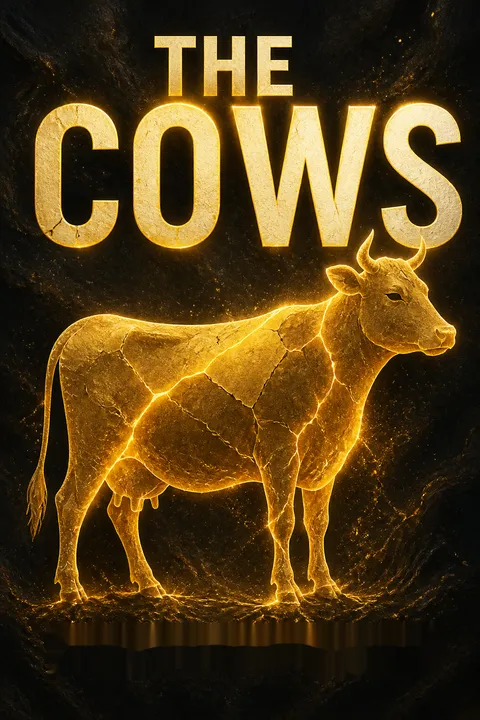
In The Cows, Dawn O'Porter crafts a sharp, satirical, and deeply empathetic exploration of modern womanhood, where "scandal" is both a personal wound and a cultural currency. The novel's brilliance lies in its willingness to reject both easy victims and heroines: women here are neither cows to be herded nor neat countercultural rebels, but deeply human, often contradictory, and always adrift in a world obsessed with policing the female body and fate. Through Tara's viral disgrace, Cam's untimely death, and Stella's desperate machinations, O'Porter deftly exposes how the Internet era has collapsed the private and public self—especially for women—and how judgment (by others and one's self) can be nearly inescapable. Yet for all its critique, The Cows is ultimately hopeful: it suggests new forms of friendship, truth-telling, and belonging for women who seize complicity with one another over judgment, who own (rather than apologize for) their bodies and choices, and who learn that legacy is less about perfection than about daring to live—messy, unapologetic, and real—outside the herd.
Review Summary
The Cows receives mixed reviews, averaging 3.89/5. Praised for its bold, unapologetic exploration of feminism, social media shaming, and women's choices, many readers found it funny, relatable, and thought-provoking. Fans appreciated its frank treatment of topics like masturbation, abortion, and societal pressures on women. Critics, however, found the plot far-fetched, characters underdeveloped, and messaging inconsistent. Several noted the writing as clunky and repetitive, while others felt it undermined its own feminist message through contradictory character portrayals.
People Also Read

Characters
Tara Thomas
Tara, a single mother working in television, is hard-edged yet deeply vulnerable. Her central conflict is the tension between independence and the inevitable judgments that come with not fitting the "motherhood script." Tara's defining act—masturbating on an empty train—becomes a global scandal when filmed by a teenager and posted online, amplifying every insecurity and demanding she reclaim authorship of her own life. As her world unravels (losing work, friends, dignity), her determination and wit persist, rooted in her love for her daughter Annie. Tara's journey is one from shame-induced isolation to radical honesty and self-acceptance, learning that on one's own terms is the only way to truly belong.
Cam(illa) Stacey
Cam is a successful blogger who has built her career on unvarnished, unorthodox commentary about women's lives—body positivity, sex, and the liberation of opting out of marriage and motherhood. She is both shielded and isolated by her online reputation, navigating the social minefield of being "The Face of Childless Women." Her deepest struggle is reconciling her private contentment (and eventual abortion) with a world that will treat her as an object lesson or a traitor. A thinker and boundary-breaker, Cam searches for authentic connection even as she recognizes its dangers. Her death—untimely, tragic, and misunderstood—forces the characters (and readers) to reckon with the cost of public life and the necessity of making your own truth known.
Stella Davies
Stella, whose twin sister and mother died young from cancer, exists on the edge—driven by loss, fear, and alienation. Her focus is legacy: desperate for a child before the hereditary cancer gene forces radical surgery and makes biological motherhood impossible. Alone after being deserted by partners and friends, she latches onto her boss, Jason, as a potential sperm donor, spinning elaborate lies and even faking illness to realize her goal. Stella's psychological arc is a downward spiral: trolling Cam, sabotaging Jason, and finally, in a rare twist, finding her way to honesty and healing when Tara seeks her out. She embodies the extent to which trauma warps need, but also how authentic vulnerability might remake a ruined life.
Jason Scott
Jason is a talented photographer and Stella's boss—empathetic, romantic, but repeatedly thwarted by awkwardness and his old-fashioned notions of love and family. Though often a target for Stella's schemes, Jason genuinely wants connection and meaning, especially after being manipulated and lied to. His jumbled attempts at finding a partner and his eventual relationship with Tara mark him as both ordinary and admirably sincere—he's a counterpoint to the more cynical and calculating characters, demonstrating that good intentions, even in chaos, can yield happiness.
Annie
Tara's daughter, Annie, is both a motivation and a marker of what's at stake for her mother. Her presence grounds Tara's decisions, fuels her shame, and becomes the touchstone for what redemption looks like. Annie represents the unfiltered, unquestioning love that underlies the possibility for forgiveness and rebuilding, even as she becomes unwillingly entangled in adult scandal.
Sophie
Sophie is Tara's oldest friend—once wild, now playing at respectability and upholding the very standards that ostracize Tara. Quick to distance herself at the first sign of scandal, Sophie is the emblem of how performative friendship and "solidarity" rarely withstand societal judgment. Her eventual betrayal is painful, but clarifies for Tara (and the reader) what real loyalty looks like.
Stella's Twin (Alice)
Alice's early death is the defining wound in Stella's life—a symbol of what was, what could have been, and the "correct" way of being a woman, sister, and friend. Stella's desperate attempts to fill the "Alice-shaped" hole—through men, motherhood, or duplicity—speak to the agony of longing for completion when it may never come.
Adam
Tara's TV boss, Adam is emblematic of the blend of workplace misogyny and transactional relationships that dominate her professional world. Outwardly supportive, he is quick to distance the company from scandal, taking credit when convenient and weaponizing Tara's missteps. He represents the obstacles that ambitious women still regularly face in male-dominated industries.
Cam's Mother
Cam's mother, with her brand of tough love and sharp critique, gives voice to the internalized expectations that all the women in the novel face. Her inability to accept Cam's choices is not unique, but Cam's attempts at honesty with her mother structure much of her own psychological conflict, highlighting how parent-daughter bonds are both foundational and embattled.
Vicky Thomson
Vicky is a fellow "school-gate mum" who, unlike the others, is endearingly candid and persistent. Her over-the-top career ideas, social climbing, and relentless pitches mirror some of the book's satire of "mompreneur" culture. Yet her employment by Tara in the end gestures toward the book's optimism—that forthrightness and support, even when naive or awkward, are better than hollow respectability.
Plot Devices
Intersecting Narratives and Multiple Perspectives
The novel's narrative structure alternates between first-person voices (Tara, Cam, and Stella), allowing readers to experience the nuanced internal struggles, unreliable interpretations, and differing values that shape each woman's life. This device not only humanizes them but also links public scandal with private trauma, showing how no "truth" is straightforward and no heroine is entirely without fault or pain.
Public Shame and Social Media Virality
Tara's viral scandal is both juicy incident and structural metaphor—the speed and brutality with which digital culture can unmake a life, set the terms of morality, and amplify hypocrisy. The mechanism by which Tara's most lonely, vulnerable, and mundane moment is turned into comedy, critique, and threat for worldwide consumption illustrates the real stakes for women whose stories don't fit the norm.
Unreliable Narrative, Concealment, and Confession
Successive revelations—Stella's lies, Cam's concealed pregnancy, Jason's missed messages—hinge on characters' depriving one another (and readers) of crucial information. The deliberate faking of illness, sabotage via phone, and trolling letters all build a web of unreliable communication, only dispelled by true confession, which becomes the climactic (and only) form of redemption.
Symbolism and Extended Metaphor
From the book's very first pages, "cows" and "herd" operate as metaphors for conformity, femaleness, and the moral judgments women must navigate. Tara's refusal to "follow the herd," Cam's rallying-cry blogs, and Stella's resistance to being "just another story" all subvert or embrace these hashtags of womanhood.
Foreshadowing and Irony
The novel skillfully foreshadows tragedy with Cam's comments about her own legacy and Tara's about the indifference of the herd, setting up a dark irony when Cam's death and the public's betrayal echo her own warnings. Similarly, the recurring online threats and Stella's obsession with legacy culminate not in triumph but in messy, truthful exposure.
Feminism as Plot Catalyst and Backdrop
Each woman's choices and the novel's major conflicts are generated by the friction between feminist ideals ("choose your own way," "don't apologize") and the often-punitive reality of trying to live those ideals in families, workplaces, and online. Feminism here is not pure empowerment but daily struggle, compromise, and sometimes painful contradiction.
Redemptive Orbits and Narrative Closure
Rather than the traditional ending—marriage, child, success—the book closes with unfinished but hopeful stories. Scandal and loss don't crown martyrs or grant neat triumphs, but instead allow for imperfect, ongoing reckonings and a new space for stories outside the "herd."
Download PDF
Download EPUB
.epub digital book format is ideal for reading ebooks on phones, tablets, and e-readers.








































