Plot Summary
Bridge Games and Daydreams
On a dull Sunday, Alice Liddell endures a tedious bridge game with her sisters and mother, her mind drifting to Wonderland—a place her family dismisses as childish fantasy or madness. Her mother's matchmaking efforts are in full swing, with the eligible Mr. Carroll present. Alice's reputation as a dreamer makes her an oddity, but her stories of Wonderland catch Mr. Carroll's attention, sparking a connection. Despite her mother's discomfort, Alice finds herself drawn into conversation, sharing her fantastical visions. The family's dynamics are revealed: Violet is flirtatious, Rhoda is supportive and independent, and Alice is caught between societal expectations and her own wild imagination. The seeds of escape and longing for something more are sown, setting the stage for Alice's journey beyond the ordinary.
A Proposal and a Lie
Alice's engagement to Lewis Carroll is less a love story and more a transaction—her only alternatives being spinsterhood or the asylum. Violet's jealousy and Rhoda's support highlight the family's tensions. Lewis seems enchanted by Alice's Wonderland tales, but his interest is more self-serving than romantic. On the eve of her wedding, Alice overhears Lewis admitting to a friend that he's marrying her for her stories, not love. The revelation devastates Alice, confirming her fears that she is valued only for her strangeness, not for herself. The wedding becomes a prison sentence rather than a rescue, and Alice's sense of agency is further eroded. The emotional stakes are raised as Alice contemplates her future, torn between resignation and rebellion.
Wedding Jitters and Eavesdropping
As the wedding approaches, Alice's anxiety mounts. Rhoda and Fredrick try to comfort her, but overhearing Lewis's true motives shatters any remaining hope. The garden, once a symbol of beauty, now feels suffocating. A vision of the White Rabbit—impossibly real—appears, reigniting Alice's sense of wonder and possibility. The rabbit's appearance is both a warning and an invitation, reminding Alice of the world she once believed in. The pull between duty and desire becomes unbearable, and Alice is faced with a choice: submit to a loveless marriage or chase the impossible. The chapter ends with Alice on the brink, her heart pounding with fear and anticipation.
The White Rabbit Returns
During the wedding procession, Alice spots the White Rabbit again, now more fantastical and urgent. Overwhelmed by the weight of expectation and betrayal, she abandons the ceremony, chasing the rabbit into the garden's maze. The pursuit leads her to a mysterious tree and a rabbit hole—an echo of her childhood adventures. With nothing left to lose, Alice follows the rabbit, tumbling into a liminal space between worlds. The act is both literal and symbolic: a rejection of societal constraints and an embrace of her own narrative. Wonderland—or something stranger—awaits, and Alice's transformation from passive victim to active seeker begins.
Through the Between
Alice lands in the Between, a surreal bureaucratic void staffed by a two-headed bird, Gripe and Type. Here, time is fluid, doors appear and vanish, and nothing is as it seems. Alice's attempts to find the rabbit are met with riddles and red tape. She steals a key and plunges through a door, her journey marked by confusion and defiance. The Between serves as a metaphor for transition and uncertainty, a place where identity and purpose are in flux. Alice's resourcefulness and stubbornness are tested, but she presses on, determined to reclaim her story and find her way.
Tea with Tricksters
Falling through another rabbit hole, Alice encounters Tick, a shapeshifting fox obsessed with time and games. Tick's riddles and seductive tricks blur the line between threat and temptation. Alice is drawn into a contest where the stakes are her freedom and identity. The encounter is both a test and a seduction, challenging Alice's resolve and self-knowledge. Tick's world is one of shifting rules and hidden dangers, reflecting the instability of Wonderland and the perils of desire. Alice escapes, but not unscathed, her sense of self sharpened by the ordeal.
The Queen's Croquet Threat
Alice, aided by the Tweedle twins, is swept into the Seelie Queen's court, where appearances are everything and danger lurks beneath the surface. The Queen's croquet game is a spectacle of manipulation and control, with living balls and shifting rules. Alice must navigate court politics, hiding her true identity and intentions. The Queen's demand for perfection and her threats of violence create a climate of fear and uncertainty. Alice's wit and adaptability are her only defenses as she is drawn deeper into the intrigues of the Fae world.
The Seer's Warning
A visit to the Seer, Francis, brings cryptic warnings and glimpses of possible futures. The Seer's words hint at transformation, loss, and the dangers of forgetting. Alice is told that change is inevitable, and that her journey will demand sacrifices she cannot yet imagine. The encounter underscores the themes of fate and free will, as Alice grapples with the knowledge that her choices have consequences beyond her understanding. The Seer's prophecy hangs over her, a shadow that will shape her actions and their outcomes.
Lost in Tundrey Woods
Alice becomes separated from her allies in the treacherous Tundrey Woods, a place where reality bends and danger is ever-present. She meets Mop, a grumpy brownie, and is led to a mad tea party hosted by Mercury the Hatter and other eccentric creatures. The woods are a crucible, testing Alice's resilience and adaptability. She must rely on her wits and the kindness—or caprice—of strangers to survive. The experience deepens her understanding of the Fae world's unpredictability and her own capacity for courage.
The Mad Hatter's Table
At the Hatter's table, Alice is swept into a whirlwind of sensuality, nostalgia, and existential questioning. Mercury, the Hatter, is both lover and guide, offering Alice a taste of passion and a glimpse of what it means to belong—and not belong—in Wonderland. The boundaries between dream and reality blur as Alice confronts her desires and fears. The tea's intoxicating effects heighten her vulnerability, and the Hatter's affection is both a comfort and a reminder of her outsider status. The chapter explores the tension between longing for connection and the impossibility of permanence.
Temptations and Choices
Alice's relationships with the Tweedle twins, Cheshire, and the Hatter deepen, each offering her different forms of love, pleasure, and acceptance. The Fae world's fluid morality challenges Alice's human notions of fidelity and propriety. She is tempted by the possibility of staying, of embracing a new identity and abandoning her old life. But the cost of such freedom becomes apparent: time moves differently, and to remain would mean losing her humanity—and perhaps her soul. The chapter is a meditation on choice, agency, and the bittersweet nature of desire.
The Cat's Bargain
Cheshire the Cat offers Alice a way forward, but at a price. The use of his magic mirror requires a bargain, and Alice is forced to confront the transactional nature of power in Wonderland. The encounter is fraught with sexual tension and mutual manipulation, as Alice learns that every gift in this world comes with strings attached. The mirror becomes a symbol of transition and transformation, a gateway to new possibilities and new dangers. Alice's willingness to pay the price marks a turning point in her journey.
The Shadows' Deal
In a dreamlike encounter, Alice is approached by the Shadows, entities exiled from the Fae world. They offer her the chance to become Fae herself, to gain magic and stay with her beloveds, in exchange for a favor: to meddle in the royal wedding and ensure the union's failure. The offer is irresistible, promising everything Alice desires, but the cost is hidden and ominous. The Shadows' bargain is a classic faustian pact, tempting Alice with power while ensnaring her in their schemes. The chapter explores the dangers of wish fulfillment and the ambiguity of agency.
Becoming Fae
Alice eats the enchanted fruit and undergoes a painful, ecstatic transformation into a Fae. Her senses are heightened, her appearance mutable, and her old life recedes into memory. The joy of newfound power is tempered by the realization that she is now bound by the Shadows' bargain. Alice's identity is in flux, caught between human and Fae, self and other. The transformation is both liberation and enslavement, granting her the means to shape her destiny while binding her to forces beyond her control.
The Price of Magic
Fulfilling her end of the bargain, Alice uses her new powers to impersonate the Seelie Princess and seduce the prince, sowing discord and heartbreak. The plan backfires: the real princess flees, the prince is devastated, and Alice is exposed as a deceiver. The Shadows' true motives are revealed—they thrive on chaos and suffering. Alice's actions, meant to secure her happiness, instead bring pain to those she cares about. The cost of magic is steep: guilt, alienation, and the loss of innocence.
The Lovers' Rift
Alice is imprisoned for her crimes, cut off from her beloveds and stripped of her powers. The Shadows feed on her memories, erasing the joys and connections that once defined her. Time becomes meaningless in her cell, and Alice is left to contemplate the consequences of her choices. The pain of exile is compounded by the knowledge that she has betrayed both herself and those she loves. The chapter is a meditation on remorse, punishment, and the fragility of happiness.
Prison of Regret
Years pass in the Hall of Mirrors, where Alice is forgotten by the world and tormented by the Shadows. Her only companions are books and the fading echoes of her past. The monotony is broken by the arrival of strangers—one of whom recognizes her and offers a glimmer of hope. The possibility of rescue and redemption emerges, but the scars of regret and loss remain. Alice's journey comes full circle, from dreamer to exile to the brink of a new beginning.
Hope in the Hall of Mirrors
Alice's story ends on a note of ambiguity and anticipation. Though imprisoned and diminished, she is recognized and remembered by another—a sign that her story is not over. The promise of rescue and renewal lingers, suggesting that even in the darkest places, hope endures. The emotional arc completes its cycle: from longing and escape, through temptation and loss, to the possibility of forgiveness and a second chance.
Analysis
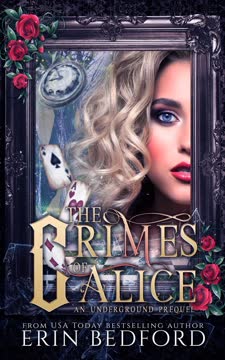
Erin Bedford's The Crimes of Alice is a dark, sensual, and psychologically rich reimagining of the Alice in Wonderland mythos, blending Victorian anxieties with modern themes of agency, desire, and the cost of self-actualization. At its core, the novel interrogates the tension between conformity and individuality, exploring what it means to be "mad" in a world that punishes difference. Alice's journey is both literal and metaphorical: a flight from the constraints of family and society into a world of possibility, temptation, and peril. The Fae realm is a mirror of human longing and folly, offering pleasures and freedoms that come at a steep price. The narrative's use of liminal spaces, bargains, and time distortion reflects the instability of identity and the dangers of unchecked desire. Ultimately, the novel is a meditation on the necessity—and the tragedy—of choice: every escape is also a loss, every transformation a kind of death. In a modern context, The Crimes of Alice speaks to the enduring relevance of fairy tales as vehicles for exploring trauma, empowerment, and the search for meaning in a world that is both wondrous and cruel.
Review Summary
The Crimes of Alice receives mostly positive reviews, averaging 4.1 out of 5 stars. Readers praise the creative reimagining of Wonderland as a Fae realm, the engaging characters, and the steamy reverse harem romance. Many appreciate it as both a standalone story and a prequel to the Underground series. Some critics note editing issues, abrupt sexual content, and a thin plot. The cliffhanger ending frustrates yet excites readers. Adult content warnings are frequently mentioned, with reviewers emphasizing this is decidedly not a children's retelling.
Characters
Alice Liddell
Alice is a young woman caught between the expectations of Victorian society and her own irrepressible imagination. Labeled mad by her family, she finds solace in dreams of Wonderland, which blur the line between fantasy and reality. Her journey is one of self-discovery, agency, and the search for belonging. Psychoanalytically, Alice embodies the tension between conformity and individuation, desire and duty. Her relationships—with her sisters, Lewis, the Fae, and herself—are marked by longing, betrayal, and the quest for authenticity. Over the course of the story, Alice evolves from passive victim to active agent, but her choices come at a steep price. Her arc is defined by the struggle to reconcile her inner world with the demands of the outer, and by the bittersweet realization that every escape carries its own form of captivity.
Lewis Carroll (Lewis)
Lewis is the suitor who woos Alice not for love, but for the stories she tells. Outwardly respectable and attentive, he is inwardly calculating, viewing Alice as a means to literary fame. His duplicity is a catalyst for Alice's flight from the human world. Psychologically, Lewis represents the dangers of objectification and the commodification of creativity. His relationship with Alice is transactional, exposing the limitations of Victorian marriage and the perils of seeking validation from others. Lewis's betrayal is the wound that propels Alice into Wonderland, and his absence haunts her choices thereafter.
Rhoda
Rhoda is Alice's elder sister and confidante, the only family member who believes in her sanity and worth. Independent, bookish, and unafraid of social censure, Rhoda is both a role model and a protector. She fights to keep Alice out of the asylum and encourages her to seek her own path. Psychologically, Rhoda embodies the possibility of female autonomy and solidarity in a patriarchal world. Her presence grounds Alice, offering a counterpoint to the madness and manipulation of both family and Wonderland.
Violet
Violet is the youngest Liddell sister, preoccupied with romance, fashion, and social climbing. She envies Alice's attention and resents her strangeness, often acting as a provocateur. Violet's superficiality and competitiveness highlight the pressures faced by women to conform and compete for male approval. Her relationship with Alice is fraught but ultimately secondary to the deeper bonds of sisterhood and self-discovery.
The Tweedle Twins (Coby and Carban)
Coby and Carban are Fae tailors who aid Alice on her journey, offering both practical help and romantic entanglement. Their twinship symbolizes the dualities of Wonderland: order and chaos, pleasure and pain, loyalty and rivalry. Psychologically, they represent the allure and danger of the unknown, as well as the possibility of love beyond conventional boundaries. Their relationship with Alice is marked by flirtation, jealousy, and genuine affection, challenging her notions of fidelity and self-worth.
Mercury the Hatter
Mercury, the Mad Hatter, is both mentor and lover to Alice. His eccentricity masks deep insight and vulnerability. He offers Alice acceptance and passion, but also reminds her of the limits of belonging in a world not her own. Mercury's madness is both a curse and a gift, allowing him to see truths others miss but isolating him from ordinary happiness. His love for Alice is unconditional, yet tinged with the knowledge that their time together is fleeting. Psychologically, Mercury embodies the archetype of the trickster and the wounded healer.
Cheshire
Cheshire is the shapeshifting cat whose help always comes at a price. He is seductive, enigmatic, and self-interested, embodying the transactional nature of Wonderland's magic. His relationship with Alice is marked by mutual attraction and wariness. Cheshire's ability to move between forms and worlds makes him a symbol of liminality and transformation. Psychologically, he represents the dangers and delights of crossing boundaries, and the necessity of accepting ambiguity.
The Seelie Queen
The Seelie Queen is the embodiment of power, control, and the tyranny of appearances. Her court is a place of beauty and terror, where failure is punished and perfection demanded. She is both a mother figure and a nemesis, testing Alice's adaptability and resolve. Psychologically, the Queen represents the superego: the internalized voice of authority, judgment, and repression.
The Shadows
The Shadows are the antagonistic force lurking at the edges of Wonderland, offering Alice the power to become Fae in exchange for sowing discord. They are formless, seductive, and malevolent, thriving on chaos and suffering. Psychologically, they represent the shadow self: the repressed desires, fears, and destructive impulses that must be confronted and integrated. Their bargain with Alice is a classic faustian pact, exposing the dangers of unchecked ambition and the cost of wish fulfillment.
Watch (the Opalaught)
Watch is the rabbit-like creature who draws Alice back into Wonderland and serves as a messenger between worlds. He is impatient, enigmatic, and bound by rules Alice does not understand. Watch's presence signals moments of transition and decision, marking the boundaries between past and future, human and Fae. Psychologically, he represents the inevitability of change and the necessity of embracing uncertainty.
Plot Devices
Liminal Spaces and Portals
The narrative is structured around liminal spaces—gardens, rabbit holes, the Between, mirrors, and doors—that serve as gateways between worlds and states of being. Each portal marks a moment of decision, risk, and potential. The instability of these spaces reflects Alice's psychological journey from innocence to experience, passivity to agency. The use of portals also allows for narrative shifts in tone, setting, and logic, mirroring the unpredictability of desire and the fluidity of identity.
Bargains and Faustian Pacts
Central to the plot is the motif of bargains: Alice's engagement to Lewis, her deals with the Fae, and her pact with the Shadows. Each bargain offers the promise of escape or fulfillment, but exacts a hidden price. The narrative interrogates the ethics of desire and the dangers of wish fulfillment, exposing the ways in which agency can be both empowering and self-destructive. The bargains also serve as engines of suspense and irony, as Alice's attempts to control her fate often lead to unintended consequences.
Time Distortion and Memory Loss
Time in Wonderland is fluid and unpredictable, with hours becoming days and memories slipping away. This device heightens the sense of disorientation and loss, underscoring the costs of transformation and the impossibility of returning to a fixed identity. Memory loss is both a punishment and a mercy, allowing Alice to survive her exile but at the cost of her connections and joys. The distortion of time and memory also serves as a metaphor for trauma, regret, and the longing for redemption.
Metafiction and Self-Reflexivity
The novel is deeply self-aware, referencing Alice's own tales, Lewis Carroll's authorship, and the act of storytelling itself. Wonderland is both a real place and a product of Alice's imagination, blurring the boundaries between fiction and reality. This metafictional quality invites readers to question the nature of truth, the reliability of narrators, and the role of fantasy in shaping identity. The story becomes a meditation on the power and peril of stories: their ability to liberate, to deceive, and to endure.








































