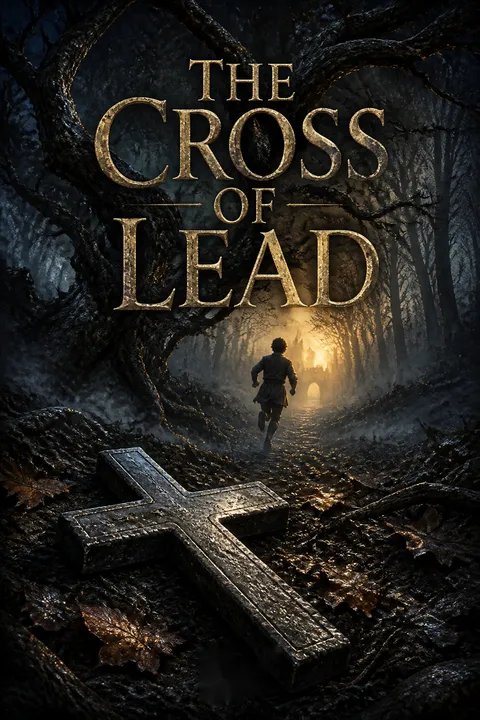

Plot Summary
Death and Accusation
In the rain-soaked village of Stromford, young Asta's son buries his mother, his only family. The villagers shun him, and the cruel steward, John Aycliffe, demands the family's only ox as a death tax, dooming the boy to starvation. Grieving and desperate, the boy flees into the forest, only to stumble upon a secret meeting between Aycliffe and a mysterious stranger. Discovered, he narrowly escapes a violent attack, realizing he is now hunted. The world he knew—already harsh and loveless—has turned openly hostile. Alone, nameless, and accused of a crime he did not commit, the boy's journey into fear and uncertainty begins, setting the stage for a life-altering flight.
Fleeing Into Darkness
The boy, now a fugitive, hides in the woods, haunted by grief and terror. He learns he is accused of theft and declared a "wolf's head"—no longer human, anyone may kill him. His home is destroyed, and the villagers are ordered to hunt him. The only kindness comes from Father Quinel, the village priest, who offers food and sanctuary. The priest hints at secrets about the boy's past and urges him to flee to a city for freedom. The boy's identity is shrouded in mystery, and his world has shrunk to survival. The darkness of the forest mirrors his confusion and despair, as he faces a future with no clear path.
The Wolf's Head
The boy's status as a wolf's head makes him an outcast, hunted by all. He learns the villagers do not believe the accusations, but Aycliffe's word is law. Father Quinel reveals the boy's true name—Crispin—and hints at a hidden lineage. Plans are made for Crispin to escape, but betrayal lurks: a village boy, Cerdic, leads him into a trap. Crispin narrowly escapes death, realizing that trust is dangerous and that even the priest's protection cannot save him. The world is revealed as a place of treachery, where innocence is no shield, and survival demands cunning and luck.
A Name Revealed
Father Quinel tells Crispin his secret name and that his mother could read and write—rare skills for a peasant. The cross of lead, left by his mother, bears mysterious writing. Before the priest can reveal more about Crispin's father, he is murdered, deepening the boy's sense of guilt and abandonment. Crispin's identity is now a source of danger, not comfort. The cross becomes his only link to the past, a symbol of both hope and peril. The revelation of his name marks the beginning of Crispin's quest for selfhood, even as the forces arrayed against him grow more deadly.
Betrayal and Escape
Crispin is betrayed by Cerdic and nearly captured by Aycliffe's men. He escapes through cunning and luck, but the cost is high: his home is gone, his protector dead, and he is utterly alone. The world beyond Stromford is vast and unknown, filled with dangers both seen and unseen. Crispin's journey becomes a test of endurance and will, as he struggles to survive in a land ravaged by plague, war, and poverty. Each step away from home is a step into the unknown, where every stranger could be a threat and every kindness a potential trap.
The Road to Nowhere
Crispin wanders through abandoned villages, haunted by the specter of death. He witnesses the aftermath of the plague, the devastation of famine, and the indifference of the world to his suffering. Starving and exhausted, he contemplates surrendering to fate, but a vision of a hanged man at a crossroads rekindles his desire to live. The road offers no comfort, only the relentless demand to keep moving. Crispin's journey becomes a search for meaning as much as for safety, and the cross of lead grows heavier with each passing day.
Bear the Juggler
In a ruined church, Crispin meets Bear, a giant of a man, juggler, and sometime philosopher. Bear claims Crispin as his servant, binding him with an oath. At first, Bear is terrifying—by turns cruel, mocking, and unpredictable. Yet he feeds Crispin, teaches him music and juggling, and challenges his beliefs about freedom and fate. Bear's irreverence and laughter are as unsettling as his strength, but he offers Crispin a new way of seeing the world. Their uneasy partnership is forged in necessity, but it soon becomes something deeper—a bond that will be tested by danger and betrayal.
Lessons in Freedom
Bear teaches Crispin practical skills—music, juggling, self-defense—and philosophical ones: the value of questions, the possibility of freedom, and the importance of self-mastery. Crispin, long accustomed to servitude and shame, begins to glimpse a different life. Bear's stories of rebellion and injustice open Crispin's eyes to the world's cruelty and its possibilities. The journey becomes a process of transformation, as Crispin learns to look people in the eye, to claim his name, and to imagine a future not defined by fear. The lessons are hard, but they plant the seeds of hope.
The World Expands
As Bear and Crispin travel from village to village, performing for coins and bread, Crispin experiences the diversity and complexity of medieval England. He learns to navigate crowds, to read people's intentions, and to hide in plain sight. The world is larger and more varied than he imagined, filled with both kindness and danger. In each village, rumors of the wolf's head and the search for Crispin persist, a reminder that safety is always temporary. Yet, for the first time, Crispin feels the stirrings of joy and the possibility of belonging.
The Shadow of Pursuit
The journey to Great Wexly is shadowed by pursuit. Aycliffe and his men are never far behind, and spies lurk in every crowd. Bear's secret meetings and cryptic warnings hint at a larger conspiracy—a brotherhood seeking to overthrow the old order. Crispin's cross of lead becomes a key to his identity and a source of peril. The tension mounts as Bear and Crispin draw closer to the city, where danger and opportunity await. The sense of being hunted intensifies, and Crispin must decide whom to trust and what risks to take for freedom.
Arrival in Great Wexly
Great Wexly overwhelms Crispin with its size, noise, and diversity. Bear's business is revealed to be political as well as personal—he is involved with rebels plotting against the ruling class. Crispin witnesses the wealth and power of the nobility, the misery of the poor, and the ever-present threat of violence. The city is a labyrinth of opportunity and danger, where every choice has consequences. Crispin's sense of self grows as he navigates this new world, but the shadow of Aycliffe and Lady Furnival looms ever larger.
Secrets and Rebellion
Bear's involvement with John Ball and the brotherhood brings Crispin into the heart of a rebellion. The cross of lead's inscription—"Crispin—son of Furnival"—is revealed, marking Crispin as the illegitimate heir to the lordship. This secret is both a claim and a death sentence, as Lady Furnival and her kin will stop at nothing to eliminate rivals. Bear is captured and tortured, and Crispin must choose between flight and rescue. The stakes are no longer just personal; Crispin's identity is entangled with the fate of the realm.
The Trap Closes
Bear is imprisoned in the Furnival palace, and Crispin risks everything to save him. Using cunning and courage, Crispin infiltrates the palace, confronts Aycliffe, and bargains for Bear's life. The cross of lead becomes a bargaining chip, a symbol of Crispin's claim and his willingness to renounce it for freedom. The confrontation with Aycliffe is a test of will and identity, as Crispin asserts his worth and demands justice. The trap that was set for Crispin becomes the means of his liberation, but only at great cost.
The Cross of Lead
The cross of lead, once a simple keepsake, is revealed as the key to Crispin's identity and the source of his peril. By surrendering the cross, Crispin renounces his claim to nobility and chooses a life of freedom over power. The act is both a sacrifice and a liberation, freeing him from the chains of blood and expectation. The cross, stained with blood, becomes a symbol of the price paid for life and liberty. Crispin's journey from nameless peasant to self-possessed individual is complete, but not without loss.
The Price of Blood
The final confrontation at the city gates is brutal and decisive. Aycliffe, bound by his own oath and driven by hatred, tries to betray Crispin and Bear. In the ensuing struggle, Aycliffe is killed, and the way to freedom is opened. The violence is both a release and a tragedy, marking the end of one life and the beginning of another. Crispin's hands are stained, not just with blood, but with the knowledge of what freedom demands. The world is changed, and so is he.
A Bargain for Life
Crispin and Bear walk out of Great Wexly, free but forever changed. The journey has cost them dearly—home, innocence, and the possibility of a simple life. Yet, in choosing each other and the uncertain road, they claim a new kind of family and a new kind of freedom. The lessons of the past—about power, identity, and the meaning of life—are etched into their souls. The future is unknown, but it belongs to them. Crispin, once nothing, is now someone, and his name is his own.
The Gate of Freedom
As they leave the city, Crispin is dubbed a "free man" by Bear, no longer a servant, but an apprentice and a friend. The journey continues, but now with hope and purpose. The cross of lead is left behind, but its meaning endures: in the midst of death, there is life. Crispin's story is one of transformation—from nameless outcast to self-possessed individual, from hunted prey to free soul. The road ahead is uncertain, but Crispin walks it with joy, music, and the knowledge that he is, at last, his own master.
Analysis
Crispin: The Cross of Lead is a masterful coming-of-age tale set against the backdrop of a medieval world in turmoil. At its heart, the novel explores the search for identity in a society that denies individuality to the poor and powerless. Crispin's journey—from nameless outcast to self-possessed free man—mirrors the broader historical currents of the fourteenth century: the collapse of old certainties, the rise of new ideas about freedom and equality, and the enduring human longing for dignity. The cross of lead, both burden and blessing, encapsulates the paradox of inheritance—how the past shapes us, but does not define us. Through vivid characters and relentless narrative drive, the story interrogates the nature of power, the meaning of justice, and the possibility of change. In a world where every institution—church, lordship, law—serves to oppress, Crispin's ultimate act is to claim his own name and fate. The novel's lesson is both timeless and urgent: freedom is not given, but chosen, and the soul's worth is measured not by birth, but by courage, compassion, and the willingness to seek one's own path.
Review Summary
Crispin: The Cross of Lead received mixed reviews. Some praised its historical accuracy, character development, and engaging plot, while others found it slow-paced and boring. Many appreciated the vivid depiction of medieval England and religious themes. Critics noted the book's challenging vocabulary and potential to spark discussions. Some felt it was better suited for older readers. The Newbery Medal win was both celebrated and questioned. Overall, readers were divided on its appeal, with some finding it a compelling adventure and others struggling to connect with the characters and story.
People Also Read

Characters
Crispin
Crispin, known first only as "Asta's son," is a 13-year-old peasant boy whose journey is both physical and existential. Orphaned, shunned, and accused of theft, he is declared a wolf's head—an outlaw with no rights. Crispin's psychological arc is one of profound transformation: from a fearful, self-loathing child to a young man who claims his name and agency. His relationships—with his mother, Father Quinel, and especially Bear—shape his understanding of trust, freedom, and self-worth. The revelation that he is Lord Furnival's illegitimate son complicates his identity, forcing him to choose between blood and selfhood. Crispin's development is marked by growing courage, curiosity, and a dawning sense of his own value, culminating in his embrace of freedom and the forging of a new life.
Bear (Orson Hrothgar)
Bear is a giant of a man—juggler, philosopher, and secret revolutionary. He is both terrifying and nurturing, challenging Crispin's beliefs and teaching him practical and existential skills. Bear's own history is one of rebellion: once destined for the priesthood, he became a performer and a soldier, rejecting authority and embracing laughter and freedom. His relationship with Crispin evolves from master-servant to mentor-apprentice, and finally to something like father and son. Bear's involvement with the brotherhood and John Ball places him at the heart of political upheaval, but his deepest loyalty is to Crispin. Psychologically, Bear is complex—by turns cynical, compassionate, and idealistic. His influence is transformative, guiding Crispin toward self-mastery and hope.
John Aycliffe
John Aycliffe is the steward of Stromford, a man of rigid authority and deep-seated cruelty. He embodies the oppressive feudal order, enforcing laws with violence and contempt. Aycliffe's hatred of Crispin is personal and political—rooted in class, kinship to Lady Furnival, and the threat Crispin poses as Lord Furnival's son. Psychologically, Aycliffe is driven by fear, pride, and a need for control. His actions—false accusations, murder, betrayal—are motivated by self-preservation and loyalty to the ruling class. Aycliffe's inability to adapt or show mercy leads to his downfall, making him both a symbol and a victim of the old order's brutality.
Father Quinel
Father Quinel is the only figure of kindness in Crispin's early life. He provides spiritual and practical guidance, revealing Crispin's true name and urging him to seek freedom. Quinel's knowledge of Crispin's parentage and his willingness to defy authority make him a target. His murder is a turning point, deepening Crispin's sense of loss and guilt. Psychologically, Quinel represents compassion, wisdom, and the possibility of change within the church. His legacy endures in Crispin's quest for identity and meaning.
Widow Daventry
Widow Daventry runs the Green Man tavern in Great Wexly. She is practical, shrewd, and deeply scarred by loss. Her relationship with Bear is one of mutual respect and shared secrets. With Crispin, she is initially brusque but becomes a source of information and protection. Widow Daventry's knowledge of Crispin's lineage and her warnings about the dangers he faces are crucial. Psychologically, she embodies resilience and the hard wisdom of survival, offering a model of strength in adversity.
John Ball
John Ball is a historical figure, leader of the brotherhood seeking to overthrow the feudal order. He is passionate, articulate, and uncompromising, preaching equality and justice. Ball's relationship with Bear is complex—marked by shared ideals but differing strategies. To Crispin, Ball is both inspiring and intimidating, representing the possibility of a new world. Psychologically, Ball is driven by faith and a sense of destiny, but his zeal can be blinding. His presence situates Crispin's personal journey within a larger movement for change.
Lady Furnival
Lady Furnival is the widow of Lord Furnival and the true power behind the pursuit of Crispin. She is never directly encountered, but her will shapes the actions of Aycliffe and the fate of Crispin. Lady Furnival's motivation is the preservation of power and property, making her ruthless in eliminating threats. Psychologically, she represents the impersonal cruelty of the ruling class, a force more than a character, whose influence is felt in every act of violence and betrayal.
Asta (Crispin's Mother)
Asta is Crispin's mother, a woman marked by sorrow, resilience, and hidden strength. Her ability to read and write, her secret naming of Crispin, and her connection to Lord Furnival are sources of both love and danger. Asta's psychological complexity is revealed in her alternating tenderness and bitterness, her efforts to protect Crispin, and her ultimate inability to save him from the world's cruelty. Her death is the catalyst for the story, and her legacy endures in the cross of lead and Crispin's quest for identity.
Cerdic
Cerdic is a village boy who betrays Crispin, luring him into a trap. His actions are motivated by self-preservation and perhaps envy. Cerdic's betrayal is a lesson in the dangers of misplaced trust and the pervasiveness of fear in a world ruled by violence. Psychologically, he represents the ordinary person's complicity in oppression, choosing safety over solidarity.
The One-Eyed Man
The one-eyed man is a recurring figure, first encountered in a village and later revealed as a spy for Aycliffe. His pursuit of Bear and Crispin adds tension and danger, embodying the ever-present threat of betrayal. Psychologically, he is opportunistic and cunning, a minor but persistent obstacle in Crispin's journey.
Plot Devices
The Cross of Lead
The cross of lead is the central plot device, linking Crispin to his mother, his secret lineage, and the dangers he faces. Its inscription—"Crispin—son of Furnival"—is both a claim and a curse, making Crispin a target for those who wish to preserve power. The cross functions as a tangible symbol of Crispin's quest for identity, the burden of inheritance, and the price of freedom. Its eventual surrender marks Crispin's rejection of blood-based privilege in favor of self-chosen liberty.
The Wolf's Head Proclamation
Declaring Crispin a wolf's head strips him of legal protection, making him prey to all. This device heightens the stakes, driving the plot forward and forcing Crispin into exile. It also serves as a metaphor for social exclusion and the arbitrary cruelty of authority. The proclamation transforms Crispin's flight from a personal tragedy into a universal struggle for recognition and survival.
Mentor-Apprentice Relationship
The evolving relationship between Bear and Crispin is a classic mentor-apprentice dynamic, providing both practical skills and existential lessons. Bear's teachings—music, juggling, self-defense, philosophy—are vehicles for Crispin's growth. The relationship is tested by danger, betrayal, and the demands of freedom, culminating in Crispin's emergence as an independent individual.
Foreshadowing and Symbolism
The narrative is rich in foreshadowing—visions of death, warnings of betrayal, and the recurring motif of the cross. Symbols such as the hanged man, the cross of lead, and the city gates reinforce themes of mortality, identity, and liberation. The use of historical context—the plague, rebellion, and social upheaval—grounds the personal story in a larger struggle for change.
Narrative Structure
The story follows a linear progression from loss and flight to discovery and confrontation. Each stage of the journey introduces new challenges, allies, and revelations, building toward the climactic confrontation in Great Wexly. The structure mirrors Crispin's psychological development, moving from passivity and fear to agency and self-assertion.
Crispin Series
Download PDF
Download EPUB
.epub digital book format is ideal for reading ebooks on phones, tablets, and e-readers.








































